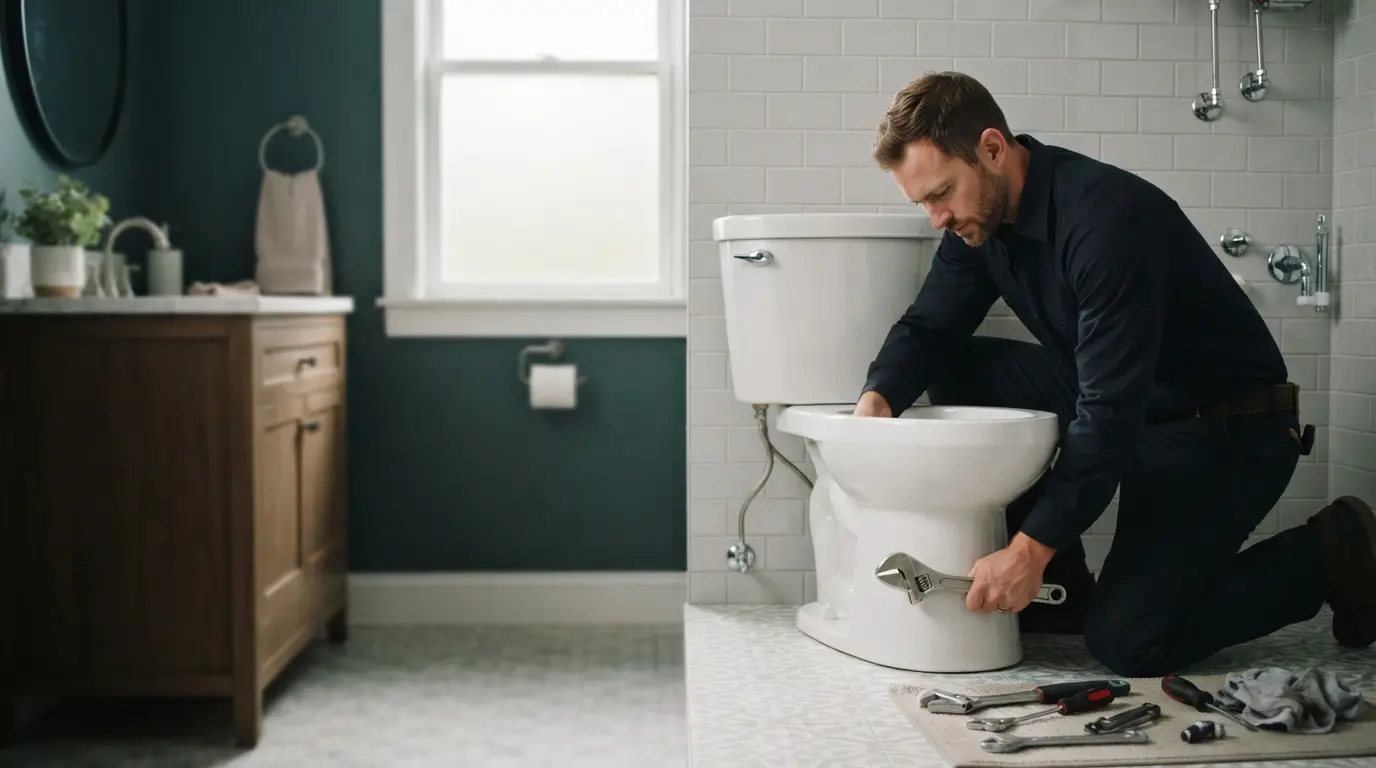
Toilet
Problem: Runs, leaks at base, cracked tank
Usual fix: Flapper, fill valve, wax ring, new toilet
Toilet that runs all night, or a faucet on an outside wall that froze? Toilet, faucet and fixture repair in Alaska keeps our plumbers busy year-round. Fixtures in Alaska face a few extra hazards: sinks and toilets on exterior walls that freeze, outdoor spigots split by frost, iron and minerals from well water that clog valves, and heavy wear in rentals. We repair and install toilets, faucets, sinks, showers, tubs and garbage disposals and handle remodel plumbing. Here is what we fix and how.
The service
Fixture problems start small and get expensive when ignored. A running toilet wastes water around the clock, and a drip under a sink can soak a cabinet and subfloor. We replace the failed part, update worn shutoffs and supply lines, and install new fixtures when repair no longer makes sense.
Common fixture repairs
Problem: Runs, leaks at base, cracked tank
Usual fix: Flapper, fill valve, wax ring, new toilet
Problem: Drips, stiff handle, low flow
Usual fix: Cartridge, aerator, new faucet
Problem: Split by frost
Usual fix: Frost-free sillcock
Problem: Drip, temperature swings
Usual fix: Cartridge or pressure-balancing valve
Problem: Jams, hums, leaks
Usual fix: Clear jam or replace unit
Why Alaska
Kitchen sinks under windows, bathrooms on outside walls and toilets near cold floors can freeze in deep cold. Supply lines split, toilet tanks crack and faucets break inside the body.
A standard hose faucet left with a hose attached in fall will freeze and split inside the wall, and the leak only shows when it is turned on in spring.
Iron, sediment and minerals in some Alaska wells stain fixtures, clog aerators and wear out cartridges and toilet valves faster.
33% of occupied homes in our Alaska Census data are rented, 60% in Fairbanks and 52% in Wasilla. In Anchorage, 45% of homes predate 1980 and many still have original valves and fixtures. We handle a steady stream of fixture calls from property managers and owners of older homes.
Warning signs
Our process
We replace flappers, fill valves and flush valves, reset loose toilets on a new seal and repair flanges. For cracked or worn-out toilets, we install a new one and haul the old one away.
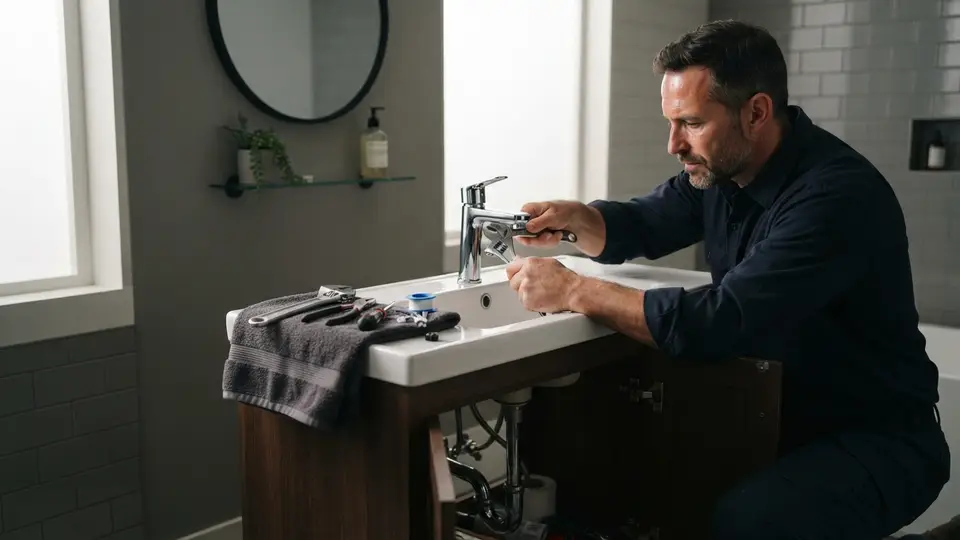
We rebuild cartridges and stems, replace supply lines and install new kitchen, bath, laundry and outdoor faucets. Outdoor faucets get frost-free sillcocks that shut off inside the heated wall.
We fix leaking traps and strainers, reseal loose sinks and install new kitchen, bath and utility sinks. On exterior walls, we make sure supply lines are insulated and protected from cold.
We repair or replace shower valves, add pressure-balancing valves, replace tub drains and install new tubs and shower bases.
We clear jams, fix leaks and install new disposals, and advise on disposal use for homes on septic.
For remodels, we relocate supply and drain lines, keeping them off cold exterior walls when we can, set valves, install fixtures and handle permits. Where a sink must stay on an outside wall, we insulate behind the lines and leave space for warm room air to reach them.
Typical cost
You approve a written price before we begin.
Get a written price: (833) 733-2357A cartridge or fill valve costs much less than a new unit.
We install fixtures you buy or supply one ourselves.
A split faucet inside a wall means opening the wall.
Old shutoffs often need replacing first.
Moving lines costs more than a straight swap.
Benefits
Running toilets and drips waste water and, on hot lines, fuel.
Small leaks under cabinets rot floors over time.
Frost-free sillcocks and insulated supplies survive winter.
Pressure-balancing valves prevent sudden scalding.
Close the shutoff under the sink or behind the toilet. If it will not close, shut off the main. If a fixture on an exterior wall has frozen, open the cabinet doors, warm the area gently and leave the faucet open.
Switch off a jammed disposal at the wall and keep hands out. Clear the cabinet so we can reach the pipes.
Frost-free sillcocks are the single most useful upgrade for Alaska houses. Indoors, ceramic disc faucet cartridges handle mineral-rich water well, and faucets with available replacement parts are easier to fix later. Low-flow toilets with wide trapways save water without clogging often. We can talk through options before you buy and install what you choose.
When a house loses heat in winter, fixtures take damage in ways that are easy to miss. Toilet tanks and bowls can crack from ice and leak slowly once the house warms. Faucet bodies and cartridges split inside, so the faucet looks fine until it is turned on. Water left in traps freezes and can crack plastic or older cast fittings. Dishwashers, washing machines and refrigerator ice makers have their own valves and lines that freeze too.
After a freeze, we go fixture by fixture: run each one, check under every sink and behind every toilet, test appliance connections and look for slow drips before closing up. It is much cheaper to find a cracked fill valve the day the heat comes back than after it has soaked a floor for a week.
Between tenants, a quick pass through each unit catches running toilets, worn flappers, dripping faucets, loose fixtures and seized shutoffs before the next tenant moves in. We work from your unit list, replace worn parts in one visit and send a short written note on each unit, including anything that needs a follow-up repair.
For buildings left vacant over winter between leases, we can also winterize units, draining lines and protecting traps, then bring them back into service and check every fixture before the next tenant arrives.
Like-for-like fixture replacements usually need no permit; remodels that move lines usually do in cities with building departments. Our plumbers hold Alaska certificates of fitness, and we are a state-registered contractor.
Why choose us
What you can count on every time one of our plumbers comes to your door.
Every job is handled by a plumber who holds the license your state or city requires, backed by liability insurance.
Our plumber explains the problem and the options, and you approve a written price before any work begins.
Burst pipes, sewage backups and failed water heaters get priority scheduling, including nights and weekends.
We pull permits when the job needs one and schedule the inspection, so the work holds up when you sell.
Repairs and installations come with a written warranty on labor, on top of the manufacturer's warranty on parts.
Our pages and plumbers account for your area's water, soil, climate and the age of the homes around you.
Service area
We repair and install fixtures in 355 Alaska communities:
A flapper or fill valve is a small job; a new toilet costs more. You get a written price before we start.
Yes. We install customer-supplied fixtures and check the parts before starting.
It depends on wall access and whether the old one split inside the wall. We quote it after a look.
We find which part leaks, the flapper, fill valve or flush valve, and replace it.
Yes. We remove the old unit, install the new one and test for leaks.
Yes, including moving lines away from cold exterior walls and pulling the permit.
Yes. A failed seal lets water into the subfloor. Stop using it and call us.
Older valves can. Pressure-balancing valves keep the temperature steady when other fixtures run.
One to two hours, more if the flange or floor needs repair.
Usually an hour or two, longer if shutoffs or lines need replacing.
Disconnect hoses before freeze-up, or have us install frost-free sillcocks.
Iron in well water. A water treatment system removes it and protects fixtures.
Close the shutoff or the main and call us. Burst lines get priority scheduling.
Supply lines in cold exterior walls lose heat in deep cold, especially behind closed cabinets.
Not usually for a straight swap. Remodels that move lines usually do.