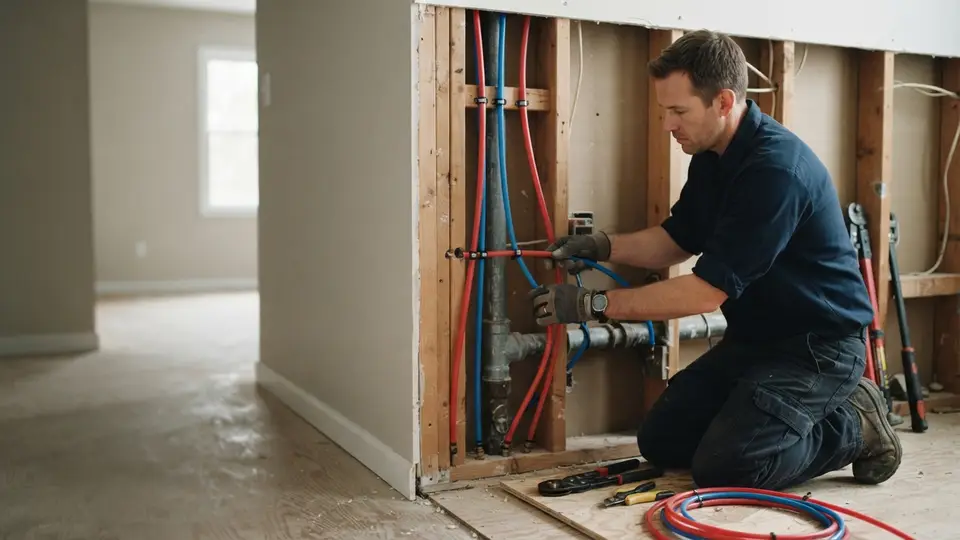
Lines in exterior walls
Problem: Freeze in deep cold
Our approach: Move them to interior walls or warm chases
Same pipe freezing every winter, or leaks popping up all over? Repiping and water line replacement in Alaska puts new pipe where the cold cannot reach it. Many Alaska homes have supply lines in exterior walls, unheated crawl spaces or additions where they freeze, plus older copper and galvanized pipe that has seen decades of service. Water service lines from the street or well must stay below frost. This page covers when repiping makes sense, how we route new lines, service line replacement and costs.
The service
Repiping replaces the supply piping inside a house. Water line replacement covers the buried service line from the street or well to the house. In Alaska both jobs are as much about where the pipe runs as what it is made of: the best new pipe in the world still freezes in an uninsulated wall.
What we replace and why
Problem: Freeze in deep cold
Our approach: Move them to interior walls or warm chases
Problem: Rust, low flow, discolored water
Our approach: Replace with PEX or copper
Problem: Pinholes, worn joints
Our approach: Repipe, especially after repeat leaks
Problem: Freezes or leaks
Our approach: Replace below frost or insulate and heat-trace
Why Alaska
Additions, remodels and older construction often left supply lines in exterior walls, over garages or in crawl spaces with failing skirting. Those lines freeze whenever the cold outlasts the insulation, and every freeze risks a split.
37% of homes in our Alaska Census data were built before 1980. In Ketchikan the figure is 71%, in Sitka 51%, in Fairbanks 51% and in Anchorage 45%. Original galvanized and copper in those homes is reaching the end of its life.
Some well water in Alaska is high in iron or minerals, and some surface supplies in Southeast are soft and slightly acidic, which can be hard on copper over time. We consider your water when choosing pipe.
Frost heave and earthquakes stress rigid pipe at the foundation entry. New service lines get flexible pipe and proper sleeving through the wall.
Warning signs
Our process
When one section has failed and the rest is sound, we replace it and insulate or reroute it if cold caused the failure.
We plan new runs on the warm side of the insulation: interior walls, heated chases and conditioned basements. PEX is often a good choice for its flexibility and freeze tolerance, though copper has its place. We add shutoffs at fixtures, pressure test, then patch.
For a leaking or frozen service line, we locate the problem, thaw it if needed and repair the damaged section. If the line is too shallow, a repair alone will not stop it freezing again.
We install a new service line below frost depth, or insulated and heat-traced where depth is not possible, with a properly sealed and sleeved entry through the foundation. Utilities are located through 811 before we dig, and major excavation is best scheduled for the thawed season.
Typical cost
We inspect the existing piping and give you a written price before work starts.
Get a written price: (833) 733-2357More fixtures and floors mean more pipe and openings.
Moving lines out of exterior walls takes planning and carpentry.
PEX usually costs less to install than copper.
Deep trenches and frozen ground add cost.
Wall repair and permit fees are listed in your quote.
Benefits
Pipes on the warm side of the insulation stay thawed.
New pipe restores flow to every fixture.
No more rust from corroded lines.
One planned job replaces a string of winter calls.
If a pipe is leaking, close the main shutoff and drain the lines through a low faucet. If a line is frozen but intact, warm the area gently and open the faucet it serves. Never use an open flame.
For a planned repipe, clear access to the basement or crawl space, utility room and under-sink cabinets, and tell us which rooms have had frozen pipes.
The point where the water line comes up into the house is the most common freeze spot. Some homes have an insulated, heated chase or box around that entry; others have a bare pipe against cold concrete. We rebuild weak entries with insulation, a heat source where needed and a flexible connection that can move with frost and earthquakes, so the line that feeds the whole house is protected.
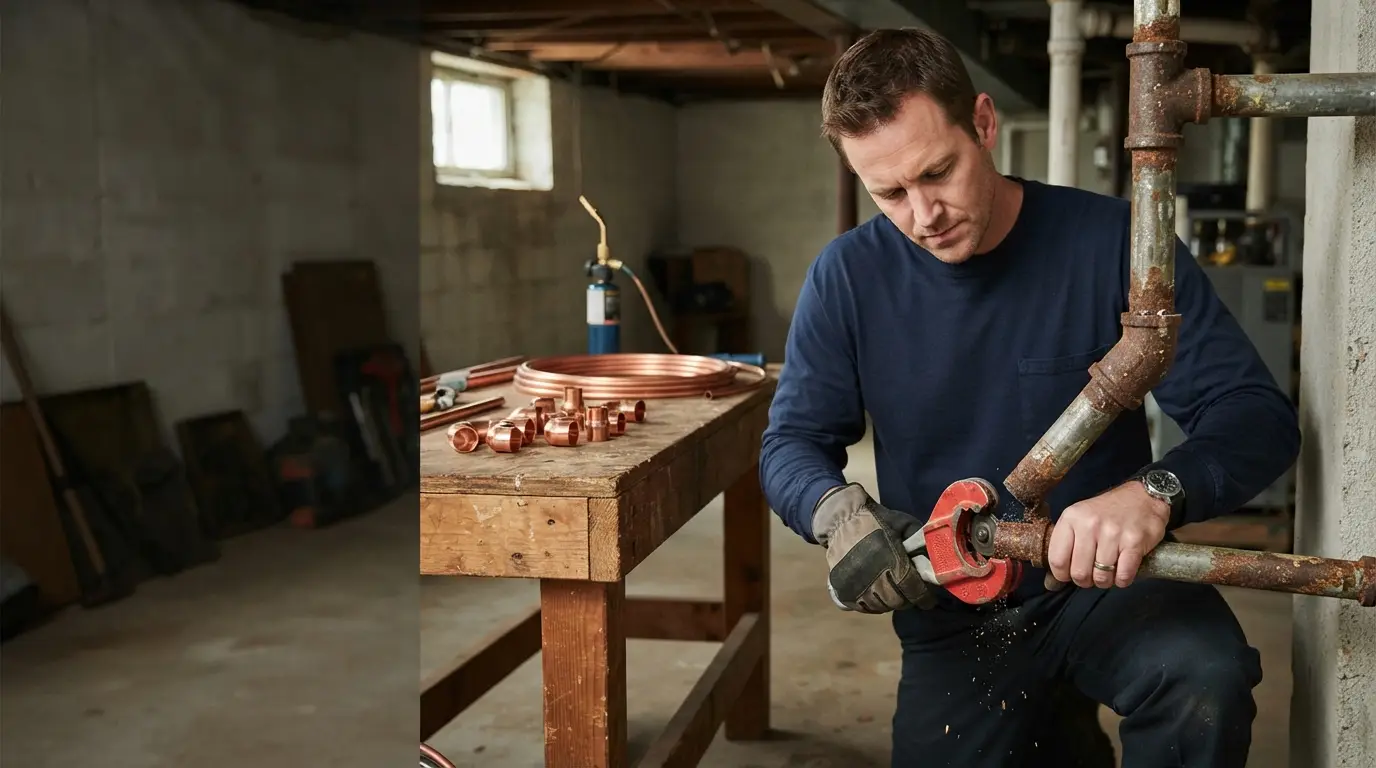
PEX is our most common choice for repiping in Alaska. It bends around framing with fewer fittings, so there are fewer joints to fail, and it can often survive a freeze that would split copper, though it should never be left where it will freeze. Copper still makes sense for exposed runs near boilers and water heaters and where local preference or code calls for it. For buried service lines, we use pipe rated for direct burial and the pressure of your water system.
Whatever the material, we label shutoffs, keep a simple diagram of the new layout for your records and show you where the main valve is before we leave.
A remodel is the cheapest time to repipe, since walls and floors are already open. If you are adding a bathroom, finishing a basement or building an addition, we can plan supply lines for the whole house at once and move any runs that sit in cold walls. It also lets us size the main line for new fixtures and a larger water heater if you plan one.
Repiping and service line replacement usually require a permit and inspection in Alaska cities with building departments, and the water utility may inspect the connection. Our plumbers hold Alaska certificates of fitness, we are a state-registered contractor, and we pull permits and schedule inspections.
Why choose us
What you can count on every time one of our plumbers comes to your door.
Every job is handled by a plumber who holds the license your state or city requires, backed by liability insurance.
Our plumber explains the problem and the options, and you approve a written price before any work begins.
Burst pipes, sewage backups and failed water heaters get priority scheduling, including nights and weekends.
We pull permits when the job needs one and schedule the inspection, so the work holds up when you sell.
Repairs and installations come with a written warranty on labor, on top of the manufacturer's warranty on parts.
Our pages and plumbers account for your area's water, soil, climate and the age of the homes around you.
Service area
We repipe homes across 355 Alaska communities:
It depends on the size of the house, how much rerouting is needed, the pipe material and patching. You get a written price after a walk-through.
Depth, length, soil and season set the price. Frozen-ground work costs more, so we plan major digging for summer when we can.
Yes. It flexes, resists scale and tolerates freezing better than rigid pipe, though no pipe should be left in the cold.
Yes. Routing lines on the warm side of the insulation is the main way we stop repeat freezes.
Yes. We rebuild the entry with insulation, a flexible connection and heat where needed.
We can include patching in the quote so you know what the walls will look like when we finish.
Rust is mostly a taste and staining issue, but very old pipe may hold lead from solder or fittings. Testing is wise.
Warm the area gently and call us. We thaw and repair it so you have water until the project starts.
Most homes take two to five working days plus inspection. Service line work depends on depth and season.
Usually, yes. Water is off only while we connect sections, and we restore it each day.
Keep the house heated, maintain insulation and skirting, and test heat trace each fall.
If it is iron-rich, hard or acidic, treatment protects the new pipe, fixtures and water heater.
Shut off the main and call us. Burst pipes get priority scheduling, nights and weekends included.
Shallow burial, thin snow cover, cleared driveways over the line and cold entries at the foundation.
Usually, in cities with building departments. We check your location and pull the permit.