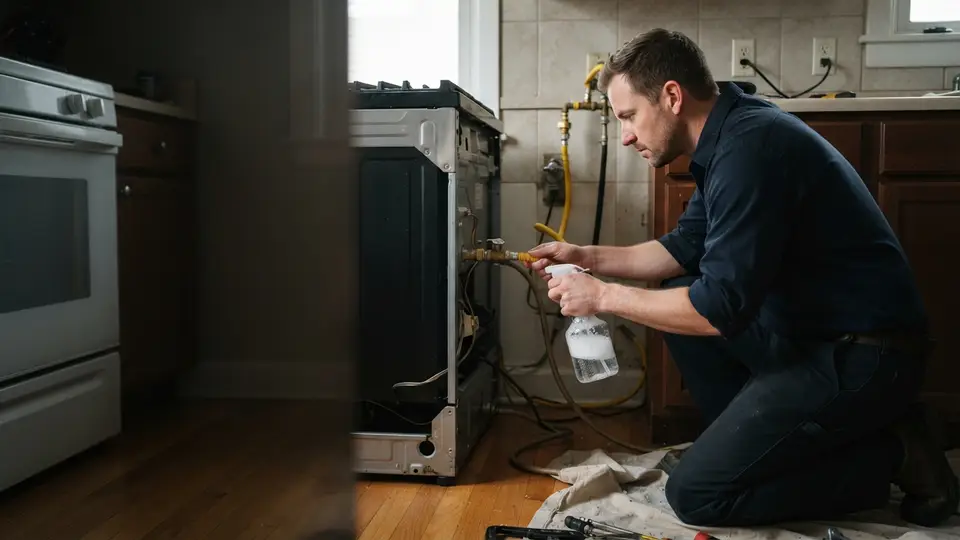
Leak repair
Typical reason: Corroded or loose fittings, damaged connectors, failed valves
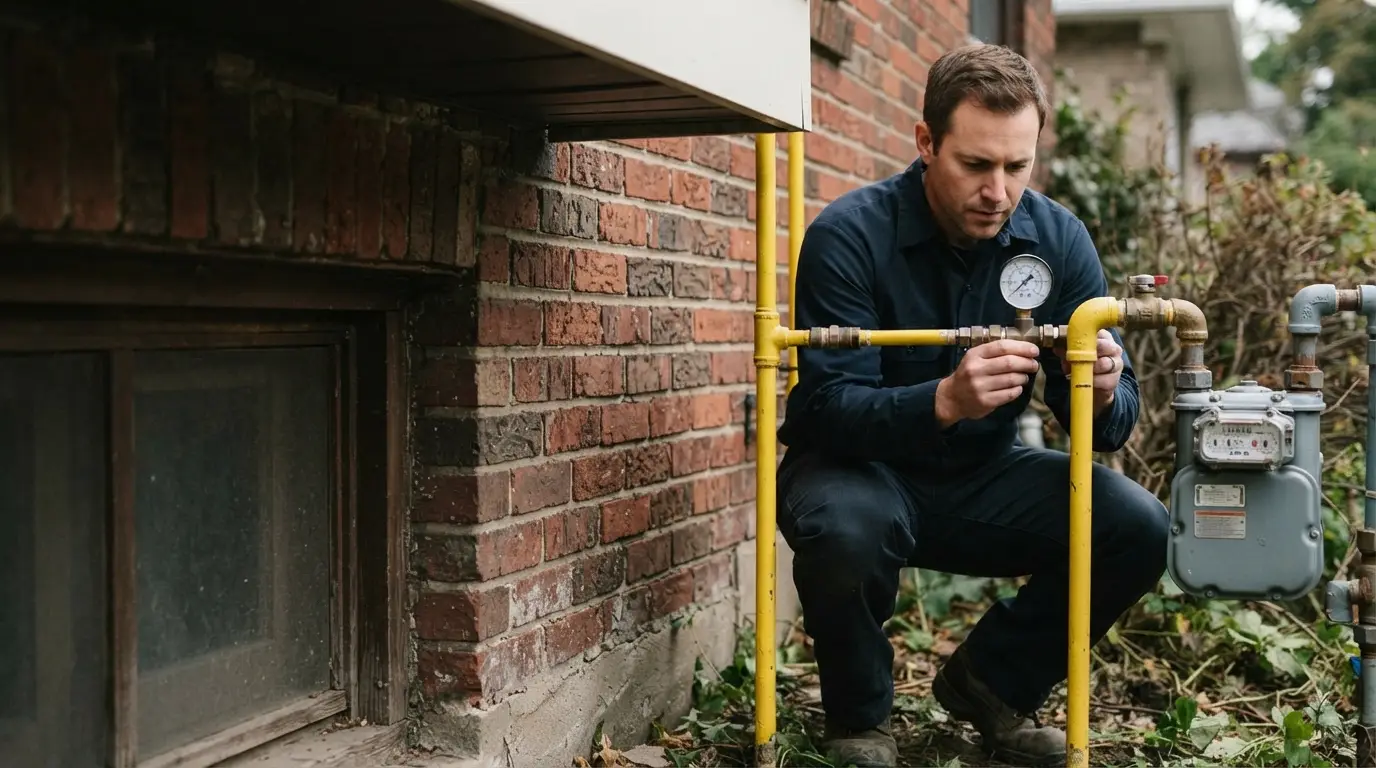
Gas odor near the meter, or a new heater for the garage? Gas line repair and installation in Alaska is careful work our certified plumbers handle every week. In Southcentral, piped natural gas heats most homes and runs boilers, furnaces, water heaters, ranges and garage heaters. Elsewhere, propane fills the same role. Snow load, ice, frost heave and earthquakes all stress gas piping here. This page covers leak repair, new lines and hookups, safety steps and permits.
The service
The gas utility or propane supplier owns the meter or tank and regulator. Everything downstream, the piping through the walls and to each appliance, is the owner's. We repair leaks in that piping, run new lines and connect appliances, and we make sure the system can carry the full load of everything on it, even on the coldest day of the year.
Common gas jobs
Typical reason: Corroded or loose fittings, damaged connectors, failed valves
Typical reason: Range, dryer, water heater, boiler or furnace
Typical reason: Unit heaters and radiant tube heaters
Typical reason: Tankless water heater, added heaters or appliances
Typical reason: Damage from snow, ice or vehicles
Why Alaska
50% of homes in our Alaska Census data heat with utility gas, mostly in Southcentral: 79% in Anchorage, 82% in Wasilla, 83% in North Lakes and 82% in Kenai. In Fairbanks only 16% do. Propane serves many homes off the gas system.
Snow sliding off roofs, ice buildup and snow plows can bend or break meter piping and regulators. Regulator vents blocked by ice can cause pressure problems.
Ground movement stresses rigid piping where it enters the house and at buried lines to garages and shops. Earthquakes can loosen joints and appliance connections.
In deep cold, boilers, furnaces, water heaters and garage heaters may all run at once. Piping sized years ago for fewer appliances can starve the last one on the line.
Warning signs
Our process
Once the utility has made the area safe, we test the system, trace the leak with electronic detectors and leak solution, replace the failed part and pressure test before restoring gas and relighting appliances.
We size piping for every appliance on the system at full winter load, route and support it, add shutoffs and sediment traps, use flexible connections where movement is expected and pressure test it for inspection. Buried lines to garages and shops go in with an 811 locate first.
We connect ranges, dryers, water heaters, boilers, furnaces and garage heaters with approved connectors and shutoffs, check for leaks and confirm clean burner operation. Older stiff connectors are replaced rather than reused.
Typical cost
You get a written price, permit included, before we begin.
Get a written price: (833) 733-2357Runs through finished walls or underground take longer.
Upsizing for added appliances means more material.
Buried lines are easier and cheaper to install in summer.
Gas work usually needs both.
Shutoffs, relights and meter changes are scheduled with the utility.
Benefits
Tight, tested joints and proper venting protect your household.
Correctly sized piping feeds every appliance in deep cold.
Flexible connections and strapped appliances hold up better in earthquakes.
Permitted, inspected work satisfies insurers and buyers.
If you smell gas, leave and call from outside. If the utility tells you to shut off the gas and you can reach the meter safely, turn the valve a quarter turn so it is crosswise to the pipe. For propane, close the tank valve. Do not turn it back on yourself.
Keep snow and ice cleared gently from around the meter and regulator, without hitting the piping. Never connect gas appliances yourself.
Many Alaska gas appliances vent through a side wall instead of the roof. In winter, drifting snow and ice can block those vents and intake pipes, pushing exhaust back into the house. Keep side-wall vents clear after every storm and watch for frost buildup on the vent cap. If a boiler, furnace or water heater shuts down repeatedly in a storm, a blocked vent is a likely cause, and a working carbon monoxide alarm is your best protection.
When we install or move a gas appliance, we place vents where snow is less likely to pile up and follow the maker's clearance rules, so the appliance keeps breathing through the winter.
A heated garage is close to standard in Alaska, and many owners add a shop or outbuilding later. Gas unit heaters and radiant tube heaters need a line sized for their input, a shutoff within reach, a sediment trap and the right clearance from vehicles and stored fuel. Lines to detached buildings are buried below frost or protected and sleeved where they enter each structure, so frost heave does not crack them.
We check whether your meter and main piping can carry the extra load in mid-winter, when every gas appliance in the house is running hard, before we add a new heater. If the system is short, we explain the options, from upsizing a section of pipe to asking the utility about a larger meter.
Gas piping work in Alaska is done by plumbers holding state certificates of fitness, and cities with building departments require permits and pressure test inspections for new piping and most repairs. Our plumbers hold the certificates the work requires, and we are a state-registered contractor. We pull the permit, schedule the inspection and coordinate with the gas utility.
Why choose us
What you can count on every time one of our plumbers comes to your door.
Every job is handled by a plumber who holds the license your state or city requires, backed by liability insurance.
Our plumber explains the problem and the options, and you approve a written price before any work begins.
Burst pipes, sewage backups and failed water heaters get priority scheduling, including nights and weekends.
We pull permits when the job needs one and schedule the inspection, so the work holds up when you sell.
Repairs and installations come with a written warranty on labor, on top of the manufacturer's warranty on parts.
Our pages and plumbers account for your area's water, soil, climate and the age of the homes around you.
Service area
We repair and install gas lines across 355 Alaska communities:
Length, route, pipe size, season and permit fees set the price. You get a written figure before we start.
It depends on distance from the existing piping and the heater's load. We quote after measuring.
By how hard the leak is to find and reach and what needs replacing. You get it in writing once located.
Yes, with approved connectors and shutoffs, and we leak test each joint.
We add up every appliance at full winter load and tell you whether the piping needs upsizing.
Yes, from the supplier's regulator to your appliances. The supplier handles the tank.
Leave right away, avoid switches and flames, and call the gas utility or 911 from outside.
Snow or ice often blocks side-wall vents or intakes. Clear them carefully and call us if it repeats.
A simple appliance line takes a few hours. Longer or buried runs can take a day or more, plus inspection.
After the system passes its pressure test and any required inspection.
Keep ice and roof snow off it and mark it so plows avoid it. Clear snow gently, without striking the pipe.
Yes, especially if you smell gas or appliances behave differently. We test the system for leaks.
Yes. Get out, call from outside and stay away until the utility or fire department says it is safe.
Natural gas from the Cook Inlet area is piped to Anchorage, the Mat-Su and the Kenai, so most homes there use it.
In cities with building departments, yes. We pull the permit and arrange the pressure test inspection.