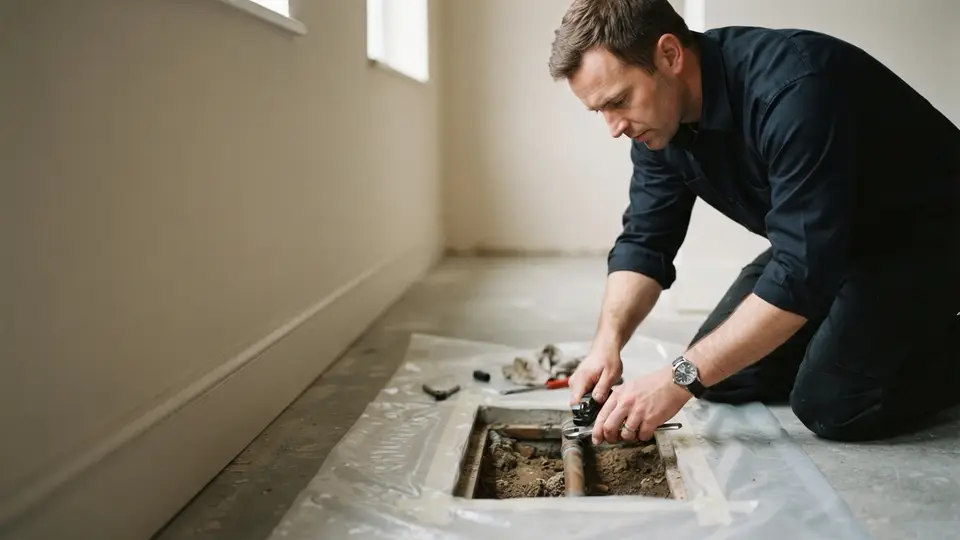
Spot repair
What happens: Open the concrete over the leak, splice the pipe or tubing, patch
When we suggest it: A single leak in sound pipe or tubing
Heated floor gone cold in one room, or water seeping at the garage slab? Slab leak repair in Alaska is a job our plumbers take on with care. Many Alaska homes sit on basements or crawl spaces, but slab-on-grade houses, heated garages and shops are common in newer neighborhoods, and many of them have radiant heat tubing or water lines in or under the concrete. A leak there wastes water or heating fluid and can soften the ground under the slab. Here is how we find and fix those leaks.
The service
A slab leak is a leak in any pipe or tubing inside or under a concrete floor. In Alaska that includes the water service line where it rises through the slab, supply lines run under the floor, and radiant heating loops embedded in the concrete. Radiant loops usually carry a water and glycol mix under pressure from a boiler, so a leak shows up as falling boiler pressure, a cold zone or a damp spot on the slab.
Our repair options
What happens: Open the concrete over the leak, splice the pipe or tubing, patch
When we suggest it: A single leak in sound pipe or tubing
What happens: Abandon the buried line and run new pipe through walls or ceiling
When we suggest it: Water supply lines with repeat or hard-to-reach leaks
What happens: Shut off and cap one radiant loop, heat the area another way
When we suggest it: When a loop cannot be reached or repaired economically
Why Alaska
Much recent building has gone up in the Mat-Su. Median homes in our Census data were built in 2003 in Knik-Fairview, 1997 in Tanaina and 2000 in Meadow Lakes, and 26% of Alaska homes in our data date from 2000 or later. Many of these homes have slabs, heated garages and radiant floors.
If frost reaches under a slab, especially at an unheated garage edge or where insulation is thin, the soil can lift and settle. Pipes and tubing crossing that zone are stressed and can crack at fittings.
Strong shaking can crack slabs and shear pipe where it passes from the slab into a wall or up to a fixture.
Drilling or anchoring into a slab with radiant tubing is a common way loops get punctured, often during shelving or equipment installs in garages and shops.
Warning signs
Our process
For water lines, we confirm the leak at the meter and isolate hot and cold sides. For radiant loops, we pressure test each zone at the manifold to find which loop is leaking. Thermal imaging then traces the warm tubing through the concrete, and acoustic equipment pinpoints the escape point.
We cut a small opening over the marked spot, expose the pipe or tubing, splice in a repair with fittings rated for burial in concrete, pressure test and patch the slab. Floor coverings over the spot are discussed with you first, and in heated garages we time the patch so the concrete can cure before the floor heat goes back on fully.
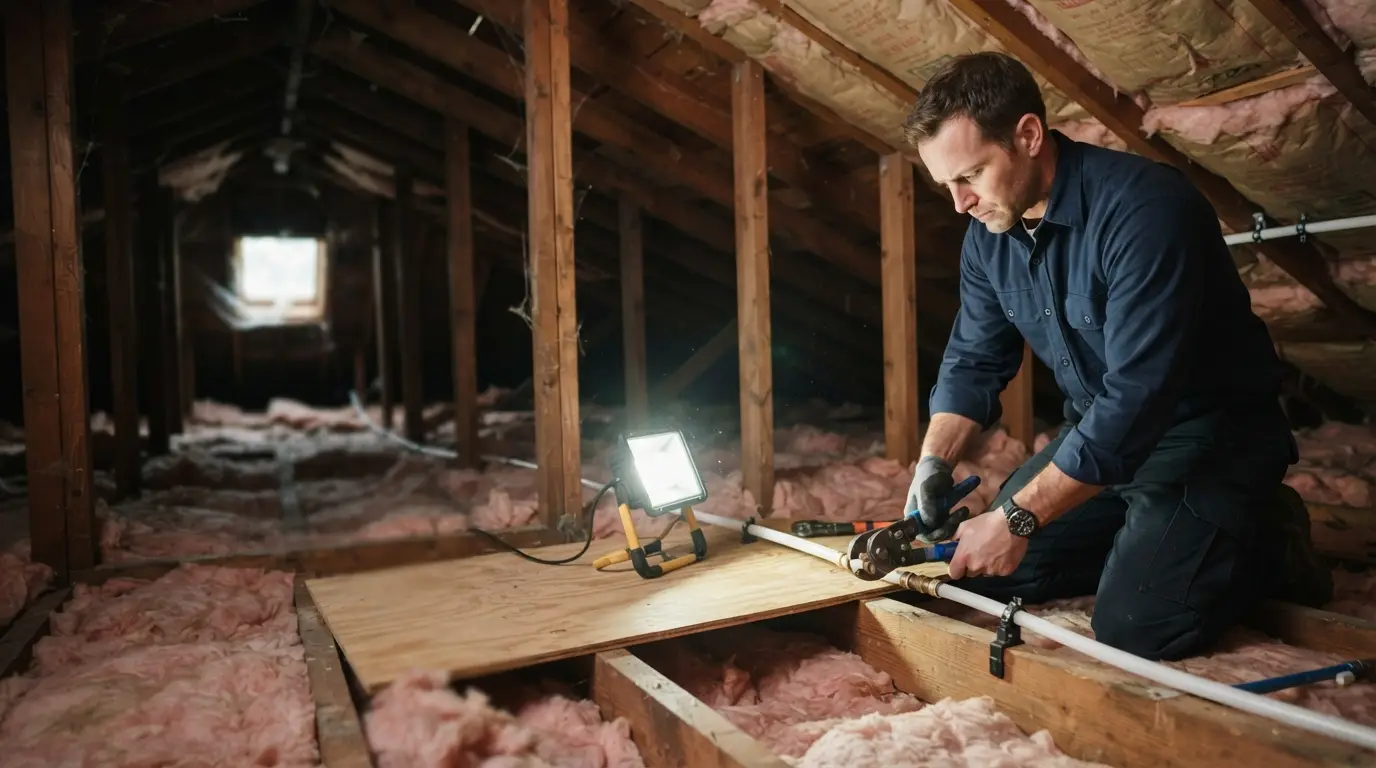
For water supply lines, we can abandon the buried pipe and run new lines through walls or ceilings, insulated against cold. For radiant loops, if a repair is impractical, we can isolate the loop and suggest other ways to heat that area.
Typical cost
Once we find the leak, you get a written price for each option that fits.
Get a written price: (833) 733-2357A water line, a radiant loop and a service line each call for different work.
Leaks under cabinets, equipment or finished floors take more to reach.
Spot repair, reroute and loop isolation are priced differently.
Radiant repairs include refilling and purging the loop with the right glycol mix.
Remote locations and after-hours calls add cost.
Benefits
Water under concrete can soften soil and feed frost heave.
A repaired radiant loop restores even heat to the room.
Leaking water and glycol both cost money to replace.
Constant topping up adds oxygen and can corrode the system.
For a suspected water line leak, check the meter with all water off, then close the main if it keeps moving. For a radiant loop, note the boiler pressure reading and how often you have had to top it up; if you can, close the valves for the zone that stays cold.
Do not keep adding water to a glycol system without checking the mix, since diluted glycol can freeze. Do not drill into the slab to look. Call us.
Most Alaska radiant floors run on a water and glycol mix so the loops will not freeze if heat fails. After any repair, the right concentration matters: too weak and the loop can freeze, too strong and the system heats less efficiently. We test the mix when we refill, purge air from the loop and bring the system back to its correct pressure. Propylene glycol is the type commonly used in homes; old fluid that has broken down should be replaced.
We also check the expansion tank, pressure relief valve and air separator while the system is open, since a waterlogged expansion tank can push pressure high enough to stress fittings throughout the loop.
Spot repairs may not need a permit; reroutes and heating system work often do in cities with building departments. Our plumbers hold Alaska certificates of fitness, we are registered with the state as a contractor, and we handle permits where they apply.
Why choose us
What you can count on every time one of our plumbers comes to your door.
Every job is handled by a plumber who holds the license your state or city requires, backed by liability insurance.
Our plumber explains the problem and the options, and you approve a written price before any work begins.
Burst pipes, sewage backups and failed water heaters get priority scheduling, including nights and weekends.
We pull permits when the job needs one and schedule the inspection, so the work holds up when you sell.
Repairs and installations come with a written warranty on labor, on top of the manufacturer's warranty on parts.
Our pages and plumbers account for your area's water, soil, climate and the age of the homes around you.
Service area
We repair slab and radiant leaks across 355 Alaska communities:
It depends on what leaked, where, and the repair method. After locating the leak, we give you written prices for each option.
A single puncture is often a modest repair plus refilling the loop. Multiple leaks or unreachable tubing cost more.
Policies vary. Many cover access and resulting damage but not the pipe. We document the leak for your claim.
We pressure test each zone at the manifold, then trace the leaking loop with thermal imaging and acoustic gear.
Usually, yes. We open a small area, splice the tubing with rated fittings, test and patch.
We can isolate that loop and recommend another way to heat the area, such as a panel radiator.
Propylene glycol used in homes is low in toxicity, but clean it up and keep pets away. Report any sweet smell to us.
Yes. Water under the slab adds moisture that can freeze and lift the concrete, especially at cold edges.
A single repair is often done in a day. Reroutes and multi-leak loops can take longer.
Only the affected zone, and only while we work on it. We restore heat as soon as the loop is refilled.
Use the original layout drawings or ask us to trace the tubing with a thermal camera before drilling.
Once a year, including pressure, the expansion tank and glycol strength.
If water is flowing up through the floor, yes. Shut off the main and call us. A slow loop leak should still be fixed soon.
They give even heat, warm floors and work well with boilers, which many Alaska homes already use.
Spot repairs may not; reroutes and heating work often do in cities. We check and pull any permit needed.