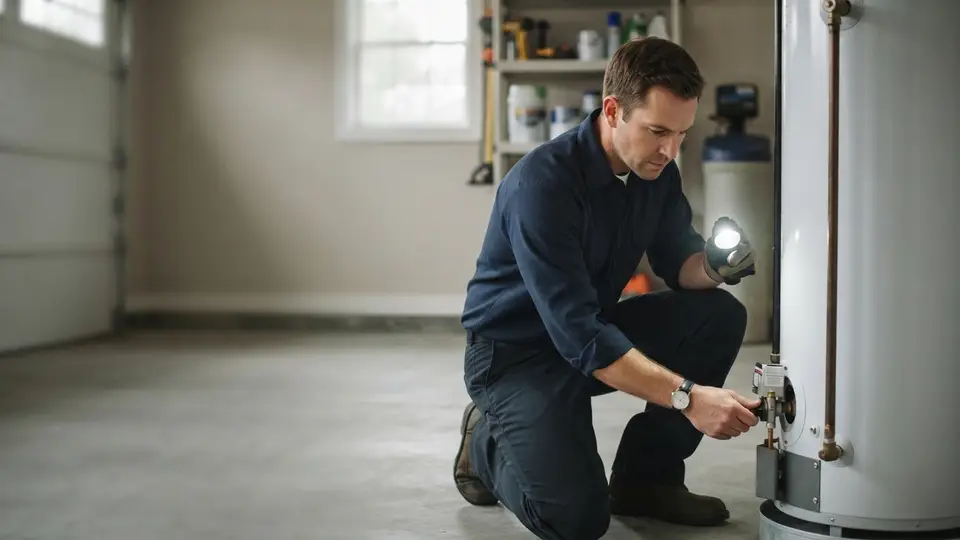
Gas tank
How it works: Burner under a storage tank
Where we see it: Anchorage, Mat-Su and Kenai, where utility gas is available
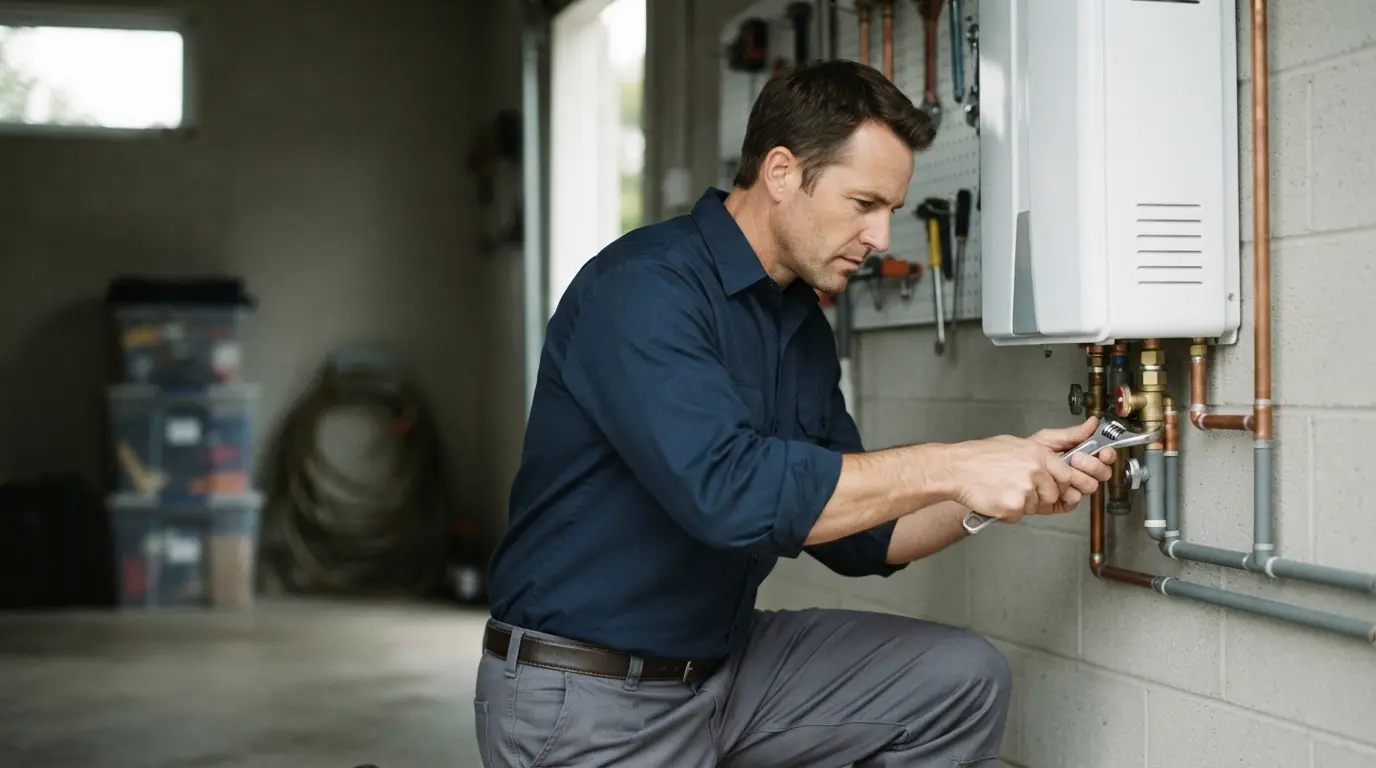
No hot water on a cold morning, or a puddle under the tank? Water heater repair and replacement in Alaska is daily work for our plumbers. Alaska water heaters work hard: incoming water is near freezing much of the year, many are tied into oil or gas boilers, and every one should be strapped against earthquakes. The right setup depends on your fuel, which varies sharply across the state. Here we cover the types we service, what fails, when to replace and how tankless units fit Alaska homes.
The service
We repair and replace standalone gas and electric tank heaters, indirect water heaters heated by a boiler, oil-fired water heaters and tankless units. Every installation includes the relief valve and discharge line, expansion tank, earthquake strapping, shutoffs and the venting or boiler connections the unit needs.
Common setups across Alaska
How it works: Burner under a storage tank
Where we see it: Anchorage, Mat-Su and Kenai, where utility gas is available
How it works: Boiler water heats a coil inside the tank
Where we see it: Homes with oil or gas boilers, common in Fairbanks and Southeast
How it works: Oil burner heats the tank directly
Where we see it: Homes on fuel oil without an indirect setup
How it works: Elements heat the tank
Where we see it: Smaller homes, apartments, some cabins
How it works: Heats water on demand
Where we see it: Gas homes with room for venting and a larger gas line
Why Alaska
Water coming in near freezing means the heater has to raise it much further than in warmer states. Burners and elements run longer, and an undersized heater runs out quickly in winter.
In our Alaska Census data, 79% of Anchorage homes and 82% of Wasilla homes heat with utility gas, while 54% of Fairbanks homes and 48% of Juneau homes use fuel oil. Gas areas mostly have gas tank heaters; oil areas mostly have indirect tanks or oil-fired units, which depend on the boiler being in good shape.
Well water with iron or hardness leaves sediment in tanks and scale in tankless heat exchangers, shortening their lives without regular flushing.
An unstrapped tank can tip in a strong quake, breaking gas and water connections. Proper strapping and flexible connectors are standard on every heater we install.
Warning signs
Our process
We test controls, burners, elements, thermostats, thermocouples, igniters, relief valves and anode rods, and on indirect tanks the zone valve or circulator that feeds the coil. Many repairs are completed on the first visit, along with a flush when sediment is part of the problem.
We size the new heater for your household and winter water temperatures, remove the old unit, install the new one with strapping, flexible connectors, expansion tank and relief line, connect venting or boiler piping, and test it. For indirect tanks, we coordinate with the boiler settings so hot water has priority when needed.
Tankless gas units must handle a large temperature rise in winter, so sizing matters more here than in most states. We check gas line size and venting before quoting, and descale existing units on schedule.
Typical cost
You approve a written price before we start, with the options explained.
Get a written price: (833) 733-2357Indirect, oil-fired and tankless units cost more than a basic electric tank.
Winter demand often calls for a larger heater than the same household needs elsewhere.
Indirect tanks need boiler piping; gas and oil units need proper venting.
Strapping, expansion tanks and relief lines are included with new installs.
Some units and parts must be shipped in, and remote sites add travel.
Benefits
Correct sizing handles cold incoming water.
A clean tank and tuned controls heat faster.
Strapping and flexible connectors keep gas and water lines intact.
Flushing and anode checks add years to the tank.
If the tank is leaking, close the cold water valve above it, then turn off the gas control, the electric breaker or the boiler zone feeding an indirect tank. Move stored items away from the water.
If there is no hot water and no leak, check that the breaker has not tripped, the pilot is lit on a gas unit, or the boiler is running for an indirect tank. Leave burners, relief valves and gas parts to us.
A heater rated for a household in a warm state can fall short here, because it has to lift near-freezing water to shower temperature. We size tanks and tankless units using winter inlet temperatures, the number of bathrooms used at the same time and any large tubs. For indirect tanks, the boiler output matters too. We show you the numbers behind our recommendation.
In many oil-heated homes the boiler does double duty, heating the house and the water. When hot water fails in those homes, the cause is often the boiler side: a circulator pump, a zone valve, a control setting or a boiler that is short of capacity on the coldest days. Our plumbers check both sides so you are not paying for a new tank when the problem sits in the boiler room. If the boiler itself is near the end of its life, we tell you, and we explain the choice between a new boiler with an indirect tank and a separate standalone water heater.
Water heater replacement usually needs a permit in Alaska cities with building departments, especially for gas and oil units. Our plumbers hold Alaska certificates of fitness, we are registered with the state as a contractor, and we pull the permit and schedule the inspection.
Why choose us
What you can count on every time one of our plumbers comes to your door.
Every job is handled by a plumber who holds the license your state or city requires, backed by liability insurance.
Our plumber explains the problem and the options, and you approve a written price before any work begins.
Burst pipes, sewage backups and failed water heaters get priority scheduling, including nights and weekends.
We pull permits when the job needs one and schedule the inspection, so the work holds up when you sell.
Repairs and installations come with a written warranty on labor, on top of the manufacturer's warranty on parts.
Our pages and plumbers account for your area's water, soil, climate and the age of the homes around you.
Related services
Service area
We repair and install water heaters in 355 Alaska communities:
Type, fuel, size, venting or boiler work and shipping set the price. You get it in writing before we begin.
Repair a younger unit with a failed part. Replace a leaking tank or one past about 10 years.
If you already have a good boiler, often yes. It uses the boiler for hot water and has no burner of its own to maintain.
Yes. Every heater we install is strapped and connected with flexible lines.
Yes. We repair and replace oil-fired and indirect tanks used in oil-heated homes.
Often, in gas homes. We check gas line size, venting and winter demand before quoting.
It can mean pressure or temperature is too high or the valve is worn. Shut the heater off and call us.
Leave, then call the gas utility or 911 from outside. Do not operate switches nearby.
A straight swap takes a few hours. Indirect tanks and tankless conversions can take most of a day.
Tanks often last around 8 to 12 years, less on hard or iron-rich water without regular flushing.
Once a year, more often on well water with iron or hardness.
Colder incoming water means the heater has to work harder. An undersized or sediment-filled tank shows it first.
Close the cold supply, shut off the fuel or power and call us. Failed heaters get priority scheduling.
Fuel varies: gas dominates in Southcentral, while oil and boilers dominate in Fairbanks and Southeast.
Usually, in cities with building departments. We pull it and arrange the inspection.