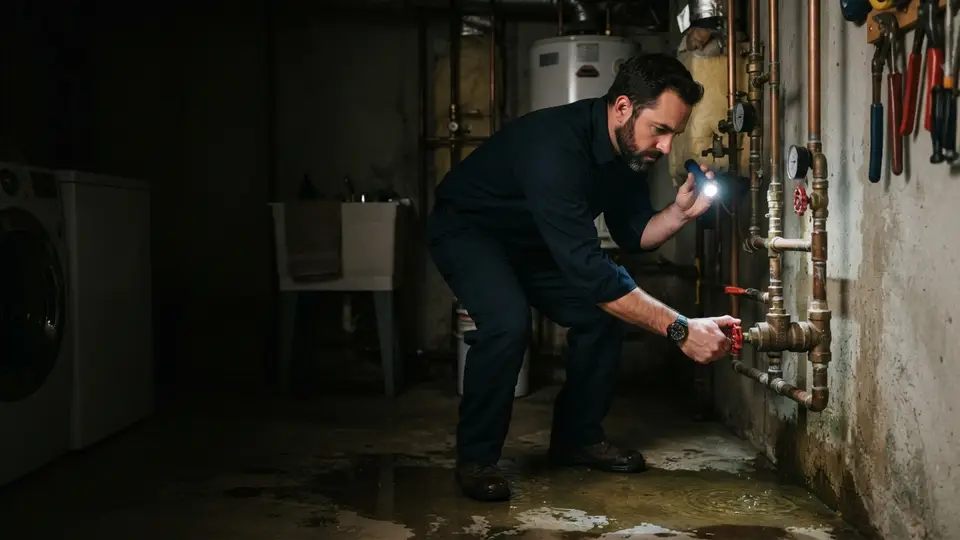
Burst pipe
Urgent?: Yes
First step: Close the main valve
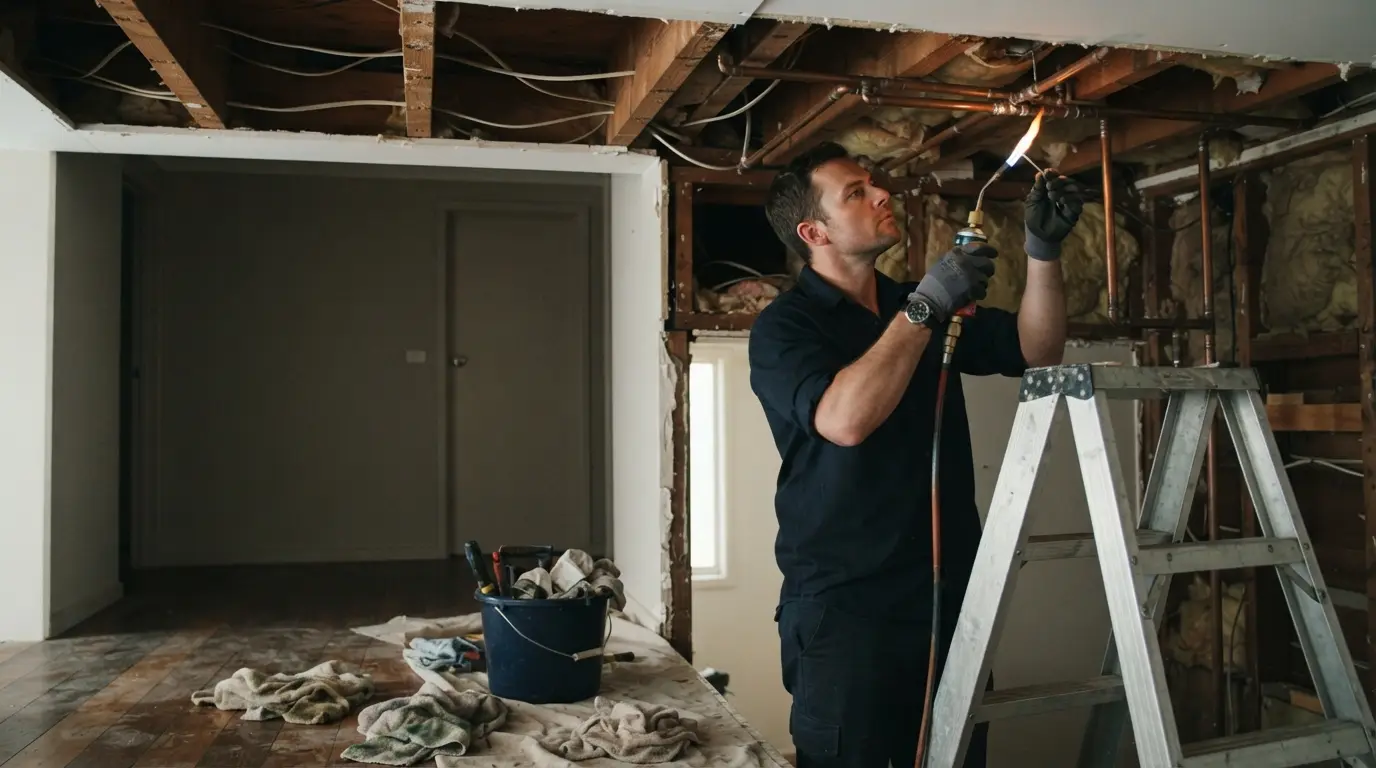
No water at 30 below, or a burst pipe? Emergency plumbing in Alaska gets priority scheduling with our plumbers, nights and weekends included. In Alaska, a plumbing emergency in winter can turn into a heating emergency, and the reverse. Frozen service lines, burst pipes after a heat failure, frozen sewer lines and failed water heaters top the list, with flooding at breakup and earthquake damage in between. Here is what to do first, how we handle each emergency and how to prepare.
The service
An emergency is any problem that is causing damage now, threatens safety or health, or leaves the house without water, a working toilet or heat in cold weather. When you call, we ask about the temperature, the heat and what you see, tell you what to do while you wait and schedule by urgency.
What to do first
Urgent?: Yes
First step: Close the main valve
Urgent?: Yes
First step: Check other taps; a frozen line is likely
Urgent?: Yes
First step: Call us; drain lines if told to
Urgent?: Yes
First step: Stop all water use
Urgent?: Yes, leave first
First step: Get out; call the utility or 911
Urgent?: Yes
First step: Cut power to the area
Why Alaska
When heat fails or cold outlasts insulation, pipes freeze; when they thaw, splits start leaking. In the Interior, where Fairbanks has 13,793 homes in our Census data, long stretches far below zero make this the top emergency.
Water lines freeze at the entry into the house; sewer lines freeze where they sag or have thin cover. Either leaves a home without working plumbing.
Many Alaska homes heat with boilers, and a boiler failure in winter puts every pipe in the house at risk. We handle the plumbing side, including loop leaks, circulators and draining lines to prevent freeze damage.
Southcentral earthquakes can break water heater connections, gas lines and pipes at the foundation. In Anchorage, with 120,348 homes, a strong quake brings a wave of these calls.
Warning signs
Before we arrive
It is usually where the service line enters, in a utility room or basement.
Switch off breakers you can reach without standing in water.
If we tell you to, open faucets and drain the lines; keep cabinet doors open and use safe space heaters.
No flushing, showers or laundry.
Call the utility or 911 from outside.
Our process
We confirm the water is off, find every split, since freezes often cause more than one, replace damaged pipe and test before turning water back on. Then we fix the reason it froze.
We clear or thaw the line so the house can use its drains, then inspect with a camera and plan any repair.
We find where the line froze or broke, from the meter or well to the entry, thaw it safely, repair any damage and protect it from refreezing. For wells, we check the pressure tank and switch.
After the utility makes the house safe, we find and repair the leak, pressure test and relight appliances.
Typical cost
Even at night, you approve a written price before the repair. If something must be done right away to stop damage, we tell you first.
Get a written price: (833) 733-2357Nights, weekends and holidays cost more than weekday visits.
One fitting is quick; a buried frozen line takes longer.
Crawl spaces, insulated walls and frozen ground add time.
Remote properties add drive time, especially in winter conditions.
Benefits
Water inside insulated walls dries slowly; stopping it fast limits the harm.
We fix the cause, not only the split.
Gas, sewage and flooded electrical areas are real hazards.
We document the cause and work for your claim.
A house without heat in deep cold has hours, not days, before pipes freeze. If your heat fails and cannot be restored quickly, call us. We may advise draining the plumbing: shutting off the main, opening faucets at the top and bottom of the house, flushing toilets, draining the water heater and, in some cases, adding plumbing antifreeze to traps. A drained system cannot burst. When heat returns, we refill, check every fixture and look for any damage.
If you have a boiler with glycol, the heating loop is protected to a point, but the domestic water lines are not. They need the same care as in any other house.
After strong shaking, check for the smell of gas first; if you smell it, leave and call from outside. Then look at the water heater, which may have shifted against its straps, and under sinks and around the main for new leaks. Watch the water meter with everything off for signs of a hidden break. If anything looks wrong, close the main and call us. We test gas piping for leaks and check water and sewer connections at the foundation.
For homes far out on the road system, travel in winter conditions takes longer, so the first steps you take matter more. Keep a few basics on hand: the location of the main shutoff, a way to drain the lines, safe space heaters and pipe insulation. When you call, we talk you through protecting the house until our plumber arrives.
Emergency repairs can often go first, with any required permit filed promptly afterward, depending on local rules. Our plumbers hold Alaska certificates of fitness, we are a state-registered contractor, and we handle permits when the repair calls for one.
Why choose us
What you can count on every time one of our plumbers comes to your door.
Every job is handled by a plumber who holds the license your state or city requires, backed by liability insurance.
Our plumber explains the problem and the options, and you approve a written price before any work begins.
Burst pipes, sewage backups and failed water heaters get priority scheduling, including nights and weekends.
We pull permits when the job needs one and schedule the inspection, so the work holds up when you sell.
Repairs and installations come with a written warranty on labor, on top of the manufacturer's warranty on parts.
Our pages and plumbers account for your area's water, soil, climate and the age of the homes around you.
Service area
We take urgent calls across 355 Alaska communities:
It depends on when you call, what failed, access and travel. You approve a written price before the repair, day or night.
Night and weekend work carries a higher labor rate. We tell you the rate when you call.
Sometimes a quick fix stops damage now and a full repair follows in better weather. We price both first.
We ask about the heat, temperature and what you see, tell you what to shut off and schedule with priority.
Yes. Frozen and burst pipes, backups and failed water heaters get priority scheduling, including nights and weekends.
We document the cause and damage with photos and a written description of our work.
Leave, avoid switches and flames, and call the gas utility or 911 from outside.
Yes, if they are rated for indoor use, kept clear of anything flammable and never left near water.
Indoor lines often thaw in an hour or two. Buried lines can take much longer.
Immediately. In deep cold, pipes can freeze within hours. Call us and follow our draining instructions.
Keep the heat on, maintain heat tape and skirting, open cabinets on cold walls and use a temperature alarm.
Usually where the service line enters, often in a utility room, basement or near the water heater.
Yes, if water is pouring out. Close the cold supply, shut off fuel or power and call us.
Gas smell first, then the water heater, sinks and the meter for hidden leaks. Close the main if anything is wrong.
Some do. Many cities allow the repair first and the permit after, and we handle it.