Orange or brown stains
Likely cause: Iron
Typical treatment: Iron filter, sometimes with a softener
Orange stains in the tub or a metallic taste from the well? Water softeners and filtration in Alaska from our plumbers solve the problem your water test shows. Many Alaska homes drink from private wells, and well water here can carry iron, manganese, hardness, sediment and in some areas arsenic. City water is treated but may taste of chlorine. This page explains what is in Alaska water, which systems fix which problem, how we install and maintain them, and how cold affects equipment.
The service
A softener removes the minerals that cause scale. Filters target specific problems: sediment, chlorine taste, iron and manganese, or odor. Reverse osmosis at the kitchen sink removes most dissolved substances for drinking water, including many that whole-house systems miss. Most Alaska well homes need some combination, chosen by test results rather than guesswork.
Problem and solution
Likely cause: Iron
Typical treatment: Iron filter, sometimes with a softener
Likely cause: Manganese
Typical treatment: Oxidizing filter
Likely cause: Hardness
Typical treatment: Water softener
Likely cause: Sediment
Typical treatment: Sediment filter
Likely cause: Disinfectant
Typical treatment: Carbon filter
Likely cause: Naturally occurring arsenic
Typical treatment: Reverse osmosis or specialized treatment
Why Alaska
Groundwater in many parts of Alaska carries dissolved iron and manganese. The Fairbanks North Star Borough has 94,524 residents in our Census data and many of them are on wells, where orange-stained fixtures and laundry are a familiar complaint.
Some wells, including many in the Mat-Su Borough (107,774 residents in our data), produce moderately hard water that scales water heaters and fixtures.
Naturally occurring arsenic has been found in groundwater in parts of Alaska. It cannot be seen, smelled or tasted, so a certified lab test is the only way to know. If a test finds it, drinking water treatment matters.
Some supplies in Southeast are very soft and slightly acidic, which can be corrosive to copper. Neutralizing filters raise the pH.
Warning signs
Our process
We test hardness, iron, manganese and pH on site and recommend a certified lab test for wells, which covers bacteria, arsenic, nitrate and other contaminants a field test cannot measure.
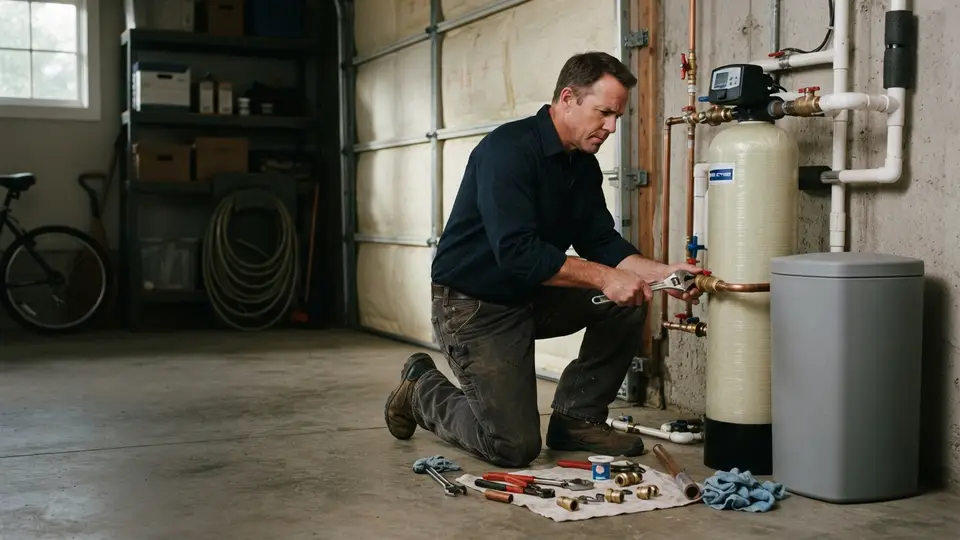
We size the softener to your hardness, iron and water use, install it with a bypass, connect a drain with an air gap and set regeneration by actual use.
We install sediment, iron and manganese, pH-neutralizing and carbon filters in the right order, with bypass valves for easy service.
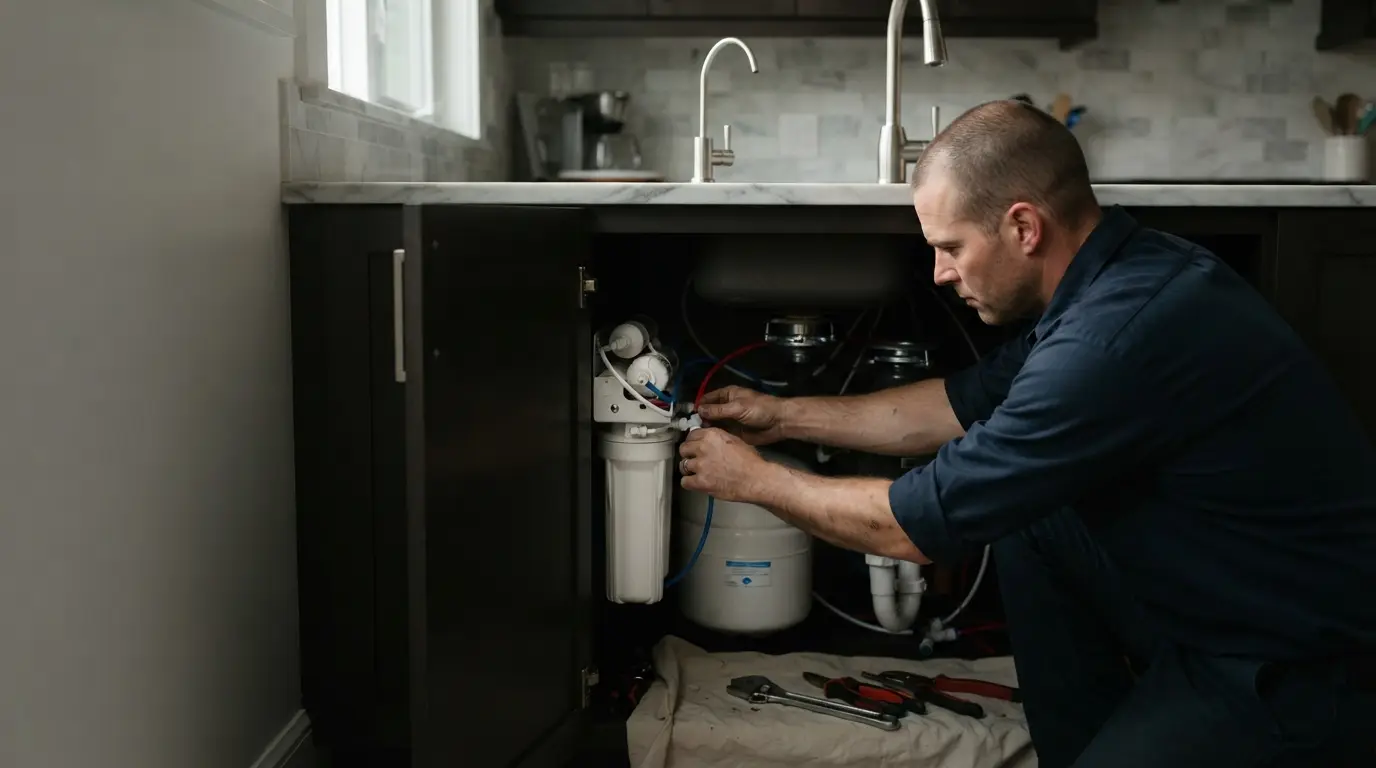
Under-sink reverse osmosis gives you treated drinking and cooking water, with its own faucet and an optional line to the refrigerator.
Typical cost
After testing, you get a written price for the system that addresses your results.
Get a written price: (833) 733-2357Iron, manganese and arsenic treatment costs more than a simple filter.
More people need more capacity.
Equipment needs a heated spot and a drain.
Multiple stages add equipment.
Salt, media and cartridges are ongoing; some ship from outside.
Benefits
Iron and manganese removal ends staining.
Reverse osmosis addresses contaminants such as arsenic where present.
Less scale and sediment in water heaters and boilers.
Neutralizing acidic water slows copper corrosion.
If equipment is leaking, turn the bypass valve and unplug the control head. If the brine tank overflows, unplug the unit.
Gather any past well test results. If you have never tested the well for arsenic and bacteria, use bottled water for infants until results are back.
Treatment equipment holds water in tanks, valves and drain lines, so it must stay above freezing. We install it inside the heated envelope, typically in a utility room or heated basement, and route drain lines where they cannot freeze. Backwash water from iron filters can be large in volume; we size the drain and, on septic, plan where that water goes so it does not overload the system.
If your well house is separate from the home, we look at whether it stays warm enough for equipment or whether treatment belongs in the house instead.
Treatment that is not matched to your water wastes money and can miss what matters. Iron can hide manganese, hardness changes how an iron filter performs, and contaminants like arsenic and bacteria need a certified lab to detect. The Alaska Department of Environmental Conservation lists certified labs. We review the report with you and recommend only what your results call for.
Untreated well water is hard on the equipment that makes hot water. Iron settles as sludge in tank heaters, hardness builds scale on elements, heat exchangers and indirect tank coils, and manganese coats everything with black film. In homes where the boiler also heats the water, scale on the indirect coil slows hot water recovery in exactly the season you need it most. Treating the water ahead of the heater protects all of it.
When we install treatment, we also look at the water heater and, if needed, flush it so the new system starts with clean equipment.
For boilers, the makeup water that tops up the heating loop should be treated too, or the loop will slowly collect the same minerals. We can add a small filter on the fill line or recommend a separate glycol feeder that does not draw from the house supply at all.
Homes on city water get treated, tested water and usually need less equipment than well homes. The common requests are a carbon filter for chlorine taste and odor, a reverse osmosis unit for drinking water, or a softener where the supply is moderately hard. We start with the published water quality report and a quick test at your tap, then recommend only what helps. If your utility changes its treatment or source, we can retest and adjust the setup.
Treatment on existing piping often needs no permit, while new drains or piping changes may in cities with building departments. Our plumbers hold Alaska certificates of fitness, and we are a state-registered contractor.
Why choose us
What you can count on every time one of our plumbers comes to your door.
Every job is handled by a plumber who holds the license your state or city requires, backed by liability insurance.
Our plumber explains the problem and the options, and you approve a written price before any work begins.
Burst pipes, sewage backups and failed water heaters get priority scheduling, including nights and weekends.
We pull permits when the job needs one and schedule the inspection, so the work holds up when you sell.
Repairs and installations come with a written warranty on labor, on top of the manufacturer's warranty on parts.
Our pages and plumbers account for your area's water, soil, climate and the age of the homes around you.
Service area
Water quality varies by well and utility. Choose your community:
Hardness, iron, household size and installation space set the price. We test first, then quote in writing.
More than a basic filter, since iron systems oxidize and backwash. The price follows your test results.
If your well shows arsenic or other dissolved contaminants, it is one of the most practical ways to treat drinking water.
Yes. We test on site and recommend a certified lab test for wells.
Small amounts, yes. Higher iron or manganese needs its own filter ahead of the softener.
Inside the heated part of the house, with a drain that cannot freeze.
Long-term exposure is a health risk. A lab test tells you whether it is present and at what level.
Iron is mainly a staining and taste problem, but wells should still be lab tested yearly.
A single system takes a few hours. Multi-stage setups can take most of a day.
Softeners often last 10 to 15 years, with media and cartridges replaced along the way.
Sediment and carbon cartridges every few months to a year, RO membranes every few years.
At least yearly, and after any change in taste, color or smell.
Put it in bypass, unplug it and call us.
Dissolved iron and manganese in groundwater oxidize on contact with air and leave orange or black stains.
Yes, with planning. We size backwash and choose efficient settings to protect the septic system.