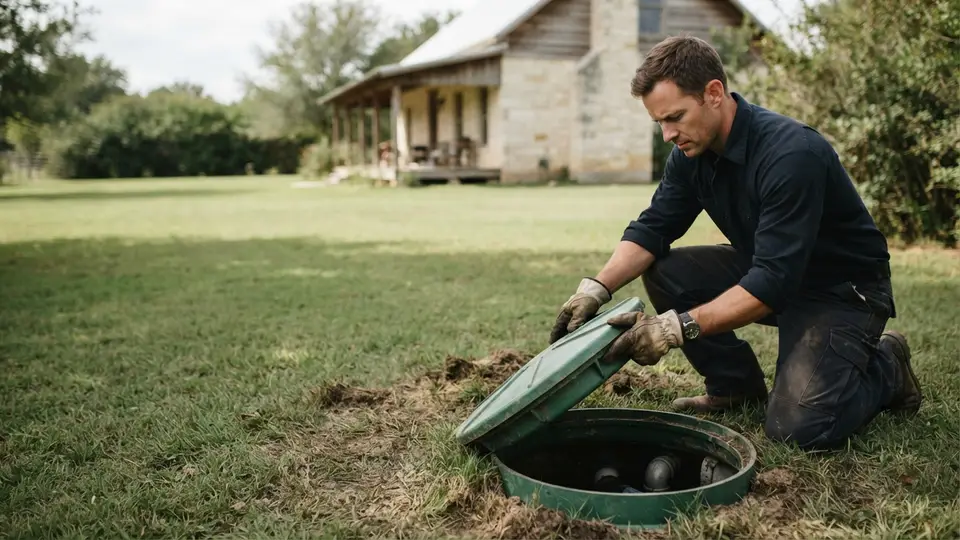
Pumping
What it involves: Remove sludge and scum, check baffles
Best timing in Alaska: Late summer or fall, before deep cold
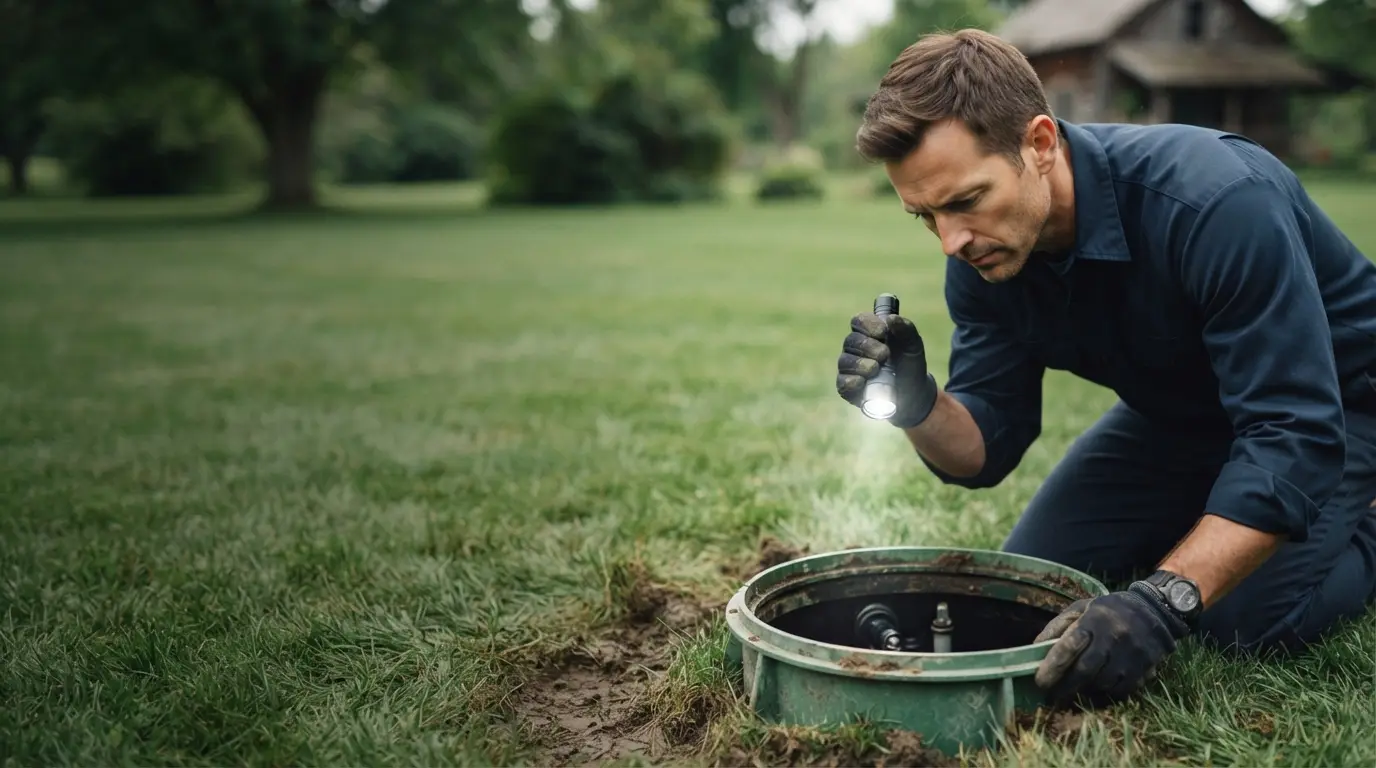
Toilets sluggish and the ground frozen solid? Septic tank services in Alaska from our plumbers cover pumping, inspections and repairs year-round. Off the city sewer, which is most of Alaska outside the larger towns, homes rely on septic systems that have to keep working through months of frozen ground. That changes how tanks are installed, when they should be pumped and what goes wrong. Here is how Alaska systems work, the problems we see, how we service them and what the state requires.
The service
Household wastewater flows into a buried tank where solids settle and scum floats. Bacteria break some of it down, and the clarified effluent flows to a drain field or seepage bed, where soil absorbs and treats it. In Alaska, tanks are set deep and fields are designed and covered so the water inside keeps moving and stays above freezing. The warmth of the wastewater itself, plus snow cover, is part of what keeps a system running in winter.
Our septic services
What it involves: Remove sludge and scum, check baffles
Best timing in Alaska: Late summer or fall, before deep cold
What it involves: Tank, components and field condition
Best timing in Alaska: Before a sale, or any time problems start
What it involves: Find and fix failed lines or beds
Best timing in Alaska: Summer, when ground is thawed
What it involves: Clear ice from the line or tank inlet
Best timing in Alaska: Winter, as needed
Why Alaska
Our Census data counts 206 unincorporated communities in Alaska with 222,517 residents, and the Mat-Su Borough alone has 107,774 people in our data, much of it on large lots with wells and septic. That is where most of our septic work happens.
A line from the house to the tank freezes when cover is thin, snow is cleared off it or water use drops. Homes left empty in winter and cabins used on weekends are most at risk.
Silty soils, high groundwater and shallow bedrock or permafrost limit how well a field absorbs. Spring breakup, when snowmelt saturates the ground, is when weak fields show it.
A tank pumped in mid-winter loses the warm water that helps keep it from freezing, and refilling slowly in deep cold can lead to ice. Fall pumping is usually better.
As everywhere, the most common cause of a failed field is a tank that went too long without pumping and sent solids into the drain lines.
Warning signs
Our process
We locate and open the tank, measure sludge and scum, pump it, inspect the baffles and filter, and close it back up with the insulation and cover in place. We can add insulated risers so future pumping is easier and less heat escapes.
We check the tank structure, liquid levels, baffles, pumps and alarms where present, and the condition of the field. You get a written report suitable for a sale, a lender or your own records.
We find why the field is failing: crushed or frozen lines, a clogged distribution box or soil that can no longer absorb. Repairs and replacements need an approved design and permit, and field work is best done in the thawed season.
We thaw frozen house-to-tank lines with steam or hot-water jetting and check for the cause, such as a sag or shallow section, so it can be fixed in summer.
Typical cost
You get a written price before any work, with seasonal options explained.
Get a written price: (833) 733-2357Deep, buried lids under snow take longer to reach.
Winter work in frozen ground costs more than summer work.
Properties far off the main roads may carry a travel charge.
A line repair costs far less than a new field with design and permit.
Benefits
Regular pumping keeps solids out of the most expensive part.
Proper cover, insulation and steady use keep the system running.
A working system protects the wells most rural Alaska homes drink from.
A current inspection answers buyer and lender questions.
Cut water use right away and avoid doing laundry until we arrive. If a line may be frozen, do not keep flushing; the water will back up into the house. Never open a tank lid or lean over an open tank, since the gases can be deadly.
Do not clear snow off the tank or field to look for the problem; the snow is insulation. Tell us where the tank is, if you know, and when it was last pumped.
A cabin used on weekends or only in summer needs a plan for winter. With no warm water flowing, lines and tanks freeze. Some owners winterize fully, draining the plumbing and adding RV antifreeze to traps. Others keep heat on and run water on each visit. We can set up either approach and check the system each fall before freeze-up. Before the first visit of spring, let the ground thaw if you can, then run water slowly at first and watch the lowest drain, since a line that froze over winter may still hold ice.
Onsite wastewater systems in Alaska are regulated by the Alaska Department of Environmental Conservation, and the Municipality of Anchorage runs its own program within its boundaries. New systems and major repairs need an approved design, installation by qualified installers and documentation. Many lenders require a septic and well inspection at sale. Our plumbers hold Alaska certificates of fitness, and we coordinate permits and inspections. Confirm current rules with DEC or your municipality before planning a new system.
Why choose us
What you can count on every time one of our plumbers comes to your door.
Every job is handled by a plumber who holds the license your state or city requires, backed by liability insurance.
Our plumber explains the problem and the options, and you approve a written price before any work begins.
Burst pipes, sewage backups and failed water heaters get priority scheduling, including nights and weekends.
We pull permits when the job needs one and schedule the inspection, so the work holds up when you sell.
Repairs and installations come with a written warranty on labor, on top of the manufacturer's warranty on parts.
Our pages and plumbers account for your area's water, soil, climate and the age of the homes around you.
Service area
Larger unincorporated communities we serve, where septic is common:
Tank size, how deep and snow-covered the lids are, the season and travel set the price. You get it in writing before we start.
Usually, since frozen ground and snow add time. We suggest fall pumping and summer repairs where they can wait.
It depends on soil, design and size, and it needs an approved design and permit. We quote it after evaluating the site.
Tank condition and levels, baffles, any pumps and alarms, and the field. You get a written report for a sale or your records.
Yes. Insulated risers make access easier and help keep heat in the tank through winter.
Yes, with steam or hot-water jetting, and we look for the sag or shallow spot that caused it.
No. The gases can overcome a person quickly. Leave the lids closed and let our crew handle it.
Yes. A failing field can contaminate nearby wells. Have your well tested if the system is failing.
Usually an hour or two, longer when lids are buried under snow or deep in the ground.
Summer, when the ground is thawed. Design and permit approval should start in spring.
Most homes every few years, depending on tank size and household. Fall is usually the best time.
No. Snow insulates the ground and helps keep the system from freezing. Keep it in place.
Stop using water and call us. A frozen line or full tank needs quick attention, and backups get priority.
Shallow cover, packed or cleared snow, low water use and long cold snaps let ice build in the line.
The Alaska Department of Environmental Conservation, with Anchorage running its own program. We help with permits.