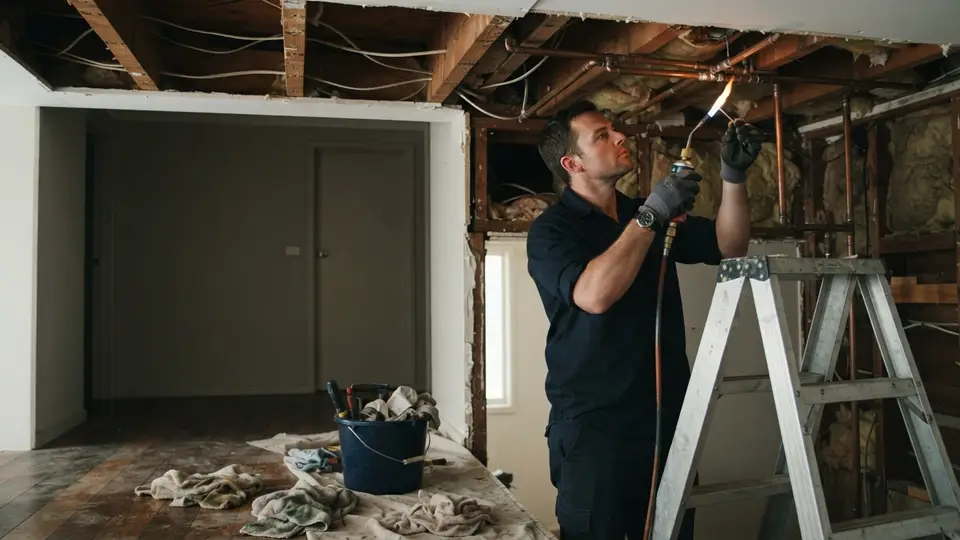
Burst or spraying pipe
Emergency?: Yes
First step: Shut off the main valve
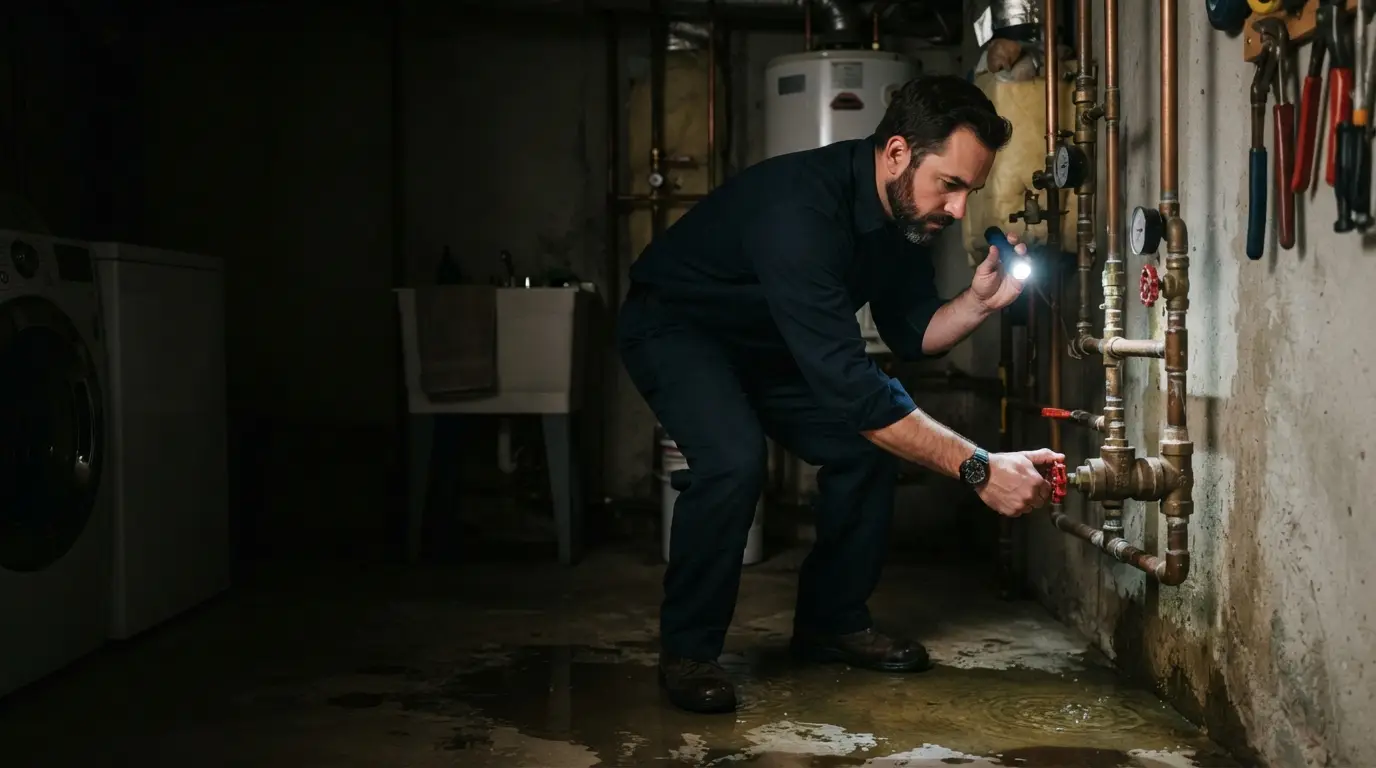
Water pouring from a ceiling or sewage in the shower? Emergency plumbing in Arizona gets priority scheduling with our plumbers, nights and weekends included. Plumbing emergencies here follow the seasons: monsoon backups in summer, frozen and split pipes in the high country in winter, failed water heaters and slab leaks any time. This page explains what counts as an emergency, what to do in the first few minutes, how we handle the call and how to lower the odds of the next one.
The service
An emergency is any problem that is causing damage right now, threatens health or safety, or leaves the home without a working water or sewer system. A dripping faucet can wait for a scheduled visit; water running into a wall cannot. When you call, we ask a few questions to judge how urgent it is and what you should shut off while you wait.
Emergency or can it wait?
Emergency?: Yes
First step: Shut off the main valve
Emergency?: Yes
First step: Stop all water use
Emergency?: Yes, leave first
First step: Get out, call the utility or 911
Emergency?: Usually
First step: Check with your water provider
Emergency?: Yes
First step: Close its cold supply valve
Emergency?: No
First step: Book a regular visit
Why Arizona
Pinhole leaks that give way, failed attic fittings baked by summer heat, and pipes that split in a freeze all end up as burst pipe calls. In the high country, freezes are a winter certainty; in the desert, a few cold nights each year still catch exposed lines and backflow devices.
Monsoon storms push water into cracked sewer laterals, and root-choked lines in older neighborhoods give way. 30% of homes in our Arizona Census data were built before 1980, and many of those still have clay or cast iron sewer lines.
A broken yard line, a failed pressure-reducing valve or a well pump that quits leaves a house dry. Many rural Arizona homes rely on private wells, and a well outage is a true emergency in summer heat.
34% of homes in our Arizona data heat with natural gas, and many more have a gas water heater, range or pool heater. Any gas smell means leave the house first and call the utility, then us for the repair.
Warning signs
Before we arrive
Use the main valve where the line enters the house or at the meter box. Learn where it is before you need it.
Switch off breakers for rooms with standing water, if you can reach the panel without stepping in water.
No flushing, showers, laundry or dishwashing.
Call the gas utility or 911 from outside.
Move valuables, then photograph the damage for insurance.
Our process
We confirm the water is off, find the break, replace the damaged section and pressure test it before restoring water. We point out wet materials that should be dried or removed quickly to prevent mold.
We clear the blockage first so the house can use its drains again, then run a camera through the line to find out why it backed up, whether roots, a belly or a broken pipe.
We check the meter, main valve, pressure-reducing valve and yard line to find the fault, repair it and restore service. For well homes, we check the pressure tank and switch and tell you if the pump needs a well specialist.
Once the gas utility has made the area safe, we locate the leak, repair the piping or connector, pressure test the system and relight appliances.
Typical cost
Even in an emergency, our plumber explains the problem and you approve a written price before the repair begins. If something must be done right away to stop damage, we tell you what and why first.
Get a written price: (833) 733-2357Night, weekend and holiday work costs more than a scheduled weekday visit.
A replaced fitting costs less than a sewer line repair or water heater replacement.
Leaks inside walls, ceilings or slabs take more work to reach.
Some emergencies need a temporary fix now and a permanent repair later.
Benefits
Every hour of a burst pipe adds to drying and repair costs.
Sewage and gas problems are health and safety hazards.
We fix the cause, not only the symptom, so the problem does not return next week.
We document what failed and what we did.
Our urgent calls in Arizona rise and fall with the weather. From July through September, monsoon storms bring sewer backups, flooded yard drains and power outages that stop sump and well pumps. In winter, the high country sees frozen and split pipes, and the desert gets a handful of nights cold enough to crack exposed lines and backflow assemblies. Summer heat adds failed attic fittings and water heaters that give out after years of sediment.
Knowing that pattern, a short checkup before each season, such as a sewer camera look before summer or pipe insulation before winter, heads off many of the calls we get.
Emergency repairs often go ahead first, with any required permit filed promptly afterward, depending on local rules. Our Arizona work is done under a plumbing contractor license from the Arizona Registrar of Contractors, and we handle the permit and inspection when the repair calls for one.
Why choose us
What you can count on every time one of our plumbers comes to your door.
Every job is handled by a plumber who holds the license your state or city requires, backed by liability insurance.
Our plumber explains the problem and the options, and you approve a written price before any work begins.
Burst pipes, sewage backups and failed water heaters get priority scheduling, including nights and weekends.
We pull permits when the job needs one and schedule the inspection, so the work holds up when you sell.
Repairs and installations come with a written warranty on labor, on top of the manufacturer's warranty on parts.
Our pages and plumbers account for your area's water, soil, climate and the age of the homes around you.
Service area
Our plumbers handle urgent calls across 467 Arizona communities. Find yours:
It depends on the time of the call, the repair and access. You approve a written price before the repair begins, even at night.
Yes. After-hours work carries a higher rate than a scheduled weekday visit, and we tell you that up front.
Sometimes a temporary fix is needed to stop damage, with the full repair later. We explain both prices before starting.
We ask what is happening, tell you what to shut off and schedule a licensed plumber with priority for emergencies.
Yes. Burst pipes, sewage backups and failed water heaters get priority scheduling, including nights and weekends.
We document the cause, the damage we saw and the work we did, so you have what your insurer needs for a claim.
Leave the house without using switches or phones, call the gas utility or 911 from outside, then call us for the repair.
Yes. Sewage carries bacteria. Keep people and pets away, avoid touching it without gloves and stop using water.
Many burst pipe and fitting repairs are done in one visit. Sewer and slab repairs may need a follow-up.
Immediately. Shut off the main valve right away to limit damage, then call us.
Insulate exposed pipes, cover hose bibs and backflow devices, and let a faucet drip on very cold nights.
Look where the line comes into the house, often on the front or side wall, or in the meter box near the street.
Not always, but a leaking tank is. Turn off the cold supply and the gas or power to the heater and call us.
Monsoon storms push water and sand into cracked sewer laterals and yard drains, overloading lines that were partly blocked.
Some do. Local rules often let the repair go first with the permit filed promptly. We handle that paperwork.