Supply line pinhole
Where it usually is: Copper lines in walls, attics or under the slab
First clue: Meter moves with all taps off

High water bill or a stain you cannot explain? Leak detection and repair in Arizona from our plumbers finds the leak first. Then we fix it with as little damage as possible. Water is expensive and scarce here, and Arizona homes hide leaks well: in slabs, in block walls, in attics that pass 130 degrees in summer and in yard lines under gravel. We cover the leaks we see most often, the tools we use to find them, burst and frozen pipes, and how to protect your home.
The service
Leak work has two halves. Detection is finding exactly where the water is escaping, without opening walls and floors at random. Repair is fixing that spot properly and, when the pipe is worn out, telling you so. We handle hidden supply leaks, drain leaks, yard line leaks, burst pipes and pipes that split after a freeze.
Common Arizona leaks and where they hide
Where it usually is: Copper lines in walls, attics or under the slab
First clue: Meter moves with all taps off
Where it usually is: Pipe from meter to house, under gravel or turf
First clue: Soft or green patch, low pressure
Where it usually is: Drip lines and valves
First clue: Wet spots, high summer bills
Where it usually is: Under sinks, tubs and showers
First clue: Stains, odor, damp cabinet floor
Where it usually is: Tank, valves, connectors
First clue: Water on the garage floor
Why Arizona
Mineral-heavy water and changes in water chemistry can wear pinholes in copper from the inside over the years. Once one pinhole appears in a run of pipe, others often follow.
Many Arizona homes run water lines through the attic, where summer temperatures soften plastic fittings and stress older connections. A failed fitting in the attic can soak insulation and ceilings before anyone notices.
Some Arizona water systems deliver high pressure, especially on hillside lots and at the bottom of a system. Pressure above what fixtures are built for strains every joint, hose and valve in the house. A pressure-reducing valve that has failed is a common find on our leak calls.
Flagstaff sits at about 7,000 feet, and its homes face hard freezes every winter; 28% of its homes were built before 1980, when pipe insulation was often thin. Even in the low desert, a few nights below freezing each winter can split exposed pipes, backflow assemblies and irrigation lines.
30% of homes in our Arizona Census data were built before 1980. In Mesa the figure is 29%. Original galvanized and copper lines in those homes are often near the end of their life, and one leak is frequently a warning about the rest.
Warning signs
Our process
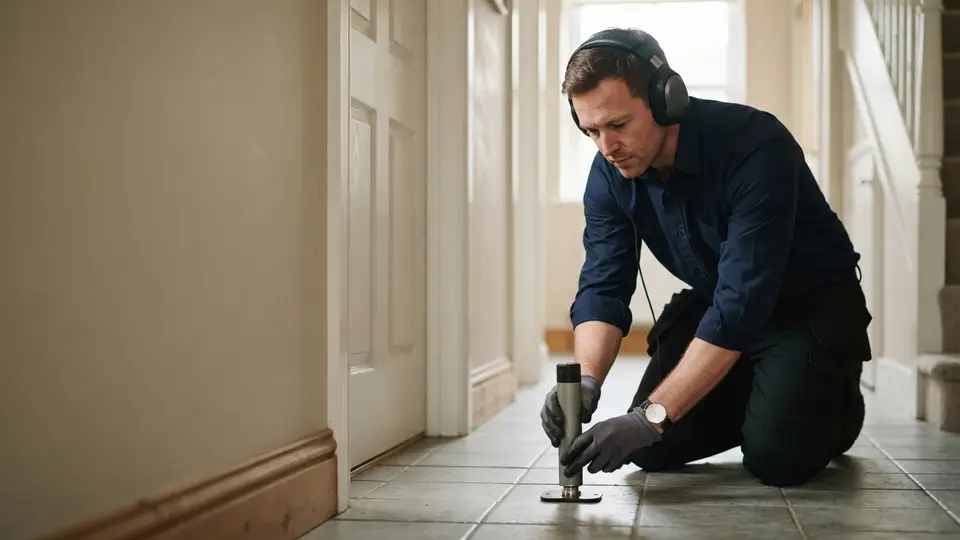
We start at the meter to confirm a leak and test whether it is on the house side or the yard side. Then we isolate sections of the system and use acoustic listening equipment, thermal imaging, moisture meters and pressure tests to narrow the leak to a small area before opening anything.
Once the leak is found, we open only what we need to, replace the damaged section with new pipe and fittings and pressure test the repair. If the pipe around it is thin or corroded, we show you and explain options from a section replacement to a reroute.
For a burst pipe, we stop the water, find the break, replace the failed section and check the rest of the line for damage. We can tell you where drying help may be needed, since soaked drywall and insulation should come out quickly.
We thaw frozen lines safely, without open flame, then check for splits that only start leaking once the ice melts. Lines that froze once are likely to freeze again, so we insulate or reroute them.
Typical cost
We give you a written price for detection and for the repair before we start each part, so you can decide at every step.
Get a written price: (833) 733-2357A leak under a sink costs far less to reach than one inside a block wall or under the slab.
Pinpointing a quiet leak takes more equipment and time than one you can see.
A single pinhole is a short repair; many pinholes may point to repiping.
Tile, stucco and ceilings that need opening add repair or patching work.
Night and weekend emergency calls cost more than scheduled visits.
Benefits
Pinpointing the leak first means we open one small area instead of guessing across a wall or floor.
A steady hidden leak can waste a lot of water every month.
Stopping water early protects drywall, cabinets and flooring.
You learn whether it was a one-off failure or a sign your pipes need replacing.
Find your main shutoff now, before you need it. In Arizona it is often on the side or front of the house where the line comes up from the ground, or in a box at the meter near the street. If water is spraying or pooling, turn it off, switch off power to any wet area at the breaker, and move belongings out of the way.
To check for a hidden leak, turn off every faucet and water-using appliance and watch the meter for a few minutes. If it moves, write down what you saw and call us. Never use a torch or open flame to thaw a frozen pipe.
Small leak repairs usually do not need a permit, while larger pipe replacement and rerouting often do, depending on the city or county. Our Arizona plumbing work is done under a plumbing contractor license from the Arizona Registrar of Contractors, and when a permit applies we pull it and schedule the inspection.
Why choose us
What you can count on every time one of our plumbers comes to your door.
Every job is handled by a plumber who holds the license your state or city requires, backed by liability insurance.
Our plumber explains the problem and the options, and you approve a written price before any work begins.
Burst pipes, sewage backups and failed water heaters get priority scheduling, including nights and weekends.
We pull permits when the job needs one and schedule the inspection, so the work holds up when you sell.
Repairs and installations come with a written warranty on labor, on top of the manufacturer's warranty on parts.
Our pages and plumbers account for your area's water, soil, climate and the age of the homes around you.
Related services
Service area
Our plumbers find and fix leaks across 467 Arizona communities. Start with your city:
It depends on how hidden the leak is and how much equipment it takes to pinpoint. We quote detection separately, in writing, before we start.
Yes. Once we know where the leak is and what the pipe looks like, we give you a written price for the repair before opening anything.
Policies often cover sudden water damage but not the pipe itself or slow leaks. We document what we find so you can discuss it with your insurer.
We test the meter, isolate parts of the system and use acoustic listening, thermal imaging, moisture readings and pressure tests to narrow it down.
We open as little as possible and leave a clean opening. Patching and painting are often handled separately; we tell you what to expect before we start.
We show you each one and explain whether the pipe is failing as a whole. Several pinholes in copper often mean repiping is the better long-term fix.
It can be. A sagging, water-filled ceiling can fall, and water near light fixtures is an electrical hazard. Turn off the water and power to that area.
Use the main valve where the line enters the house, or the valve at the meter box. Find it before you need it and make sure it turns.
Many leaks are located within one to three hours. Quiet leaks under slabs or in long yard lines can take longer.
A section repair in an open wall is often done the same visit. Repairs that need concrete, tile or long reroutes may take a day or more.
Turn off all water and watch the meter for a few minutes. If it moves, something is leaking. Also check under sinks and around the water heater.
Yes. Pressure above about 80 psi strains joints, hoses and valves. We test pressure and replace failed pressure-reducing valves.
Shut off the main valve, turn off power to wet areas and move valuables. Then call us; burst pipes get priority scheduling.
Yes. Flagstaff, Prescott and other high country towns freeze every winter, and desert cities get a few cold nights that can split exposed pipes.
Hard water, water chemistry and high pressure can wear copper from the inside over time. Once pinholes start, more usually follow in the same run.