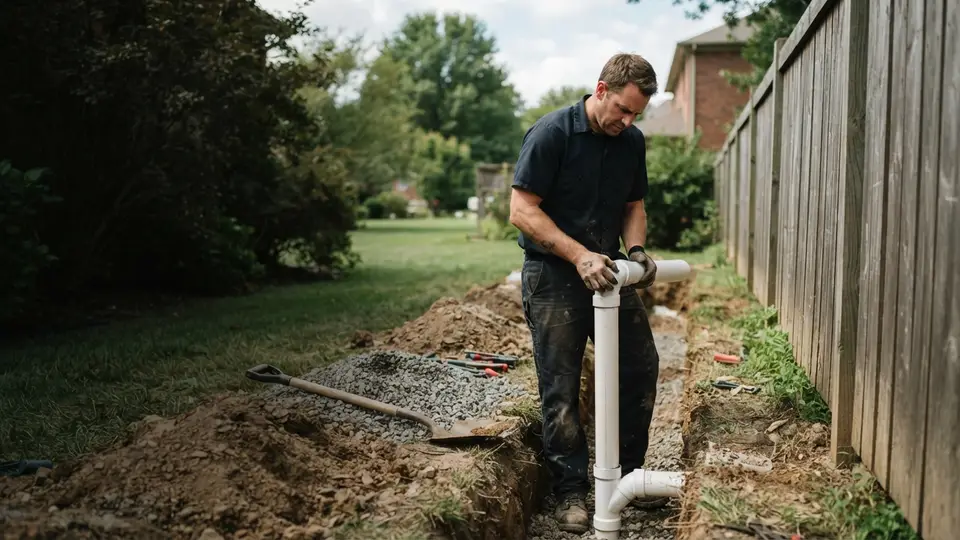
Spot repair
Best for: One cracked joint or short broken section
Digging needed: One small excavation
Main line backing up, or a soggy patch in a dry yard? Sewer line repair and replacement in Arizona starts with our camera, so you see the damage. Arizona sewer lines fail in their own ways: roots squeeze into old clay joints, shifting clay soil pulls pipes out of line, and caliche makes every foot of digging slow. Here we cover how our plumbers inspect a line, the repair methods we use, what drives the cost and how the permit side works.
The service
Your sewer lateral is the pipe that carries everything from the house drains to the city main in the street or to a septic tank. The homeowner is usually responsible for it from the house to the property line or the connection at the main, depending on the city. When it cracks, sags or fills with roots, every drain in the house is affected.
We handle three parts of this work: camera inspection to find and measure the problem, repair of damaged sections, and full replacement when the line is beyond saving. We also add cleanouts so the line can be serviced without pulling a toilet.
Repair methods we use
Best for: One cracked joint or short broken section
Digging needed: One small excavation
Best for: Cracked or root-damaged pipe that still holds its shape
Digging needed: Access points only
Best for: Replacing a worn line along the same path
Digging needed: Two pits, start and end
Best for: Collapsed pipe, severe bellies, changes in slope
Digging needed: Full length of the run
Why Arizona
30% of the homes in our Arizona Census data were built before 1980, and in some older cities the share is much higher: 52% in Tucson and 42% in Phoenix. Laterals from that era are often vitrified clay or cast iron. Clay joints separate and let roots in; cast iron rusts through along the bottom where water runs. In a newer city such as Surprise, where only 3% of homes predate 1980, most lines are PVC and problems tend to come from installation or ground movement.
Parts of Arizona have expansive clay that swells after rain and shrinks in drought. That movement can push a pipe out of line, open joints and create a belly, a low spot where waste settles and builds a blockage.
Many southern Arizona lots have a hard, cement-like caliche layer below the surface. It makes trenching slow and expensive, and pipes laid on or through it without proper bedding can crack where they rest on hard points.
In a dry climate, the moisture escaping from a sewer joint attracts roots from trees and shrubs many feet away. Once inside, roots catch paper and waste and slowly widen the crack they came through.
Warning signs
Our process
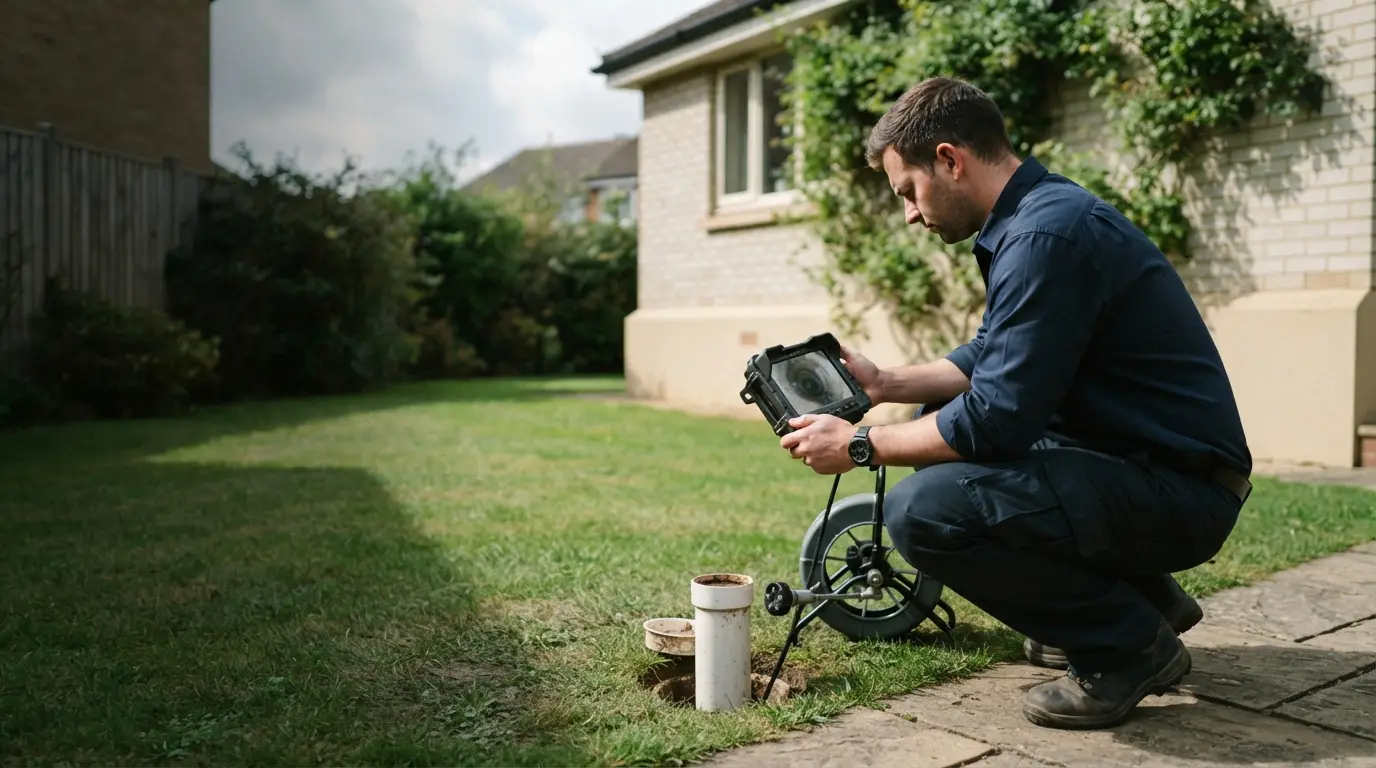
We run a waterproof camera through the line from a cleanout, record the footage and mark the depth and location of each problem from the surface.
You see the cracks, roots or bellies yourself, and our plumber explains which repair methods fit the damage.
You approve a written price; we pull the permit from the city or county and call Arizona 811 to mark buried utilities before any digging.
We make the repair using the method we agreed on, trenchless where the pipe allows it.
The work is inspected where required, and we run a final camera pass and flow test so you have a record of the new line.
Typical cost
Every sewer job gets a written price after the camera inspection, so you know the full cost and the method before any ground is broken.
Get a written price: (833) 733-2357A short spot repair near the house costs far less than replacing a long, deep lateral to the street.
Digging through caliche can take several times longer than ordinary soil, which often makes trenchless methods the better value.
Driveways, patios, pools and mature landscaping above the line add restoration work if we have to dig.
Lining needs a pipe that still holds its shape; a collapsed or badly sagging line has to be replaced.
City and county fees vary across Arizona and are listed in your quote.
Benefits
Fixing the crack or belly removes the cause instead of clearing the clog again and again.
Trenchless lining and bursting leave lawns, desert landscaping and driveways mostly in place.
You keep the before and after footage, which helps when you sell the house.
Stopping a leaking lateral keeps water from softening the soil under the slab.
If sewage is coming up in the house, stop using every fixture, including the washer and dishwasher. If you know where the outdoor cleanout is and can open the cap safely, loosening it can let a backup drain outside instead of into the house; wear gloves and stand back as you do it.
Keep children and pets out of the affected room and do not try to clean up sewage without gloves and eye protection. Then call us. We will clear the line first so the house is usable, then inspect it with the camera.
Sewer repairs and replacements in Arizona normally need a permit and an inspection from the city, or from the county outside city limits. Some cities also require their own inspection where the lateral meets the public main. Our plumbing work in Arizona is performed under a plumbing contractor license issued by the Arizona Registrar of Contractors, and we handle the permit, the 811 locate and the inspection for you.
Why choose us
What you can count on every time one of our plumbers comes to your door.
Every job is handled by a plumber who holds the license your state or city requires, backed by liability insurance.
Our plumber explains the problem and the options, and you approve a written price before any work begins.
Burst pipes, sewage backups and failed water heaters get priority scheduling, including nights and weekends.
We pull permits when the job needs one and schedule the inspection, so the work holds up when you sell.
Repairs and installations come with a written warranty on labor, on top of the manufacturer's warranty on parts.
Our pages and plumbers account for your area's water, soil, climate and the age of the homes around you.
Related services
Service area
We serve all 467 Arizona communities. Choose yours for local details.
It depends on the length and depth of the damage, the soil, what sits above the line and the method. After the camera inspection you get a written price for the whole job.
Often, especially under driveways or in caliche, because it skips most excavation and restoration. It needs a pipe that still holds its shape, which the camera tells us.
Yes, it is priced separately, and you keep the footage. It is the only reliable way to see what is wrong before deciding on a repair.
A locator in the camera head sends a signal we track from above, so we can mark the exact spot and depth of each problem on the ground.
We pull a resin-soaked liner into the old pipe and cure it in place, forming a new pipe inside the old one. It seals cracks and joints that roots used.
In most Arizona cities the homeowner owns the lateral from the house to the main or property line. The exact split varies by city, and we confirm it before work.
Sewer gas can make you sick and can contain flammable methane. Air the room, avoid open flames and call us so we can find the dry trap or broken pipe.
Gas, electric and water lines often share the yard. We call Arizona 811 to have utilities marked before we dig, and you should too before any digging.
A spot repair or lining job is often finished in a day. A full open-trench replacement can take two to several days, plus time for the inspection.
Not while the line is open. We plan the work to keep that window short and tell you in advance when to stop using water.
Keep trees away from the line, have known root problems cleaned on schedule and repair the joints roots use. Lining seals them for good.
For an older home, yes. A camera inspection before closing can reveal roots, cracks or bellies that would be expensive to discover later.
Sewage coming up into the house, or every drain stopping at once. Stop using water and call us; we clear the line first, then inspect it.
Yes. Digging through caliche is slow and may need special equipment, which is why we look at trenchless methods first in much of southern Arizona.
Usually, from the city or county where you live. We pull the permit, arrange the inspection and keep the paperwork with your job record.