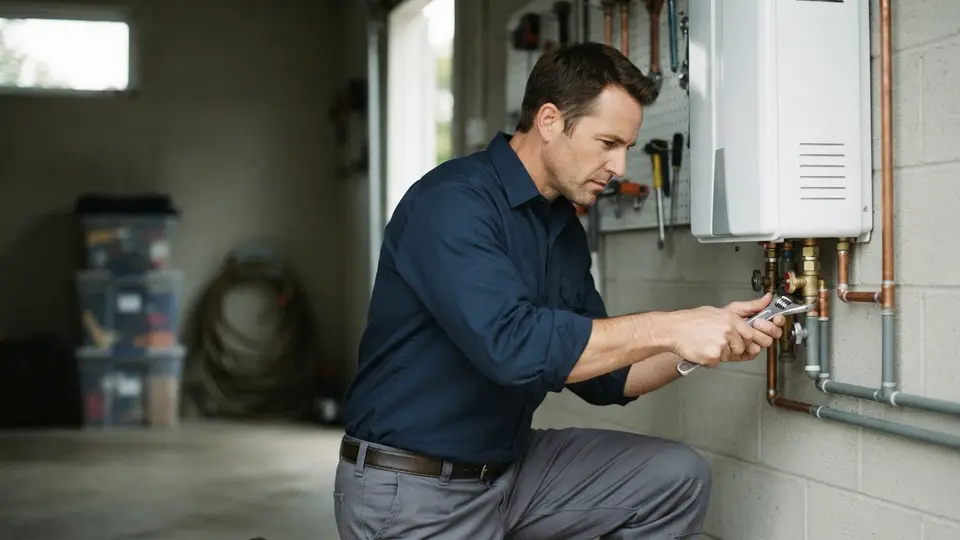
Gas tank
How it works: Burner heats a stored tank of water
Good fit for: Homes with natural gas and steady demand
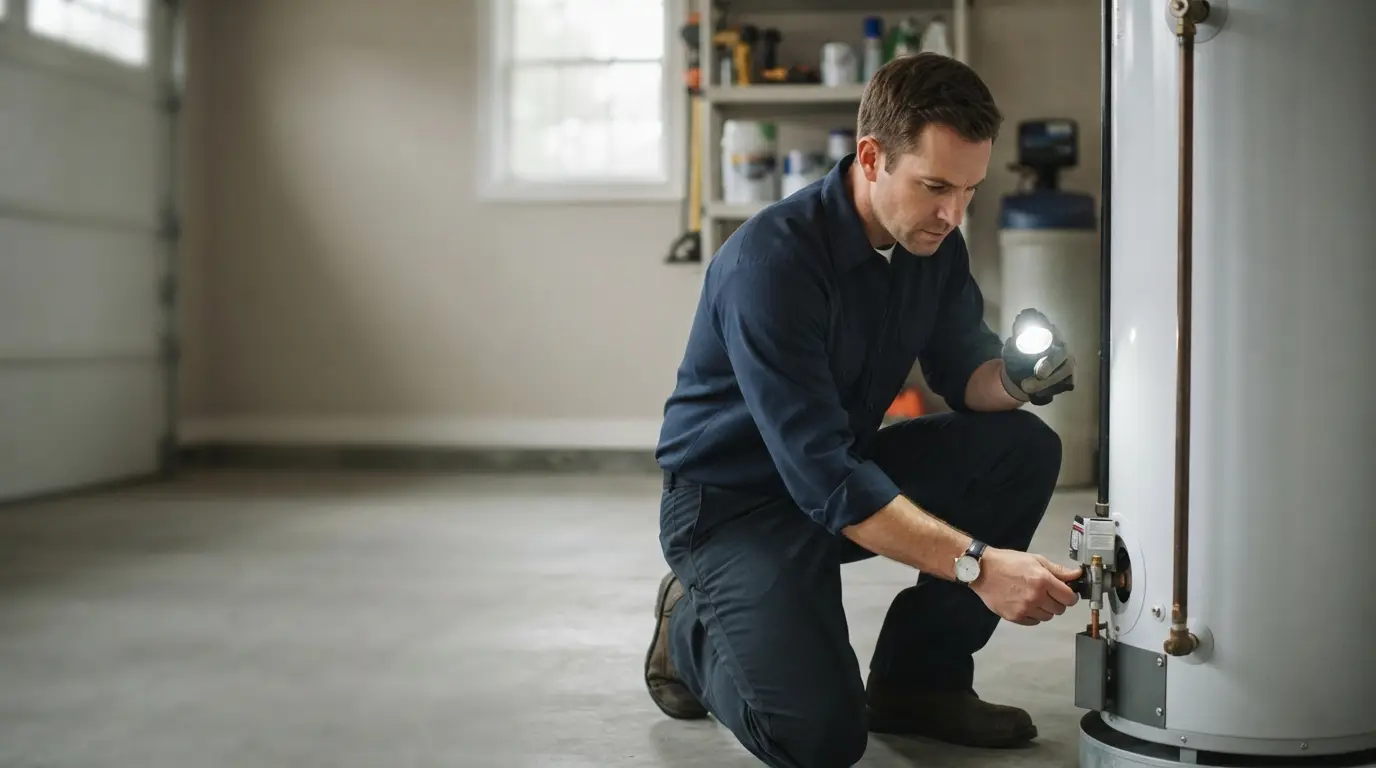
Lukewarm showers, popping noises or water under the tank? Water heater repair and replacement in Arizona is everyday work for our plumbers. Arizona is hard on water heaters. Mineral-heavy water fills tanks with sediment, garages bake through the summer, and in the high country the heater works overtime all winter. Here is what wears heaters out in Arizona, how we repair them, when replacing makes more sense, and what to know about tankless models.
The service
We repair and replace storage tank water heaters, both gas and electric, and install and service tankless units. Our work includes the venting, gas or electrical connection, expansion tank, pressure relief valve and drain line, so the whole installation meets code.
Choosing a water heater type
How it works: Burner heats a stored tank of water
Good fit for: Homes with natural gas and steady demand
How it works: Elements heat a stored tank
Good fit for: All-electric homes, simple installs
How it works: Heats water only as it flows
Good fit for: Endless hot water, saving space
How it works: Moves heat from the air into the tank
Good fit for: Warm garages, lower electric use
Why Arizona
Arizona's hard water drops minerals in the bottom of a tank every time it heats. The layer insulates the water from the burner, causes popping and rumbling, and overheats the tank bottom until it fails. In tankless units, scale builds in the heat exchanger and triggers error codes.
In our Arizona Census data, 34% of homes heat with natural gas and 60% with electricity. The mix varies a lot by city: 48% gas in Tucson and 51% in Goodyear, against 19% in Tempe. Homes with gas usually have gas water heaters, which need proper venting and combustion air; all-electric homes rely on elements and thermostats.
Most Arizona water heaters sit in the garage, which can pass well over 100 degrees in summer. Heat ages plastic parts, valves and wiring, and a dust-clogged burner area can affect a gas unit's air supply.
In Flagstaff, Prescott and other high country towns, incoming water is much colder in winter, so the heater runs longer and a weak unit shows its limits.
Warning signs
Our process
We test the unit to find the fault: thermocouple, gas valve, igniter, elements, thermostats, dip tube, anode rod or relief valve. Many of these parts can be replaced in one visit. We also flush sediment and check the venting and gas connection on gas units.
When a tank is leaking or near the end of its life, we size the new heater to your household, remove the old one, install the new unit with a new relief valve, connectors and expansion tank where needed, and test it. We haul the old heater away.
We install, descale and repair tankless units. Gas models often need a larger gas line and new venting, and electric models need enough electrical capacity, so we check both before quoting. In Arizona, yearly descaling is the most useful maintenance a tankless unit can get.
A heat pump water heater pulls warmth from the surrounding air, which suits a hot Arizona garage well and can cut electric use compared with a standard electric tank. It needs room around the unit, a condensate drain and the right circuit. We check all three during the estimate and tell you plainly whether it fits your space.
Typical cost
Before any work, our plumber explains your options and you approve a written price.
Get a written price: (833) 733-2357A part swap costs far less than a new unit; we tell you which makes sense for the age and condition.
Tankless and heat pump units cost more up front than standard tanks.
Gas units may need venting or gas line upgrades; tankless often does.
Expansion tanks, drain pans and seismic straps may be required with a new install.
An attic or closet install takes more work than a garage.
Benefits
A clean tank or descaled tankless unit delivers the hot water it was rated for.
Sediment makes the heater burn longer for the same hot water.
A working relief valve and proper venting protect your household.
Regular flushing and anode checks add years to a tank.
If the tank is leaking, turn off the cold water valve above the heater. For a gas unit, turn the gas control to off or pilot; for an electric unit, switch off its breaker. Move stored items away from the water.
If there is no hot water but no leak, check that the breaker has not tripped on an electric unit or that the pilot is lit on a gas unit, following the label on the tank. Do not try to fix the relief valve or gas parts yourself; call us.
Replacing a water heater usually requires a permit from the city or county, especially for gas units and tankless conversions. Our Arizona work is done under a plumbing contractor license from the Arizona Registrar of Contractors. We pull the permit and schedule the inspection so the installation is on record.
Why choose us
What you can count on every time one of our plumbers comes to your door.
Every job is handled by a plumber who holds the license your state or city requires, backed by liability insurance.
Our plumber explains the problem and the options, and you approve a written price before any work begins.
Burst pipes, sewage backups and failed water heaters get priority scheduling, including nights and weekends.
We pull permits when the job needs one and schedule the inspection, so the work holds up when you sell.
Repairs and installations come with a written warranty on labor, on top of the manufacturer's warranty on parts.
Our pages and plumbers account for your area's water, soil, climate and the age of the homes around you.
Related services
Service area
We service water heaters in 467 Arizona communities. Choose your city:
It depends on type, size, fuel, venting and code updates such as an expansion tank. You get a written price before we start.
For a newer unit with a failed part, usually yes. For a leaking tank or one over about 10 years old, replacement is often the better value.
Yes, usually, because of the unit price and possible gas line, venting or electrical upgrades. It can last longer and save space.
We test the unit, find the failed part, explain the fix and price, then repair it, flush sediment if needed and test the heater.
Yes. Removal and disposal of the old unit are part of our installation work.
Often, yes. We check your gas line or electrical capacity and venting first, then quote the full conversion.
It can mean pressure or temperature is too high, or the valve has failed. Turn off the heater and call us; do not plug the valve.
Leave the house and call the gas company or 911 from outside. Do not use switches, phones or flames inside until it is safe.
A straight swap is usually done in a few hours. A tankless conversion with gas or venting changes can take a day.
Tank heaters often last around 8 to 12 years here; hard water and garage heat shorten life when tanks are not flushed.
Once a year for tanks in most of Arizona, and yearly descaling for tankless units, more often with very hard water.
A metal rod inside the tank that corrodes so the tank does not. Checking and replacing it every few years extends tank life.
Shut off the cold supply valve and the gas or power to the heater, then call us. Failed water heaters get priority scheduling.
Minerals settle as sediment in tanks and scale in tankless heat exchangers, making the heater work harder and fail sooner.
Usually, yes, especially for gas units. We pull the permit and arrange the inspection.