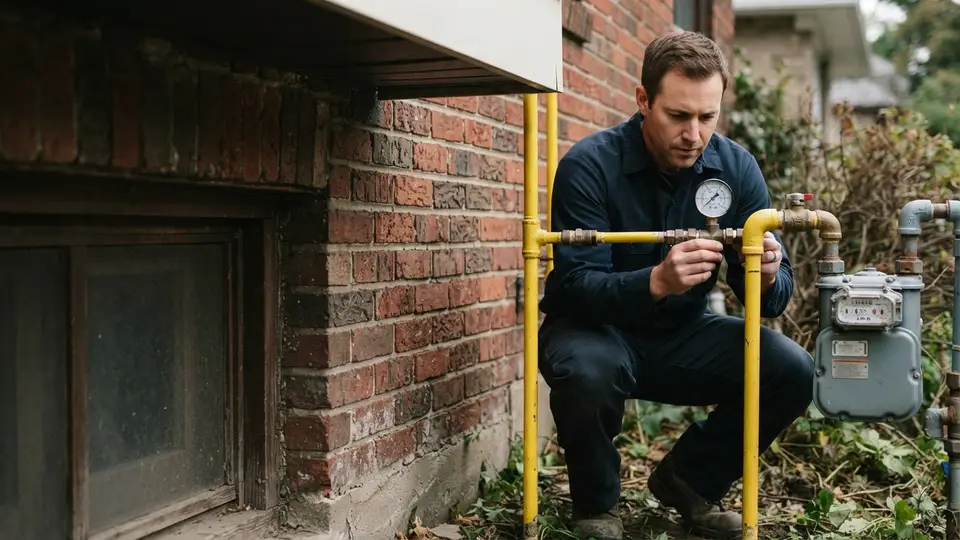
Leak repair
What it involves: Finding and replacing a leaking fitting, valve or pipe section
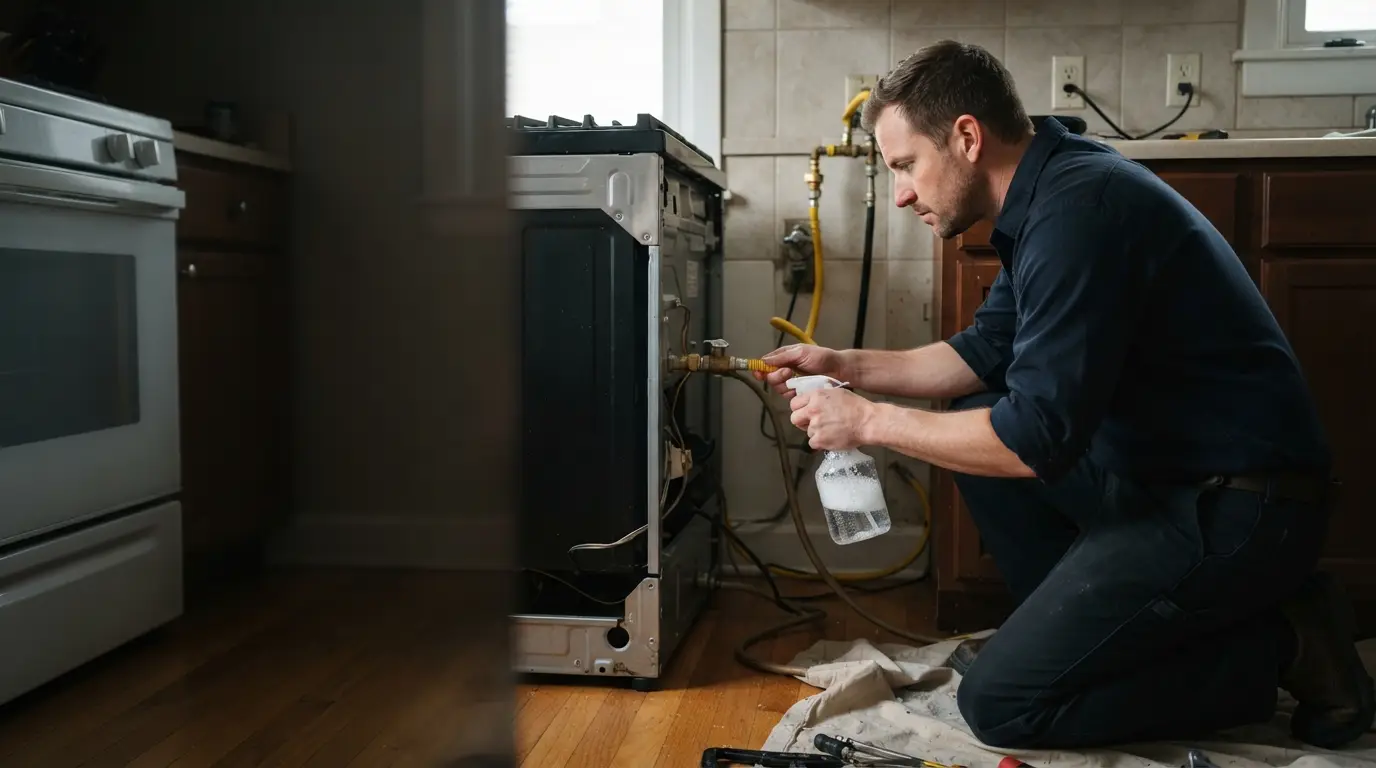
Faint gas smell by the meter, or a new range that needs a line? Gas line repair and installation in Arizona is careful work our plumbers take on every week. Gas piping feeds water heaters, furnaces, ranges, dryers, pool heaters, fireplaces and outdoor kitchens, and every joint has to stay tight for decades in heat, sun and shifting soil. This page covers leak repair, new lines and appliance hookups, how we test our work and what Arizona homeowners should know about safety and permits.
The service
The gas utility owns the meter and the line up to it. Everything after the meter, the yard line to the house and all the piping inside to each appliance, belongs to the homeowner. That is the piping we repair, extend and install. We work with natural gas systems and with propane systems on homes outside the utility's reach.
Common gas line jobs in Arizona
What it involves: Finding and replacing a leaking fitting, valve or pipe section
What it involves: Running a line to a range, dryer, water heater or fireplace
What it involves: Grills, fire pits, patio heaters and pool or spa heaters
What it involves: Larger pipe for a tankless water heater or added appliances
What it involves: Replacing a corroded or damaged buried line
Why Arizona
In our Arizona Census data, 34% of homes heat with natural gas and 2% with propane. Gas use differs by city: 48% of Tucson homes heat with gas, 51% in Goodyear and 45% in Surprise, against 23% in Phoenix. Many more homes use gas only for the water heater, range or pool heater.
Gas pipe that runs along exterior walls and rooftops sits in direct sun for much of the year. Paint fails, steel rusts at the joints and flexible connectors age faster than they would indoors.
Older steel yard lines corrode where coatings have failed, and expansive soils can stress joints. Lines to pool heaters and outdoor kitchens are sometimes buried too shallow and get hit by landscaping work.
Arizona homeowners often add outdoor kitchens, fire features and tankless water heaters. Each extra appliance draws gas, and a line sized for the original house may not deliver enough, which causes weak flames and error codes.
Warning signs
Our process
Once the utility has made the area safe, we find the leak with electronic detectors and leak-detection solution, replace the failed fitting, valve or pipe, and pressure test the whole system before restoring service and relighting appliances.
We size new piping for the total load of every appliance on the system, route it to code with proper supports, shutoff valves and sediment traps, and pressure test it before the inspection. For buried lines, we call Arizona 811 to mark other utilities first.
We connect ranges, dryers, water heaters, fireplaces, grills and pool heaters with the correct connectors and shutoff valves, check for leaks and confirm the appliance burns properly.
Typical cost
You get a written price for the full job, including the permit, before we begin.
Get a written price: (833) 733-2357A short line in an open garage costs less than one through finished walls or underground.
Upsizing for a tankless heater or several new appliances takes more material.
Buried lines through caliche or under hardscape add labor.
Most gas work needs both, and fees vary by city and county.
Some jobs need the gas company to shut off or restore service.
Benefits
Tight, tested joints keep gas where it belongs.
Correctly sized lines give every burner the gas it needs.
Permitted, inspected work protects you at resale and with insurers.
A line planned for future appliances saves rework later.
If you smell gas, get everyone outside and call the gas utility or 911 from a safe distance. If you know where the meter shutoff is and can reach it safely from outside, the utility may tell you to turn it a quarter turn so the tab sits crosswise to the pipe. Leave it off; only the utility or a licensed professional should turn gas back on.
For a planned hookup, clear space around the appliance location and have the appliance's installation manual handy. Never connect gas appliances or tighten gas fittings yourself.
Outdoor gas lines are a big part of our Arizona work, since patios get year-round use. Pool and spa heaters draw a large amount of gas, often more than the rest of the house combined, so they usually need their own properly sized line from the meter. Fire pits and built-in grills need a shutoff valve within easy reach and piping protected from landscaping tools.
We plan outdoor lines with the whole yard in mind: where you might add a heater or fire feature later, how deep the pipe should be buried and how to route it around trees and irrigation. Planning that once costs less than adding a second line in a few years.
In Arizona, new gas piping and most gas repairs need a permit and a pressure test inspection from the city or county before the gas company will restore or start service. Our gas work is done under a plumbing contractor license from the Arizona Registrar of Contractors. We pull the permit, schedule the inspection and coordinate with the utility.
Why choose us
What you can count on every time one of our plumbers comes to your door.
Every job is handled by a plumber who holds the license your state or city requires, backed by liability insurance.
Our plumber explains the problem and the options, and you approve a written price before any work begins.
Burst pipes, sewage backups and failed water heaters get priority scheduling, including nights and weekends.
We pull permits when the job needs one and schedule the inspection, so the work holds up when you sell.
Repairs and installations come with a written warranty on labor, on top of the manufacturer's warranty on parts.
Our pages and plumbers account for your area's water, soil, climate and the age of the homes around you.
Service area
We handle gas lines in 467 Arizona communities. Find yours:
It depends on the length, route, pipe size, digging and permit fees. You get a written price for the whole job before we start.
Distance from the meter or nearest line, whether the line is buried and the total gas load set the price. We quote it after measuring the route.
Leak repair depends on how hard the leak is to find and reach. We quote the repair in writing once the leak is located.
Yes. We connect them with the correct connector and shutoff valve, leak test the joints and check the burners.
Often it cannot without upsizing. We calculate the total load and tell you whether a larger line is needed.
Yes, on the piping from the tank regulator to the appliances. The propane supplier handles the tank itself.
Leave the house without using switches or phones, then call the gas utility or 911 from outside. Call us for the repair after.
Yes, if you have any gas appliance. Put alarms near sleeping areas and on each floor, and test them monthly.
A simple appliance line often takes a few hours. Longer runs and buried lines can take a day or more, plus inspection.
After the repair passes its pressure test and, where required, the inspection. Then the utility or our plumber restores service.
Keep it painted, supported and clear of landscaping. Have us check rusted or loose sections.
Have them checked when you add or replace an appliance, buy a home, or notice a smell or weak flames.
Yes. Leave, call the utility or 911 from outside, and keep others away until it is declared safe.
Sun and heat break down paint and connectors on exterior piping, leading to rust at joints. We inspect exposed lines.
New lines and most repairs do, with a pressure test inspection. We pull the permit and coordinate with the utility.