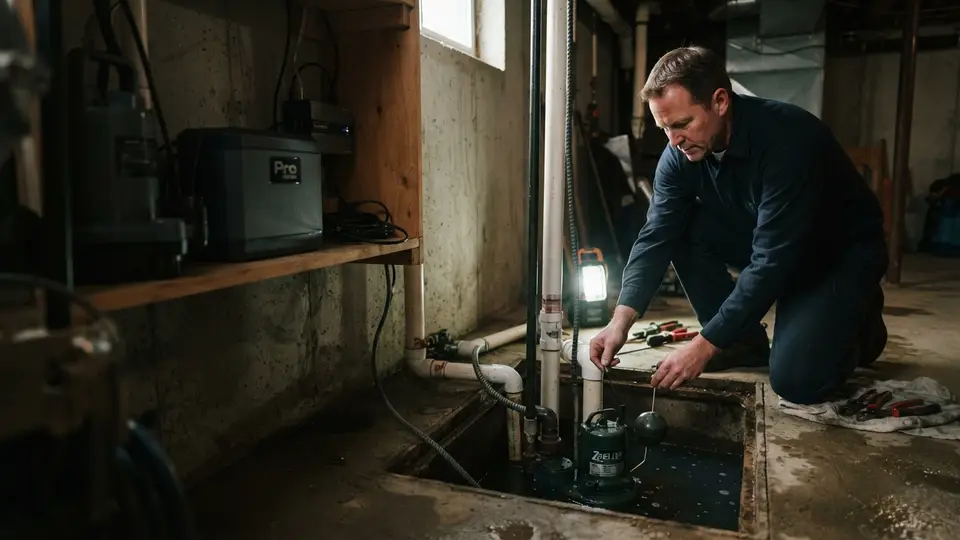
Submersible sump pump
What it handles: Ground and storm water
Where we see it in Arizona: Basements and crawl spaces
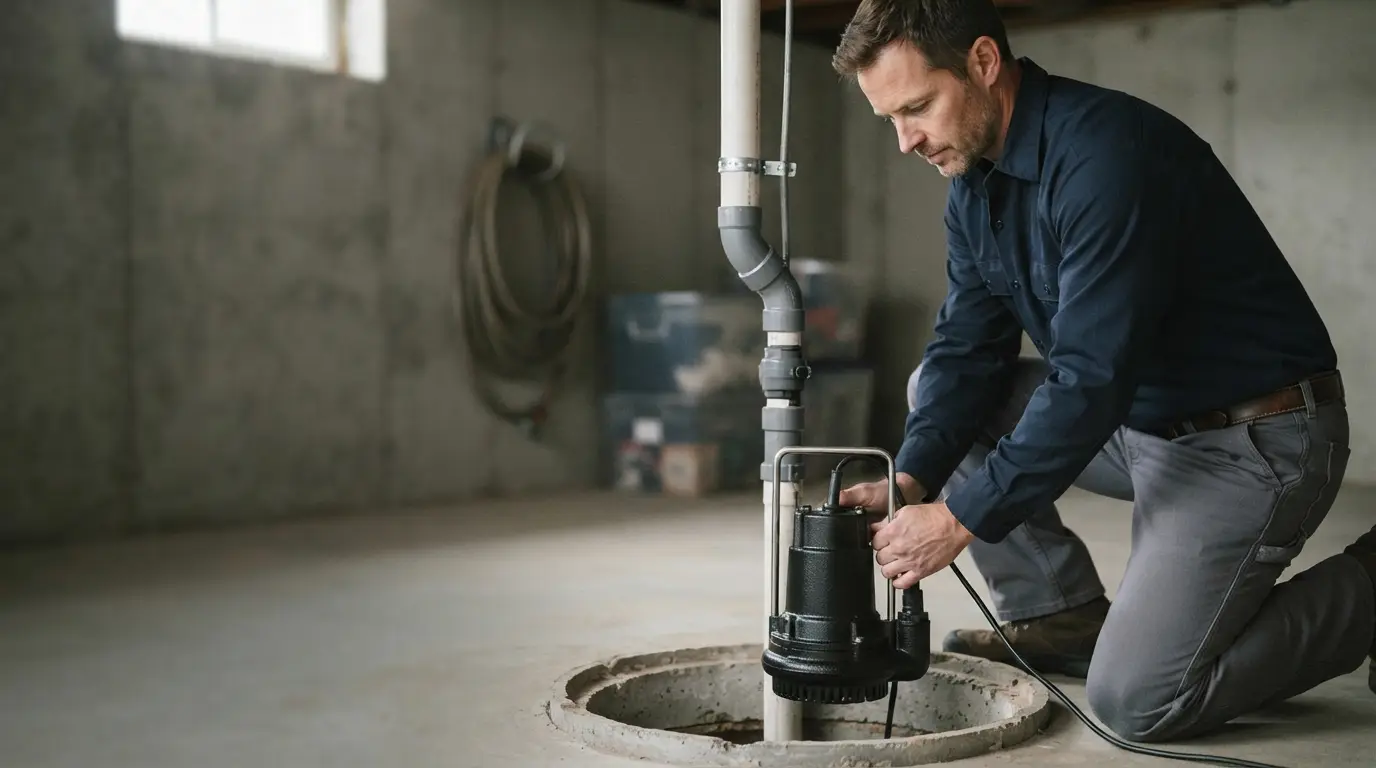
Pump humming but not running, or water in the basement after a storm? Sump pump repair and installation in Arizona is a job our plumbers handle. Most Arizona houses sit on slabs, so sump pumps are less common here than in wetter states. They still matter in the homes that have them: basement and hillside homes in Flagstaff, Prescott and other high country towns, below-grade rooms, and houses with sewage ejector pits. Here is how we service those pumps and keep water out during monsoon season and snowmelt.
The service
A sump pump sits in a pit at the lowest point of a basement or crawl space. Groundwater and storm water drain into the pit, and when it fills to a set level, a float switch turns the pump on and it pushes the water out through a discharge pipe away from the house. A sewage ejector pump does a similar job for a bathroom or laundry below the level of the sewer line, lifting wastewater up to the main drain.
Pump types we service
What it handles: Ground and storm water
Where we see it in Arizona: Basements and crawl spaces
What it handles: Ground and storm water
Where we see it in Arizona: Older or narrow pits
What it handles: Wastewater from low fixtures
Where we see it in Arizona: Basement baths, below-grade laundry
What it handles: Runs when power fails
Where we see it in Arizona: Paired with a primary pump
Why Arizona
Basements are more common in northern Arizona, where frost depth and sloped lots make them practical. Flagstaff has 31,994 homes and Prescott 25,683 in our Census data, and spring snowmelt there can raise the water around foundations for weeks.
Summer monsoon storms drop heavy rain in a short time. On hillside lots and in homes with below-grade rooms, water can collect against the foundation faster than the soil can absorb it, and the pump has to keep up.
The same storms that bring heavy rain can knock out power, and a sump pump without power does nothing. A battery backup keeps pumping until power returns.
Because many Arizona pumps run only a few times a year, problems such as a stuck float, a seized motor or a clogged check valve go unnoticed until the pump is needed.
Warning signs
Our process
We test the float switch, motor, check valve and discharge line, clear debris from the pit and intake, and replace the failed part. If the pump is old or undersized for the water it has to move, we tell you.
We size the pump to the pit and the expected water, install a check valve to stop backflow, route the discharge well away from the foundation and test the full cycle. For homes without a pit, we can dig and line a new one where water collects.
We add a battery backup pump alongside the primary pump with its own float and an alarm, so it takes over during an outage or if the main pump fails.
We repair and replace ejector pumps, seal the basin lid and vent it properly so odors stay out of the house.
Typical cost
We explain the options and give you a written price before any work begins.
Get a written price: (833) 733-2357A float switch or check valve costs less than a new pump.
Larger and sewage-rated pumps cost more.
Digging and lining a pit adds labor, especially in rocky soil.
Long or buried discharge lines add work.
A backup system adds parts and wiring.
Benefits
Water is removed before it reaches floors and stored belongings.
Less water pressure against walls means fewer cracks and leaks.
Keeping below-grade rooms dry limits musty odors and mold growth.
A battery backup keeps working when the power fails in a storm.
If the pump stopped, check that it is plugged in and its breaker or GFCI outlet has not tripped. Look into the pit: a float stuck against the wall can sometimes be freed with a stick, with the power unplugged first.
If water is rising, move belongings off the floor and keep away from water near electrical equipment. For an ejector pump, stop using the fixtures that drain into it. Then call us.
In the high country, the discharge line is the weak point in winter. A line that runs across the surface or sits in a low spot can freeze solid, and when the pump turns on it has nowhere to push the water. The pump overheats or the pit overflows. We slope discharge lines so they drain between cycles and can add a freeze-resistant outlet that lets water escape near the house if the far end is blocked by ice.
Crawl spaces need attention too. A crawl space pump that sits unused through a dry fall may stick by the time the snow melts. A quick test in late winter, before the thaw, catches that early.
Replacing a sump pump usually does not need a permit, but new pits, sewage ejector systems and discharge connections may, depending on the city or county. Our Arizona work is done under a plumbing contractor license from the Arizona Registrar of Contractors, and we handle the permit where one applies.
Why choose us
What you can count on every time one of our plumbers comes to your door.
Every job is handled by a plumber who holds the license your state or city requires, backed by liability insurance.
Our plumber explains the problem and the options, and you approve a written price before any work begins.
Burst pipes, sewage backups and failed water heaters get priority scheduling, including nights and weekends.
We pull permits when the job needs one and schedule the inspection, so the work holds up when you sell.
Repairs and installations come with a written warranty on labor, on top of the manufacturer's warranty on parts.
Our pages and plumbers account for your area's water, soil, climate and the age of the homes around you.
Related services
Service area
Choose your city for local sump pump information:
It depends on the pump type, pit condition and discharge routing. You get a written price after we look at the setup.
If the basement holds anything valuable, yes. Storms that bring heavy rain can also cut power, and a backup keeps pumping.
Yes. Digging and lining a pit takes more labor, especially in rocky soil, and may need a new discharge line.
We look at the pit, how much water enters it in a storm and how high and far the water must be pushed to leave the house.
Yes. We install and replace ejector pumps for basement bathrooms and laundry, including the sealed basin and vent.
Well away from the foundation, onto ground that slopes away, and never into the sewer unless local rules allow it.
Not if water is near outlets, cords or appliances. Shut off power to that area first, or wait for us.
Yes. Sewage can back up into the basement. Stop using the fixtures that drain to it and call us.
A straight replacement usually takes a few hours. Adding a pit or backup system can take a day.
Many last around 7 to 10 years. Pumps that sit unused for long periods should be tested regularly.
Before monsoon season and before snowmelt, by pouring water into the pit to make sure it starts and empties.
Remove dirt and debris once or twice a year and make sure the float moves freely.
Check the breaker and outlet, move belongings up and call us. Flooding calls get priority scheduling.
Fewer than in wetter states, since most sit on slabs. They are more common in basement homes in the high country.
A replacement usually does not. New pits and ejector systems may, and we handle that permit.