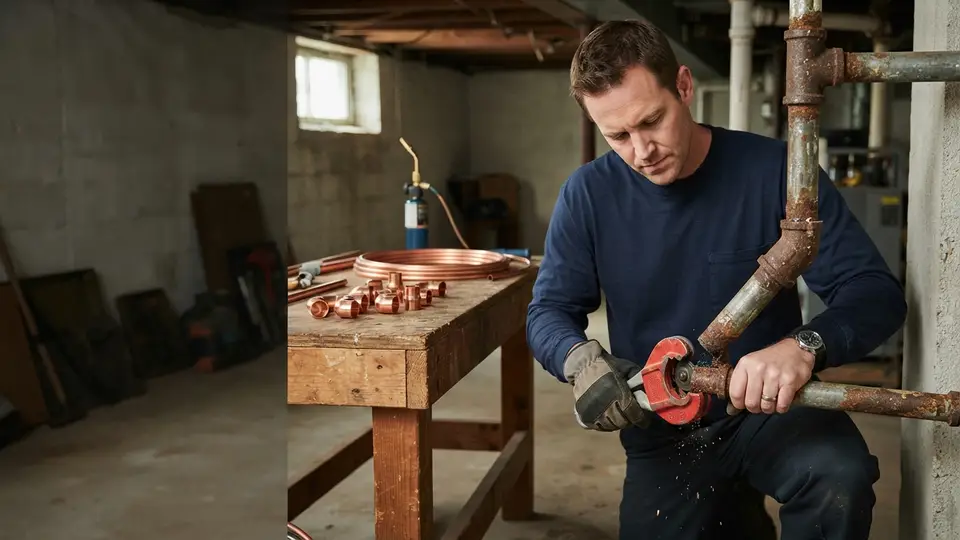
Galvanized steel
Where we find it: Homes built before about 1960
Common problem: Rust inside the pipe, low pressure, brown water
Another pinhole leak, or brown water in the morning? Repiping and water line replacement in Arizona from our plumbers replaces worn pipe so the leaks stop. When copper has thinned from decades of hard water, when galvanized steel has rusted shut, or when a home still has polybutylene from the 1980s, patching one leak at a time stops making sense. This page explains when repiping is the right call, how we do it with as little disruption as possible, and what affects the price.
The service
Your home has two sets of water piping. The water service line runs underground from the meter to the house. The distribution piping runs inside the house to each fixture. Either one can wear out, and we replace them separately or together.
Pipe types we replace in Arizona homes
Where we find it: Homes built before about 1960
Common problem: Rust inside the pipe, low pressure, brown water
Where we find it: Most homes from the 1960s on
Common problem: Pinhole leaks after years of hard water
Where we find it: Some homes built roughly 1978 to 1995
Common problem: Fittings and pipe can fail without warning
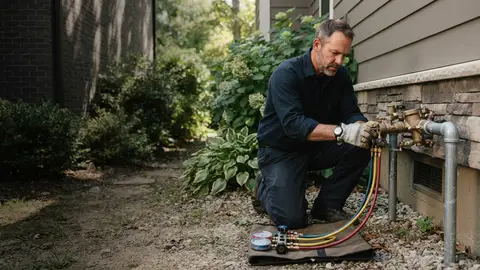
Where we find it: Meter to house
Common problem: Leaks under gravel, root damage, low pressure
Why Arizona
Across our Arizona Census data, 30% of homes were built before 1980 and 8% before 1960. In Tucson 52% of homes are from before 1980, in Tempe 41%, and in Phoenix 42%. Many of those homes still have original galvanized or copper lines that are well past their expected service life.
Arizona's hard water leaves scale inside pipes and fittings and, along with water chemistry changes, can wear pinholes in copper over the years. Once a run of copper starts leaking in several places, more leaks tend to follow.
Arizona built many homes during the years when polybutylene was in use. That gray plastic pipe is no longer installed, and many insurers and buyers treat it as a problem. Replacing it removes the uncertainty.
Under-slab lines wear against gravel and concrete, and attic lines bake in summer heat. Both settings shorten pipe life, which is why we usually route new lines where they can be reached and insulated.
Warning signs
Our process
When only one section has failed and the rest is sound, we replace that section and test the system. We tell you honestly whether the rest of the piping is worth keeping.
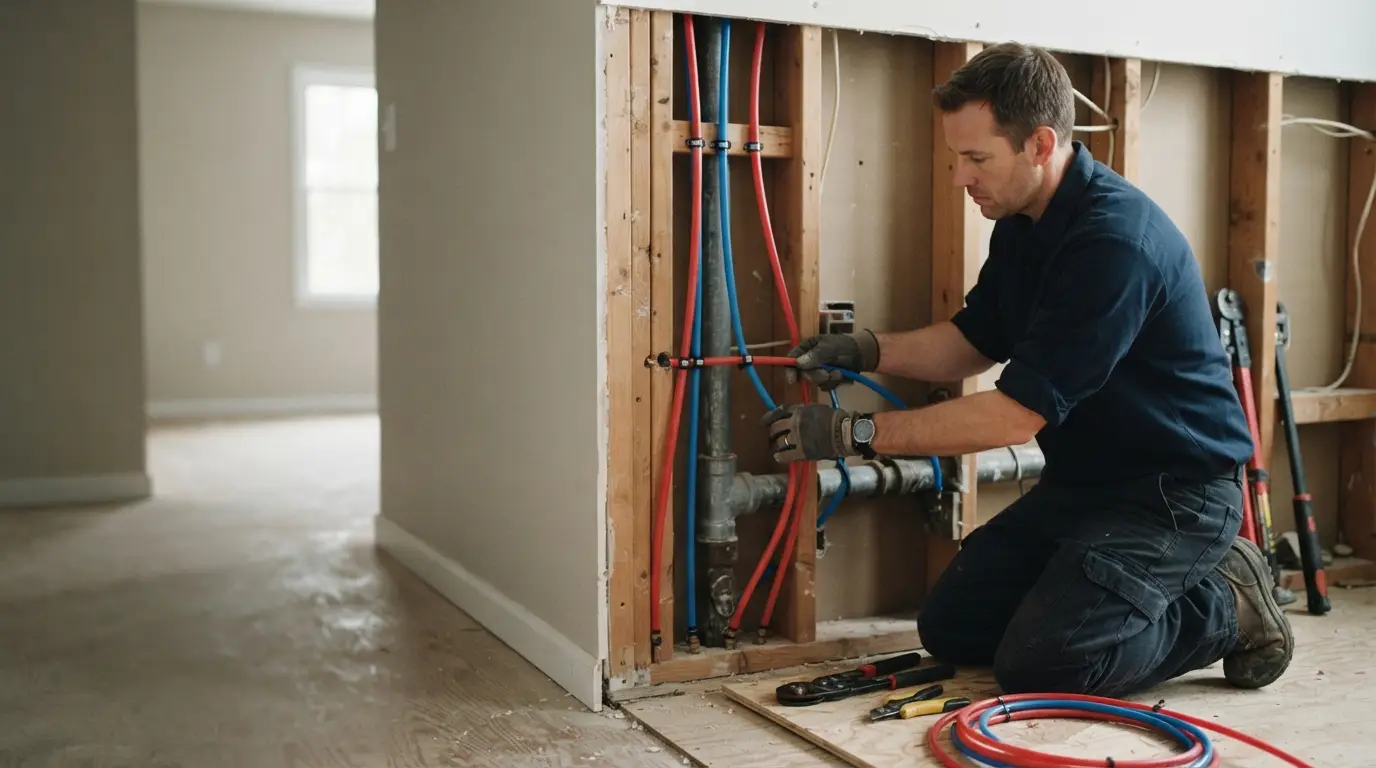
We plan new runs through walls, ceilings and the attic, usually in PEX or copper, so lines are no longer buried in the slab. We make small, neat openings in drywall, connect every fixture and appliance, pressure test the new system and patch the openings. Most of the old piping is capped and left in place.
For a leaking service line between the meter and the house, we locate the leak, dig to it and replace the damaged section. In caliche or under hardscape, we may recommend replacing the line instead of repeated spot repairs.
We replace the full service line with new pipe from the meter to the house, by trenching or, where the ground allows, by pulling or boring new pipe along the old path. Arizona 811 marks other utilities before we dig.
We cover floors and furniture near each work area, keep dust down when we cut drywall and clean up at the end of every day. You get running water back each evening, and we tell you in advance which rooms we will be working in the next morning so you can plan around us.
Typical cost
We walk the house, check the existing pipe and give you a written price before any work begins.
Get a written price: (833) 733-2357More bathrooms and a second story mean more pipe and more openings.
PEX usually costs less to install than copper; we explain the trade-offs.
Easy attic access keeps the job simpler.
A long service line through caliche costs more than a short run in soft soil.
Drywall repair and permit fees are listed in your quote.
Benefits
New pipe stops the cycle of patching one leak after another.
Clean pipe without scale delivers water at full flow to every fixture.
No more rust from corroded galvanized lines.
Removing polybutylene or failing pipe settles a common inspection concern.
If a pipe is leaking, turn off the main valve and open a faucet at the lowest point of the house to drain the lines. Put towels and a bucket under the leak and keep power away from any wet area.
For a planned repipe, clear space under sinks and in closets along walls where we will work, and tell us about any finishes you want us to avoid. We take care of the rest.
Whole-house repiping and water service line replacement normally need a permit and inspection from the city or county. Our Arizona plumbing work is done under a plumbing contractor license from the Arizona Registrar of Contractors. We pull the permit, call 811 before digging and schedule each inspection.
Why choose us
What you can count on every time one of our plumbers comes to your door.
Every job is handled by a plumber who holds the license your state or city requires, backed by liability insurance.
Our plumber explains the problem and the options, and you approve a written price before any work begins.
Burst pipes, sewage backups and failed water heaters get priority scheduling, including nights and weekends.
We pull permits when the job needs one and schedule the inspection, so the work holds up when you sell.
Repairs and installations come with a written warranty on labor, on top of the manufacturer's warranty on parts.
Our pages and plumbers account for your area's water, soil, climate and the age of the homes around you.
Related services
Service area
Older and newer homes alike in 467 Arizona communities get our repiping service. Find yours:
It depends on the size of the home, the number of bathrooms, the pipe material and access. After a walk-through, you get a written price before we start.
Both work well. PEX costs less to install and resists scale; copper is rigid and long-lived. We explain the trade-offs for your home.
Length, depth, soil and what sits above the line drive the price. Caliche and hardscape add time. We quote it in writing after locating the line.
No. We make small openings at a few planned spots, run new pipe through them and patch them afterward. Most of the old pipe is capped and left in place.
Usually. Running new lines through walls and the attic avoids future slab leaks and makes the pipe easy to reach.
Patching is part of our repiping quote when you want it, so you know exactly what condition the walls will be left in.
It does not harm water quality, but its fittings and pipe can fail suddenly, causing major water damage. Many owners replace it before it fails.
Rust itself is mostly a taste and staining issue, but it signals corroding pipe. Old pipe can also hold lead solder or fittings, so testing is wise.
Most single-family homes take two to five days, plus inspection. We plan the work so you have water each evening.
Yes, in most cases. Water is off only during working hours while we connect each section.
Keep pressure below about 80 psi, soften hard water, insulate attic lines and flush the water heater yearly.
It helps. Softer water leaves less scale in pipes, fittings and fixtures, which is a common cause of wear in Arizona.
Shut off the main valve and call us. We repair the break right away so the house has water until the full repipe.
Hard water, older galvanized and copper lines, polybutylene from the growth years and pipes buried in slabs all shorten pipe life here.
Usually, yes. We pull the permit from the city or county and schedule the inspection so the new piping is on record.