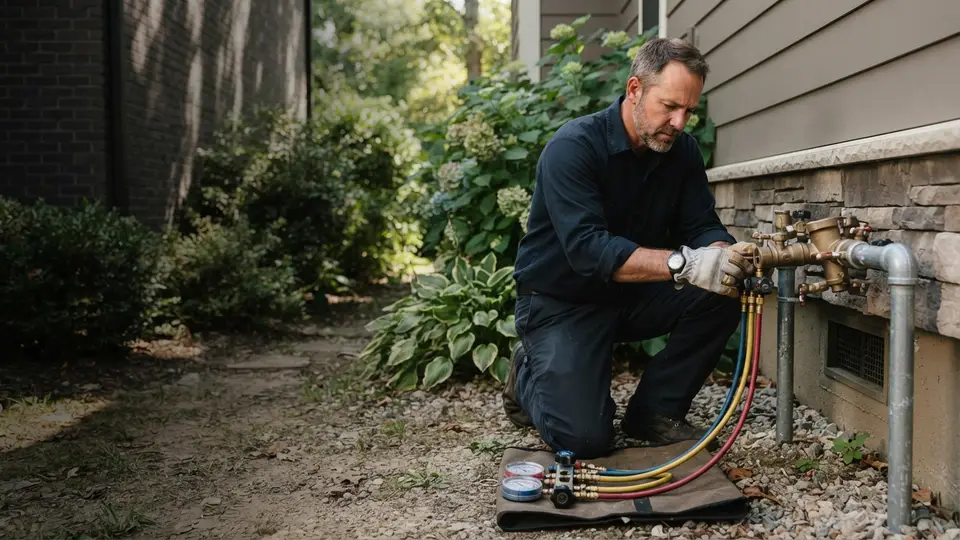
Pressure vacuum breaker (PVB)
Typical use: Lawn sprinkler systems
Notes: Most common residential device; freezes if not drained
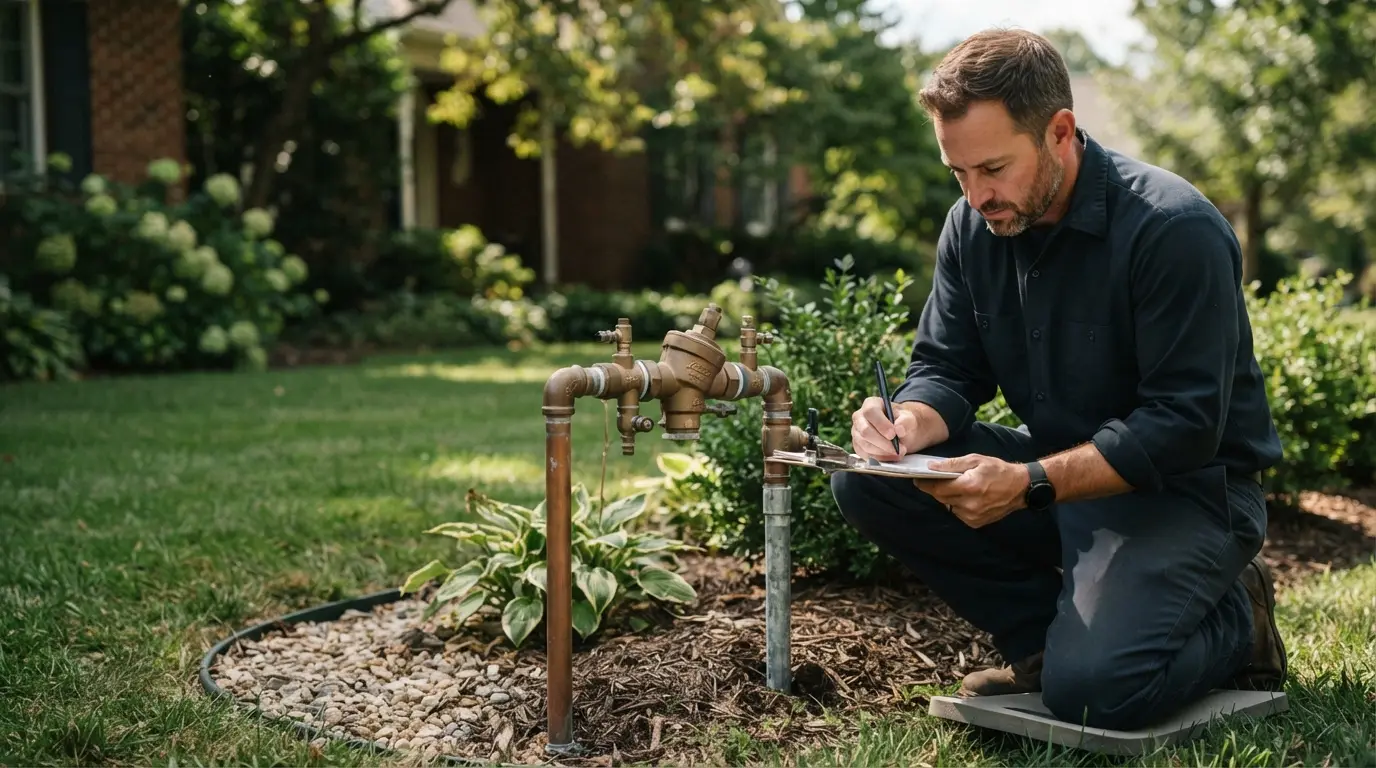
Sprinkler backflow split over winter, or a test due notice? We handle backflow testing and prevention in Colorado for homes and businesses. Backflow assemblies keep water from sprinkler systems, boilers, fire lines and equipment out of the public drinking water. Colorado water suppliers run cross-connection control programs under state drinking water rules, and testable assemblies must be checked by a certified tester. Colorado winters add another job: repairing assemblies that froze. We test, repair, replace and install, and file your reports.
The service
Backflow happens when water reverses direction and flows from a customer system back into the public main. A drop in main pressure from a break or firefighting can siphon water back, and a pump or boiler can push it back. Without protection, fertilizer from sprinklers, boiler chemicals or stagnant fire line water could reach the drinking water supply.
Backflow preventers are valve assemblies with check valves and, on some types, relief valves. Springs and rubber parts wear, so testable assemblies are checked regularly and after installation or repair.
Assemblies used in Colorado
Typical use: Lawn sprinkler systems
Notes: Most common residential device; freezes if not drained
Typical use: Commercial, medical, restaurants, boilers
Notes: High hazard; relief valve discharges when it senses a problem
Typical use: Fire sprinkler systems, some water services
Notes: Low hazard; often installed indoors
Typical use: Fire lines with meter bypass
Notes: Detects unauthorized water use
Why Colorado
Sprinkler PVBs sit outside, usually near the foundation. If they are not drained when sprinklers are blown out in fall, the first hard freeze cracks the body or bonnet. Spring startup is when owners discover the damage.
Suburbs built since the 1990s nearly all have automatic sprinklers. The median home in Highlands Ranch dates from 1997, in Castle Rock from 2007, in Broomfield from 2002 and in Windsor from 2009. HOA common areas add many more assemblies.
Restaurants, clinics, car washes, breweries and facilities with boilers usually need RPZ assemblies, which are tested on a schedule set by the water provider.
Fire sprinkler systems hold still water for long periods. Water providers generally require backflow protection on fire service connections.
Warning signs
Our process
Our certified tester connects a calibrated test kit to the assembly, checks each check valve and relief valve against required readings and records the results. We send the report to your water provider in the format it requires and give you a copy.
We install the assembly your provider and the hazard require, at the right height and location, with test cocks reachable. For sprinkler systems, we include drain valves so the device can be winterized. New devices are tested at installation.
Failed assemblies get new seals, springs or check parts. Freeze-cracked bodies are replaced. Every repair is retested and reported.
Typical cost
We give a written price before testing or repairs.
Get a written price: (833) 733-2357RPZ and fire line devices take longer.
Testing several in one visit lowers the cost per device.
Rubber kits cost less than replacement.
Cracked bodies need a new assembly.
New devices may need piping changes and a permit.
Benefits
Working devices stop contamination at the source.
Late tests can bring notices and, under provider rules, possible service interruption.
Testing catches worn parts before a device fails.
We test, repair, winterize and report.
Every fall, after the sprinkler lines are blown out, the backflow device needs to be drained too. Close the isolation valve inside the house, open the test cocks partway to let water out, and leave the ball valves at a half-open angle so trapped water can escape. An insulated cover adds protection. We can winterize the device during a fall visit and test and restart it in spring.
Large properties in Aurora (152,377 homes in our data) and other fast-growing suburbs may have dozens of assemblies across parks, entries and buildings. We keep an inventory of each device with serial numbers, locations and due dates, test them on one schedule where possible and send every report. For fire lines we coordinate with your fire protection company before closing valves.
Most single-family homes with a testable assembly have it on the sprinkler system, usually a pressure vacuum breaker on the outside wall near where the irrigation line leaves the house. Some newer homes also have a device on a residential fire sprinkler system. If your provider sends a notice, it lists the device and due date. If you are unsure whether you have a testable device, your provider can tell you, and we can check during any visit. Spring startup is the best time to test, since we can check for freeze damage at the same time.
A new or repaired assembly must pass a test before it is put back in service, and most providers want that report even if the annual test was already done this year. We test immediately after installation or repair and file the report so your record stays current.
Clear landscaping and snow from around the device and unlock any enclosure. Keep the provider notice handy; it lists the serial number and due date.
If a device is leaking heavily, close the isolation valve that feeds it, usually inside the house for sprinkler systems. Do not remove or bypass an assembly. Call us.
Colorado drinking water rules require public water systems to run cross-connection control programs, and each provider sets which assemblies need testing, how often and which tester certifications it accepts. Our testers hold certifications Colorado providers recognize, and our plumbers hold the Colorado plumbing license for installation and repair. New installations may need a plumbing permit, which we pull.
Why choose us
What you can count on every time one of our plumbers comes to your door.
Every job is handled by a plumber who holds the license your state or city requires, backed by liability insurance.
Our plumber explains the problem and the options, and you approve a written price before any work begins.
Burst pipes, sewage backups and failed water heaters get priority scheduling, including nights and weekends.
We pull permits when the job needs one and schedule the inspection, so the work holds up when you sell.
Repairs and installations come with a written warranty on labor, on top of the manufacturer's warranty on parts.
Our pages and plumbers account for your area's water, soil, climate and the age of the homes around you.
Service area
We test and repair backflow assemblies in 482 Colorado places. Choose yours:
It depends on the assembly type and size and how many devices we test on one visit. You get a written price before the test.
It depends on the device size and the piping around it. Many residential replacements are straightforward; we give you a written price first.
Yes. Testing all devices on one visit lowers the cost per device, which helps HOAs and businesses.
Our certified tester attaches a calibrated gauge, tests each check and relief valve against required values and records the results.
Yes. We file it in the required format and give you a copy.
Yes. We drain the device and set the valves correctly in fall, then test and restart it in spring.
Yes. During pressure drops, water from sprinklers, boilers or fire lines can be drawn into the main without a working device.
No. Removing or bypassing a required device violates provider rules and endangers the water supply.
A residential test usually takes under an hour. Large commercial devices take longer.
Promptly after the test, so it reaches your provider before the due date.
Most providers require testable assemblies to be tested at least once a year and after installation or repair.
Drain it every fall after blowing out the sprinklers, leave the valves half open and use an insulated cover.
Close the isolation valve feeding it and call us. Heavy discharge usually means a fouled check or relief valve.
State drinking water rules require cross-connection programs, and each water provider sets the details for its customers.
They sit outside, and water left inside after fall shutdown freezes in the first hard cold snap and splits the body.