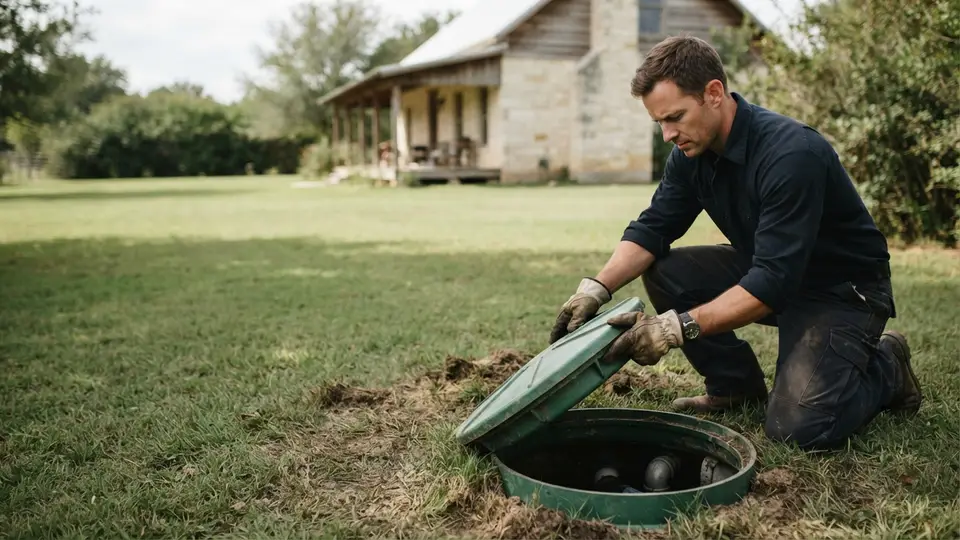
Septic pumping
When: Every few years, or when sludge is high
What it includes: Uncover lids, pump all compartments, check baffles and filter
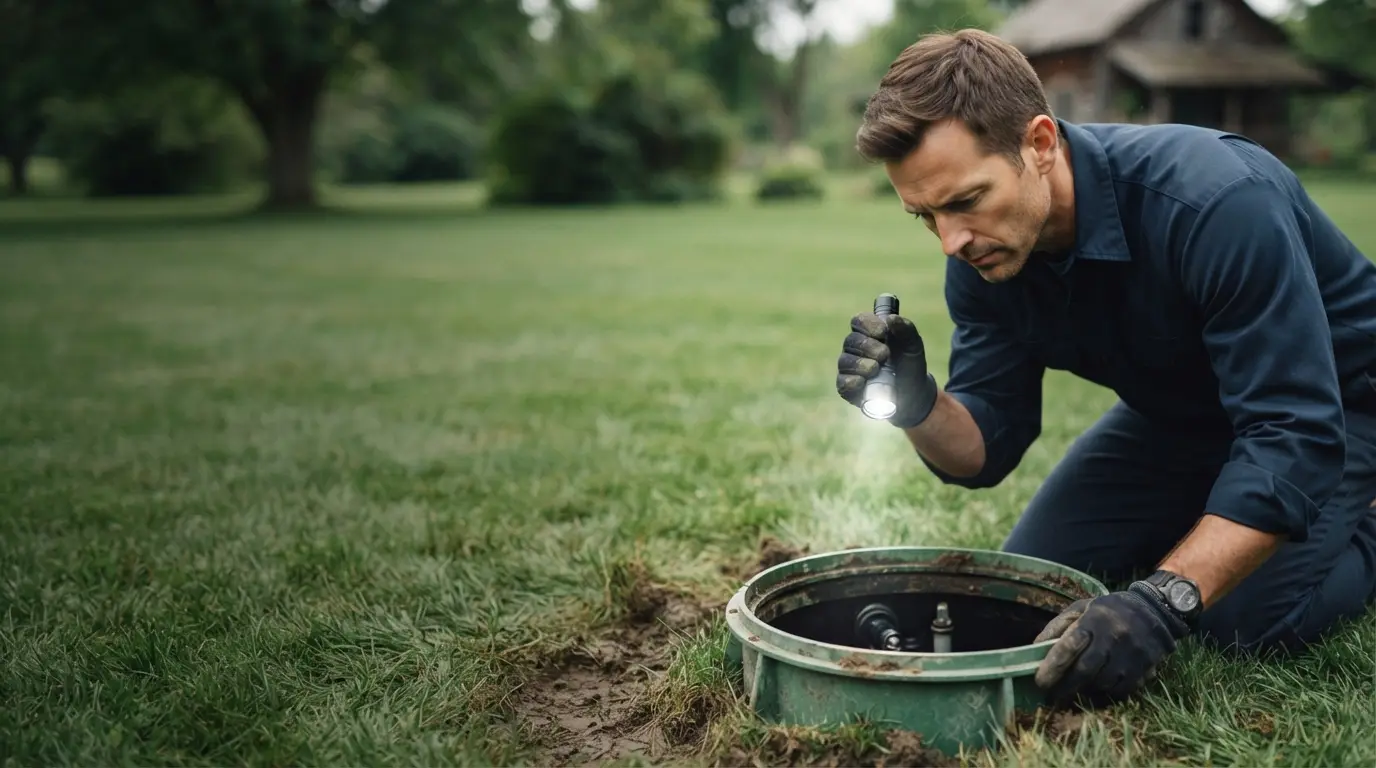
Toilets slow at the mountain house, or a soggy spot over the leach field after snowmelt? We provide septic tank services in Colorado for homes off the sewer. Septic systems are common in the foothills, mountain valleys, plains towns and rural subdivisions across the state. Colorado conditions are hard on them: thin soil over rock, deep frost, high spring water tables in mountain valleys and homes that sit empty for weeks. We pump, inspect and repair systems, and work with the county health agency when permits are needed.
The service
An onsite wastewater treatment system, or OWTS, has a tank where solids settle and scum floats, and a soil treatment area, often called a leach field, where effluent soaks into the ground. Mountain and difficult sites may use pumps, pressure dosing, mounds or advanced treatment units.
What we do
When: Every few years, or when sludge is high
What it includes: Uncover lids, pump all compartments, check baffles and filter
When: Buying, selling or when problems appear
What it includes: Measure levels, inspect tank structure, check the field and components
When: Surfacing water, odors, slow drains after pumping
What it includes: Locate and repair failed lines or distribution
When: Alarm on a dosing or pump chamber
What it includes: Test floats, pump, controls and alarm, repair or replace
Why Colorado
Many mountain and foothill lots have shallow soil over granite or other bedrock. There is little room to treat effluent, and systems often depend on pressure distribution or engineered designs that need regular care.
Tanks and lines must stay below the frost line or be insulated. Thin snow cover, compacted snow over the lines and low water use in winter let pipes freeze, especially at homes used only part of the year.
Snowmelt raises groundwater in mountain valleys and near streams. A saturated field cannot accept effluent until the water drops.
Skipped pumping lets solids flow into the field and seal the soil, the most common reason fields fail early.
Warning signs
Our process
We locate the lids, digging or clearing snow if needed.
A high liquid level warns us the field is not taking water.
We pump every compartment and check baffles, effluent filter and tank condition.
We look for surfacing effluent and test pumps, floats and alarms.
You receive findings and a written price for any repair.
Typical cost
We give a written price before work begins.
Get a written price: (833) 733-2357Larger tanks and more compartments take longer to pump.
Buried lids, deep snow and steep driveways add time.
Pumps, floats, filters and alarms add parts.
Line repairs cost much less than a new field.
Rock and slope make excavation slower.
Needed for new fields and major repairs.
Benefits
Pumping keeps solids out of the costliest part to replace.
A working system keeps effluent out of groundwater.
Mountain watersheds stay cleaner.
An inspection report answers buyer and lender questions.
A failing field is not always finished. Crushed pipe, a clogged distribution box, a failed dosing pump or roots can starve part of the field. We locate and repair those problems. When the soil is sealed, the field needs replacing, which requires a design based on a site and soil evaluation and a permit from the county or district health agency. We coordinate with the designer and the agency.
Cabins and second homes are tough on septic systems. Weeks of no use can let lines freeze in winter, and then a busy holiday weekend sends a heavy load all at once. We recommend keeping heat on, avoiding compacting snow over the tank and lines, and spreading laundry and dishwashing over the stay. For homes on pumped systems, an alarm that sends a notice when you are away is worth considering.
Our Colorado data includes 210 unincorporated places and 322 places with fewer than 2,500 residents, many of them beyond sewer service. Large rural subdivisions like Pueblo West, with 13,027 homes, also include septic properties, as do the outskirts of Western Slope towns such as Montrose and Craig, where 16% of homes are manufactured homes.
Most rural Colorado homes with septic also draw water from a private well, sometimes only a short distance away. Required setbacks keep the two apart, but a failing field or a cracked tank can still affect groundwater, especially in fractured rock. Regular pumping and inspection protect both. If your well water changes in taste, smell or clarity, have it tested by a lab and let us check the septic system at the same time.
Use as little water as possible. If a pump alarm is sounding, silence it but leave the pump circuit on unless the breaker trips. Note whether the trouble began after a cold snap, a heavy-use weekend or spring melt.
Never open or enter a septic tank; the gases are deadly and old lids can collapse. Keep vehicles and people off the field and call us.
Onsite wastewater systems in Colorado follow state regulations, and county or district public health agencies issue permits and set local rules. Some counties require an inspection when a property is sold. New systems and major repairs need a permit; routine pumping does not. Our plumbers hold the Colorado license their work requires, and we coordinate permits with the local agency. Confirm the rules in your county before planning new work.
Why choose us
What you can count on every time one of our plumbers comes to your door.
Every job is handled by a plumber who holds the license your state or city requires, backed by liability insurance.
Our plumber explains the problem and the options, and you approve a written price before any work begins.
Burst pipes, sewage backups and failed water heaters get priority scheduling, including nights and weekends.
We pull permits when the job needs one and schedule the inspection, so the work holds up when you sell.
Repairs and installations come with a written warranty on labor, on top of the manufacturer's warranty on parts.
Our pages and plumbers account for your area's water, soil, climate and the age of the homes around you.
Service area
We service septic systems around Montrose, home to 9,805 homes, and many other Colorado communities. Choose the nearest area:
Tank size, access to the lids, snow and what the inspection finds set the price. We give you a written price before pumping.
It needs a site and soil evaluation, an engineered design, a permit and excavation, often in rocky ground. Pumping and line repairs cost far less.
Clearing snow and digging through frozen ground to reach lids adds time. Risers make winter service quicker and cheaper.
We open and pump the tank as needed, measure layers, check baffles and filters, inspect the field and test pumps and alarms.
Yes. Risers bring lids to the surface so they can be found and opened quickly, even in winter.
Yes. For repairs and replacements that need a permit, we coordinate with the designer and your county or district health agency.
Yes. Gases inside can kill quickly, and old lids may collapse. Leave tank work to our crew.
Yes. It carries pathogens and can reach wells and streams. Keep people and pets away and call us.
Usually one to two hours, longer if lids are buried or under snow.
Construction can take several days, but design and permit come first. In the mountains, ground conditions may limit the building season.
Many households need it every three to five years. Part-time homes may go longer; we suggest an interval after measuring.
Keep snow cover over the lines, do not plow or pack it down, keep water flowing regularly and keep the house heated.
Stop using water and call us. Backups get priority scheduling, and pumping the tank usually gives immediate relief.
Colorado has state regulations for onsite systems, and county or district public health agencies issue permits and enforce them.
Some do. Ask your county health agency or real estate agent; we can perform the inspection and any required repairs.