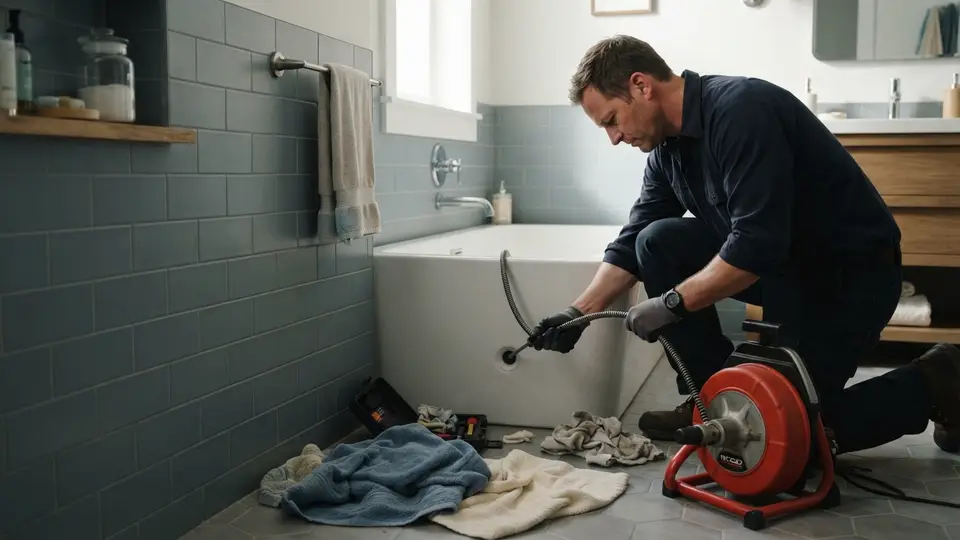
One sink or tub drains slowly
Usual cause: Hair, soap or grease near the trap
How we clear it: Hand auger or small machine
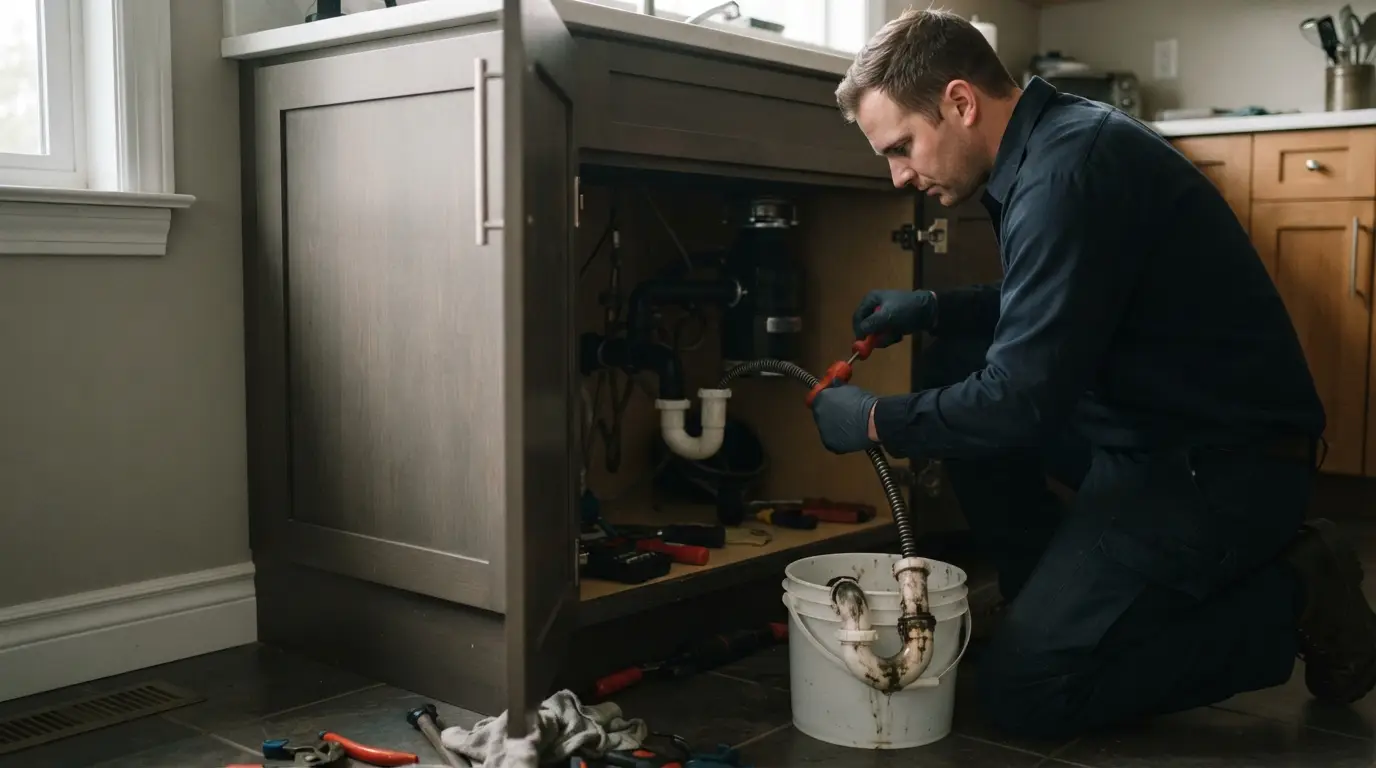
Water coming up through the basement floor drain, or a tub that drains in slow motion? We handle drain cleaning and clog removal in Colorado. Many Colorado homes have basements, so the lowest drain in the house is often a floor drain or basement bathroom, and that is where a main line clog shows up first. Roots in old clay laterals, grease in kitchen lines, scale in cast iron and soil movement that bends pipes are the usual causes. We clear the line, inspect it and tell you what caused the blockage. Here is how.
The service
We clear every drain from the fixture to the city sewer or septic tank: sinks, tubs, showers, toilets, laundry standpipes, basement floor drains, utility sinks and the main sewer line. In basements, we also clear the drains feeding sewage ejector pits. Our aim is a clean pipe and a clear answer about why it clogged.
Symptoms and solutions
Usual cause: Hair, soap or grease near the trap
How we clear it: Hand auger or small machine
Usual cause: Main line clog or roots in the lateral
How we clear it: Main line cable from a cleanout, then camera
Usual cause: Grease building up in the branch
How we clear it: Hydro jetting
Usual cause: Partial main line blockage or vent issue
How we clear it: Main cleaning and vent check
Usual cause: Roots, sags or soil in a cracked lateral
How we clear it: Camera inspection and repair plan
Why Colorado
41% of the homes in our Colorado Census data predate 1980, 55% in Denver, 56% in Lakewood and 72% in Pueblo. Many of those homes have clay sewer laterals, and the large shade trees in older neighborhoods push roots into every joint.
Expansive clay along the Front Range swells and shrinks with moisture, bending drain lines under basement slabs and in the yard. Offsets and sags catch waste and paper.
Kitchen grease hardens fast in lines that run through cold crawl spaces or along exterior walls in winter, building up until the line closes.
Cast iron drain stacks rust into rough, narrow channels, and harder water on the plains and Western Slope leaves mineral buildup inside drains.
Warning signs
Our process
One fixture, one floor, or the whole house tells us where the blockage sits.
We clear main lines from a cleanout in the basement or yard, not through a fixture trap.
Cutting heads handle roots and paper; hydro jetting removes grease, scale and sludge.
For repeat clogs, roots and older homes, we record the pipe and locate problems from above ground.
We run water through every line we cleaned and tell you what we found.
Typical cost
You receive a written price before any work begins.
Get a written price: (833) 733-2357A sink trap is quick; a main line or lateral takes larger equipment.
A cleanout behind a finished basement wall or buried in the yard adds time.
Roots and hardened grease take longer than hair.
Hydro jetting costs more than cabling and lasts longer.
Added when we need to see inside.
After-hours calls cost more.
Benefits
Clearing the main line keeps sewage from coming up through the floor drain.
Jetting clears the whole pipe wall.
Camera footage shows roots, offsets or sags, and you keep a copy.
Catching damage early costs less than a collapsed line.
In a basement home, the floor drain is the lowest opening on the system, so it is where sewage appears first when the main line clogs. Floor drains can also dry out, letting sewer gas into the basement; a little water poured in every few months refills the trap. Basement bathrooms below the sewer line drain into an ejector pit, where a pump lifts waste to the main. Wipes and grease clog those pumps quickly, and we clear and service them.
We recommend jetting for kitchen lines coated in grease, restaurant and apartment drains, scaled cast iron stacks and laterals after root cutting. The jetter scours the full pipe wall, so the line stays open far longer than after cabling. We camera older pipe first, because a badly cracked line may need repair before it can take the pressure.
For a single slow fixture, a plunger is fine to try. If the basement floor drain is backing up, stop all water use in the house immediately, including the washer and dishwasher; anything you run upstairs will come out downstairs.
Do not pour chemical drain cleaners into a main line clog; they rarely work and make the water dangerous to handle. Move belongings away from the floor drain, keep children and pets out of the area, and call us.
Drain cleaning does not require a permit. Sewer line repair or replacement and new cleanouts generally do. Our plumbers hold the Colorado plumbing license the work requires, and we pull permits when a repair needs one.
Why choose us
What you can count on every time one of our plumbers comes to your door.
Every job is handled by a plumber who holds the license your state or city requires, backed by liability insurance.
Our plumber explains the problem and the options, and you approve a written price before any work begins.
Burst pipes, sewage backups and failed water heaters get priority scheduling, including nights and weekends.
We pull permits when the job needs one and schedule the inspection, so the work holds up when you sell.
Repairs and installations come with a written warranty on labor, on top of the manufacturer's warranty on parts.
Our pages and plumbers account for your area's water, soil, climate and the age of the homes around you.
Related services
Service area
We clear drains in 482 Colorado places, from Boulder, where 55% of homes predate 1980, to Northglenn at 60%. Choose yours:
It depends on which line is clogged, access to a cleanout, what is causing the clog and the method we use. We give you a written price before starting.
Yes, jetting usually costs more because of the equipment and time involved. It scours the whole pipe wall, so grease and scale take much longer to return.
The camera is listed separately on your quote. For repeat clogs, root problems and older laterals, it shows the real cause so you only pay for repairs you need.
From a cleanout, usually in the basement near where the line leaves the house, or outside. If there is none, we can pull a toilet or install a cleanout.
Yes. We show you the inspection as it happens, explain what you see and give you a copy for your records.
We show you the damage and give you written prices for repair options, such as a spot repair, a liner or a new line.
Yes. Sewage carries harmful bacteria. Stop using water, keep people and pets out of the area and let us clear the line before cleanup.
We recommend against them. They rarely clear main line or root clogs and can harm older pipes and anyone who works on the line afterward.
Many main lines are cleared and inspected in two to three hours. Heavy roots or difficult access can take longer.
Right after we finish testing the line. If the camera found damage, we tell you whether normal use is safe until the repair.
Most homes only when problems start. Homes with a history of root clogs often benefit from cleaning every year or two.
Often a dry floor drain trap. Pour water into it every few months. If the smell persists, we check for cracked pipes or vent problems.
Stop using all water upstairs and call us. Main line backups get priority scheduling to limit damage to finished basements.
Expansive clay soils along the Front Range swell and shrink with moisture, which can bend or offset pipes under slabs and yards.
Mountain homes on septic may see slow drains from frozen or saturated lines, and vacant homes can lose trap water to evaporation.