Scale on fixtures, spotty glassware
Usual cause: Hardness
Typical treatment: Water softener
Spots on the dishes, or well water with a metallic taste? We install water softeners and filtration in Colorado after testing what comes out of your tap. Colorado water varies by source. Front Range cities drawing mountain snowmelt often deliver water that is only moderately hard, while the eastern plains, Western Slope and many private wells are harder and may carry iron, sulfur or other minerals. We test, explain the results and install softeners, filters or reverse osmosis to fit. Here is how.
The service
Each kind of equipment handles a different problem. A softener removes hardness minerals that cause scale. A whole-house filter treats all water entering the home for sediment, chlorine taste, iron or sulfur. Reverse osmosis at the kitchen sink produces highly filtered drinking water. Many homes need only one of these.
Problems and solutions
Usual cause: Hardness
Typical treatment: Water softener
Usual cause: City disinfection
Typical treatment: Carbon whole-house filter
Usual cause: Iron or manganese in well water
Typical treatment: Iron filter or specialty media
Usual cause: Hydrogen sulfide in well water
Typical treatment: Oxidizing filter or aeration
Usual cause: Wells or main repairs
Typical treatment: Sediment filter
Usual cause: Dissolved minerals, taste
Typical treatment: Reverse osmosis
Why Colorado
Denver, with 359,581 homes in our data, and most Front Range cities rely on mountain rivers and reservoirs. Their water is usually soft to moderately hard and changes with the season and source. Some homeowners want only a carbon filter; others with more scale add a softener.
Greeley, Pueblo and plains towns such as Sterling can see harder water, especially where groundwater is part of the supply. Scale builds quickly in heaters and fixtures. Pueblo's median home dates from 1965, so many of its heaters and pipes carry decades of buildup.
Grand Junction (median built 1988) and Montrose (1994) and the surrounding valleys often have hard water, and some wells carry sulfur or other minerals.
Wells in granite and fractured rock vary from soft to mineral-heavy, sometimes with iron, manganese or other naturally occurring elements. A lab test is the starting point.
Warning signs
Our process
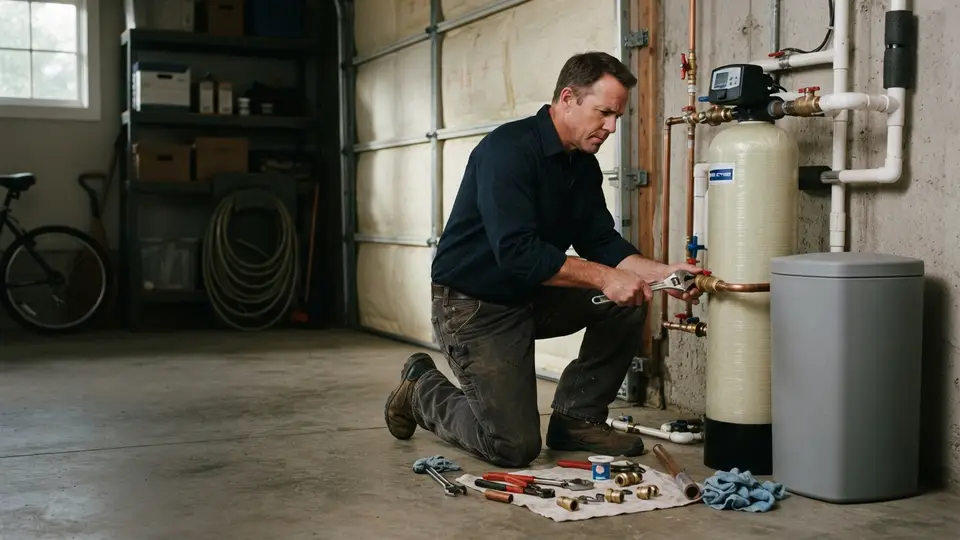
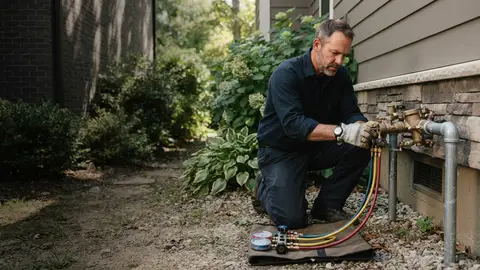
We test hardness, size the softener to your household and install it at the main line with a bypass valve, an air-gapped drain and a dedicated outlet. Outdoor faucets can stay on untreated water.
We install sediment, carbon, iron or sulfur filters ahead of the softener and house plumbing, choosing the media from your test results.
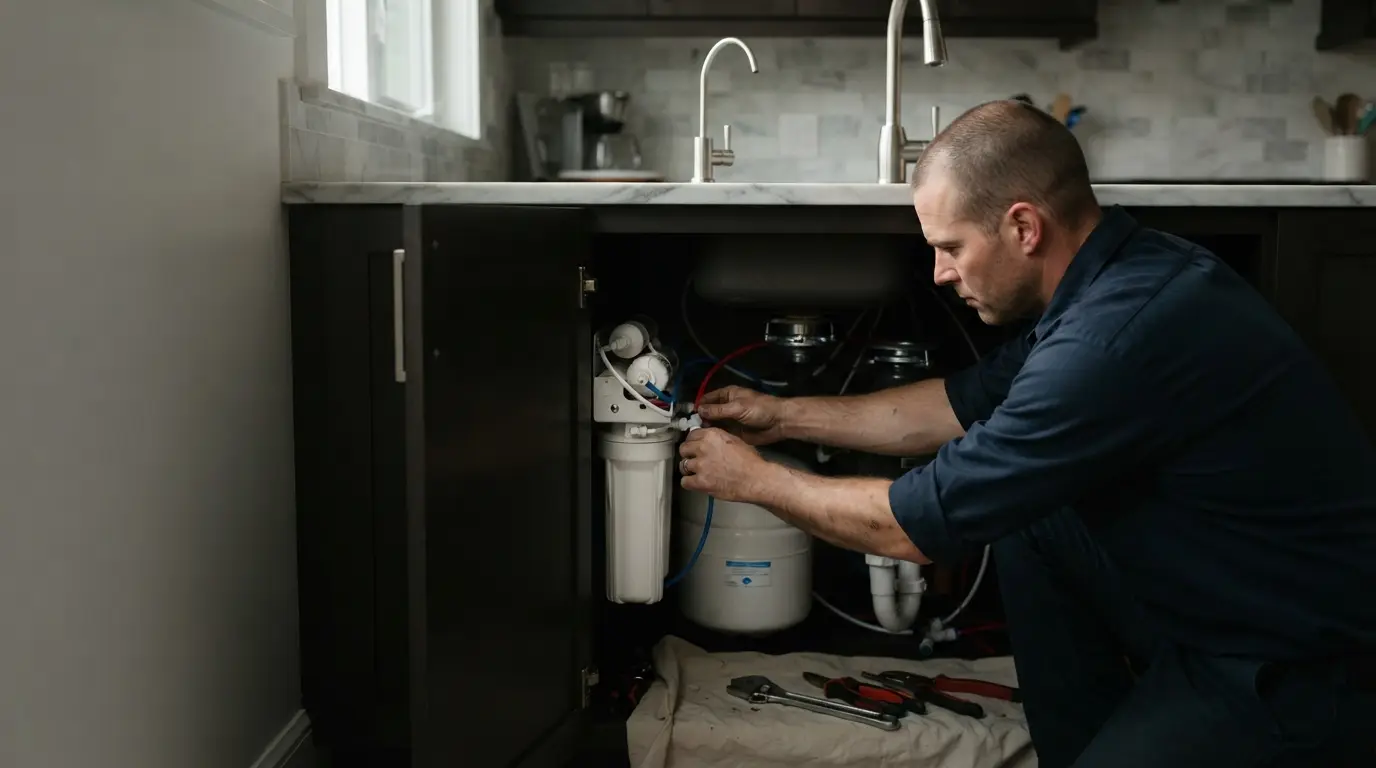
We mount the unit under the kitchen sink with a dedicated faucet and can connect the refrigerator. We set a filter and membrane change schedule.
Typical cost
You get a written price for the equipment and installation, plus a maintenance plan.
Get a written price: (833) 733-2357Hardness alone is simpler than iron or sulfur.
Softeners, filters and reverse osmosis vary in price.
Larger households need more capacity.
Basements near the main line are simplest.
Salt, cartridges and membranes are recurring.
Benefits
Less scale in heaters, dishwashers and washers.
Cleaner glass, tile and fixtures.
Carbon and reverse osmosis remove chlorine and odors.
Aerators and shower heads stay clear.
In most Colorado homes the main water line enters the basement or a utility room, which makes treatment equipment easy to place near the water heater. We check that the floor drain or a standpipe can take the softener discharge, keep the brine tank away from the furnace and leave room to add salt. In finished basements, we plan the install around closets and mechanical rooms.
With 69% of Colorado homes heating with gas, most water heaters here are gas-fired. Scale on the tank bottom insulates the water from the burner, so the heater runs longer and the steel overheats, shortening its life. Tankless units clog their heat exchangers. Softening or conditioning the water, or flushing and descaling on schedule, protects them.
Private well owners are responsible for their own water quality. Hardness and iron tests guide treatment, but they do not test for bacteria, nitrates or naturally occurring elements that can occur in some Colorado groundwater. We recommend a certified lab test, and your county public health agency can point you to options. We then size treatment to the lab results.
An ion-exchange softener removes calcium and magnesium, so soap lathers, spots disappear and water feels slick. It uses salt and sends brine to the drain when it regenerates. A salt-free conditioner changes how minerals behave so they are less likely to form hard scale on heaters and pipes, without salt or a drain, but the minerals stay in the water and spots can still appear on glass. If protecting the water heater and plumbing is the main goal, a conditioner may be enough. If you want the full feel and cleaning benefit of soft water, a softener is the better choice. We explain both after testing.
Colorado water providers disinfect their water, some with chlorine and some with chloramine. Both are safe at treatment levels but affect taste and smell for some households. Standard carbon removes chlorine well; chloramine needs catalytic carbon designed for it. We check which your provider uses before choosing a filter.
About 26% of Colorado homes are in buildings with five or more units, where whole-house treatment is often not possible. A reverse osmosis unit under the kitchen sink, an inline carbon filter or a filtered shower head works well there. Renters should get the property owner's approval before any installation.
Look up your water provider's annual water quality report, or keep a recent well test handy. Note where the main enters the house and what space and outlets are nearby.
If a softener is leaking, put it in bypass, unplug it and call us. Do not add chemicals to a well yourself.
Softener and filter installations often need no permit, though some jurisdictions require one for new connections. Our plumbers hold the Colorado plumbing license required, and every drain connection includes an approved air gap.
Why choose us
What you can count on every time one of our plumbers comes to your door.
Every job is handled by a plumber who holds the license your state or city requires, backed by liability insurance.
Our plumber explains the problem and the options, and you approve a written price before any work begins.
Burst pipes, sewage backups and failed water heaters get priority scheduling, including nights and weekends.
We pull permits when the job needs one and schedule the inspection, so the work holds up when you sell.
Repairs and installations come with a written warranty on labor, on top of the manufacturer's warranty on parts.
Our pages and plumbers account for your area's water, soil, climate and the age of the homes around you.
Service area
We test and treat water in 482 Colorado places, including Greeley and Sterling, where 79% of homes predate 1980. Choose yours:
It depends on hardness, household size and installation location. We test first and give you a written price.
Usually, yes. They need specialty media and often their own tank ahead of a softener.
Mainly filter and membrane replacements on a set schedule, which we explain at installation.
Yes. We test at the tap and review your provider report or well test before recommending anything.
Usually near the main in the basement or utility room, close to a drain and outlet.
Yes. We can route the system so hose bibs stay on untreated water.
For most people, yes. It adds a little sodium; a reverse osmosis tap gives low-sodium drinking water.
Hardness tests do not check for bacteria or other contaminants. Have a certified lab test your well.
Most installs take a few hours; combined systems can take most of a day.
Treated water is immediate. Existing scale fades over time with cleaning.
Often every month or two, depending on hardness and use.
Every year or two, and whenever taste, smell or color changes.
Put it in bypass, unplug it and call us. A stuck valve or drain line is the usual cause.
Denver-area water from mountain sources is usually soft to moderately hard and varies by season. A test tells you about your home.
Often, yes. Grand Junction and nearby valleys commonly see hard water, and some wells carry sulfur or other minerals.