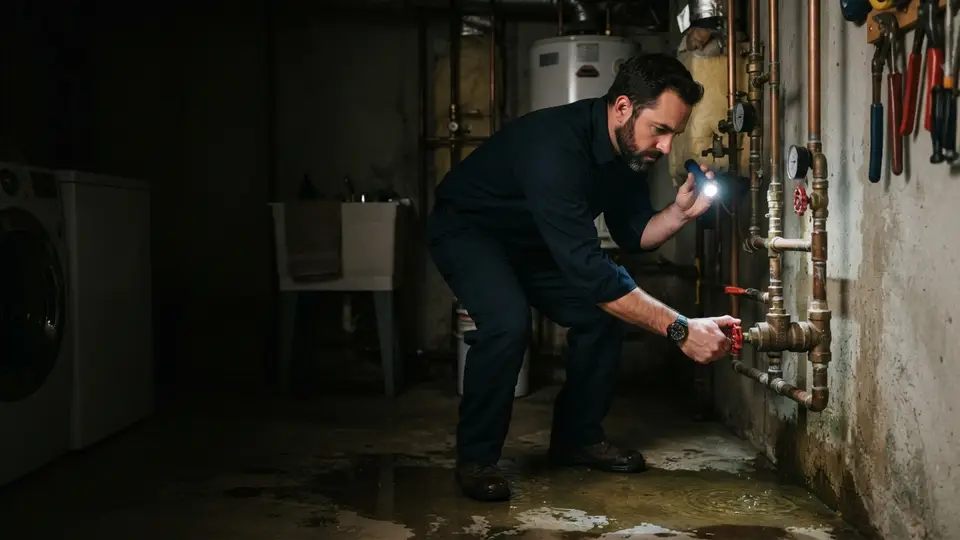
Burst or frozen pipe
Your first step: Close the main water valve
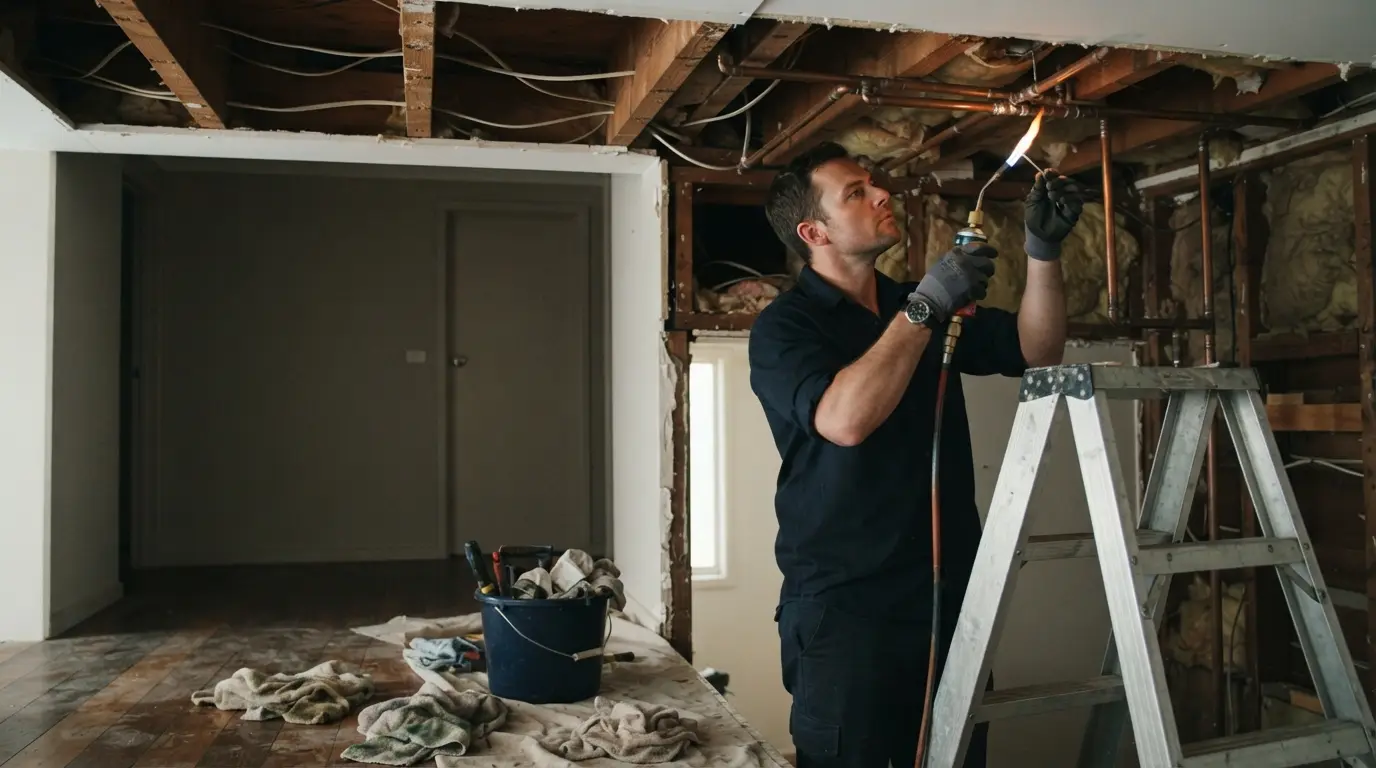
What we do: Thaw, repair and protect the line
Pipe burst during a cold snap, or sewage on the basement floor? Call us for emergency plumbing in Colorado; urgent problems are scheduled first. Colorado emergencies follow the weather. Arctic fronts split pipes in exterior walls and garages, spring snowmelt floods basements when sump pumps fail, and storms overload old sewer laterals. Water heaters and gas appliances add their own urgent calls. We stop the damage, find the cause and make the repair once you approve a written price. Here is what to do in the first minutes and how we respond.
The service
A plumbing emergency is anything that is damaging your home right now, creates a health or safety hazard, or leaves you without water or a working toilet. We schedule these calls ahead of routine work. When you call, we help you judge how urgent it is and tell you exactly what to shut off while we are on the way.
Common emergencies and first steps
Your first step: Close the main water valve
What we do: Thaw, repair and protect the line
Your first step: Stop all water use
What we do: Clear the main, camera it, plan repairs
Your first step: Check sump pump power; stay clear of wet electrical
What we do: Restore pumping, repair or replace the pump
Your first step: Check with neighbors and your provider
What we do: Find frozen, broken or blocked lines
Your first step: Leave and call the gas utility
What we do: Repair the leak once the site is safe
Your first step: Close the cold supply; cut gas or power
What we do: Repair or replace the heater
Why Colorado
Front Range temperatures can fall dramatically within hours. Pipes in exterior walls, over garages and in crawl spaces freeze, and hose bibs left connected split inside walls. Calls spike during and right after deep cold.
Wet spring snows and rapid melts raise groundwater. Basements flood when sump pumps fail or power goes out, and old laterals let water in and back up.
With 41% of Colorado homes in our data built before 1980, including 55% in Denver and 72% in Pueblo, worn valves, galvanized pipe and clay laterals cause many urgent calls.
Second homes in towns such as Steamboat Springs (median built 1994) can freeze if a furnace fails while no one is there, and leaks may run for days.
Warning signs
Our process
We tell you which valve to close or what to switch off so the damage stops.
Emergencies go ahead of routine work, and we keep you updated on timing.
Our plumber stops the leak, backup or hazard on arrival.
We explain the cause and give you a written price before repairing.
The repair is tested, and you get notes and photos for insurance.
Typical cost
You approve a written price before the repair, even in an emergency.
Get a written price: (833) 733-2357Nights, weekends and holidays cost more than regular hours.
A single split pipe is simpler than a collapsed lateral.
Finished basements and tight crawl spaces add time.
Water heaters and pumps cost more than fittings.
Sometimes we stabilize first and finish later.
Benefits
Finished basements soak up water fast.
Quick drying keeps mold from starting.
Sewage and gas need immediate attention.
Prompt repair and documentation help a claim.
We thaw frozen sections with controlled heat, replace split pipe and check the run for more damage. Then we fix the cause, such as an open vent, missing insulation or a pipe in a cold wall.
We clear the main from a basement cleanout, then camera the lateral to find roots, breaks or sags, and give you repair options.
We check for frozen service lines, failed pressure regulators, closed or broken valves and, on well homes, failed pumps or pressure switches.
The gas utility responds first. After the site is safe, we find the leak, repair it, pressure test and relight appliances, checking altitude setup.
If faucets stop flowing during extreme cold, a pipe has likely frozen somewhere. Leave the affected faucet open, open cabinet doors on exterior walls and warm the room. Do not use an open flame or leave a space heater unattended near pipes. Call us; we find the frozen section, thaw it safely and check for splits before the water pressure returns, because a split pipe will start leaking the moment it thaws.
Find your main water shutoff now, usually in the basement or crawl space where the line enters. For leaks, close it and turn off the water heater. For sewage, stop using water. For gas, get out and call the utility. For a flooding basement, check the sump pump power from a dry spot.
Keep away from water near electrical panels and outlets. Move belongings, take photos and open faucets on frozen lines. Never use an open flame on pipes. Then call us.
We make emergency repairs right away. When a repair requires a permit, such as a water heater replacement or sewer repair, we file it and schedule the inspection as local rules allow. Our plumbers hold the Colorado plumbing license required.
Why choose us
What you can count on every time one of our plumbers comes to your door.
Every job is handled by a plumber who holds the license your state or city requires, backed by liability insurance.
Our plumber explains the problem and the options, and you approve a written price before any work begins.
Burst pipes, sewage backups and failed water heaters get priority scheduling, including nights and weekends.
We pull permits when the job needs one and schedule the inspection, so the work holds up when you sell.
Repairs and installations come with a written warranty on labor, on top of the manufacturer's warranty on parts.
Our pages and plumbers account for your area's water, soil, climate and the age of the homes around you.
Service area
We take emergency calls in 482 Colorado places, from Colorado Springs (211,353 homes) to Aurora (152,377). Choose yours:
The time of the call, the repair, access and parts set the price. After we stop the damage, you approve a written price for the repair before we start it.
Yes. After-hours work costs more than regular hours, and we tell you the price before we make the repair so there are no surprises.
Sometimes. If it is safe, we can stop the leak or restore water now and schedule the permanent repair during regular hours.
We tell you how to stop the damage, schedule you ahead of routine work and keep you updated on when our plumber will arrive.
Yes. You get notes on the cause, photos and an itemized invoice that you can send to your insurance company with your claim.
Yes. We winterize systems, install automatic shutoff valves and add temperature and leak sensors that alert you by phone.
Leave the house, avoid switches and phones inside and call your gas utility or 911 from outside. We repair the leak once it is safe.
Yes. Sewage carries bacteria. Keep everyone out of the area, stop using water and let us clear the line before cleanup.
Immediately, by closing the main valve. We then repair it, usually within a few hours of arriving at your home.
Many repairs restore water the same visit. Frozen service lines and larger repairs take longer, and we give you a timeline.
Disconnect hoses, drain outdoor faucets, insulate exposed pipes, keep the heat on and open cabinets on exterior walls during cold snaps.
Yes. Find it, label it and turn it once a year. A stuck valve costs time in an emergency, and we replace bad ones.
Stop the water at the fixture valve or the main shutoff, turn off the water heater, keep clear of wet electrical areas and call us.
Snowmelt and spring storms raise groundwater, and when a sump pump fails or loses power, water rises into the basement.
Ice inside a split pipe holds water back. When it thaws, water pours out of the crack, which is why leaks appear as temperatures rise.