Gas leak repair
What it covers: Locating and repairing leaks at pipe, fittings, valves and connectors
Gas smell near the furnace closet, or a range that needs a new line? We provide gas line repair and installation in Colorado, pressure tested and inspected. Natural gas heats most Colorado homes and runs water heaters, ranges, dryers, fireplaces, garage heaters, patio fire pits and grills. At Colorado elevations, appliances and piping have to be sized and set up for thinner air, and older homes often carry corroded pipe and outdated connectors. We find and repair leaks, run new lines and hook up appliances. Here is how.
The service
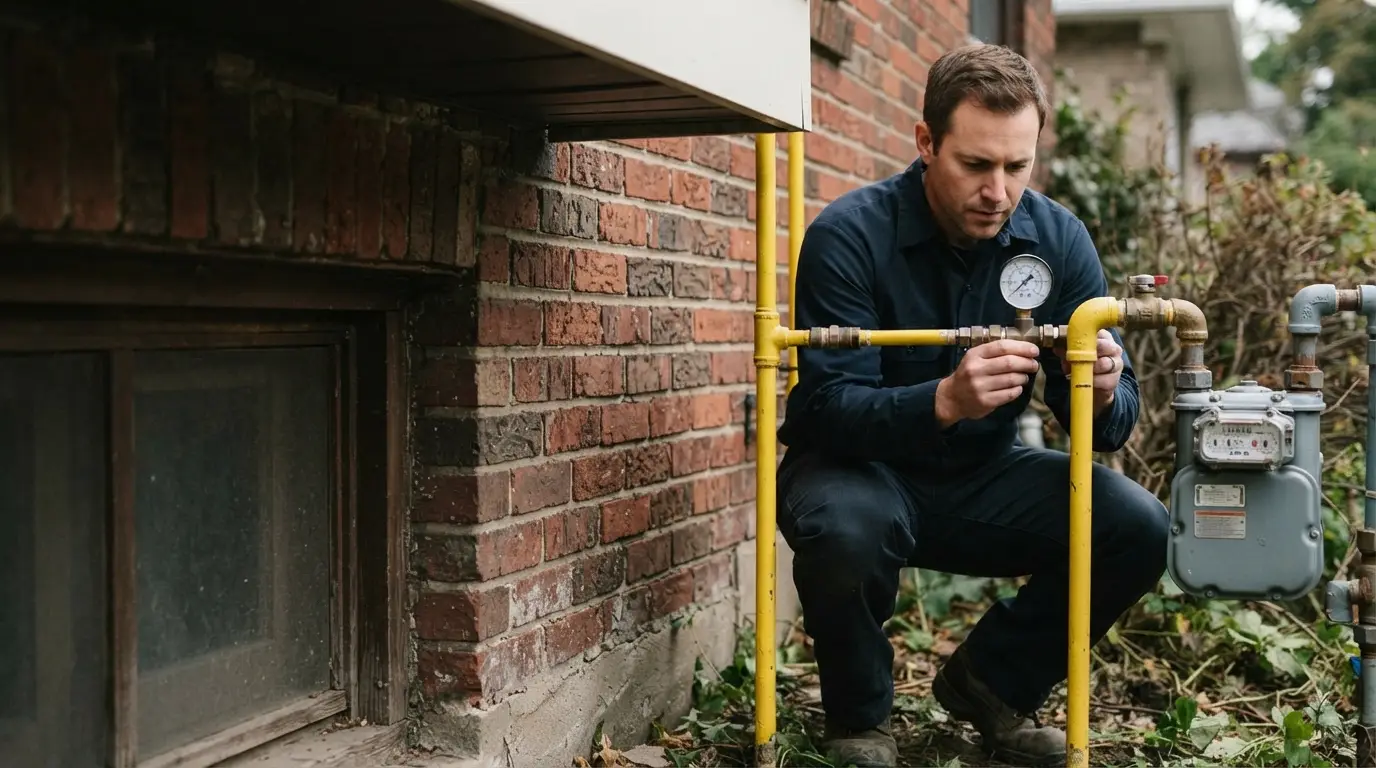
In our Colorado Census data, 69% of homes heat with utility gas, with even higher shares in Centennial (77%), Brighton (78%) and Greeley (75%). The gas utility owns the line to the meter; the house piping after it belongs to the owner, and that is where we work.
Our gas services
What it covers: Locating and repairing leaks at pipe, fittings, valves and connectors
What it covers: New lines for kitchens, additions, garage heaters, fire pits, grills and generators
What it covers: Ranges, dryers, water heaters, furnaces and fireplaces with shutoffs and approved connectors
What it covers: Testing new and repaired piping before service and for inspection
Why Colorado
55% of Denver homes and 72% of Pueblo homes predate 1980. Black iron in older basements and crawl spaces corrodes, and joints loosen after decades of temperature swings.
Expansive clay and frost heave can stress buried gas lines to detached garages, shops and outdoor appliances, and the riser where the meter connects.
Adding a tankless heater, bigger furnace or outdoor kitchen to an existing line can starve appliances. At altitude, sizing has to account for the lower energy content of gas per volume and longer runs.
Uncoated brass appliance connectors from past decades can crack. We replace them whenever we find them.
Warning signs
Our process
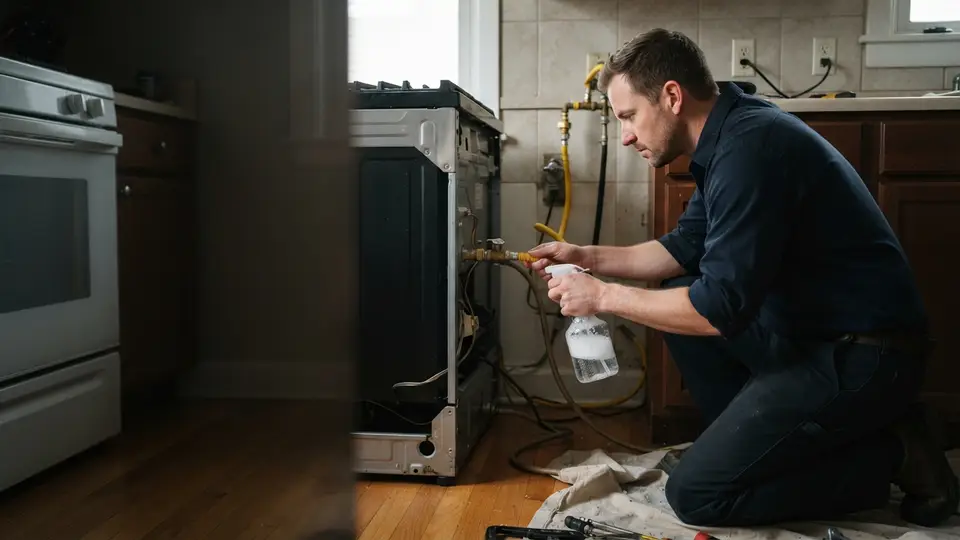
Once the utility has made the site safe, we pressure test the system, locate the leak with an electronic detector and leak solution, and replace the failed parts. The system is tested before gas is restored, and appliances are relit and checked.
We add up the load of every appliance, size the pipe for length and elevation, and install black iron or coated stainless tubing with proper support and bonding. Buried lines go to the required depth with tracer wire. Everything is pressure tested and inspected.
Each appliance gets a shutoff, an approved connector and a sediment trap where required. We check for leaks, confirm flame and venting, and make sure the appliance is set up for altitude.
Typical cost
We give you a written price before work begins.
Get a written price: (833) 733-2357Longer runs and finished walls take more time.
Black iron takes more labor than flexible stainless tubing.
Trenching below frost to a shop or patio adds cost.
Large appliances may need larger pipe or a meter upgrade.
Required for most gas work.
Emergency repairs after hours cost more.
Benefits
Proper fittings and testing prevent leaks.
Correct sizing and altitude setup reduce carbon monoxide.
Every appliance gets enough gas on the coldest nights.
Permits protect you with insurers and buyers.
Colorado homeowners add gas garage heaters for winter projects and fire pits and grills for summer evenings. Each needs a properly sized line, a shutoff and correct clearances. Garage heaters must be installed with venting and clearances that suit the space. Outdoor lines are buried to the required depth or protected where they run above ground. We plan the full load so a new appliance does not starve the furnace on a cold night.
About 2% of Colorado homes heat with propane, mostly in mountain and rural areas beyond gas mains, including around towns like Montrose (9,805 homes). The propane supplier usually owns the tank and first regulator. We install and repair the house piping and appliance connections and coordinate with the supplier when systems change.
Every gas meter has a maximum flow. Adding a tankless water heater, a larger furnace, a generator and an outdoor kitchen to a home with an older meter can exceed it, so appliances starve when several run at once. We calculate the new total load. If it exceeds the meter, we coordinate with the gas utility, which owns the meter, to request an upgrade before the new appliances go in.
Home inspections often flag gas piping concerns: old connectors, missing sediment traps, unsupported pipe or abandoned lines that were never capped. We evaluate those items, test the system and give you a written price to correct them, so you can plan repairs or negotiate before closing.
If you smell gas, get everyone out and call the utility first. Do not look for the leak or relight pilots. If the utility shuts off the meter, tell us so we can coordinate service restoration after the repair.
For new installations, have appliance model numbers and locations ready so we can size the line accurately.
Gas piping in Colorado generally needs a permit and inspection from the state, county or city that covers your address, and new piping must pass a pressure test. Our plumbers hold the Colorado plumbing license required for gas piping work. We pull permits, run tests, schedule inspections and coordinate with the gas utility.
Why choose us
What you can count on every time one of our plumbers comes to your door.
Every job is handled by a plumber who holds the license your state or city requires, backed by liability insurance.
Our plumber explains the problem and the options, and you approve a written price before any work begins.
Burst pipes, sewage backups and failed water heaters get priority scheduling, including nights and weekends.
We pull permits when the job needs one and schedule the inspection, so the work holds up when you sell.
Repairs and installations come with a written warranty on labor, on top of the manufacturer's warranty on parts.
Our pages and plumbers account for your area's water, soil, climate and the age of the homes around you.
Service area
We repair and install gas lines in 482 Colorado places. Choose yours:
It depends on where the leak is, how much pipe or how many fittings need replacing, access and permits. We give you a written price after locating the leak.
Distance from the existing line, the route, pipe size and venting for the heater drive the price. We quote it in writing first.
Underground runs below frost depth cost more than indoor hookups. Length and what is in the way matter most.
We pressure test the piping and use an electronic detector and leak solution on joints and connectors to find the spot.
Yes. We confirm each appliance is rated and adjusted for your elevation so it burns cleanly.
Yes. When service must be restored or the meter upgraded, we schedule with the utility after our work passes testing.
Leave, avoid switches and phones inside and call your gas utility or 911 from outside. We repair the leak once it is safe.
Get everyone outside and call 911 or the gas utility. Do not go back in until cleared, then have us check the appliances.
Many repairs take a few hours. Underground lines or reroutes can take a day or more, plus inspection.
After the repair passes a pressure test and any required inspection. We coordinate with the utility for a quick restart.
Usually yearly for furnaces and water heaters. Have connectors checked at the same visit.
Yes. Gently keep snow and ice off the meter and regulator vent so the regulator works properly.
Call us. We repair and test the piping, then arrange for service to be restored and relight appliances.
At elevation, appliances and piping must be sized and adjusted for thinner air and lower effective gas capacity.
Very common. Our Census data shows about seven in ten Colorado homes heat with utility gas.