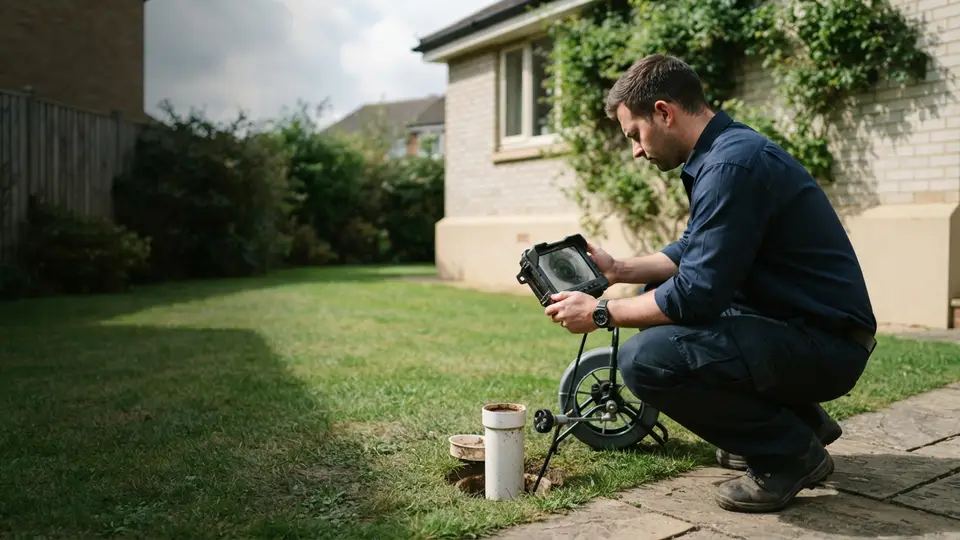
Spot repair
Fits when: One failed joint or short broken section
What it means for you: One excavation at the marked spot
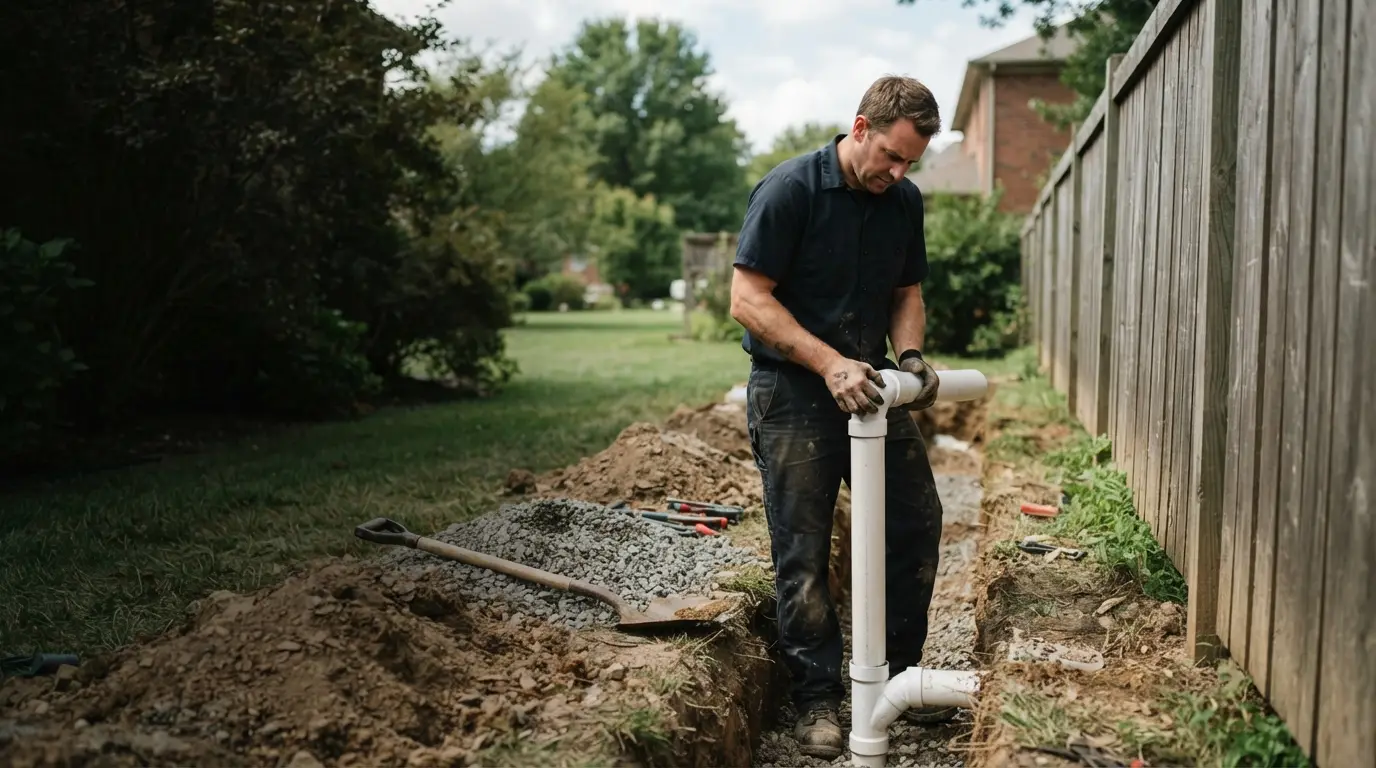
Same basement backup every spring, or a sunken strip in the lawn? Our crews do sewer line repair and replacement in Colorado after a camera inspection. Older Colorado laterals are mostly clay, cast iron or early plastic, and they fail from tree roots, expansive soil that heaves and settles, and frost working on shallow sections. We find the damage on video, explain each option and repair, line or replace the line to the main. Below are the warning signs, our process, the repair methods and what affects the price.
The service
Your sewer lateral runs from the foundation to the public main, usually in the street or alley. In most Colorado cities the property owner is responsible for the lateral, often including the connection at the main. In basement homes, the line leaves below the floor, so laterals are deep. We inspect, repair, line and replace laterals and add cleanouts.
Ways to fix a damaged lateral
Fits when: One failed joint or short broken section
What it means for you: One excavation at the marked spot
Fits when: Cracked or root-filled pipe that is still round
What it means for you: New pipe formed inside the old one with little digging
Fits when: Long runs under driveways, trees or landscaping
What it means for you: New pipe pulled through the old between two pits
Fits when: Collapsed, sagging or badly offset pipe
What it means for you: Excavate and relay at the correct slope
Why Colorado
About 17% of the homes in our Colorado Census data were built before 1960 and 41% before 1980. In Pueblo 72% predate 1980, in Arvada 53% and in Sterling 79%. Clay pipe from those years has joints that loosen, and cast iron rusts through on the bottom.
Cottonwoods, silver maples, elms and other large trees planted in older neighborhoods send aggressive roots toward any moisture, and sewer joints are a favorite target.
Swelling clay along the Front Range lifts and drops pipe as moisture changes. Joints separate and bellies form where waste collects.
Where a lateral runs shallow, such as under a driveway apron or near a foundation step, frost can stress the pipe and make it freeze in deep cold.
Warning signs
Our process
We record the full lateral and note the depth and distance of each defect.
A locator in the camera head lets us mark the route and problem spots on the ground.
You watch the footage with us and receive written prices for each suitable method.
We obtain the permit, including right-of-way permits for street work, and call 811 for utility locates.
We perform the chosen repair and add a cleanout if the house lacks one.
We verify the repair on video, then backfill and restore the surface.
Typical cost
We give you a written price for each option before you decide.
Get a written price: (833) 733-2357Basement homes have deeper laterals, which take more excavation.
Spot repair is least costly; full replacement under hardscape is most.
Right-of-way permits, traffic control and pavement patching add cost.
Driveways, mature trees and landscaping add care and time.
Frozen ground slows digging in winter.
These vary by city and county.
Benefits
A sealed line keeps roots and groundwater out.
A sound lateral keeps sewage from coming up through floor drains.
New pipe at the right grade carries waste away reliably.
A new cleanout makes any later work faster.
Sewer scopes are a routine part of buying a home in Colorado, especially in older neighborhoods. A failing lateral can cost more than many other repairs combined, and it is invisible during a showing. We scope the line from the cleanout, record defects with distances, and give a written repair price so buyers and sellers can negotiate with real information.
If sewage is backing up, stop all water use. Move belongings away from the basement floor drain and keep people and pets out of the area. If the outdoor cleanout is reachable, opening its cap slowly may let sewage flow outside instead of into the basement.
Do not dig near the line yourself; gas and electric lines are often close by, and street work requires a permit. Call us.
A backwater valve installed on the main line lets sewage leave the house but closes if the city main surcharges during heavy storms. For basement homes in low areas or with a history of backups from the main, it can prevent a costly cleanup. We install them during a lateral repair or as a separate job and show you how to inspect the flap.
Sewer lines do not wait for spring to fail. In winter, frozen topsoil has to be broken or thawed before excavation, which adds time and equipment, and asphalt patches may be temporary until plants reopen. When a line has failed completely, we repair it right away. When it is still flowing, we may clear it to buy time and schedule the replacement after the thaw, which often costs less. We explain both choices with written prices.
Sewer repair and replacement generally need a permit and inspection, and work in the street or alley needs a right-of-way permit. Our plumbers hold the Colorado plumbing license required, and we handle permits, utility locates and inspections.
Why choose us
What you can count on every time one of our plumbers comes to your door.
Every job is handled by a plumber who holds the license your state or city requires, backed by liability insurance.
Our plumber explains the problem and the options, and you approve a written price before any work begins.
Burst pipes, sewage backups and failed water heaters get priority scheduling, including nights and weekends.
We pull permits when the job needs one and schedule the inspection, so the work holds up when you sell.
Repairs and installations come with a written warranty on labor, on top of the manufacturer's warranty on parts.
Our pages and plumbers account for your area's water, soil, climate and the age of the homes around you.
Service area
We repair laterals in 482 Colorado places, from Denver's 359,581 homes to Colorado Springs and Lakewood, where 56% of homes predate 1980. Choose yours:
Depth, length, method, street work, what is above the line and permit fees all affect the price. After the camera inspection, you get a written price for each option.
Often, when driveways, trees or long distances sit above the line. A collapsed or sagging pipe may still need excavation.
Their laterals leave the house below the basement floor, so the pipe is deeper and takes more excavation to reach.
We feed a camera through the cleanout, record the full lateral and note the location and depth of roots, cracks, offsets and sags.
Yes. We scope the line, give you the video and a written repair price if needed, which helps with negotiations.
Yes. We obtain right-of-way permits, arrange traffic control and patch the pavement as the permit requires.
It can be. Leaking sewage contaminates soil and can back up into the basement. Keep everyone away from affected areas and call us.
We advise against it. Buried utilities run nearby and street work needs a permit. We call 811 before any digging.
Lining and spot repairs often take a day. Full replacements with street work can take several days, plus inspection.
Not while the line is open. We tell you when to stop using water and keep that time short.
Modern PVC and properly installed liners are expected to last for decades with normal use and no grease or wipes.
Lined or new pipe has no open joints. Keep new trees away from the route and avoid planting over the line.
Stop using water and call us. Sewer backups get priority scheduling, and we clear the line first, then find the cause.
Yes. Clay that swells and shrinks along the Front Range can separate joints and create sags in laterals.
Usually the property owner, often including the tap at the main. Your city or sanitation district can confirm the boundary.