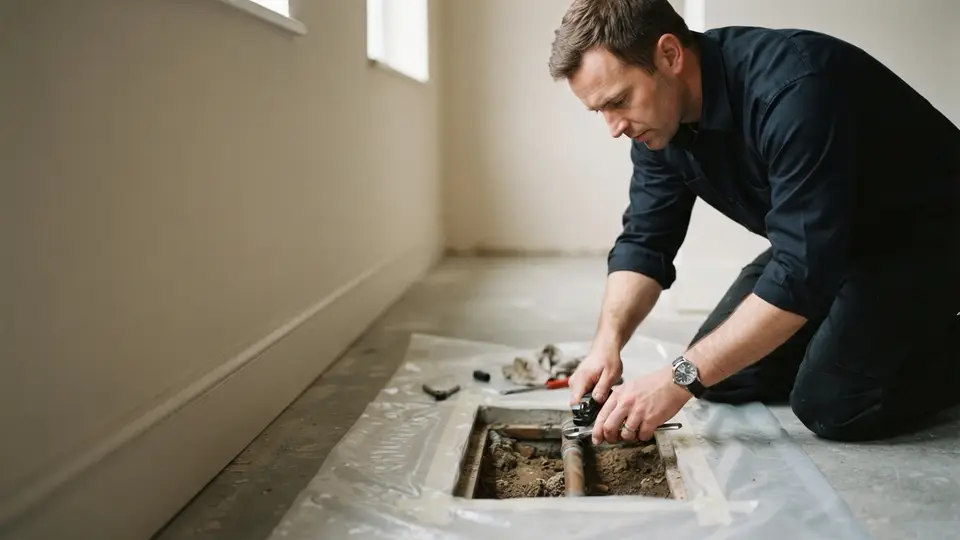
Direct repair
Best when: A single leak in otherwise sound pipe
What it involves: Small opening in the slab, repair, then patch
Basement carpet damp with nothing leaking above it? We do slab leak repair in Colorado for slab-on-grade homes and basement floors alike. Many Colorado homes have water and drain lines running under a concrete basement floor or a ground-level slab, and the region's expansive clay soils move enough to stress them. A slab leak can soak carpet, feed mold and raise the water bill long before anyone finds it. We locate the leak precisely, then repair it through the floor or reroute the line around it. Here is how.
The service
A slab leak is a leak in a pipe below or inside a concrete floor. In Colorado that can mean a ranch home on a slab, the slab floor of a basement, or a garage slab with lines running under it. The main water service often enters through the basement floor or foundation, and drain lines run beneath basement slabs to the sewer.
Some Front Range homes are built with structural floors over a crawl space because of expansive soil, and their pipes are easier to reach. Homes with slab floors directly on the soil are the ones where we see most slab leaks.
Repair options
Best when: A single leak in otherwise sound pipe
What it involves: Small opening in the slab, repair, then patch
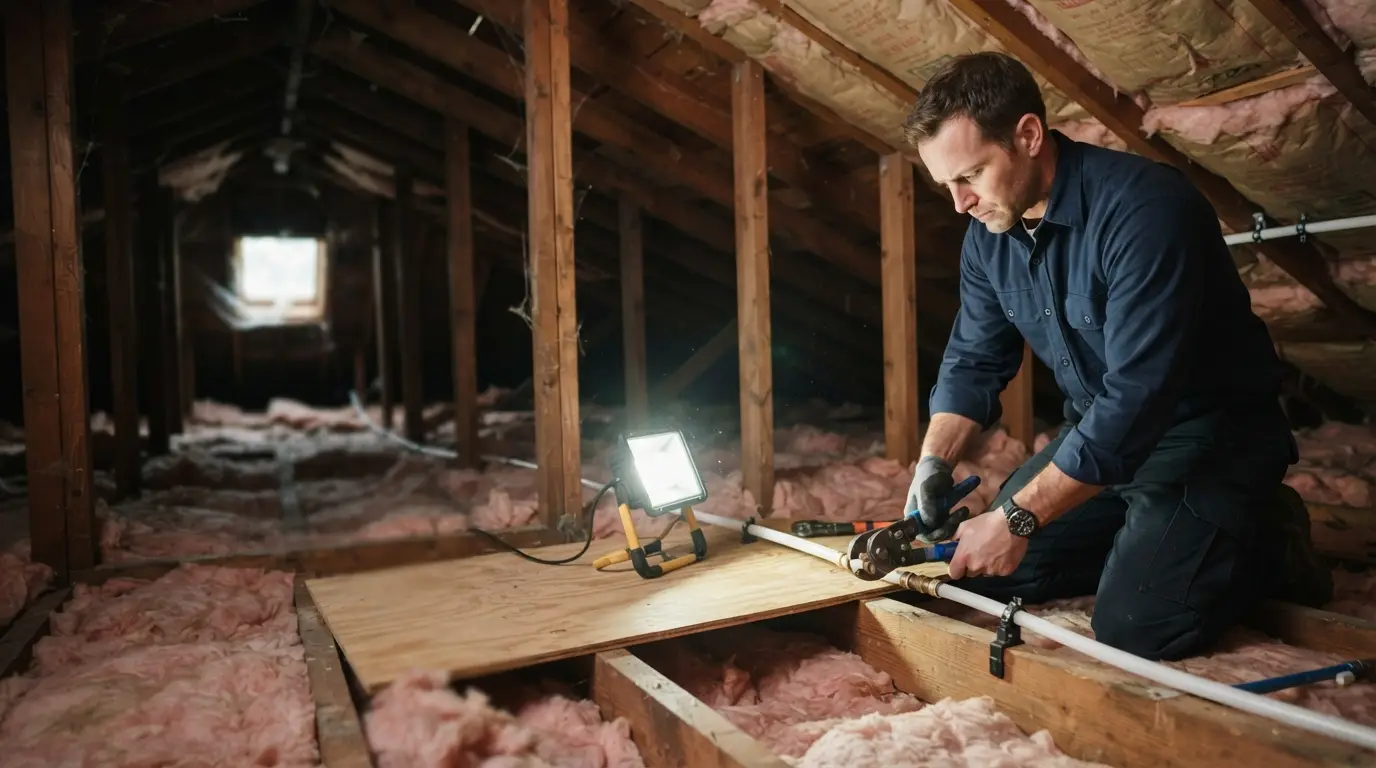
Best when: Older pipe or a leak under finished flooring or cabinets
What it involves: New line through walls, joists or ceilings; old line capped
Best when: Repeat leaks or widespread corrosion
What it involves: Replace supply lines throughout, mostly overhead
Best when: Leaking drain under the basement floor
What it involves: Spot repair through the slab or a liner from inside
Why Colorado
Clay soils along the Front Range can swell with water and shrink when dry. Slabs resting on that soil heave and settle, and pipes where they pass through or under the concrete bend until a joint or wall gives.
Copper lines under slabs wear where they rub on gravel or concrete, and hot lines expand and contract with each use. Over decades, pinholes form.
Cast iron and early plastic drains under basement floors can crack or separate as soil moves, leaking each time water drains.
High street pressure in some neighborhoods adds stress to buried pipes, especially when a pressure regulator has failed.
Warning signs
Our process
We test the meter and isolate hot, cold and drain lines.
Acoustic listening and thermal imaging locate the leak under the floor.
We weigh pipe age, location and your finishes, then give written prices for each.
Direct repairs open the slab at one spot; reroutes run new pipe through walls and joists.
We pressure test and recheck the meter before leaving.
Typical cost
You approve a written price before work starts.
Get a written price: (833) 733-2357Under open concrete is simpler than under tile, cabinets or a finished room.
Reroutes avoid the slab but use more pipe and wall access.
Tile and wood patches cost more than carpet.
Drain leaks under slabs may call for lining or excavation.
Reroutes and repipes generally require one.
Benefits
Water under a slab on expansive clay can cause the soil to swell and lift concrete.
Wet carpet pad and drywall breed mold quickly.
Hot water slab leaks waste both water and gas.
Early leaks can often be repaired before finishes are ruined.
Not every wet basement floor is a plumbing leak. Groundwater seeping through the slab after snowmelt, a failed sump pump or condensation can look similar. Our meter and pressure tests tell the difference before anyone breaks concrete.
Suburbs built heavily in the 1980s and 1990s now have plumbing that is 30 to 40 years old. The median home in Aurora dates from 1985, in Westminster from 1987, in Greeley from 1985, in Loveland from 1993 and in Thornton from 1997. Many of these homes sit on clay that moves, which is where most of our Colorado slab leak calls come from. Grand Junction, with a median build year of 1988, sees them too, often with harder water adding to pipe wear.
In a finished basement, a slab leak soaks the carpet pad from below and wicks into the bottom of drywall. Drying out quickly matters as much as the pipe repair. We locate and stop the leak, then tell you which areas are wet so a restoration company can dry them. When rerouting, we can often run new pipe through the basement ceiling joists, avoiding the slab entirely.
Homeowners policies treat slab leaks differently. Some pay to access the pipe and repair resulting water damage but not the pipe itself; others limit coverage for gradual leaks. We document the location, cause and repair with photos and notes so you have what your insurer asks for. Your policy decides coverage, so check with your agent.
If the floor is warm, the leak is likely on the hot side; close the cold inlet valve on top of the water heater to stop it. For cold-side or large leaks, close the main between uses.
Pull back wet carpet if you can do so safely, run fans, and photograph damage for your insurer. Do not break the concrete yourself. Call us to locate the leak.
Small direct repairs often need no permit, but reroutes and repipes usually do. Our plumbers hold the Colorado plumbing license required, and we pull permits and schedule inspections as needed.
Why choose us
What you can count on every time one of our plumbers comes to your door.
Every job is handled by a plumber who holds the license your state or city requires, backed by liability insurance.
Our plumber explains the problem and the options, and you approve a written price before any work begins.
Burst pipes, sewage backups and failed water heaters get priority scheduling, including nights and weekends.
We pull permits when the job needs one and schedule the inspection, so the work holds up when you sell.
Repairs and installations come with a written warranty on labor, on top of the manufacturer's warranty on parts.
Our pages and plumbers account for your area's water, soil, climate and the age of the homes around you.
Service area
We locate and repair slab leaks in 482 Colorado places. Choose yours:
It depends on where the leak is, whether we repair or reroute, your flooring and permits. We give you a written price for each option.
Often, especially in basements where new pipe can run through ceiling joists. We price both so you can compare.
When you have had repeat slab leaks or the pipe is corroded throughout. One repipe can cost less than several separate repairs.
We isolate the leaking line, then use acoustic listening and thermal imaging to pinpoint it before opening concrete.
Usually a small opening over the leak, just large enough to work on the pipe. Precise location keeps it small.
Often, yes. A liner installed from inside can seal a cracked drain without breaking the floor, if the pipe is still round.
Yes. Water under a slab on expansive clay can make the soil swell and lift or crack concrete.
For short periods, usually. Close the valve to the leaking line between uses and call us. Large leaks need the main closed.
Most direct repairs or reroutes are done in one or two days.
Usually during the first visit, often within a few hours.
Keep drainage away from the foundation, maintain normal water pressure and consider rerouting after a first leak.
Yes. Comparing each bill with the same month last year is a reliable early warning.
Shut off the main water valve and call us. Surfacing leaks get priority scheduling.
Bentonite clay along the Front Range swells and shrinks with moisture, moving slabs and stressing the pipes beneath them.
Yes. Water service and drain lines often run under basement floors, and they can leak just like lines under a ground-level slab.