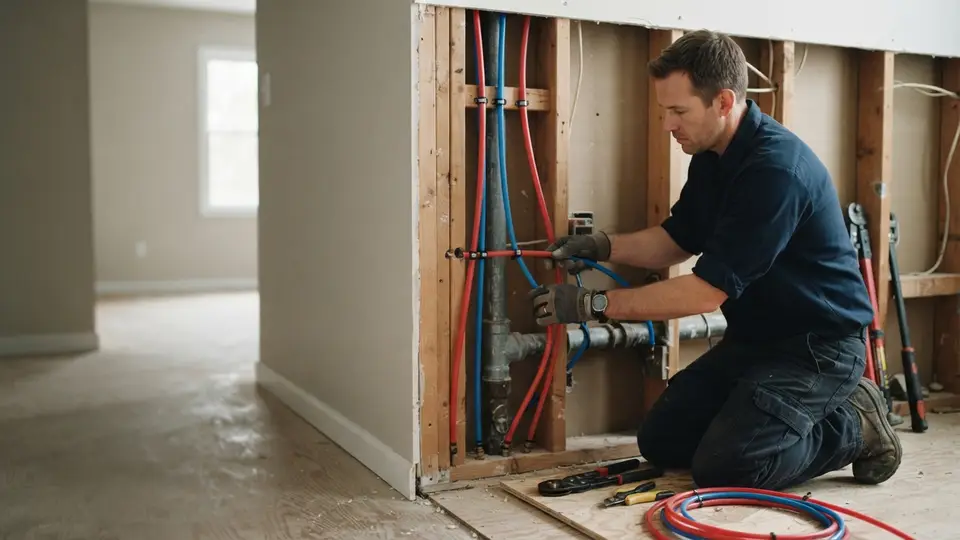
PEX
Typical use: Most whole-house repipes
Why: Flexible, tolerates freezing better than rigid pipe, fewer fittings
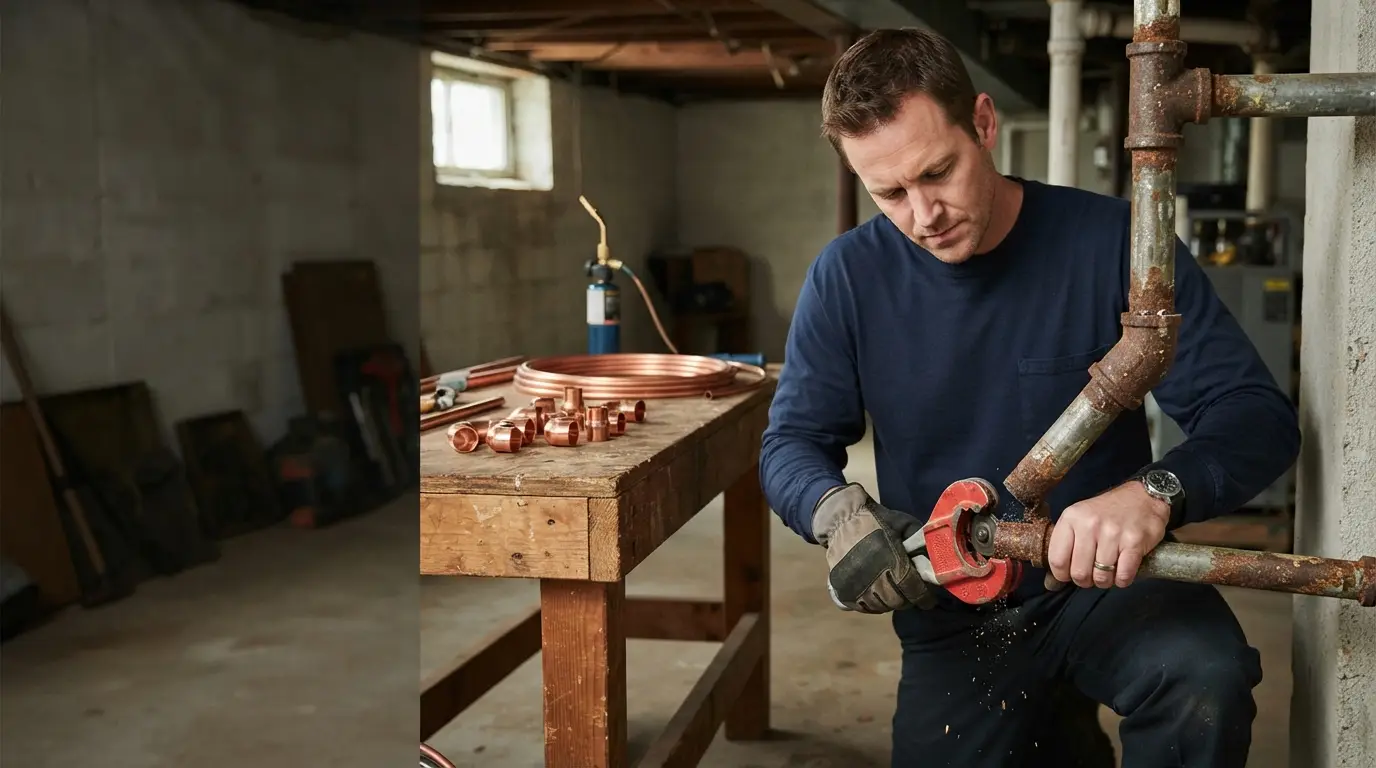
Rusty water from the tap, or pressure that keeps dropping? We handle repiping and water line replacement in Colorado for homes with worn-out pipe. Older Colorado neighborhoods still run on galvanized steel and early copper, and many service lines from the curb stop are old galvanized or copper buried below a deep frost line. We repair sections, repipe whole homes through basements and crawl spaces, and replace service lines with as little digging as possible. Below: signs it is time, our process, and what affects price.
The service
Pipe repair replaces a damaged section. Whole-house repiping replaces every supply line from the main shutoff to each fixture. Water line work covers the buried service line from the curb stop to the house, which in most Colorado cities belongs to the homeowner. Older homes often need all three.
Materials we use
Typical use: Most whole-house repipes
Why: Flexible, tolerates freezing better than rigid pipe, fewer fittings
Typical use: Exposed runs and owner preference
Why: Long track record, rigid and durable
Typical use: Curb stop to house
Why: Chosen by utility rules, soil and depth
Why Colorado
17% of the Colorado homes in our data were built before 1960. In Pueblo, 72% of homes predate 1980, in Denver 55% and in Northglenn 60%. Galvanized supply lines from those years close up with rust and fail at threaded joints.
Rigid pipe in exterior walls and crawl spaces that has frozen and been patched several times is often weak throughout. Repiping lets us route lines inside the heated envelope.
Harder water on the plains and Western Slope builds scale inside pipes and fixtures. Plains towns such as Sterling and Craig, where 67% of homes predate 1980, see both scale and old galvanized.
Service lines buried deep for frost protection may be decades old. Soil movement and corrosion cause leaks that show up as wet spots in the yard or water in the basement.
Warning signs
Our process
We look at the existing pipe, fixtures, basement or crawl space access and the best routes.
You approve the material, routes, schedule and written price.
We cover floors and finishes and keep openings small.
The old system keeps working while new pipe goes in; water is off only for connections.
Every fixture gets a new shutoff, the system is pressure tested and flushed, and we schedule the inspection.
Access openings are patched as agreed in the price.
Typical cost
You get a written price covering every part before we start.
Get a written price: (833) 733-2357More bathrooms mean more pipe and labor.
Finished ceilings need more openings and patching.
PEX generally costs less than copper.
Deep frost-protected lines take more excavation.
Frozen ground slows outdoor work.
Most Colorado jurisdictions require one for repipes and service lines.
Benefits
Full-diameter pipe brings back strong flow everywhere.
No more rust from corroded galvanized.
New routes keep pipes inside the heated space.
Every fixture can be isolated for future repairs.
Before recommending a full repipe, our plumber checks whether a section repair will hold. If most of the pipe is sound and one run has failed, a repair is the better value, and we say so. When the pipe is corroded throughout, patching only moves the next leak somewhere else.
Unfinished basements make repiping straightforward: most new lines run along the joists with short vertical runs into walls above. Finished basements take more planning, since ceilings hide the main runs. We look for soffits, utility rooms and closets that can carry pipe, and open drywall only where needed. In crawl space and slab homes, we route through the crawl space or attic, keeping lines away from cold exterior walls.
Finishing a basement or remodeling a kitchen opens walls and ceilings that normally hide the plumbing. That is the least expensive time to replace old supply lines, because access is already there. We work with your contractor so new pipe goes in before insulation and drywall, set valves and stub-outs for the new layout, and can repipe the rest of the house in the same project.
Renters occupy 36% of Colorado homes in our data. In duplexes and small apartment buildings in Denver, Boulder and Fort Collins, we can phase a repipe unit by unit so occupied units keep water, and give the owner a schedule to share with tenants.
Mountain cabins often have plumbing that has frozen and been patched more than once, with lines running through cold crawl spaces and exterior walls. A repipe lets us reroute lines inside the heated space, add drain-down valves for winterizing and install PEX, which tolerates freezing better than rigid pipe.
When the service line leaks or is undersized for the home, we trace it, check its depth and replace it from the curb stop to the house. In many cases we can pull new pipe through with small pits at each end instead of trenching the whole yard. New lines go below the frost line, are pressure tested and inspected before backfill, and we coordinate with your water provider for work at the curb stop or meter.
If old pipe leaks, close the main shutoff, usually in the basement where the line enters. Older valves can break if forced; if it will not turn, call us and your water provider about the curb stop.
Note which fixtures have weak pressure or rusty water. Clear access to the basement ceiling, crawl space entrance and water heater before our survey.
Repiping and service line replacement usually require a permit and inspection from the state, county or city that covers your address. Our plumbers hold the Colorado plumbing license required, and we pull permits, schedule inspections and coordinate with your water provider.
Why choose us
What you can count on every time one of our plumbers comes to your door.
Every job is handled by a plumber who holds the license your state or city requires, backed by liability insurance.
Our plumber explains the problem and the options, and you approve a written price before any work begins.
Burst pipes, sewage backups and failed water heaters get priority scheduling, including nights and weekends.
We pull permits when the job needs one and schedule the inspection, so the work holds up when you sell.
Repairs and installations come with a written warranty on labor, on top of the manufacturer's warranty on parts.
Our pages and plumbers account for your area's water, soil, climate and the age of the homes around you.
Service area
We repipe homes in 482 Colorado places, from Lakewood (56% of homes before 1980) to Sterling (79%). Choose yours:
Home size, fixture count, basement finishes, material and permits set the price. After surveying your home, we give you a written price.
Usually, yes. PEX costs less and installs faster with fewer joints, and it tolerates freezing better than rigid pipe.
Depth, length, what lies above the line and the method drive the price. We trace the line before giving you a written quote.
Yes, in most cases. Water stays on except during short connection periods.
Yes. Openings are patched as described in your written price, often ready for paint.
Yes. A new main shutoff and new stops at every fixture are part of our repipe.
Rust is mostly a nuisance, but older systems can have lead in solder or fittings. Repiping removes that concern; testing shows current levels.
No. Old valves can break. If it will not turn, stop and call us and your water provider.
Many homes take two to four days, longer with finished basements, plus inspection.
Often one day. Winter conditions or long, deep runs can extend it.
PEX and copper installed correctly are expected to last for decades.
If your water is hard, a softener protects the new pipe, water heater and fixtures from scale.
Shut off the main and call us. We fix the break so you have water, and the repipe goes ahead as planned.
PEX can expand slightly when water freezes, so it is less likely to split than copper or steel, though it should still be protected.
Usually, yes. We pull it from the right jurisdiction and schedule the inspection.