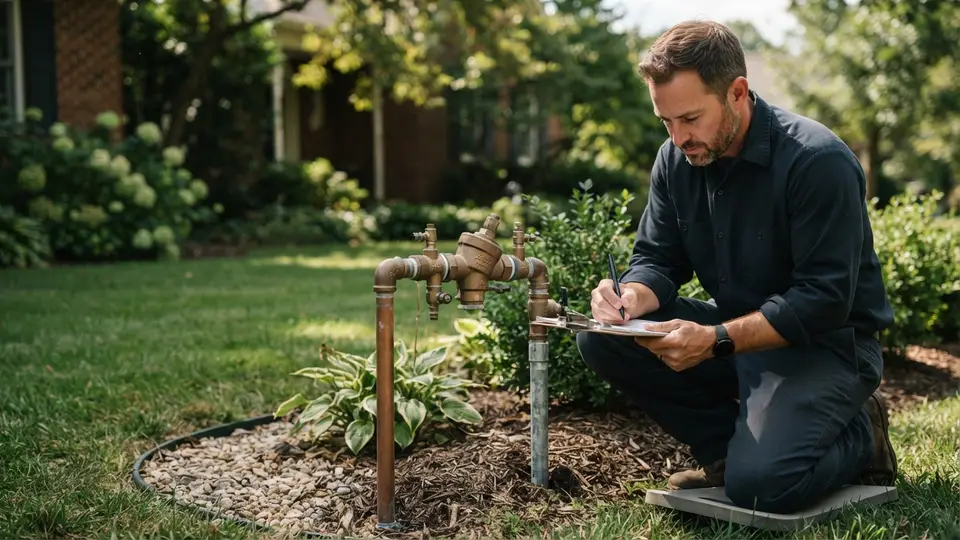
Reduced pressure zone (RPZ)
Typical use: Boilers, commercial kitchens, chemical lines
Protection level: High hazard
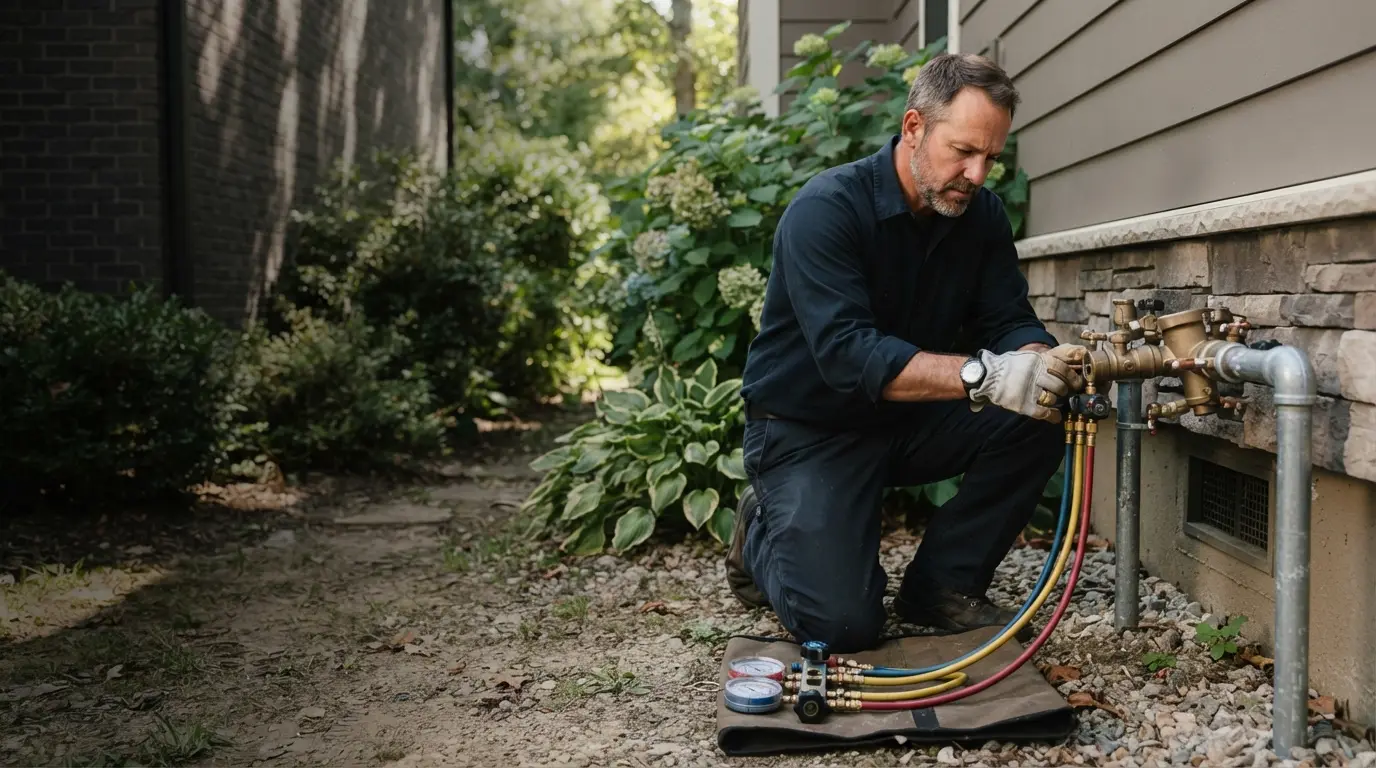
Got a backflow test notice from the water department? We handle backflow testing and prevention in Massachusetts. Our plumbers test, install and repair backflow preventers on irrigation systems, fire sprinklers, boilers and commercial equipment, and we send results to your water supplier. Massachusetts runs a cross-connection control program under state drinking water rules, so testable devices need regular checks. We keep your devices in service and your paperwork in order.
The service
Backflow happens when water flows the wrong way into the public supply, carrying chemicals, fertilizers or boiler water with it. It can be caused by a drop in street pressure, such as a main break or firefighting, or by equipment pushing water back. A backflow preventer blocks that reverse flow. Water suppliers in Massachusetts require testable devices on many connections and must track their testing.
Common backflow devices
Typical use: Boilers, commercial kitchens, chemical lines
Protection level: High hazard
Typical use: Fire sprinklers, some irrigation
Protection level: Lower hazard
Typical use: Lawn irrigation
Protection level: Irrigation hazards
Typical use: Outdoor faucets
Protection level: Basic, not testable
Why Massachusetts
MassDEP drinking water regulations require water suppliers to run a cross-connection control program.
Suburban lawn sprinklers carry fertilizer and soil water that must not reach the supply.
Many homes and buildings have boilers with treated water that could flow back.
Standing water in sprinkler lines needs to stay separated from drinking water.
Warning signs
Our process
We test each device with calibrated gauges, check that the check valves and relief valve work within limits and file the results with your water supplier. Some devices must be tested more often than once a year; your supplier sets the schedule.
We pick the right device for the hazard, install it where it can be tested and protected from freezing and get any required approval from the water supplier.
When a device fails, we rebuild it with new checks, springs and seals, or replace it, then retest it and file the passing result.
Typical cost
Prices are estimates only until we see the device. These factors matter:
We explain the options and you approve a written price before we start.
Get a written price: (833) 733-2357Several devices in one visit cost less each.
Large RPZs take longer.
Rebuild kits and replacement parts.
New devices, piping and enclosures.
Spring startup and fall shutdown.
Benefits
Your supply and your neighbors stay protected.
Results filed on time.
Devices maintained before they fail.
We keep track of every device and due date.
Lawn sprinklers are common in Lexington (12,754 homes), Framingham and other suburbs. Each system needs a backflow device, and because Massachusetts winters freeze, the device must be drained or removed each fall and reinstalled and tested in spring. A device left full of water will crack. We handle fall shutdown and spring startup along with testing, so the system is ready and the paperwork is filed.
Office parks and labs in Waltham (26,728 homes), Woburn and Marlborough, and restaurants in Boston and Worcester, have many cross-connections: boilers, soda machines, dishwashers, lab equipment and fire lines. Each one may need a device and regular testing. We keep a schedule of every device in your building, test on time and handle repairs so you do not get notices or fines from the water supplier.
Buildings with five or more units hold 55% of homes in Cambridge and 46% in Boston. These buildings often have fire sprinkler systems, boilers and booster pumps that need backflow protection. We test devices for property managers and condo associations, plan any shutoffs with residents in mind and keep test records for the building.
Backflow devices outdoors or in unheated rooms freeze and crack in a Massachusetts winter. An RPZ can split its body, and a broken device can flood a mechanical room. We install devices indoors where possible, add insulated enclosures or heat outdoors and drain seasonal devices in the fall. If a device freezes, we replace it and retest it.
Hot water and steam boilers heat a large share of older Massachusetts homes and apartment buildings, in Worcester (85,876 homes), Springfield and the inner suburbs alike. The boiler fill line connects drinking water to a closed loop that may hold antifreeze, corrosion inhibitors or simply stale, rusty water. A backflow device on that fill line keeps it out of the supply. Older boilers sometimes have none, or an outdated single check valve. When we service a boiler fill or replace a feed valve, we check the protection and bring it up to what your water supplier expects.
Devices fail for ordinary reasons: debris from a water main flush lodges in a check valve, rubber seals harden, or springs weaken after years of use. A failed result does not mean your water is unsafe, but the device must be repaired and retested within the time your supplier allows. We carry rebuild kits for common makes, so many repairs are done on the same visit. If a device is obsolete or damaged beyond repair, we price a replacement and file the new test once it passes.
Find your test notice and note the device location and serial number. Make sure we can reach the device and the shutoff valves.
If an RPZ is discharging a lot of water, close the shutoffs on either side of it if you can do so safely. Then call us.
Installing a new backflow device usually needs a plumbing permit and approval from the water supplier. Testing must be done by a certified tester, and we file results with your supplier. Our plumbers hold Massachusetts plumbing licenses, and our testers hold the required backflow certification.
Why choose us
What you can count on every time one of our plumbers comes to your door.
Every job is handled by a plumber who holds the license your state or city requires, backed by liability insurance.
Our plumber explains the problem and the options, and you approve a written price before any work begins.
Burst pipes, sewage backups and failed water heaters get priority scheduling, including nights and weekends.
We pull permits when the job needs one and schedule the inspection, so the work holds up when you sell.
Repairs and installations come with a written warranty on labor, on top of the manufacturer's warranty on parts.
Our pages and plumbers account for your area's water, soil, climate and the age of the homes around you.
Service area
We test and repair backflow devices in 248 Massachusetts communities, including Springfield (62,217 homes), Quincy and Barnstable (27,656 homes). Find yours:
It depends on the number and type of devices. Testing several devices in one visit costs less each. We give you a written price first.
A rebuild is usually cheaper if the body is sound. A frozen or cracked device needs replacement.
Filing is part of the test. We send the results to your water supplier and give you a copy.
We connect calibrated gauges to the test cocks, check each valve and relief valve and record the readings.
Yes. We install the correct device, set it where it can be tested and drained, and handle approval.
Yes. We reinstall and test devices in spring and drain or remove them in the fall.
Yes. Backflow can draw chemicals or contaminated water into drinking water. Devices exist to prevent that.
Stop drinking it, contact your water supplier and call us to check your backflow devices.
Usually under an hour per device. Water is off briefly during the test.
At least once a year for many devices, and more often for some high-hazard devices. Your water supplier sets the schedule.
Install it indoors or in an insulated, heated enclosure, and drain seasonal devices before winter.
For seasonal irrigation devices, draining or removing them before a freeze is common. We do it for you.
Close the shutoffs on either side if safe and call us. A discharging RPZ usually needs repair.
Water suppliers run cross-connection programs under MassDEP rules and send testing notices to property owners.
Homes with irrigation systems, boilers or fire sprinklers often do. Your water supplier will notify you.