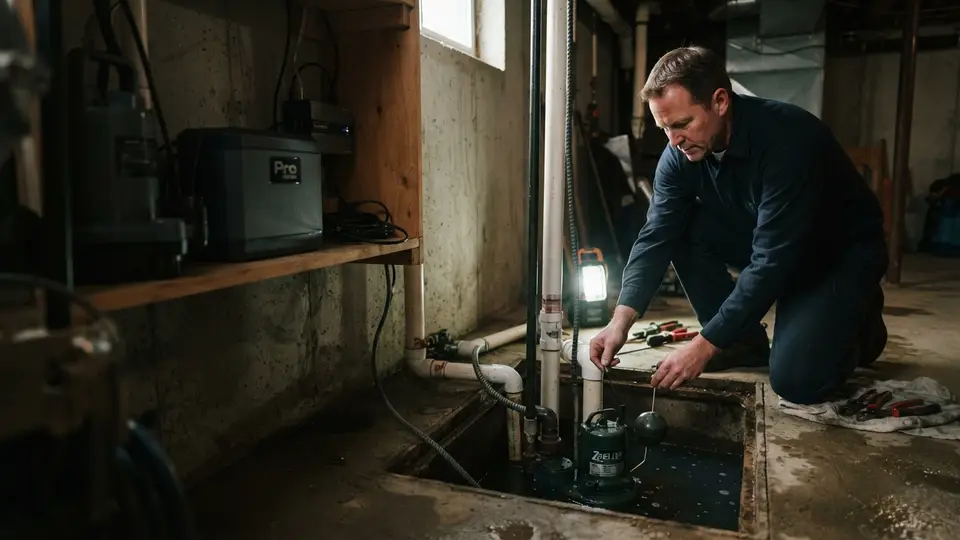
Submersible
How it works: Sits in the pit, quiet and sealed
Best for: Most finished and unfinished basements
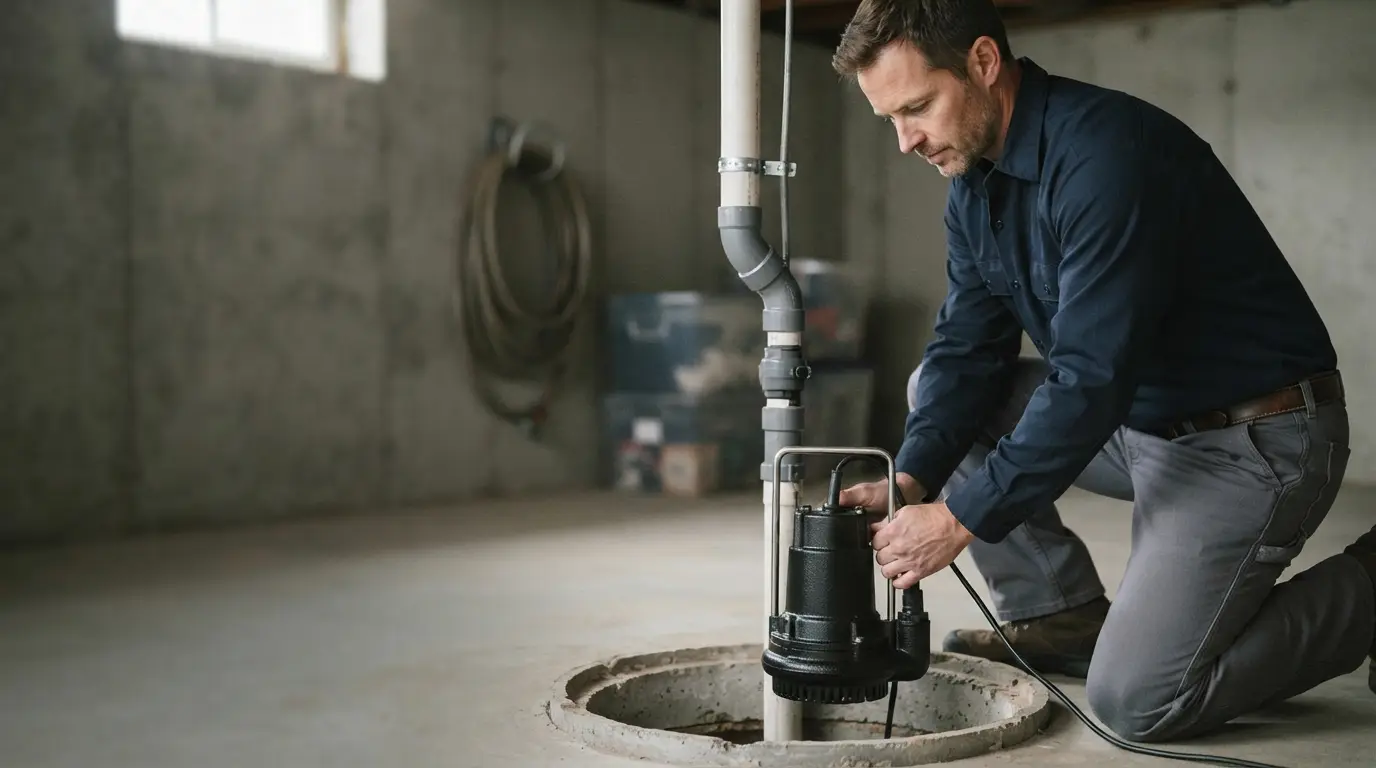
Water on the basement floor after snowmelt, or a pump that hums but will not run? We handle sump pump repair and installation in Massachusetts. Nearly every home here has a basement, and spring thaw, nor'easters and high groundwater push water against old stone and block foundations. Our plumbers repair failed pumps, install new pits and pumps, and add battery backup systems so the basement stays dry when the power goes out in a storm.
The service
A sump pump sits in a pit at the lowest point of the basement and pumps groundwater out before it rises through the floor or walls. 53% of Massachusetts homes in our data were built before 1960, many with fieldstone or early block foundations that let water through. Newer homes often come with a pump from the builder, but those factory pumps are rarely the best quality.
Sump pump options
How it works: Sits in the pit, quiet and sealed
Best for: Most finished and unfinished basements
How it works: Motor above the pit
Best for: Small or shallow pits
How it works: Second pump runs on a battery
Best for: Storms and power outages
How it works: Uses city water pressure
Best for: Homes on municipal water
Why Massachusetts
Melting snow and frozen ground send water toward the foundation in March and April.
Coastal storms bring heavy rain and power outages at the same time.
River valleys, wetlands and coastal lowlands have water tables that rise each spring.
Fieldstone and early block walls let water through joints and cracks.
Warning signs
Our process
We test the float, switch and motor, clear the pit and intake, check the check valve and discharge line and replace failed parts.
We dig and line a pit at the low point, set a properly sized pump, run discharge away from the foundation and install a check valve.
We install a second pump on a deep-cycle battery with an alarm, so the pit keeps draining when power is out or the main pump fails.
Typical cost
Prices are estimates only until we see the basement. These factors matter:
We explain the options and you approve a written price before we start.
Get a written price: (833) 733-2357A switch is cheaper than a new pump.
Cutting the floor and digging adds labor.
Higher-volume pumps cost more.
Battery or water-powered.
Long runs or dry wells add work.
Benefits
Water is removed before it rises.
A backup keeps pumping.
A drier basement means less damp air.
An alarm warns you before flooding.
Haverhill (27,892 homes), Methuen and Lowell (44,850 homes) sit along the Merrimack River, and many neighborhoods on low ground see high water in spring. Basements here often need a reliable pump plus a backup. We size pumps for the volume a basement actually takes on and route discharge where it will not run back toward the house or into a neighbor's yard.
Brockton (median year 1960), Taunton (1965), Randolph and Braintree have neighborhoods on flat, wet ground near brooks and wetlands. Groundwater rises close to the basement floor in spring. Pumps there may run for weeks. We install pumps rated for long run times, check valves that stop backflow into the pit, and backups that keep the basement dry during nor'easter outages.
Many older homes in Worcester (85,876 homes), Springfield (62,217 homes) and the hill towns have fieldstone foundations. Water seeps between stones, especially in spring. A sump pit with a perimeter drain directs that water to one spot and pumps it out. We set the pit where the water collects and make sure the discharge goes well away from the wall so it does not soak back in.
Finished basements are common in Franklin (median year 1985), Peabody and Woburn. A single pump failure can ruin carpet, drywall and furniture. We recommend a quality primary pump, a battery backup and a high-water alarm or smart sensor for these basements. We also check that the pit lid is sealed so moisture and radon do not escape into living space.
Many Massachusetts towns do not allow sump pumps to discharge into the sanitary sewer, because the extra water overloads treatment plants. Discharge usually goes to the yard, a dry well or a storm drain where permitted. In winter, an outdoor discharge line can freeze, so we pitch it to drain and add a freeze-resistant outlet. Ask your town about its rules; we set up discharge to meet them.
A sump pump fails quietly. A stuck float or a tripped breaker gives no warning until water is on the floor. A simple high-water alarm in the pit sounds before the basement floods, and Wi-Fi monitors can send a phone alert if the pump stops or the power fails. For seasonal homes and finished basements, we strongly suggest one. We install alarms and monitors with the pump and test them before we leave.
Check that the pump is plugged in and the breaker is on. Lift the float gently to see if the pump starts. Clear debris from the pit if you can reach it safely.
Move belongings off the floor and keep away from water near outlets. Then call us.
Replacing a sump pump usually does not need a permit, but new discharge connections or plumbing changes may. Some towns restrict where pumps may discharge. We check local rules and handle permits. Our plumbers hold Massachusetts plumbing licenses.
Why choose us
What you can count on every time one of our plumbers comes to your door.
Every job is handled by a plumber who holds the license your state or city requires, backed by liability insurance.
Our plumber explains the problem and the options, and you approve a written price before any work begins.
Burst pipes, sewage backups and failed water heaters get priority scheduling, including nights and weekends.
We pull permits when the job needs one and schedule the inspection, so the work holds up when you sell.
Repairs and installations come with a written warranty on labor, on top of the manufacturer's warranty on parts.
Our pages and plumbers account for your area's water, soil, climate and the age of the homes around you.
Service area
We repair and install sump pumps in 248 Massachusetts communities, from Braintree (15,163 homes) and Randolph (13,080 homes) to Methuen and Peabody. Find yours:
It depends on the pump size, the condition of the pit and the discharge line. We give you a written price before we start.
For most Massachusetts basements, yes. Nor'easters often cut power just as groundwater rises, and a backup keeps pumping.
Cutting the floor, digging and lining a pit adds labor compared with a pump swap. We price it clearly before starting.
We look at how much water the basement takes on, the lift height and the discharge length, then match the pump capacity.
We cut and dig the pit, set the liner and pump, install the check valve and discharge line and test it with water.
Yes. We set the pit where water collects and can add drainage to lead water to it.
Yes, if water reaches outlets or appliances. Keep out of standing water and shut off power only if you can do it safely.
Unplug the pump first. Never reach in while it is plugged in or standing in water near electrical connections.
A replacement takes a few hours. A new pit and pump usually take most of a day.
Often around seven to ten years, less if they run constantly. A pump that has been running hard for years should be checked.
Each fall and again before spring thaw, by pouring water into the pit until the pump starts.
Yes. We pitch the line to drain and add a freeze-resistant outlet so it keeps working in winter.
Call us. Flooding basements get priority, and we keep you updated on timing.
Many towns do not allow it. Discharge usually goes to the yard, a dry well or a storm drain where permitted.
Snowmelt, rain and a rising water table push water against old foundations. A good sump system handles it.