Water softener
What it treats: Hardness (calcium and magnesium)
Common in: Some well and town supplies
Orange stains in the tub, or blue-green marks under the faucet? We handle water softeners and filtration in Massachusetts. Our plumbers install softeners, iron and manganese filters, acid neutralizers, whole-house filters and reverse osmosis systems. Massachusetts water problems vary by source: public reservoir water is often soft and treated, while private wells in many towns can be acidic, hard or full of iron and manganese. We start with a water test and install only what your water needs.
The service
Boston-area communities on the MWRA system receive soft water from the Quabbin and Wachusett reservoirs, treated and adjusted for corrosion control. Worcester, Springfield and other cities run their own reservoir systems. Many suburban and rural towns pump groundwater from local wells, and a large number of homes have private wells. Groundwater in parts of the state is acidic, and some wells carry iron, manganese, hardness, radon or arsenic. Treatment depends on what is in your water.
Water treatment we install
What it treats: Hardness (calcium and magnesium)
Common in: Some well and town supplies
What it treats: Orange and black staining
Common in: Private wells
What it treats: Low pH, blue-green stains
Common in: Private wells
What it treats: Grit, taste, odor, chlorine
Common in: Wells and city water
What it treats: Dissolved solids, many contaminants
Common in: Drinking water at the kitchen sink
Why Massachusetts
Much of the state sits on granite and glacial sand with little limestone, so well water is often acidic.
Dissolved iron and manganese are common in wells and some town supplies.
Parts of the Berkshires and other areas have harder water.
Some private wells in New England contain radon or arsenic, which need specific treatment.
Warning signs
Our process
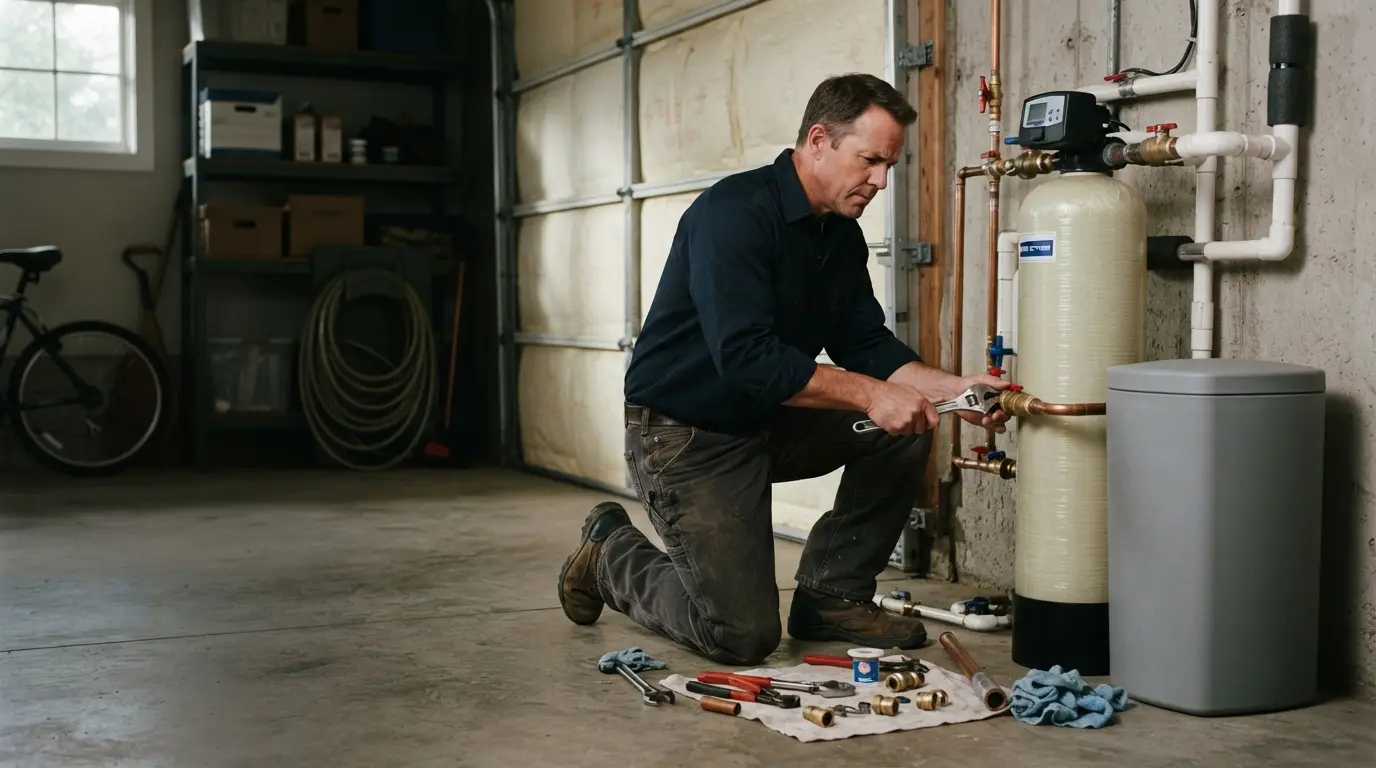
We size the softener to your hardness and water use, install it with a bypass valve and drain line and set the regeneration schedule.
We install sediment, carbon, iron and manganese filters and acid neutralizers where the water enters the house, with valves for easy service.
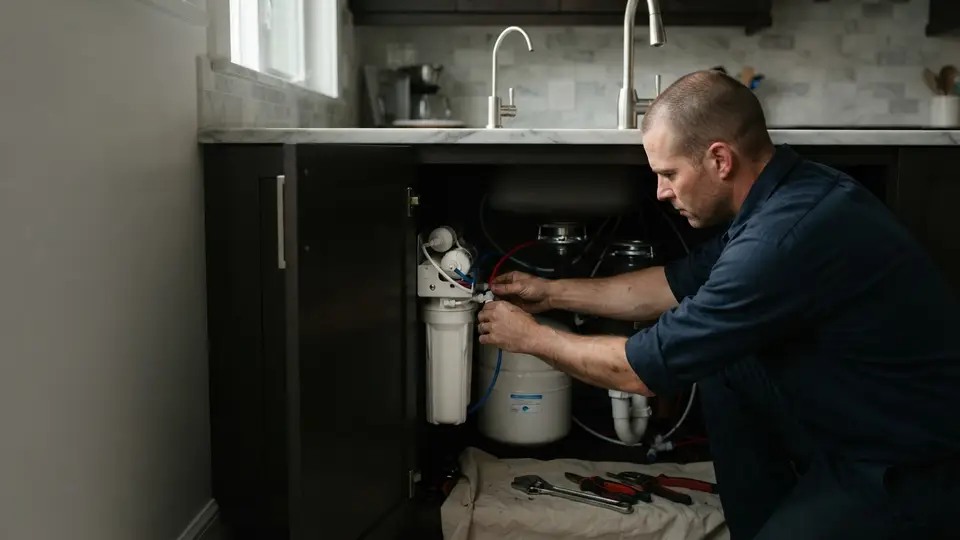
We install an under-sink reverse osmosis system with its own faucet for drinking and cooking water, and explain filter changes.
Typical cost
Prices are estimates only until we see your test results. These factors matter:
We explain the options and you approve a written price before we start.
Get a written price: (833) 733-2357Several problems need several stages.
Household size and water use.
Softeners, filters, neutralizers and RO.
Basements, garages and closets.
Softeners and some filters need a drain.
Benefits
Iron and manganese removed.
Acidic water neutralized.
Water heaters and fixtures last longer.
Reverse osmosis at the tap.
Homes in Belchertown (median year 1987), Fiskdale (1,123 homes) and many towns across Worcester, Hampshire and Plymouth counties rely on private wells. Private well water is not regulated like public water, so owners are responsible for testing and treatment. We recommend testing with a certified lab, then design a treatment train in the right order, usually sediment filtering, then neutralizing or iron removal, then softening if needed.
Acidic well water slowly dissolves copper pipe, leaving blue-green stains and eventually pinhole leaks. It can also raise copper and lead levels in drinking water. An acid neutralizer adds calcite or a similar mineral to raise the pH before water reaches the pipes. We install neutralizers, test pH after setup and explain how often the media needs refilling. Fixing the water often saves a repipe.
Public water in Boston (310,625 homes), Worcester (85,876 homes) and Springfield is treated and tested regularly. Most city homes do not need a softener, but some owners want a carbon filter for chlorine taste or a reverse osmosis system for drinking water. In older homes, the bigger concern is often the pipes, not the source. We can check for lead service lines and old galvanized pipe that affect water quality.
Pittsfield (21,054 homes), Westfield and towns in the Berkshires have areas where marble and limestone bedrock make water harder. Hard water leaves scale on fixtures, water heaters and tankless units. A properly sized softener protects them. We test hardness and iron and recommend a softener or combination unit to match.
Cape Cod relies on a sole-source aquifer in sandy soil. Barnstable (27,656 homes) and other Cape towns supply public water from wells, and many homes have private wells. Water tends to be soft and slightly acidic, with iron and manganese in some areas. We install neutralizers and filters for private wells and protect fixtures and pipes from corrosion.
Some private wells in Massachusetts, especially those drilled into bedrock, contain radon gas or arsenic. Neither can be seen or tasted, and a softener does not remove them. Radon in water is released into indoor air during showers and laundry, and it is usually treated with aeration or carbon systems. Arsenic needs specific filters or reverse osmosis. A certified lab test is the only way to know. Once you have results, we explain the options and install the system that fits. Homes in North Lakeville (median year 1992) and other well-served towns should test even if the water looks clean.
Hard water and iron shorten the life of water heaters, especially tankless units with narrow heat exchangers. In Westfield (16,834 homes) and other western towns with harder water, a softener or scale-reduction system upstream of a new tankless heater pays for itself in fewer service calls. We often install treatment and the heater together so the warranty conditions on water quality are met from the start.
Have your water tested by a certified lab if you are on a well, and keep the results handy. Note any stains, smells or pipe leaks.
Clear space near the main water line and find the nearest drain and outlet. Then call us.
Installing treatment equipment on the main water line generally needs a plumbing permit in Massachusetts, and discharge from softeners must be handled properly, especially on septic. We pull permits when required. Our plumbers hold Massachusetts plumbing licenses.
Why choose us
What you can count on every time one of our plumbers comes to your door.
Every job is handled by a plumber who holds the license your state or city requires, backed by liability insurance.
Our plumber explains the problem and the options, and you approve a written price before any work begins.
Burst pipes, sewage backups and failed water heaters get priority scheduling, including nights and weekends.
We pull permits when the job needs one and schedule the inspection, so the work holds up when you sell.
Repairs and installations come with a written warranty on labor, on top of the manufacturer's warranty on parts.
Our pages and plumbers account for your area's water, soil, climate and the age of the homes around you.
Service area
We install softeners and filters in 248 Massachusetts communities, including Lexington (12,754 homes), Franklin (median year 1985) and The Pinehills (median year 2009). Find yours:
It depends on hardness, household size and the model. We give you a written price after reviewing your water test.
Usually much cheaper, and it protects the pipes you have. If copper is already failing, both may be needed.
Ongoing costs include salt, filters and neutralizer media. We explain them before installation.
We start with a water test, then match treatment to the problems it shows, installed in the right order.
Yes. We install an under-sink system with its own faucet and explain filter changes.
Usually not in the Boston area, where water is soft. Some towns with harder water may benefit.
Only testing can tell. Test for bacteria, arsenic and other contaminants with a certified lab.
It can raise copper and lead levels from pipes. Neutralizing it and testing helps protect your household.
Most single systems take a few hours. Multi-stage systems may take a day.
Every year for bacteria and every few years for other contaminants, or after any change in taste or color.
It depends on the filter and water use, often every few months for sediment and carbon cartridges.
Regeneration water adds volume. Proper sizing and settings reduce the load. We explain options for septic homes.
Stop drinking it, contact your water supplier if you are on public water and call us to check your system.
Much of the state lies on granite and sandy soil with little limestone to buffer the water.
Yes. We install filters designed to remove iron and manganese and stop staining.