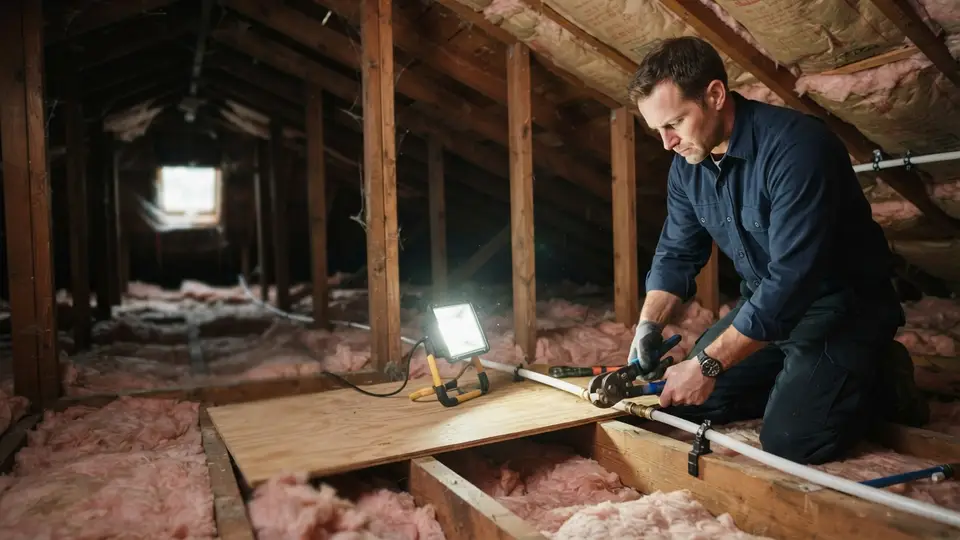
Spot repair
How it works: Open the floor at the leak and replace the pipe
When we use it: A single leak in otherwise sound pipe
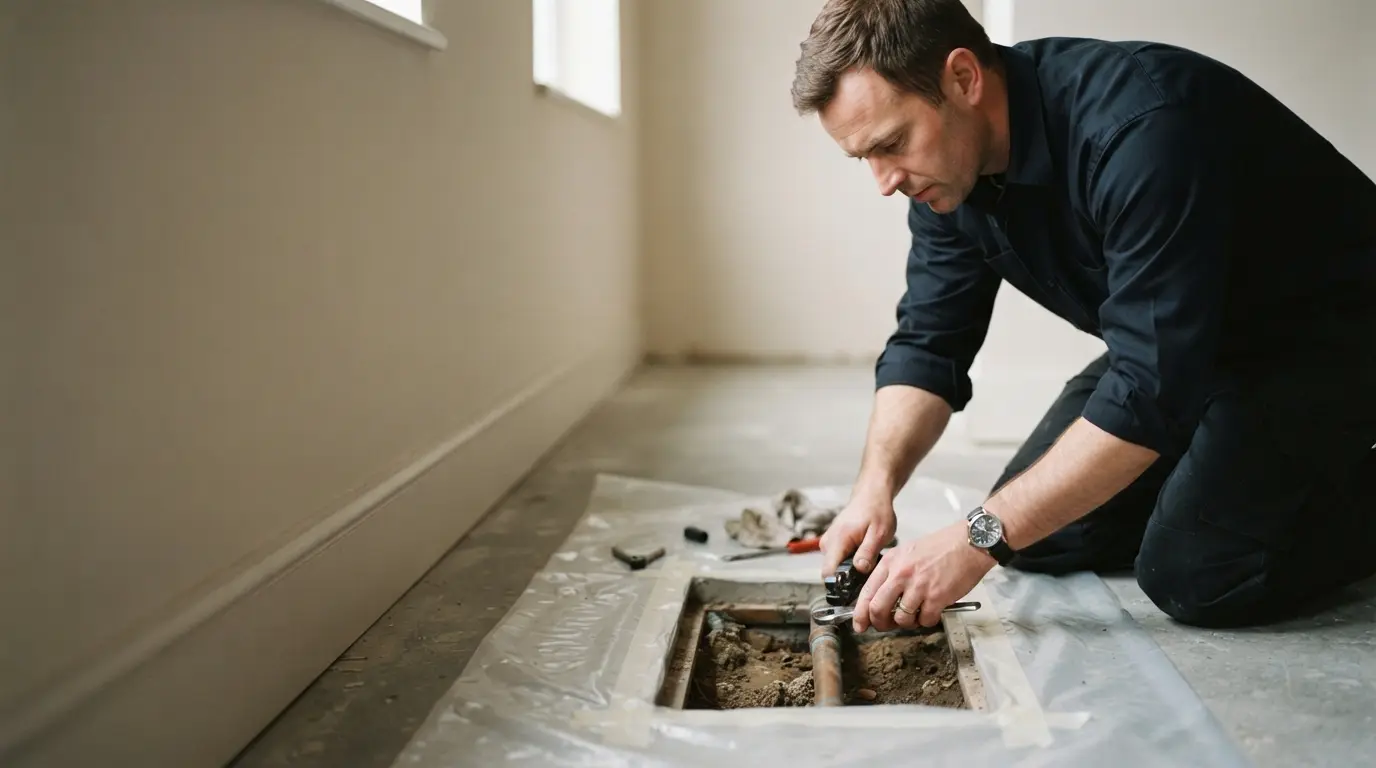
Warm spot on the floor, or a meter that never stops? We handle slab leak repair in Massachusetts. Most homes here sit on full basements, but many ranches, additions, condos and Cape Cod houses are built on concrete slabs, and finished basement floors hide pipe too. When a water line under concrete leaks, our plumbers locate it precisely, then repair it through a small opening or reroute the line above the floor so the slab stays intact.
The service
A slab leak is a leak in a water or drain pipe running under or inside a concrete floor. In Massachusetts that means slab-on-grade ranches and additions, garages converted to living space, townhouse condos, and pipe buried beneath basement floors. Because the pipe is hidden, a leak may run for months before it shows as a damp floor, a warm patch or a high water bill.
Slab leak repair options
How it works: Open the floor at the leak and replace the pipe
When we use it: A single leak in otherwise sound pipe
How it works: Run new pipe through walls or ceilings
When we use it: Several leaks or old pipe throughout
How it works: Cap the old line and replace the run
When we use it: Long runs under finished floors
How it works: Open, replace and test the drain
When we use it: Cracked drain pipe under the slab
Why Massachusetts
Copper pipe that rubs on concrete or gravel wears thin over years of expansion and contraction.
Slabs on fill can settle, and frost near edges can shift soil and stress pipe.
Soft or acidic water from some supplies and wells corrodes copper from the inside.
Hot water loops cast into floors can develop leaks at fittings or where tubing was damaged.
Warning signs
Our process
We confirm the leak at the meter, isolate hot and cold lines, and use acoustic equipment and thermal imaging to mark the leak on the floor, usually within a small area.
We cut a small opening in the floor, dig to the pipe, replace the damaged section, pressure test it and backfill and patch the concrete.
When the old line is likely to leak again, we abandon it and run new PEX or copper through walls, closets or the ceiling to the fixtures it served.
Typical cost
Slab leak prices are estimates only until we locate the leak. These factors set the price:
We explain both repair and reroute and you approve a written price first.
Get a written price: (833) 733-2357Under tile or hardwood costs more to open and restore.
Rerouting avoids the slab but needs new pipe runs.
Old copper may have more than one.
Water lines, drains and radiant tubing differ.
Concrete patching and finish flooring.
Benefits
We open only where the leak is.
The hidden loss stops.
Less moisture under floors and finishes.
Rerouting removes old pipe from the slab.
Postwar and 1960s neighborhoods around Brockton (37,730 homes), Taunton (median year 1965) and Weymouth (median year 1964) include ranches and additions built on slabs. Family rooms, sunrooms and in-law apartments added later often have water lines running under new concrete. These are the most common slab leak locations we see in the state. We find the leak and usually recommend rerouting through the attic or walls when the original line is decades old.
Radiant floor heat is popular in Massachusetts for basements, bathrooms and additions. The tubing runs through the slab and is fed by a boiler. A leak shows as a boiler losing pressure, a feed valve that keeps adding water, or a damp patch on the floor. We use thermal imaging to trace the loops while they are warm, find the leak and repair it, or isolate the loop if repair is not practical.
Barnstable has a median home year of 1978, and many Cape homes and condos were built on slabs or shallow foundations over sandy soil. Some coastal water supplies are soft and slightly acidic, which can thin copper over time. We test for leaks in seasonal homes before they open and recommend rerouting where copper under the slab has already leaked once.
Homes in The Pinehills (median year 2009), Franklin (1985) and Marlborough (1974) are newer, but townhouses and homes with finished basements or slab garages still have pipe under concrete. A nail through a line during finishing, or a damaged fitting from construction, can leak years later. We locate the leak and repair it, and we document the cause in case a builder warranty applies.
Not every slab leak is a water line. Cast iron drains under basement and slab floors can rot through or separate at joints, letting wastewater soak into the soil and odors rise into the house. A camera inspection shows where the drain is broken. We repair the section through the floor or reroute the drain when that makes more sense, and test it before patching the concrete.
Close the main water valve if the floor is wet or the meter shows a large leak. If only hot water is leaking, closing the valve on the water heater supply may let you keep cold water.
Pull back rugs and move furniture off damp spots, and keep electrical devices away from wet floors. Then call us.
Rerouting supply or drain lines usually needs a permit from your local plumbing inspector, and we file it and schedule the inspection. Our plumbers hold Massachusetts plumbing licenses. In towns like Plymouth (4,284 homes) and Lexington (12,754 homes), inspectors may ask to see new pipe before walls are closed, and we plan the work around that.
Why choose us
What you can count on every time one of our plumbers comes to your door.
Every job is handled by a plumber who holds the license your state or city requires, backed by liability insurance.
Our plumber explains the problem and the options, and you approve a written price before any work begins.
Burst pipes, sewage backups and failed water heaters get priority scheduling, including nights and weekends.
We pull permits when the job needs one and schedule the inspection, so the work holds up when you sell.
Repairs and installations come with a written warranty on labor, on top of the manufacturer's warranty on parts.
Our pages and plumbers account for your area's water, soil, climate and the age of the homes around you.
Service area
We repair slab leaks in 248 Massachusetts communities, including Attleboro (19,121 homes). Find yours:
It depends on where the leak is, what floor covers it and whether we repair or reroute. After locating the leak, we give you a written price.
Sometimes. Rerouting avoids concrete and flooring work, but needs new pipe runs. We price both so you can compare.
Some policies cover access and resulting damage but not the pipe itself. Check your policy; we provide documentation of the cause.
We isolate the line with pressure tests, then use acoustic equipment and thermal imaging to mark the leak on the floor.
Usually small, often around two feet square, depending on depth and pipe location. We patch the concrete afterward.
Often, yes. We trace the loops with a thermal camera, find the leak and repair it or isolate the loop if that is more practical.
Water under floors can damage finishes, encourage mold and, near outlets or cords, create an electrical hazard. Shut off water and keep devices off wet floors.
Long-running leaks can wash out soil and contribute to settling. Finding and stopping the leak early limits that risk.
A spot repair often takes a day. A reroute can take one to three days depending on the number of fixtures.
We shut off water while we work on the line and restore it as soon as the repair or new line is tested.
Keep water pressure in a normal range, treat acidic water and consider rerouting old copper after the first leak.
Yes. Before opening for the season, a meter test and walkthrough can catch a leak under a slab before it causes damage.
Close the main valve, move belongings and electronics away and call us. Active leaks get priority.
Less common than basements, but ranches, additions, condos and many Cape homes sit on slabs, and finished basements also hide pipe.
Soft or acidic water can corrode copper over time. Testing and treating it reduces the risk of pinhole leaks.