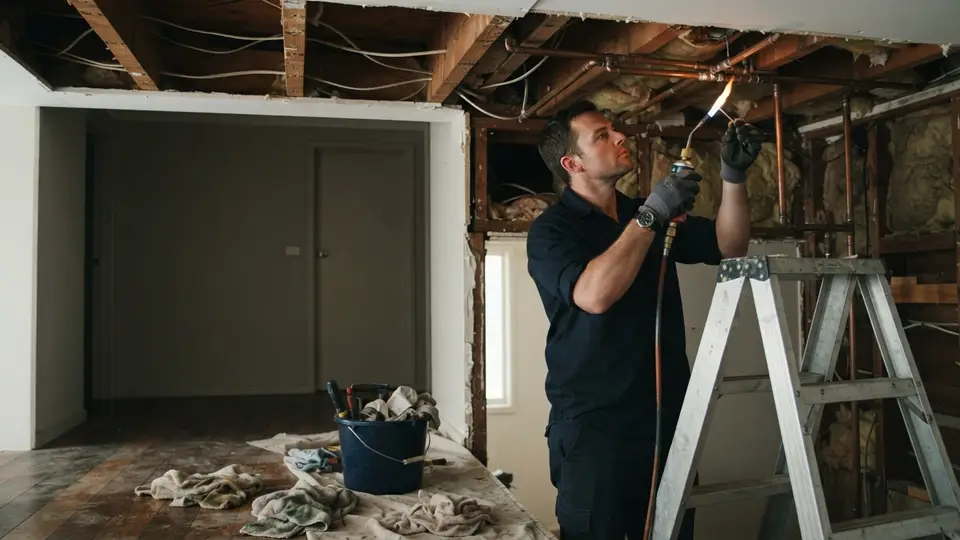
Burst pipe
First step for you: Close the main shutoff
What our plumber does: Stops the leak and replaces the split pipe
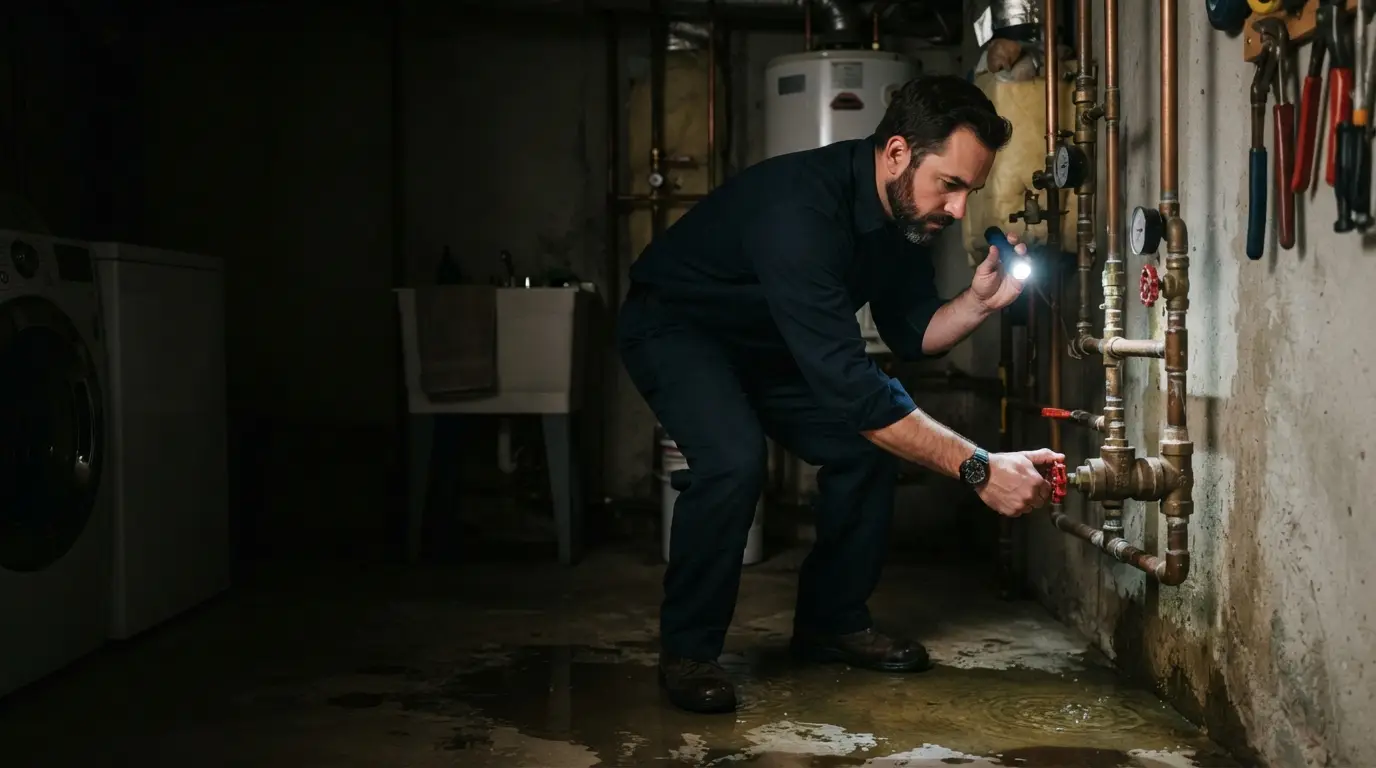
Pipe burst overnight, or sewage rising in the basement? We handle emergency plumbing in Massachusetts. When water is pouring through a ceiling, a drain is backing up or a gas smell fills the kitchen, our plumbers move those calls ahead of routine work. Massachusetts emergencies follow the weather: Arctic cold splits pipes, nor'easters knock out sump pumps, and spring thaw floods basements. We tell you what to shut off while you wait and keep you informed on timing.
The service
An emergency is anything that is damaging your home right now or makes it unsafe to stay: water you cannot stop, sewage coming in, no water at all, or the smell of gas. In a state where 53% of homes were built before 1960 and many are stacked multifamily houses, one failure can reach several households within minutes.
Emergencies we handle
First step for you: Close the main shutoff
What our plumber does: Stops the leak and replaces the split pipe
First step for you: Stop all water use
What our plumber does: Clears the line and finds the cause
First step for you: Check with neighbors and the utility
What our plumber does: Finds the frozen or failed line
First step for you: Leave and call the gas company
What our plumber does: Repairs piping once the area is safe
First step for you: Shut off water and fuel to it
What our plumber does: Repairs or replaces the heater
Warning signs
Typical cost
Emergency prices are estimates only until we see the problem. These factors shape the price:
We stop the immediate damage, then you approve a written price for the full repair.
Get a written price: (833) 733-2357Nights, weekends and holidays cost more than weekday hours.
A single split pipe costs less than a collapsed sewer.
Water in walls and several units adds work.
Unusual heaters or valves may need sourcing.
Heater, gas and sewer repairs often need one.
Benefits
Plaster, floors and ceilings dry out sooner.
Gas and electrical risks are dealt with properly.
We fix the cause, not only the leak.
Photos and notes on what failed.
When temperatures fall well below zero for a few nights, pipes in north walls, rear porches and drafty basements freeze. In Pittsfield (85% of homes built before 1980) and Fitchburg (79%), those nights come every winter. The split shows up when the ice melts and water starts to pour. We stop the flow, replace the split, look for other cracks on the same run and suggest ways to keep that section warm in the future.
A sewage backup usually starts at the lowest drain: the basement floor drain, a laundry tub or a basement toilet. In Boston (310,625 homes), Worcester and Springfield, old clay laterals and roots are frequent causes; in heavy rain, overloaded city sewers can push water back too. We clear the line, run a camera to find out why it happened and explain whether the fix is cleaning, repair or a backwater valve where your town allows one.
Nor'easters bring wind, heavy rain or snow and power outages at once. River towns like Haverhill (27,892 homes) and Lawrence, and low coastal neighborhoods in Revere and the South Shore, take on water when groundwater rises. If your sump pump fails or loses power mid-storm, the basement can flood within hours. We repair or replace pumps, install battery backups and help get water moving out again.
Buildings with five or more units hold 51% of homes in Brookline and 55% in Cambridge, and three-family houses line streets across the state. A burst pipe on the third floor reaches every unit below. Shutoffs in older buildings may be in a locked basement or hard to find. We locate the right valve, stop the water, repair the pipe and give owners and trustees a record of the cause.
If every faucet is dry, first check whether your neighbors have water; the town may have a main break. If they do and you do not, the cause is usually a frozen service line, a failed well pump or a closed valve. Frozen service lines are common in January where the pipe enters through a cold foundation wall. We find the frozen spot, thaw it safely and recommend insulation or heat tape so it does not happen again.
The gas utility responds first to any gas smell and will shut off service if needed. Once they have made it safe, our licensed gas fitters find and repair the leaking joint, fitting or appliance connector, test the system and coordinate with the utility to restore service. Gas repairs in Massachusetts need a licensed gas fitter and usually a permit, which we handle.
In our data, 57% of homes in Provincetown and 57% in West Dennis are not lived in year-round. A pipe that bursts in an empty house can run for days before a neighbor or caretaker notices. We respond to calls from owners, caretakers and property managers, stop the water, repair the damage and suggest automatic shutoff valves and temperature alerts before next winter.
A tank that splits can dump forty gallons or more onto a basement floor, and a heater that quits in February leaves a household without hot water in the coldest weeks. We stop leaks, repair heaters when the tank is sound and replace them when it is not. Replacements in Massachusetts need a permit, and gas units need a gas permit too; we file both.
What is happening, where the water or smell is and whether anyone is at risk.
Main water valve, water heater, or which breaker to switch off.
Emergencies go ahead of routine work, and we keep you updated on timing.
Then we find the cause and price the repair in writing.
Close the main water shutoff, usually where the line enters the basement. If water is near outlets or fixtures, switch off that circuit at the panel if you can stay dry doing it.
For a sewage backup, stop all water use and tell others in the building. For gas, get out and call the utility. Move valuables, take photos for insurance and call us.
Emergency repairs that replace heaters, gas piping or sewer lines usually need a permit from your local inspector. We stop the damage first and file the permit right away. Our plumbers and gas fitters hold Massachusetts licenses.
Why choose us
What you can count on every time one of our plumbers comes to your door.
Every job is handled by a plumber who holds the license your state or city requires, backed by liability insurance.
Our plumber explains the problem and the options, and you approve a written price before any work begins.
Burst pipes, sewage backups and failed water heaters get priority scheduling, including nights and weekends.
We pull permits when the job needs one and schedule the inspection, so the work holds up when you sell.
Repairs and installations come with a written warranty on labor, on top of the manufacturer's warranty on parts.
Our pages and plumbers account for your area's water, soil, climate and the age of the homes around you.
Service area
We handle plumbing emergencies in 248 Massachusetts communities, from Springfield (62,217 homes) and Worcester (85,876 homes) to Revere (24,139 homes). Find yours:
The price depends on the time of day, what failed and how much damage spread. Once the water is stopped, you get a written price for the full repair.
Yes. Work outside regular weekday hours costs more. We tell you the rate when you call so there are no surprises.
We stop the damage first. Then we explain the repair options, and you approve a written price before the larger work begins.
Makes the home safe: confirms water, gas or power is off where needed, stops the leak and then looks for the cause.
Yes. We open the smallest section that reaches the split, replace the pipe and leave a clean opening for a plasterer.
We give you photos, notes on what failed and an itemized invoice, which most adjusters ask for. Check your own policy for coverage.
Keep clear of the area, since wet plaster can fall and water near fixtures is an electrical risk. Shut off that circuit if you safely can.
Leave the house, avoid switches and phones inside and call the gas company or 911 from outside. We repair the piping after they clear it.
Emergencies go ahead of routine calls. We give you the best timing we can when you call and update you if it changes.
Many burst pipes and backups are handled in a few hours. Sewer breaks and heater replacements can take longer, especially with permits.
Look where the water line comes through the basement wall or floor, usually near the meter. Learn it now so you are ready.
Yes. Keep it steady through winter, shut off the water if you will be away long, and consider a temperature alert.
Stop all water use in the building, keep people and pets away and call us. Sewage backups are handled as emergencies.
Yes, because a frozen pipe can split as it thaws. Open the faucet it feeds, keep heat on and call us.
Move belongings off the floor, stay away from water near outlets and call us. We repair or replace the pump and can add a backup.