Clay tile
Common in: Pre-war city and suburban homes
Typical failure: Root entry at joints, cracking
Roots in an old clay sewer, or a backup that keeps returning? We handle sewer line repair and replacement in Massachusetts. Our plumbers camera the line, find the broken section and fix it with the least digging the job allows. Most building sewers in the state were laid decades ago in clay, cast iron or Orangeburg fiber pipe, and street trees, frost and settling have had a long time to work on them. We show you the damage before we price the repair.
The service
The building sewer runs from your foundation to the public main or septic tank, and in most of the state it is the homeowner's responsibility up to the town connection. With 73% of Massachusetts homes built before 1980, many of these lines are clay tile or cast iron, and some mid-century homes still have bituminous fiber pipe that flattens with age.
Sewer pipe we find in Massachusetts
Common in: Pre-war city and suburban homes
Typical failure: Root entry at joints, cracking
Common in: Basements and older laterals
Typical failure: Scale, rot along the bottom
Common in: Some 1940s to 1970s homes
Typical failure: Flattening and collapse
Common in: Newer homes and repairs
Typical failure: Settled bellies, poor joints
Why Massachusetts
Maples, oaks and elms along older streets push roots into every leaky joint they can reach.
Shallow lines move with deep winter frost, which opens joints and cracks pipe over the years.
Glacial boulders and ledge under many yards press on pipe and make trenches harder to dig.
Many lines are 70 to 100 years old and have simply worn through.
Warning signs
Our process
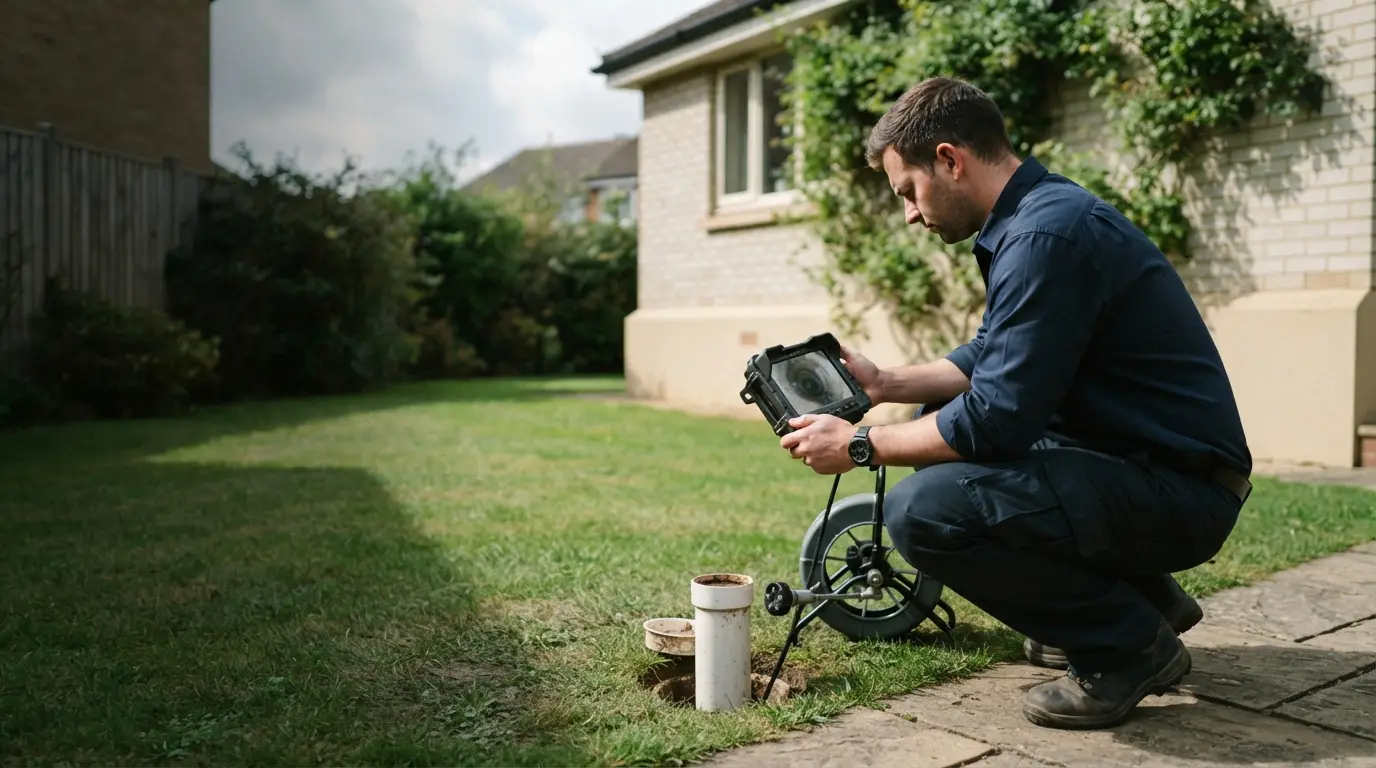
We push a camera through the cleanout, record the line and locate any defect from the surface so we know exactly where it is and how deep.
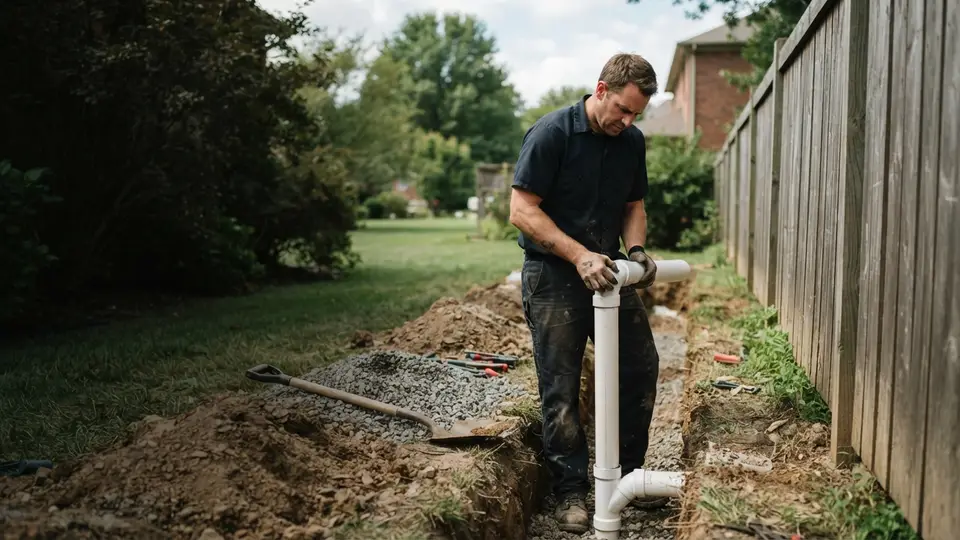
For a single cracked or rooted section, we dig at that point, cut out the bad pipe and join in new pipe with proper couplings and bedding.
When the whole run is failing, we replace it by open trench or, where conditions suit it, by trenchless pipe bursting or lining, then camera the new line.
Typical cost
Sewer repair prices are estimates only until we camera the line. These factors matter most:
We walk you through each option and you approve a written price first.
Get a written price: (833) 733-2357Longer, deeper runs take more digging.
Spot repair, lining, bursting or full trench.
Driveways, patios, walls and mature trees.
Rock slows trench work.
Sidewalk or street openings need extra permits.
Paving and lawn repair after the dig.
Benefits
A sound pipe stops the backup cycle.
Camera footage of a new line helps at closing.
Trenchless methods leave lawns and drives mostly intact.
We locate and fix the actual defect.
Boston (310,625 homes), Somerville and Lynn (37,960 homes) have small lots, shared driveways and sewers that run under sidewalks to mains in the street. Digging there can mean working with the city's public works department for street openings and traffic control. Our plumbers handle the permits and coordinate the dig, and we use trenchless methods where they cut down on pavement and landscaping work.
Newton (80% of homes built before 1980), Arlington (86%) and Medford (76%) have big street trees and clay laterals that are often original. Roots return every year or two once they are in a joint. Cleaning buys time, but a lined or replaced section stops the cycle. We show you the camera footage and the cost of both paths so you can choose.
Glaciers left much of Massachusetts covered in rocky till, and bedrock ledge sits close to the surface in parts of Worcester County, the North Shore and the hill towns. A sewer that was laid around boulders decades ago may sag or crack where it rests on rock. When a trench hits ledge, the job takes more time and equipment. We look at the route on camera first and tell you if trenchless repair is the better choice for your lot.
Some homes built in the 1940s through the 1960s, common in Braintree (median year 1957), Quincy and Chicopee (median year 1958), have sewers made of Orangeburg, a fiber pipe soaked in tar. It slowly deforms into an oval and then collapses. A camera makes it easy to spot. Because it cannot be repaired in pieces, we replace the run, usually from the foundation to the street connection.
In a competitive Massachusetts housing market, buyers and lenders want to know what is under the yard. A camera inspection of the sewer before listing or during a purchase shows roots, breaks or old fiber pipe before they turn into a surprise after closing. We record the line, locate defects and write up what we found. If repairs are needed, we can price and schedule them so the sale stays on track.
Springfield (62,217 homes), Chicopee and Pittsfield, where 85% of homes predate 1980, have older sewer laterals and long, cold winters. Frost works on shallow lines, and some towns have combined sewers that fill during heavy rain. We repair laterals, camera lines after spring thaw and help owners decide whether a backwater valve makes sense where the local sewer allows one.
Stop using water if sewage is backing up, and ask others in the building to do the same. Do not open a cleanout that is holding back sewage.
Note when the backups happen, such as after laundry or heavy rain. Clear access to the basement cleanout, then call us.
Sewer repair and replacement need a permit, usually from your local plumbing inspector and sometimes the sewer department or public works for the street connection. We pull every permit and schedule the inspections. Our plumbers hold Massachusetts plumbing licenses. In newer towns like Franklin (median year 1985) we still check grades and connections against the original plans.
Why choose us
What you can count on every time one of our plumbers comes to your door.
Every job is handled by a plumber who holds the license your state or city requires, backed by liability insurance.
Our plumber explains the problem and the options, and you approve a written price before any work begins.
Burst pipes, sewage backups and failed water heaters get priority scheduling, including nights and weekends.
We pull permits when the job needs one and schedule the inspection, so the work holds up when you sell.
Repairs and installations come with a written warranty on labor, on top of the manufacturer's warranty on parts.
Our pages and plumbers account for your area's water, soil, climate and the age of the homes around you.
Service area
We repair sewer lines in 248 Massachusetts communities, including Worcester (85,876 homes) and Quincy (48,072 homes). Find yours:
It depends on depth, length, the repair method and what sits above the pipe. After a camera inspection, we give you a written price for each option.
Often, when the line has a sound route and good access. Less digging means less restoration. Ledge, sags or collapsed pipe can still require a trench.
It is priced on its own. It shows the exact location and type of damage, so you pay only for the repair the line actually needs.
Our camera has a locator in its head. We mark the spot and depth on the surface, so we dig only where the problem is.
We pull permits, mark utilities, dig or set up trenchless equipment, install new pipe, test it, get it inspected and restore the ground.
Yes, when the rest of the pipe is sound. The camera tells us whether a spot repair will last or the whole run needs work.
Yes. Leaking sewage carries bacteria into soil and basements. Stop using water during a backup and keep people away from it.
We fence or cover open trenches, shore deep ones and keep the work area closed off until the line is buried again.
Many jobs take one to three days. Street connections, ledge or inspection scheduling can stretch that.
You will have water, but you cannot use drains while the line is open. We plan the work to keep that time short.
Plant trees away from the line and have older clay pipe checked every few years. Lining or replacing rooted sections keeps roots out for good.
For older clay or cast iron lines, every few years, and always before buying a house with an older sewer.
Stop all water use, stay out of the sewage and call us. Backups get priority, and we will clear the line before planning a repair.
If the repair reaches the public sidewalk or street, usually yes. We arrange it with the city or town public works department.
Yes. Ledge and boulders slow trench digging and can damage pipe. We check the route and suggest trenchless options when they fit.