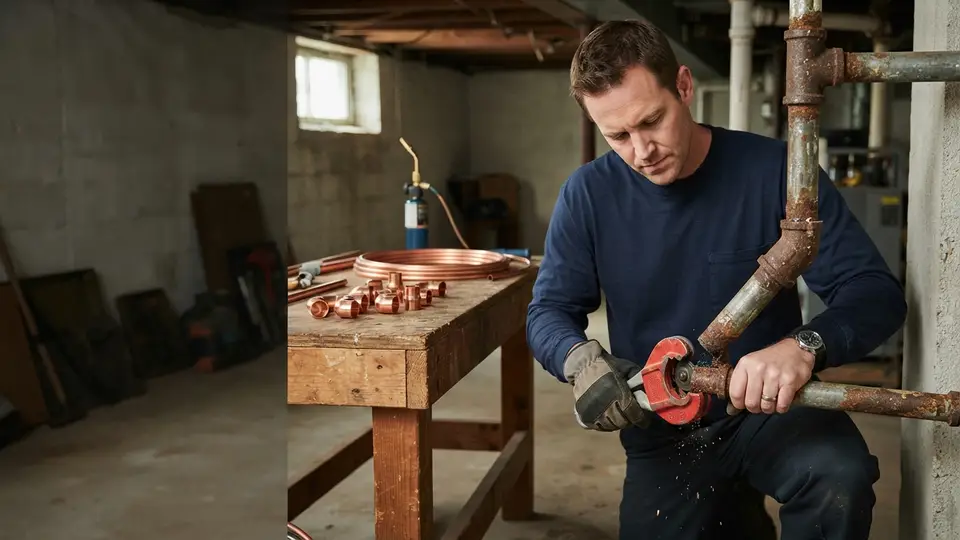
Galvanized steel
Common in: Homes built before about 1960
What happens with age: Rust buildup, low pressure, leaks at threads
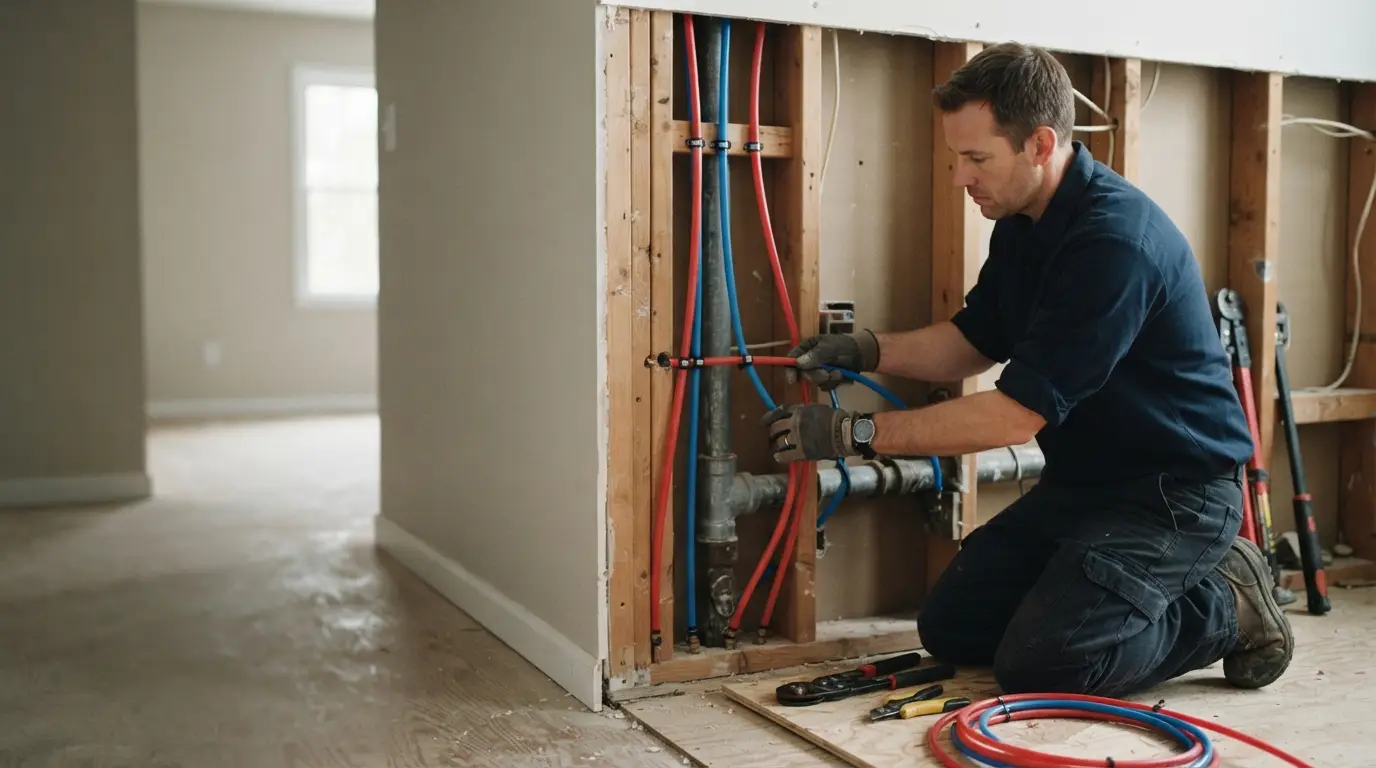
Rusty water, weak pressure, or an old lead service line? We handle repiping and water line replacement in Massachusetts. Our plumbers replace worn galvanized, brass and old copper supply pipe in homes and multifamily buildings, and we replace the water service line from the street to your basement. With so much of the state built before 1960, many houses are running on pipe that has reached the end of its life. We plan the work room by room and pull the permits.
The service
53% of Massachusetts homes in our data were built before 1960, and in Brookline and Arlington the pre-1980 share is 86% and 86%. Homes from that era were plumbed with galvanized steel, brass or early copper. Galvanized pipe closes up with rust inside, brass can crack, and the old service lines that feed them may be lead or galvanized as well.
Supply pipe in Massachusetts homes
Common in: Homes built before about 1960
What happens with age: Rust buildup, low pressure, leaks at threads
Common in: Older higher-end homes
What happens with age: Cracking and pinhole leaks
Common in: Some pre-1950s homes
What happens with age: Health risk; replacement advised
Common in: Most homes since the 1950s
What happens with age: Pinholes with soft or acidic water
Common in: New work and repipes
What happens with age: Flexible, freeze-tolerant, few joints
Why Massachusetts
Pipe installed 70 to 100 years ago has simply outlived its design life.
Pipes that froze and thawed over many winters carry hidden cracks and weak joints.
Soft, low-mineral water from reservoirs and acidic well water can be hard on copper and galvanized pipe.
Decades of partial fixes leave mixed metals and joints that corrode.
Warning signs
Our process
For a single failed section, we cut out the damaged pipe and replace it with copper or PEX, using proper transition fittings between metals.
We plan a new layout, run new lines through basements, closets and walls with small openings and connect each fixture, keeping water on in part of the house where we can.
We locate and repair leaks in the service line between the street and the house, usually with a short excavation at the leak.
We replace the service line from the curb stop to the meter, by trench or trenchless methods where they fit, coordinating any street work with your water department.
Typical cost
Repiping prices are estimates only until we see the house. These factors matter most:
We explain the plan and you approve a written price before we start.
Get a written price: (833) 733-2357More bathrooms mean more pipe.
Multifamily repipes need more planning.
Plaster and finished basements take more care.
PEX and copper differ in cost and labor.
Length, depth and street work for replacement.
Wall repair after the plumbing work.
Benefits
Showers do not drop when a toilet flushes.
No rust from corroded galvanized pipe.
New pipe and joints throughout.
Updated plumbing helps at inspection.
Some older Massachusetts homes, especially in cities and older suburbs, may still be connected to the street by lead service pipe. Many water suppliers in the state have inventoried service lines and some run replacement programs that share the cost. Ask your water department whether your address is listed and whether a program applies. We replace the private side of the line, coordinate with the utility on the public side and pull the permits.
Somerville (37,756 homes), Everett (77% built before 1980) and Lynn (37,960 homes) have many two- and three-family houses fed by one service and one set of risers. Repiping them takes planning so tenants are not without water for long. We work floor by floor, use temporary connections where possible and schedule shutoffs with owners. We can also split shared lines so each unit has its own shutoff, which makes future repairs easier.
Victorian and colonial homes in Beverly, Lexington and Worcester (median year 1951) have plaster walls, wood trim and built-ins owners want to keep. We route new pipe through closets, chases and the basement where possible and open plaster only where we must, cutting cleanly for a plasterer to patch. PEX pipe bends through existing cavities, which cuts down on the number of openings.
In Pittsfield, where 85% of homes predate 1980, and the hill towns around it, many homes use private wells. Acidic well water can eat through copper and leave blue-green stains in sinks. Repiping alone will not stop that; we test the water and pair new pipe with a neutralizer or other treatment where it is needed so the new lines last.
If a pipe is leaking, close the main shutoff at the meter. If you suspect lead, flush the tap before drinking and use a certified filter or bottled water for cooking.
Clear space in the basement near the main and note which fixtures have low pressure or discolored water. Then call us.
Repiping and service line work need a permit from your local plumbing inspector, and street work may need approval from the water or public works department. We file the permits and schedule inspections. Our plumbers hold Massachusetts plumbing licenses.
We repipe homes and replace water lines in 248 Massachusetts communities, from Beverly (17,630 homes) to Lexington (12,754 homes). Find yours:
Why choose us
What you can count on every time one of our plumbers comes to your door.
Every job is handled by a plumber who holds the license your state or city requires, backed by liability insurance.
Our plumber explains the problem and the options, and you approve a written price before any work begins.
Burst pipes, sewage backups and failed water heaters get priority scheduling, including nights and weekends.
We pull permits when the job needs one and schedule the inspection, so the work holds up when you sell.
Repairs and installations come with a written warranty on labor, on top of the manufacturer's warranty on parts.
Our pages and plumbers account for your area's water, soil, climate and the age of the homes around you.
Service area
New Bedford (median year 1938), Holyoke (1950) and Springfield (1952) have large stocks of old multifamily housing where supply pipe has been patched for decades. Galvanized mains in the basement often feed copper branches added later, and the old mains limit pressure to every floor. Replacing the basement mains and risers first restores pressure quickly, and we can do the rest in stages.
It depends on the size of the house, the number of fixtures and units, wall access and pipe material. We give you a written price after we see the house.
Both work well. PEX costs less, bends through walls with fewer openings and tolerates freezing better; copper is rigid and long-proven. We explain the trade-offs.
Some Massachusetts water suppliers offer programs that share the cost. Ask your water department, and we coordinate with them on the work.
We route pipe through basements, closets and chases and make small openings only where needed, then cut cleanly for patching.
Yes. We work in stages, plan shutoffs with the owner and keep water on to as many units as possible during the job.
Yes. We replace the private side of the line and coordinate with the water department on the public side and any street work.
Yes, especially for children and pregnant people. Use a certified filter or bottled water for drinking and cooking until the line is replaced.
It can release rust and sometimes lead picked up from older connections. Replacing it removes the source.
A single-family home often takes several days. Multifamily homes and plaster walls can take longer.
Usually yes, except for short shutoffs while we connect new lines. We schedule them in advance.
Keep pipe away from exterior walls where possible, insulate pipe in cold spaces and keep the house heated.
Yes. Untreated acidic water can damage new copper. A neutralizer protects both pipe and fixtures.
Shut off the main and call us. We repair the break right away and fold that section into the repipe plan.
Lead pipe is dull gray, soft and not magnetic. Your water supplier may also have a record. We can check it during a visit.
Yes. Repiping needs a plumbing permit from your town, and we pull it and schedule the inspection.