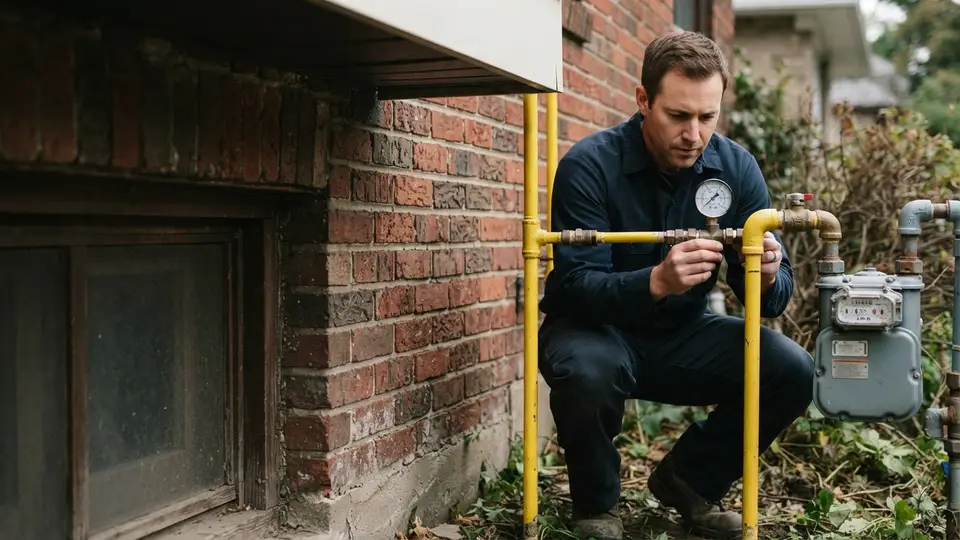
Leak repair
What it involves: Find and fix leaking joints or pipe
Inspection: Pressure test after repair
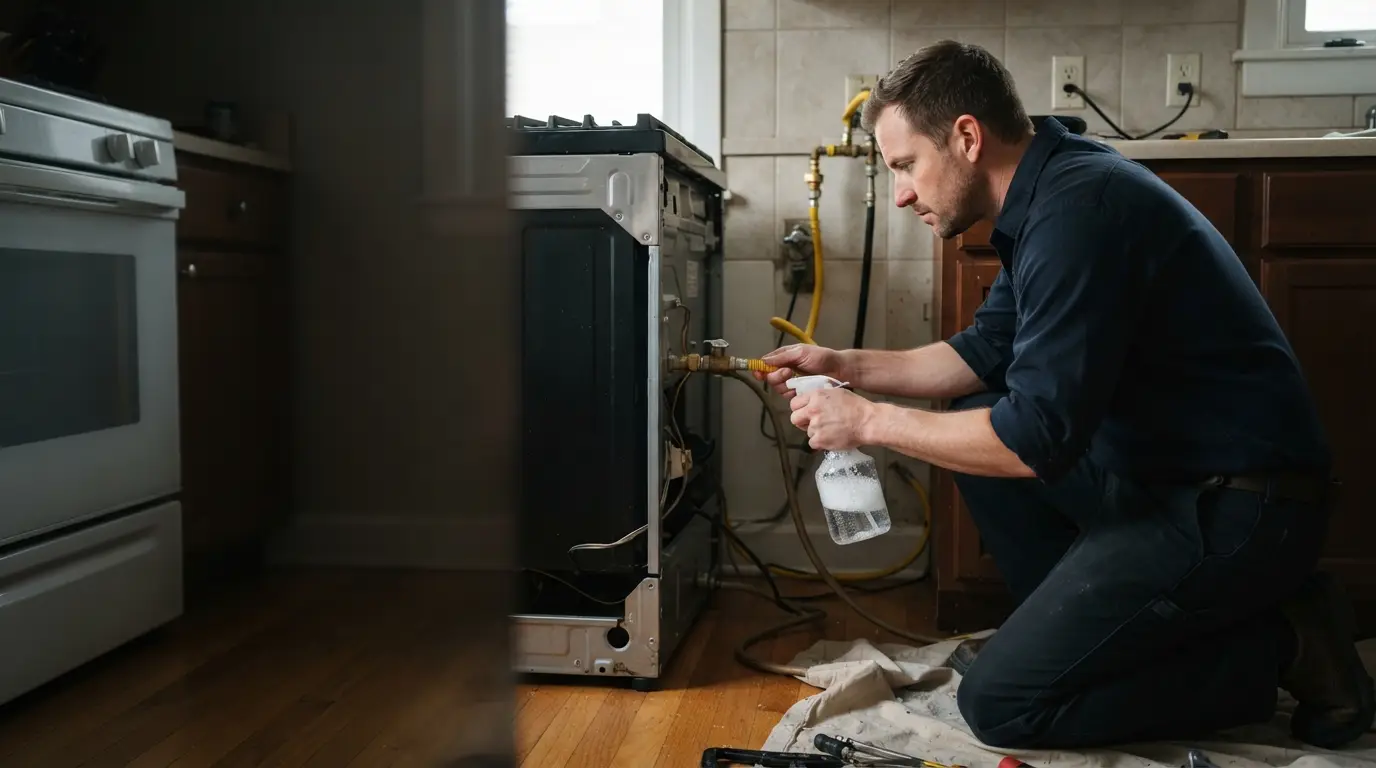
Gas smell near the stove, or a new range that needs a line? We handle gas line repair and installation in Massachusetts. Our licensed gas fitters repair leaking piping, run new lines and hook up ranges, dryers, water heaters, boilers, fireplaces and generators. Gas heats more than half of the homes in the state, and many basements carry decades-old piping that has been changed many times. We test every line we work on and get it inspected.
The service
Utility gas heats 56% of Massachusetts homes in our data, 79% in New Bedford and 67% in Lowell. Outside the gas mains, propane is common on the Cape and islands: it heats 31% of homes on Nantucket and 36% in Vineyard Haven. Gas piping runs from the meter or tank to each appliance, and in older homes it often mixes black iron with later additions.
Gas work our fitters handle
What it involves: Find and fix leaking joints or pipe
Inspection: Pressure test after repair
What it involves: Run pipe to a new appliance
Inspection: Gas permit and inspection
What it involves: Connect range, dryer, heater or boiler
Inspection: Leak test and inspection
What it involves: Size and run pipe to a standby generator
Inspection: Gas permit and inspection
What it involves: Adapt appliances and piping for propane
Inspection: Leak test and inspection
Why Massachusetts
Basement gas piping in older homes can have worn joints and outdated connectors.
Many homes have switched from oil to gas, adding new piping to old systems.
Kitchen remodels and new appliances need lines resized or moved.
Damp basements and salt air near the coast corrode exposed steel pipe.
Warning signs
Our process
Once the utility has made the area safe, we find the leak with a detector and soap test, replace the failed fitting or pipe and pressure test the system.
We size the pipe for every appliance on the line, run black iron or approved flexible pipe, pull the gas permit and have the line inspected before it is put into service.
We connect ranges, dryers, water heaters, boilers, fireplaces and grills with proper shutoffs and connectors, then check for leaks and correct burner operation.
Typical cost
Prices are estimates only until we see your piping. These factors matter:
We explain the options and you approve a written price before we start.
Get a written price: (833) 733-2357Longer lines need more pipe and labor.
Larger loads need bigger pipe.
Finished basements and walls take more time.
One fitting or several corroded sections.
Gas permits and inspections are required.
Benefits
Lines tested and inspected.
Appliances get the gas they need.
Proper connections and settings.
Permits on file for future sales.
Many Massachusetts homes have switched from oil to gas over the years, and some are still doing so. Oil still heats 24% of homes in Pittsfield. A conversion means a new gas service from the utility, piping to the boiler or furnace and often to the water heater and range. We size and install the house piping, coordinate with the utility on the meter, and pull the permits. We can also cap and plan removal of the old oil line.
Propane heats 26% of homes in Belchertown and 11% in Amherst, and it is common on Cape Cod and the islands, including Barnstable (27,656 homes). Propane appliances need different orifices and regulators than natural gas. We run piping from the tank regulator to each appliance, convert appliances, and test lines. The propane supplier owns and fills the tank; we handle everything inside.
Winter storms and nor'easters knock out power across Massachusetts, and many homeowners in Newton (33,959 homes) and suburban towns now install standby generators. A generator needs a gas or propane line sized for its load along with everything else on the system. We calculate the load, run the line and coordinate with the electrician who installs the generator and transfer switch.
Many Massachusetts homeowners move from electric to gas cooking during a remodel, or swap an old range for a larger professional-style model. Bigger ranges need more gas, and an old half-inch branch that fed a small stove may not carry enough. We calculate the load of every appliance on the line, upsize piping where needed, set a shutoff valve within reach of the range and connect it with an approved flexible connector. We coordinate with your contractor so the gas rough-in is inspected before walls close.
Outdoor kitchens, gas grills and patio heaters are popular on the North and South Shores. We run buried or exposed lines to them, protect pipe where it leaves the house and include them in the permit.
If you smell gas, leave the building and call your gas company or 911 from outside. Do not try to find the leak yourself.
For a non-urgent job, clear a path to the meter, appliances and gas piping, and have appliance model numbers ready. Then call us.
Massachusetts requires gas work to be done by a licensed gas fitter, and most gas piping work needs a gas permit from your local inspector. We pull permits and schedule inspections. Our gas fitters are licensed by the Board of State Examiners of Plumbers and Gas Fitters.
We repair and install gas lines in 248 Massachusetts communities, including Cambridge (54,840 homes) and Lowell (44,850 homes). Find yours:
Why choose us
What you can count on every time one of our plumbers comes to your door.
Every job is handled by a plumber who holds the license your state or city requires, backed by liability insurance.
Our plumber explains the problem and the options, and you approve a written price before any work begins.
Burst pipes, sewage backups and failed water heaters get priority scheduling, including nights and weekends.
We pull permits when the job needs one and schedule the inspection, so the work holds up when you sell.
Repairs and installations come with a written warranty on labor, on top of the manufacturer's warranty on parts.
Our pages and plumbers account for your area's water, soil, climate and the age of the homes around you.
Service area
In Fall River (44,576 homes), Lawrence and Cambridge, gas piping in multifamily houses often feeds a boiler, water heaters and ranges for several units. Lines have been added, extended and patched over many decades. We trace each branch, replace corroded sections and add shutoff valves at appliances so one unit can be worked on without shutting gas to the others.
It depends on the length of the run, pipe size, access and the permit. We give you a written price before we start.
It involves the utility service, house piping and often new equipment. We price the piping and connections clearly so you can plan.
Yes, a little. Permits are required for most gas work in Massachusetts, and we include them in your price.
After the utility makes the area safe, we use a gas detector and soap solution on joints to pinpoint the leak.
Yes. We connect it with a proper shutoff and connector, test for leaks and check the burners.
Yes. We size and run the line and work with your electrician on the generator and transfer switch.
Leave the building without using switches or phones and call your gas company or 911 from outside.
Massachusetts requires CO alarms in homes with fuel-burning appliances. Put one on every level and test them regularly.
A simple appliance line often takes a few hours. Longer runs and inspections can stretch it to a day or more.
After the line passes inspection and we test it. We schedule the inspection promptly.
Once a year for boilers, furnaces and water heaters is a good habit, and keep vents clear of snow.
Yes. Blocked vents can push exhaust back into the house. Clear them after every storm.
Call the gas company first. Once they make it safe, we repair the piping as a priority.
Yes. We run and repair propane piping and convert appliances. Your supplier handles the tank.
Yes. State rules require gas piping work to be done by a licensed gas fitter.