Restaurants
Typical work: Grease traps, kitchen drains, gas
Common issues: Grease clogs, interceptor service
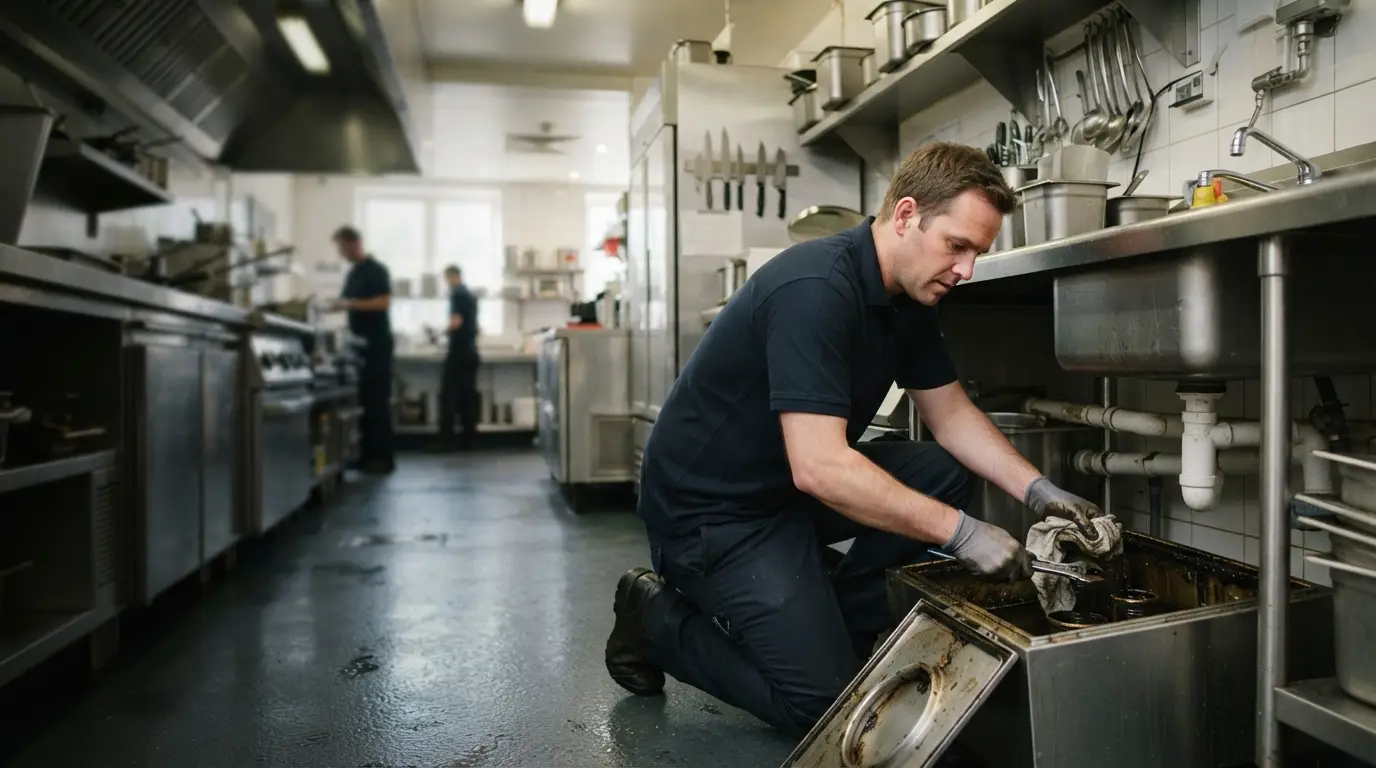
Grease trap backing up, or a riser leaking in an apartment block? We handle commercial plumbing in Massachusetts. Our plumbers work for restaurants, offices, retail stores, labs, schools and multi-unit buildings. Commercial plumbing here often means old buildings with new uses, from mill conversions in Lowell to brownstone offices in Boston, plus strict permitting and backflow rules. We schedule around your business hours, keep downtime short and keep records your managers and inspectors can use.
The service
Commercial work ranges from a single café to large apartment and office buildings. Buildings with five or more units hold 27% of homes in Massachusetts, 46% in Boston and 55% in Cambridge. Many commercial spaces sit in buildings over a century old, where new tenants need new plumbing in old structures.
Commercial work our plumbers handle
Typical work: Grease traps, kitchen drains, gas
Common issues: Grease clogs, interceptor service
Typical work: Restrooms, water heaters, backflow
Common issues: Fixture wear, compliance testing
Typical work: Risers, boilers, booster pumps
Common issues: Leaks between floors, old pipe
Typical work: Special drains, backflow, RO water
Common issues: Cross-connections, specialty fixtures
Typical work: Restrooms, fountains, mechanical
Common issues: Heavy use, seasonal shutdowns
Why Massachusetts
Mills, warehouses and townhouses converted to offices, labs and restaurants need updated plumbing.
Food service establishments must manage grease under state and local rules.
Water suppliers track testable devices in commercial buildings.
Vacant floors, loading docks and sprinkler lines freeze when heat fails.
Warning signs
Our process
We jet kitchen lines, repair and replace grease traps and interceptors, fix gas connections for cooking equipment and keep records of cleaning for inspectors.
We repair restrooms, water heaters and drains, install fixtures for fit-outs, and test and repair backflow devices.
We repair risers and stacks, service boilers' water connections and booster pumps, and replace old pipe floor by floor with planned shutoffs.
Typical cost
Prices are estimates only until we see the building. These factors matter:
We explain the options and you approve a written price before we start.
Get a written price: (833) 733-2357Service calls, repairs or full fit-outs.
Old structures and occupied spaces.
After-hours work to avoid downtime.
Commercial permits and plan reviews.
Interceptors, boilers, pumps and backflow devices.
Benefits
Work scheduled around your hours.
Backflow and grease records kept.
Fewer surprise failures.
We know your building and its history.
Restaurants in Boston, Salem (21,492 homes), Worcester and Cape Cod towns like Barnstable run hard during their busy seasons. Massachusetts food establishments need grease interceptors or traps and must keep them maintained, under state plumbing rules and local board of health requirements. We size, install and repair interceptors, jet lines on a schedule and book work for early mornings or closed days.
Waltham (26,728 homes), Cambridge and Burlington have many offices and labs. Labs need backflow protection on every water connection to equipment, sometimes neutralization tanks for drains and purified water systems. We install and test backflow devices, repair specialty fixtures and coordinate with facility managers so research work is not interrupted.
Lowell (44,850 homes), Lawrence, Fall River and Holyoke have large brick mills converted to apartments, offices and studios. These buildings have long pipe runs, old risers and thick masonry. We plan routes for new supply and drain lines, replace old risers and work with general contractors on permits and inspections for each phase of a conversion.
Renters occupy 59% of homes in Malden and 55% in Quincy. Property managers need plumbers who answer, show up and document work. We handle tenant calls, plan larger repairs like riser replacement and boiler fill backflow devices, and give managers clear reports and photos for their records.
Schools, town halls and libraries see heavy restroom use and long breaks. Fixtures and flush valves wear quickly, drinking fountains need service, and buildings that sit quiet over vacation weeks can have frozen or stagnant lines. We repair fixtures, replace flush valves and help schedule work for summer and school vacations when buildings are empty.
Commercial buildings freeze in ways homes do not. Loading docks open to the cold for hours, dry and wet sprinkler lines run through unheated spaces, and vacant storefronts may have the heat turned down to save money. When a pipe splits on an empty floor over a weekend, the damage can reach several tenants before Monday. We walk buildings before winter, point out pipes at risk, insulate or heat-trace lines that need it and repair freeze damage quickly when it happens. Leak sensors tied to a building alarm or phone alerts are a sensible addition for any building with empty space.
Restaurants, salons, gyms and apartment buildings in Worcester (85,876 homes), Boston and the suburbs depend on large water heaters or boiler-fed storage tanks. When one fails, the business may have to close for the day. We repair and replace commercial gas and electric heaters, install tankless banks and indirect tanks, and size them to real peak demand. We also set mixing valves so hot water reaches the right temperature at each fixture, which matters for food safety and for preventing scalds.
Public restrooms take more use than any home bathroom. Flush valves, sensor faucets and urinals wear out, and a closed restroom affects customers and staff right away. During renovations, restrooms often need to meet current accessibility standards, which changes fixture heights, clearances and controls. We repair and replace commercial fixtures, stock common flush valve parts and work with your architect or contractor on accessible layouts.
Shut off water to the affected area or the building if a leak is spreading. Stop using fixtures on a backed-up line and post signs.
Tell us where the shutoffs and cleanouts are, who can give access and what hours we can work. Then call us.
Commercial plumbing and gas work in Massachusetts needs permits from the local inspector and often plan review for larger projects. We pull permits and schedule inspections. Our plumbers and gas fitters hold Massachusetts licenses.
Why choose us
What you can count on every time one of our plumbers comes to your door.
Every job is handled by a plumber who holds the license your state or city requires, backed by liability insurance.
Our plumber explains the problem and the options, and you approve a written price before any work begins.
Burst pipes, sewage backups and failed water heaters get priority scheduling, including nights and weekends.
We pull permits when the job needs one and schedule the inspection, so the work holds up when you sell.
Repairs and installations come with a written warranty on labor, on top of the manufacturer's warranty on parts.
Our pages and plumbers account for your area's water, soil, climate and the age of the homes around you.
Service area
We serve businesses in 248 Massachusetts communities, including Springfield (62,217 homes), Framingham (27,918 homes) and Barnstable (27,656 homes). Find yours:
We look at the scope, building access, scheduling and permits, then give you a written price before work starts.
Yes. Work at night or on weekends costs more, but it can save lost business. We explain both options.
We set up regular schedules for grease lines, backflow testing and water heaters, priced in writing.
Often yes, by working in stages. For larger shutoffs, we schedule work before or after hours.
Yes. We plan and install plumbing for new tenants, pull permits and coordinate with your contractor.
We repair and replace interceptors and jet lines. We also coordinate with pumping services where needed.
Evacuate, avoid switches and equipment, and call the gas company or 911 from outside.
We close off work areas, post signs and follow safety practices so staff and customers stay clear.
It depends on the number of floors. We plan it in stages to limit how long each unit is without water.
It varies by town and project size. Simple permits can be quick; larger projects need plan review.
Busy kitchens often need jetting every few months. We set a schedule based on what we find.
At least once a year for many devices, more often for some. Your water supplier sets the schedule.
Shut off the water and call us. We treat it as an emergency and keep you updated on timing.
Food establishments generally need grease control under state and local rules. Your board of health can confirm details.
Yes. We plan routes through masonry and old structures and coordinate phased work with your contractor.