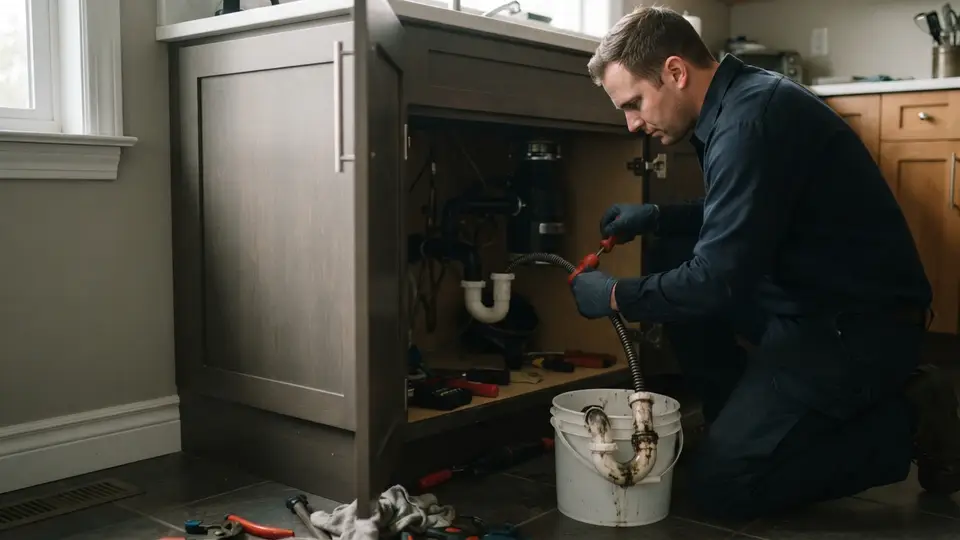
Hand and closet augers
Typical job: Sinks, tubs, toilets
Result: Opens clogs near the fixture
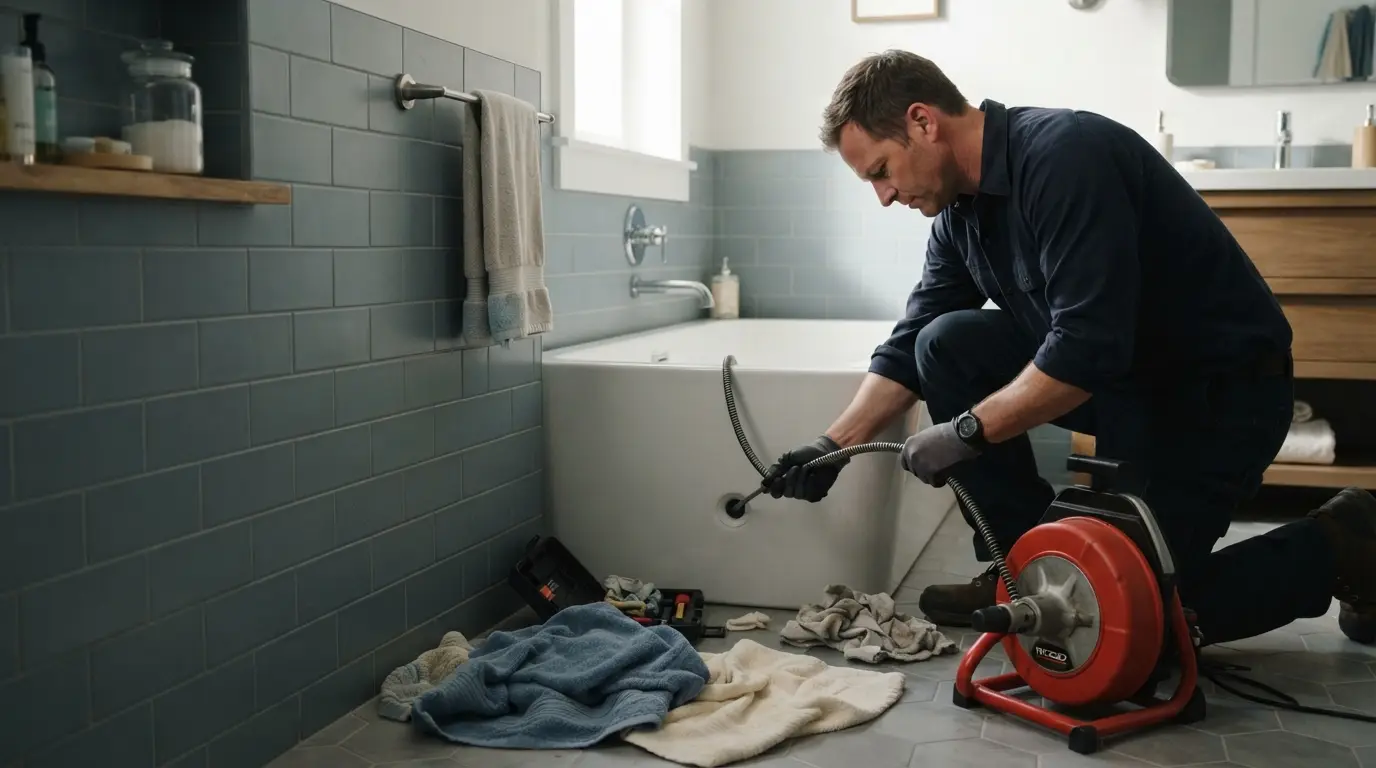
Tub filling when the toilet flushes, or a kitchen line that backs up? We handle drain cleaning and clog removal in New York. Our plumbers clear kitchen, bath and laundry drains, toilets, floor drains, building stacks and house sewers in brownstones, co-ops, two-family houses, Long Island ranches, upstate Victorians, restaurants and lake camps. New York drains are often a century old: cast iron stacks scaled half shut, house traps that catch everything, clay sewers full of roots and lines shared by a dozen apartments. We clear the blockage, camera the line and show you what caused it.
The service
New York has 6,953,234 homes in our data, and 57% were built before 1960. The median home in Buffalo and Rochester dates from 1938, in Albany from 1949 and in Syracuse from 1948. Drains in buildings of that age are mostly cast iron inside, with a house trap near the front wall and a clay or cast iron sewer to the street. Scale inside the iron, roots in the clay and debris in the trap cause most of the clogs we clear.
How our plumbers clear New York drains
Typical job: Sinks, tubs, toilets
Result: Opens clogs near the fixture
Typical job: House sewers and traps
Result: Cuts roots and packed debris
Typical job: Grease and scaled stacks
Result: Scours the pipe wall
Typical job: Repeat backups
Result: Shows breaks, roots and bellies
Why New York
Decades of rust and grease narrow old stacks until paper and wipes catch.
The U-shaped trap on the main collects debris and often cracks with age.
Street trees in older neighborhoods push roots into clay joints.
In apartment buildings, dozens of kitchens feed the same stack.
Warning signs
Our process
We open the cleanout or house trap closest to the blockage, run a cutter sized to the pipe and flush the line with steady water to show it drains at full speed.
When a line keeps blocking, our camera finds the broken hub, the sag or the cracked trap, and we replace that piece or quote a liner.
Jetting removes grease from kitchen stacks and root fibers from sewers. We camera old cast iron first and set the pressure so the pipe is not harmed.
Typical cost
Any figure before we see the line is an estimate only. The price depends on:
You approve a written price before we begin.
Get a written price: (833) 733-2357A sink branch costs less than the house sewer.
Roof cleanouts, house traps and tight cellars vary.
Jetting and camera work add to cabling.
Broken pipe needs repair.
Evening and weekend calls cost more.
Benefits
Cleaned all the way to the pipe wall.
You see roots, scale or breaks.
Clean, repair or line.
Grease and roots cut back fully.
Buildings with five or more units hold 62% of New York City homes, 51% of Yonkers homes and 61% of White Plains homes. Kitchen stacks in these buildings fill with grease, and a blockage on a lower floor sends water back up into the lowest sinks on the line. We clear the stack from the roof or a cleanout, jet it when grease is the cause and work with the super to notify tenants and set a cleaning schedule.
90% of Buffalo homes, 87% of Rochester homes and 83% of Troy homes were built before 1980, most well before. These houses often have a house trap, a cellar floor drain and a clay sewer under a tree lawn lined with maples. Roots and cracked traps are common. We clear the line, camera it to the street and explain whether a section repair, a liner or a new trap and cleanout will stop the repeat calls.
New York City, Buffalo, Rochester, Syracuse and Albany all have combined sewers in their older neighborhoods. In a cloudburst, the street sewer can fill and push water back toward the lowest drain in the house. Basement apartments in the city and cellar drains upstate are most at risk. We clear and camera the house sewer and install backwater valves that let water out but not back in.
Renters occupy 70% of homes in Ithaca and 63% in Troy, and Albany, Syracuse and Buffalo have large student neighborhoods too. Old houses split into apartments clog often from shared kitchens and full bathrooms. We clear lines for landlords and managers, jet mains between semesters and add cleanouts and strainers that make later visits quicker.
65% of Montauk homes and 31% of Lake Placid homes are vacant on a typical day. Seasonal homes and camps sit dry for months, then fill with guests. Traps dry out, lines freeze in unheated crawl spaces and septic systems slow down. We check and clear drains when homes open and close and handle clogs between guests.
Stop running water, including the washer and dishwasher. If a toilet is rising, close the valve behind it.
Do not use chemical openers on a blocked line; they rarely work on a main and can burn whoever opens it. In a building, tell the super. Then call us.
Clearing a drain needs no permit. Replacing a house sewer, trap or stack usually does, from the local building department or the New York City Department of Buildings, and we file it. Our plumbers hold the local licenses each job requires.
Why choose us
What you can count on every time one of our plumbers comes to your door.
Every job is handled by a plumber who holds the license your state or city requires, backed by liability insurance.
Our plumber explains the problem and the options, and you approve a written price before any work begins.
Burst pipes, sewage backups and failed water heaters get priority scheduling, including nights and weekends.
We pull permits when the job needs one and schedule the inspection, so the work holds up when you sell.
Repairs and installations come with a written warranty on labor, on top of the manufacturer's warranty on parts.
Our pages and plumbers account for your area's water, soil, climate and the age of the homes around you.
Service area
We clear drains in 1293 New York communities, including Hempstead (18,747 homes) and Mount Vernon (30,080 homes). Find yours:
It depends on which line is blocked, how we reach it and whether we need a jetter or camera. You get a written price and approve it before we start.
In apartment buildings with grease buildup, usually yes. Jetting clears the full pipe wall, so the stack stays open far longer than after cabling alone.
Yes, it is priced separately. On old cast iron and clay it often saves money by showing exactly which section has failed before anyone opens a wall or yard.
It is a U-shaped fitting on the main near the front wall of many older New York homes. It catches debris, cracks with age and is a common clog point.
We run a cable from the roof vent or a cleanout, flush the stack, then jet it if grease is the cause. We coordinate with the super so tenants hold off on water.
Yes. After clearing the line, we run the camera and show you the roots, scale, broken hub or sag, and we can save the video for your records.
We advise against them. They seldom clear a main, can damage old pipe and leave caustic water that can burn whoever opens the line next.
Yes. Sewage carries bacteria and viruses. Keep people and pets out of the area, avoid touching the water and stop using fixtures until the line is clear.
Most fixture clogs take under an hour. A rooted house sewer or a greasy stack with jetting and a camera inspection can take a few hours.
We book the earliest time we can and put sewage backups ahead of slow drains. We keep you updated on timing from the time you call.
Many need cleaning every year or two. If roots return faster, a liner or a section repair usually costs less than repeated cleanings over a few years.
In neighborhoods with combined sewers, the street sewer can fill in a storm and push water back toward low drains. A backwater valve stops that backflow.
Many homes built before the 1960s do. Clay joints let roots in and can shift, so we camera the line before recommending any repair.
Yes. We schedule stack and main cleaning based on how fast lines clog, which helps prevent backups in lower apartments.
Yes. Dry traps, frozen lines and slow septic systems show up when a home reopens. A check before guests arrive prevents backups mid-season.