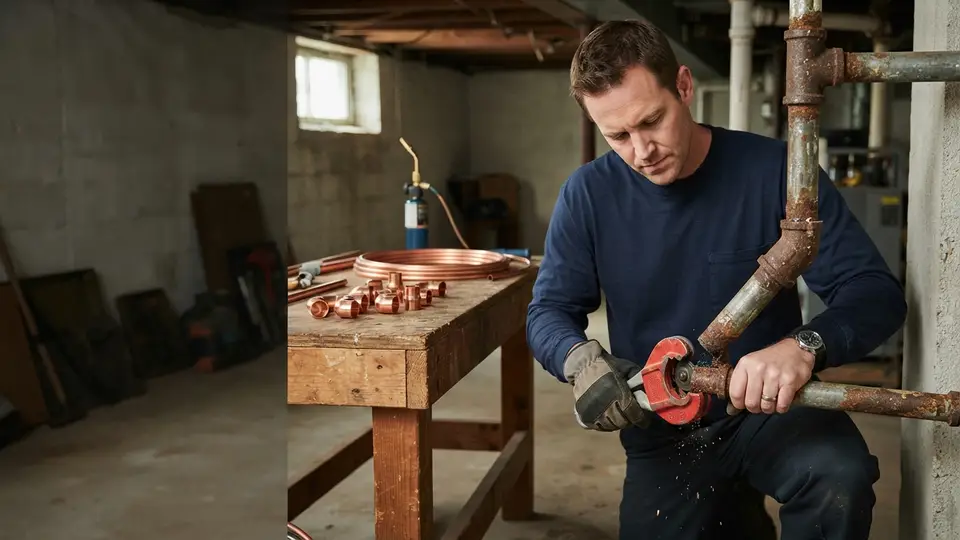
Lead service line
Problem: Lead in drinking water
Replacement: Copper service
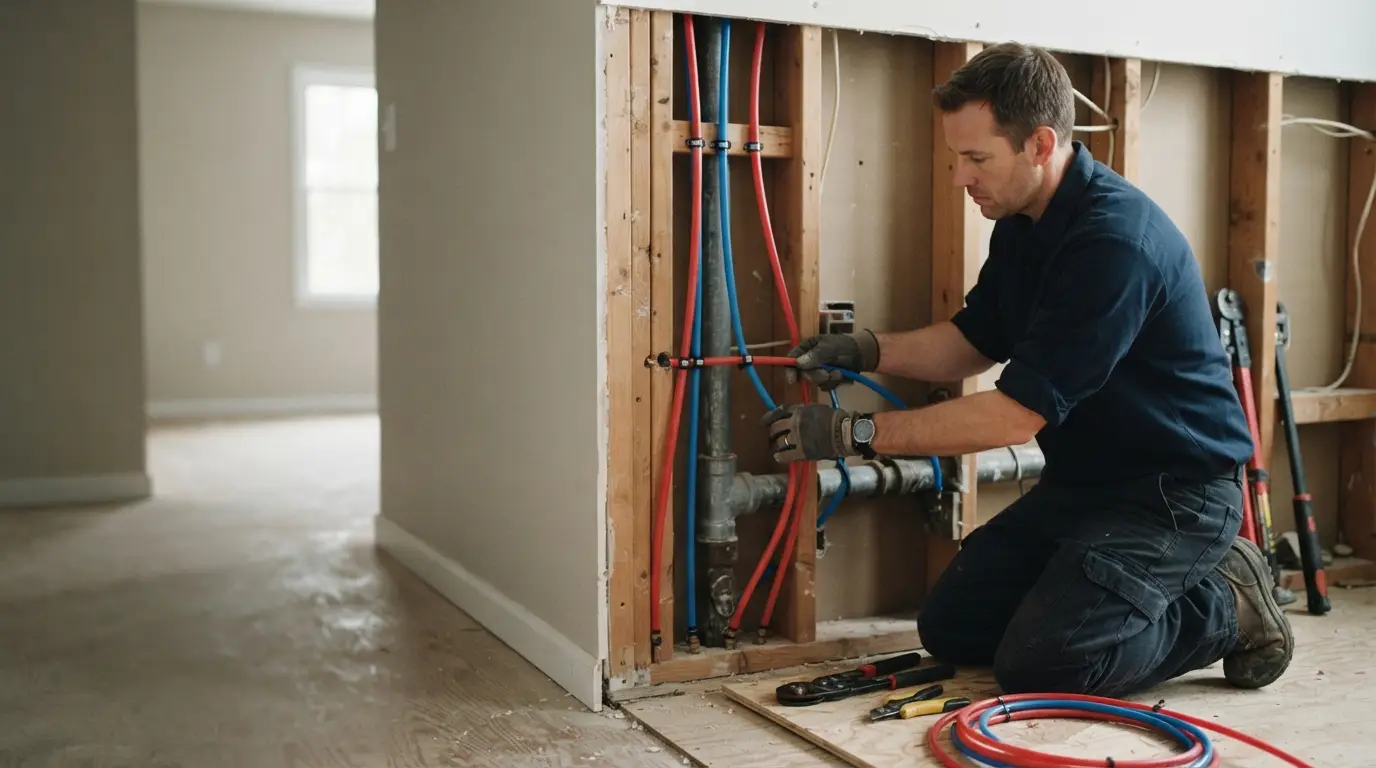
Rusty water, weak upstairs pressure or a lead service line? We handle repiping and water line replacement in New York. Our plumbers repair failing pipe, replace galvanized, brass and old copper supply lines in houses and apartment buildings, and replace water services from the curb to the meter. New York has some of the oldest housing in the country, and many homes still carry lead services and steel pipe from a century ago. We plan each repipe around plaster walls, tenants and the local permit rules, and we coordinate with water utilities on lead service replacement.
The service
57% of New York's 6,953,234 homes were built before 1960. The median home dates from 1938 in Buffalo, Rochester, Troy, Elmira and Olean, and from 1940 in Utica. Houses and buildings of that age were plumbed with galvanized steel or brass, often fed by lead service lines. Steel rusts shut from the inside; brass and old copper pinhole. Repiping replaces the supply system with copper or PEX.
Pipe we find and replace
Problem: Lead in drinking water
Replacement: Copper service
Problem: Rust, low flow, leaks
Replacement: Copper or PEX
Problem: Dezincification and pinholes
Replacement: Copper or PEX
Problem: Leaks between floors
Replacement: New copper risers
Why New York
Much of the supply pipe in older cities is approaching or past a century old.
Many cities installed lead service lines well into the twentieth century.
Generations of repairs joined copper to steel, which corrodes at the joints.
Old pipes in outside walls split in hard winters.
Warning signs
Our process
We replace a failed section with new pipe and proper transition fittings and tell you honestly how much life the rest of the system has.
We plan routes through cellars, closets and chases, run new lines floor by floor and reconnect each area so you have water every evening.
We locate a leaking service, expose it and splice in a new section.
We replace the service from the curb valve to the meter by trench or by pulling new pipe, and coordinate with the water department.
Typical cost
Any figure before we see the building is an estimate only. The main factors:
You approve a written price before work begins.
Get a written price: (833) 733-2357More units and fixtures mean more pipe.
Plaster and tile take more care.
Copper and PEX differ in cost.
Length, sidewalk and street work.
Working around tenants takes scheduling.
Benefits
Clear pipe carries full flow.
From the street to the tap.
One project instead of repeated repairs.
Buyers look for updated plumbing.
Buffalo (136,850 homes), Rochester, Syracuse, Albany and New York City all have large numbers of lead service lines, and utilities across the state are working to find and replace them. Programs differ: some utilities replace the whole line, others only their side. When your service is replaced, we replace any lead or galvanized pipe inside the home and connect it to the new service so the whole path is lead-free.
Buildings with five or more units hold 62% of New York City homes, 51% of Yonkers homes and 48% of Mount Vernon homes. Their risers carry water to every unit on a line, and when they fail, leaks show up on several floors. We replace risers one line at a time, post notices, open walls only at each floor and restore water before we leave each day.
85% of Syracuse homes, 88% of Binghamton homes and 93% of Gloversville homes predate 1980, many with two-family layouts and plaster walls. Repiping them means planning routes that keep each unit separate and avoiding outside walls that freeze. We use cellar ceilings, closets and stacked chases, and we leave neat openings ready for plaster repair.
Both are approved under the state plumbing code, while New York City has its own rules on materials in some buildings. Copper suits exposed cellar runs and buildings where it is required. PEX bends through finished walls with smaller openings and resists freeze damage. We recommend based on your building, local code and budget, and often combine the two.
Inspectors regularly flag galvanized pipe and lead services in older New York homes. If you are selling, a written assessment and price helps in negotiations. If you just bought an older house, repiping before you finish walls or renovate a kitchen saves money. We can inspect the plumbing and tell you what needs attention now and what can wait.
Many older New York homes and buildings heat with steam or hot water boilers, and the boiler often makes domestic hot water too. Old supply pipe, boiler feed lines and the piping to an indirect water heater are tangled together in the cellar. When we repipe, we separate and label the domestic water lines, add a proper backflow device on the boiler feed and leave the heating piping undisturbed unless it also needs work.
Find the main shutoff and check that it turns. If a pipe is leaking, close it and open a low faucet to drain the lines.
If you suspect lead, flush the cold tap before using water and drink filtered water. Clear space in the cellar and call us.
Repiping and water service replacement need permits from the local building department or the New York City Department of Buildings, and street work may need separate permits. We file them, coordinate with the water department and schedule inspections. Our plumbers hold the local licenses each job requires.
Why choose us
What you can count on every time one of our plumbers comes to your door.
Every job is handled by a plumber who holds the license your state or city requires, backed by liability insurance.
Our plumber explains the problem and the options, and you approve a written price before any work begins.
Burst pipes, sewage backups and failed water heaters get priority scheduling, including nights and weekends.
We pull permits when the job needs one and schedule the inspection, so the work holds up when you sell.
Repairs and installations come with a written warranty on labor, on top of the manufacturer's warranty on parts.
Our pages and plumbers account for your area's water, soil, climate and the age of the homes around you.
Service area
We repipe homes and buildings in 1293 New York communities, including Albany (50,408 homes) and Troy (24,818 homes). Find yours:
It depends on the building size, number of fixtures, wall finishes and pipe material. You get a written price after we look at the building.
Many New York utilities have replacement programs, but terms vary. We check what your utility covers and price only the work it does not.
Usually, because it needs fewer fittings and less labour. Copper is still required or preferred in some buildings. We price both where allowed.
We route through cellars, closets and chases, make small openings where needed and leave them clean and ready for plaster repair.
Most evenings, yes. We work in sections and reconnect water before we leave each day, and we give tenants notice of planned shutoffs.
We protect floors, confirm the plan with you, shut off water to the first area and begin running new lines from the main.
Lead is dull gray, soft and shiny when scratched, and a magnet will not stick to it. We can check it, or your utility may have records.
Old galvanized pipe can release rust and may hold lead from earlier lead services. Use filtered water until the pipe is replaced.
A typical house takes a few days. Two-families and larger buildings take longer, and we plan the schedule with you before starting.
Usually one day of work, plus time for permits, markouts and coordinating the curb valve with the water department.
Keep them out of outside walls, insulate any in cold spaces and keep heat on. PEX handles freezing better than copper but is not immune.
Yes. Replacing old pipe while walls are open costs much less than coming back later. We work around your contractor.
Yes. We plan riser by riser, coordinate with the board or owner and keep each unit without water for as little time as possible.
Very. Many homes built before 1960 still have galvanized or brass supply pipe, and repiping fixes low pressure and rusty water.
Close the main valve and call us. We put active leaks ahead of routine work and keep you updated on timing.