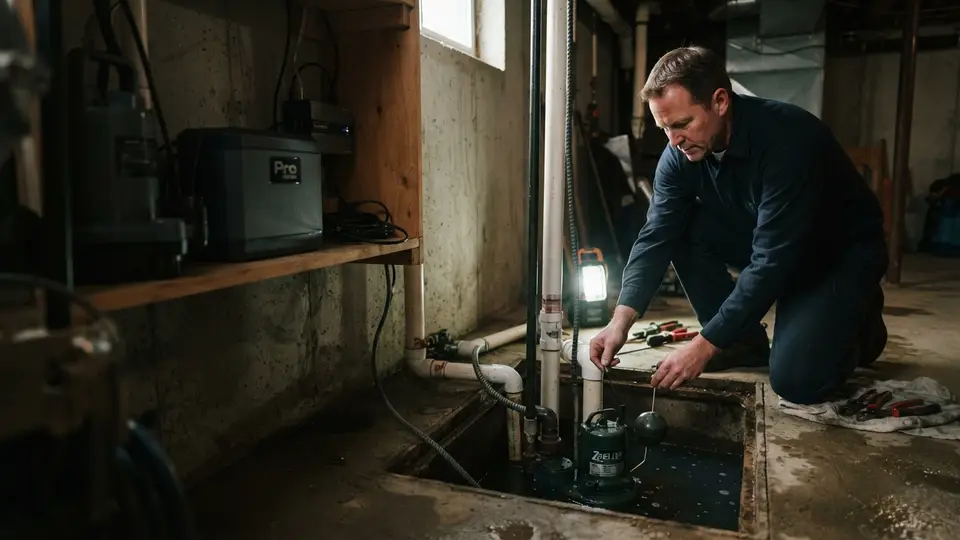
Submersible pump
What it does: Quiet pump inside the pit
Best for: Finished basements
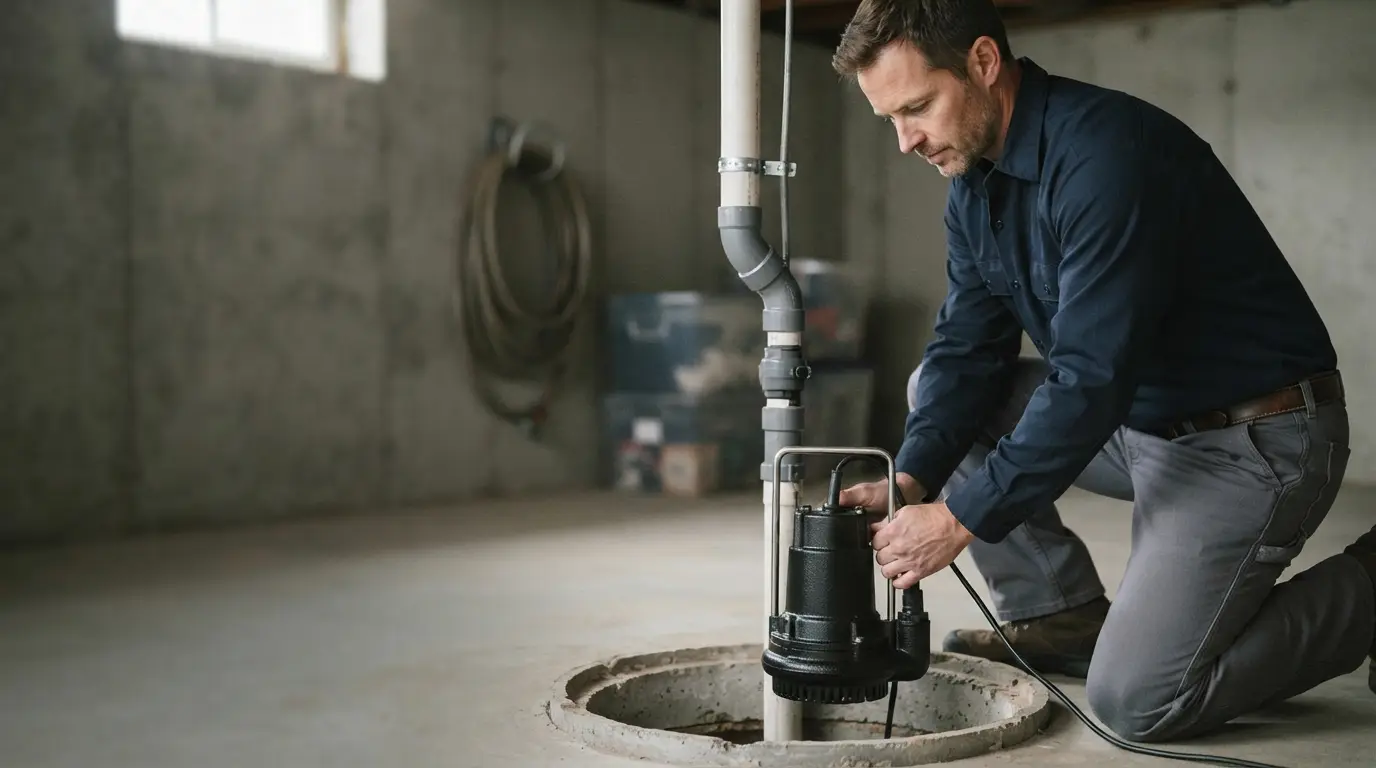
Water in the basement after heavy rain or snowmelt? We handle sump pump repair and installation in New York. Our plumbers repair failed pumps, install new pits and pumps, add battery backup pumps and run discharge lines away from the foundation. New York basements face spring snowmelt upstate, river flooding in the Southern Tier, a high water table on Long Island's South Shore and sudden cloudbursts in the city. The storms of 2011, 2012 and 2021 showed how quickly a basement can fill. A working pump, a backup and an alarm are the best protection.
The service
Most New York houses have basements, and 57% of the state's 6,953,234 homes were built before 1960, before drain tile and sump pits were standard. Groundwater seeps through stone and block foundations and the joint at the floor. A sump system collects that water in a pit and pumps it out. Many older homes added pumps over the years, and those pumps wear out.
Sump pump options
What it does: Quiet pump inside the pit
Best for: Finished basements
What it does: Motor above the pit
Best for: Small or shallow pits
What it does: Second pump on battery
Best for: Storms with power loss
What it does: Runs on city water pressure
Best for: Homes on public water
Why New York
Upstate snowpack melts fast in spring and soaks the ground around foundations.
The Susquehanna, Chemung and Mohawk valleys have flooded many times.
Long Island's South Shore sits close to the water table.
Intense rain overwhelms city sewers and fills low basements.
Warning signs
Our process
We fill the pit to test the pump, check the float switch and check valve, clear silt and replace the switch or pump when it cannot be trusted.
We cut a pit at the low point, set a lined basin, connect any drain tile and run the discharge well away from the house, protected from freezing.
We add a second pump with its own float, a sealed battery and a high-water alarm so the pit keeps draining in a power outage.
Typical cost
Any figure before we see the basement is an estimate only. The main factors:
You get a written price before we start.
Get a written price: (833) 733-2357Switches cost less than pumps.
Cutting concrete or stone floors takes time.
Battery or water-powered.
Long, buried or freeze-protected lines.
Working around finishes takes care.
Benefits
Water leaves before it spreads.
Backups keep working.
Alarms alert you to rising water.
Less moisture, less mold.
Binghamton (25,457 homes) and the Susquehanna Valley were badly flooded in 2011, and Elmira and Corning sit on the Chemung. 88% of Binghamton homes and 92% of Elmira homes were built before 1980, many with stone foundations. When rivers rise, groundwater pushes in for days. We install pumps sized for long run times, add backups and route discharge well clear of the house.
Long Beach (16,630 homes), Freeport, Baldwin, Lindenhurst and West Babylon sit close to the bays, where the water table is high and storm surge from Sandy flooded thousands of homes. Many basements there take water after heavy rain. We install pumps with backups and alarms, raise equipment where we can and pair pumps with backwater valves where sewer backup is also a risk.
When the remnants of Ida dropped record rain on New York City in September 2021, basements across Queens, Brooklyn and the Bronx filled within minutes. New York City has 3,678,486 homes, and many one- and two-family houses have finished basements below street level. We install pumps, backup systems and backwater valves and talk with owners about safe exits and alarms for anyone living below grade.
Buffalo, Cheektowaga, West Seneca and Rochester get heavy lake-effect snow, and a quick thaw sends meltwater toward every foundation. 86% of Cheektowaga homes were built before 1980. Discharge lines freeze in winter and back water into the pit. We route discharge lines with a steady slope, add freeze-resistant outlets and make sure the pump is ready before the spring thaw.
Many New York families have turned basements into living space. A pump failure there damages carpet, drywall and furniture. We recommend a submersible pump with a sealed lid, a battery backup and an alarm that sends a phone alert, and we place the pit where it can be serviced without opening finished walls.
Many older New York houses stand on fieldstone, rubble or early block foundations with dirt or thin concrete floors. Water finds its way through mortar joints and up through the floor, especially in spring. A sump pit with a short run of interior drain along the worst wall can keep these basements usable. We work around the old foundation without undermining it and seal the pit so moisture and radon do not escape into the house.
If safe, check that the pump is plugged in and the breaker is on. Lift the float gently to see if the pump starts.
Move valuables up and stay out of water near electrical equipment. Then call us.
Pump replacement usually needs no permit, but new pits, new discharge lines and electrical work may, and connecting a sump pump to the sanitary sewer is generally not allowed. We follow local rules and file any permit needed. Our plumbers hold the local licenses each job requires.
Why choose us
What you can count on every time one of our plumbers comes to your door.
Every job is handled by a plumber who holds the license your state or city requires, backed by liability insurance.
Our plumber explains the problem and the options, and you approve a written price before any work begins.
Burst pipes, sewage backups and failed water heaters get priority scheduling, including nights and weekends.
We pull permits when the job needs one and schedule the inspection, so the work holds up when you sell.
Repairs and installations come with a written warranty on labor, on top of the manufacturer's warranty on parts.
Our pages and plumbers account for your area's water, soil, climate and the age of the homes around you.
Service area
We install and repair sump pumps in 1293 New York communities, including Syracuse (67,601 homes) and Rochester (104,479 homes). Find yours:
It depends on the pump type, the pit, the discharge route and access. We give you a written price before we start any work.
In New York, usually yes. The storms that bring the most water often knock out power, and a backup keeps the pit draining when the main pump stops.
Yes. Cutting through a concrete or stone floor, digging and setting a basin take more labour than swapping a pump in an existing pit.
We fill the pit with water, watch the float start the pump, check the flow at the outlet and listen for worn bearings or a failing motor.
At the lowest point of the basement or where water comes in, and where it can be serviced without opening finished walls.
We check for a stuck float, a failed check valve or a high water table, then fix the switch or valve or size the pump correctly.
Not if water is near outlets, appliances or the panel. Have the power shut off first and keep children and pets out.
Generally no. We route the discharge outdoors, away from the foundation, following local rules for where it may go.
Usually a couple of hours in an existing pit. A new pit and discharge line can take most of a day.
Usually a few years. Run time during an outage depends on how much water enters and how often the pump cycles.
Before the spring thaw and storm season, and after any long dry spell. Pour water into the pit and make sure it starts and drains.
Slope it so water drains out, keep the outlet clear of snow and use a freeze-resistant fitting where the line exits the house.
No. A sump pump handles groundwater. A backwater valve stops sewer water from flowing back in, and many homes need both.
Yes. A pump with a backup, a backwater valve and a high-water alarm, plus safe exits, help protect anyone living below grade.
We put flooding basements ahead of routine work and keep you updated on timing. Move valuables up and stay clear of electrical hazards.