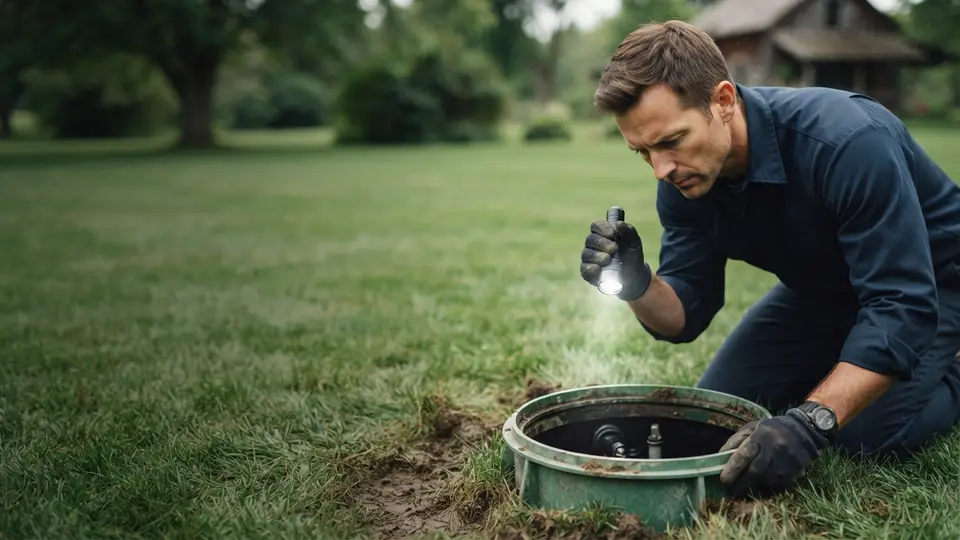
Pumping
When it is needed: Every few years or at a backup
What we do: Remove solids, check inlet and outlet
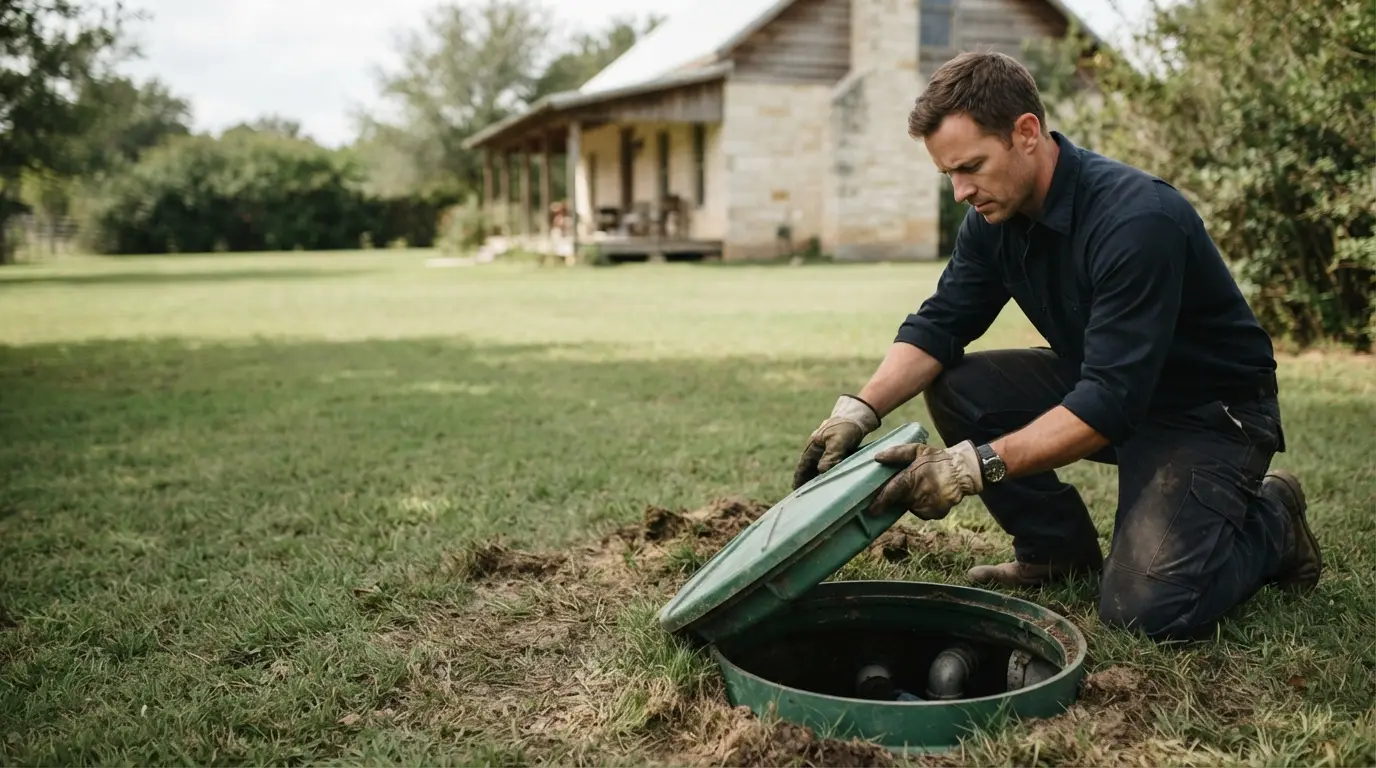
Cesspool overflowing on Long Island, or a slow septic at a camp? We handle septic tank services in New York. Our plumbers pump and inspect septic tanks and cesspools, find the cause of slow drains and backups, replace baffles, lids and pumps and repair leaching pools and drain fields. Much of Suffolk County is not sewered, and rural homes and lake camps across upstate New York treat their own waste. Sandy Long Island soil over a drinking water aquifer, Adirondack bedrock and Catskill slopes each bring their own challenges, and we follow state and county rules on every repair.
The service
A septic system holds waste in a tank where solids settle, then sends liquid to a drain field or leaching pools. Older Long Island homes often have cesspools, which are simply perforated rings with no separate tank. New York State health department standards cover rural systems, and Suffolk County has its own rules. Coram (16,304 homes), Central Islip, Riverhead and the East End rely heavily on onsite systems, and so do towns across the Hudson Valley, Catskills and Adirondacks.
Septic services we provide
When it is needed: Every few years or at a backup
What we do: Remove solids, check inlet and outlet
When it is needed: Home sale, slow drains, odors
What we do: Check tank, pools or field and parts
When it is needed: Overflowing or collapsing rings
What we do: Clean, repair or replace
When it is needed: Wet ground, surfacing effluent
What we do: Diagnose, repair or replace
Why New York
Block and concrete rings clog with solids and lose the ability to drain.
In the Adirondacks and Catskills, thin soil over rock limits fields.
Shallow lines and tanks freeze in long upstate winters.
Summer homes and camps go from empty to full in a weekend.
Warning signs
Our process
We uncover the covers, pump the tank or cesspool, check the inlet, outlet and baffles and note the condition of the rings or tank.
We check the tank or pools, run water through the system, look at the distribution box and field and give you a written report.
We find crushed lines, tipped boxes or clogged pools before assuming a full replacement. When a new system is needed, we work with the designer and the county or state health office.
Typical cost
Any figure before we see the system is an estimate only. The main factors:
You get a written price before work begins.
Get a written price: (833) 733-2357Cesspools, tanks and advanced units differ.
Buried covers take time to reach.
Collapsing rings or broken baffles add work.
County or state approval and engineering.
Remote camps add travel.
Benefits
Solids stay out of the pools and field.
Collapsing rings are found early.
Bays, lakes and wells stay protected.
Records help buyers and lenders.
Much of Suffolk County has no public sewers, and many homes still drain to cesspools. Nitrogen from these systems has harmed bays and groundwater, and Suffolk County now encourages advanced nitrogen-reducing systems and offers programs to help owners replace old systems. Hampton Bays (8,794 homes), Coram and Central Islip all rely on onsite systems. We pump and repair cesspools and septic tanks and help owners understand their upgrade options.
65% of Montauk homes, 57% of Southampton homes and 31% of Greenport homes are vacant on a typical day. Summer weekends bring full houses and heavy flows into systems that sat quiet all winter. Fuel oil heats 67% of Greenport homes, a sign of how old much of the housing is. We pump before the season and handle backups between guests.
Around Old Forge, Saranac Lake and Lake Placid, many camps sit close to lakes on shallow soil over rock. 63% of Old Forge homes are vacant on a typical day, and propane heats 40% of them. In the Catskills, the New York City watershed has additional septic rules. We pump, inspect and repair camp systems, protect tanks from frost and advise when a system is too close to water.
Cottages along the Finger Lakes near Canandaigua and the other lakes often sit on narrow lots between the road and the water. Many were seasonal and now house people year round. Some lake associations and towns require regular septic inspections. We pump, inspect and repair these systems and help owners plan replacements that fit tight lots.
Upstate, many homes with septic also have private wells. State standards require separation between the two, but older properties may not meet modern distances. A failing system can send bacteria and nitrate toward a shallow well. If your system is struggling, we fix the septic first and recommend a lab test of your well water afterward.
Cut water use: no laundry, short showers and no dishwasher. Keep cars and people off the system area.
Never open a cesspool or tank or lean in. The gases can kill, and old covers can collapse. Call us.
Septic and cesspool replacements need approval from the county health department or the state, and Suffolk and Nassau counties have their own requirements. We work with designers and health officials and handle the plumbing between the house and the system. Our plumbers hold the local licenses each job requires.
Why choose us
What you can count on every time one of our plumbers comes to your door.
Every job is handled by a plumber who holds the license your state or city requires, backed by liability insurance.
Our plumber explains the problem and the options, and you approve a written price before any work begins.
Burst pipes, sewage backups and failed water heaters get priority scheduling, including nights and weekends.
We pull permits when the job needs one and schedule the inspection, so the work holds up when you sell.
Repairs and installations come with a written warranty on labor, on top of the manufacturer's warranty on parts.
Our pages and plumbers account for your area's water, soil, climate and the age of the homes around you.
Service area
We serve septic and cesspool homes across 1293 New York communities, from Riverhead (5,781 homes) to Cooperstown (1,139 homes). Find yours:
It depends on the system type, size, cover depth and distance, plus any repairs found. You get a written price before we begin the work.
A new system needs design, county or state approval and excavation. Advanced nitrogen-reducing systems also cost more than a basic tank.
Suffolk County has offered programs for advanced systems. We can explain the options, and you should confirm current terms with the county.
We check the tank or rings, baffles and levels, run water through the system, look at the field or pools and give you a written report.
We check the level first. A high level points to the pools or field; a normal level points to a clog between the house and the tank.
Sometimes. Cleaning, jetting or adding a new ring can restore drainage. A collapsing or failed cesspool usually needs replacement.
Yes, if the cover or rings are failing. A sinking spot can mean a collapse. Keep everyone away and call us right away.
Keep people and pets away, stop using water and call us. Surfacing sewage carries bacteria and must be dealt with promptly.
Usually one to two hours, depending on how deep the covers are and how many tanks or rings the system has.
Installation takes a few days. Design and approval by the health department can take several weeks before work begins.
Most septic tanks need pumping every three to five years. Cesspools, large households and busy summer homes often need more frequent pumping to keep solids out of the pools.
Additives do not replace pumping. Regular pumping and keeping grease, wipes and chemicals out of drains matter much more.
Nitrogen from cesspools and septic systems has harmed bays and groundwater. Advanced systems remove much more nitrogen.
Yes. Insulate shallow lines and tanks, or winterize the camp, so lines do not freeze while it sits empty.
Yes. A spring pumping and check helps a seasonal system handle full houses without backing up mid-season.