Hardness
Where common: Western and central New York
Treatment: Water softener
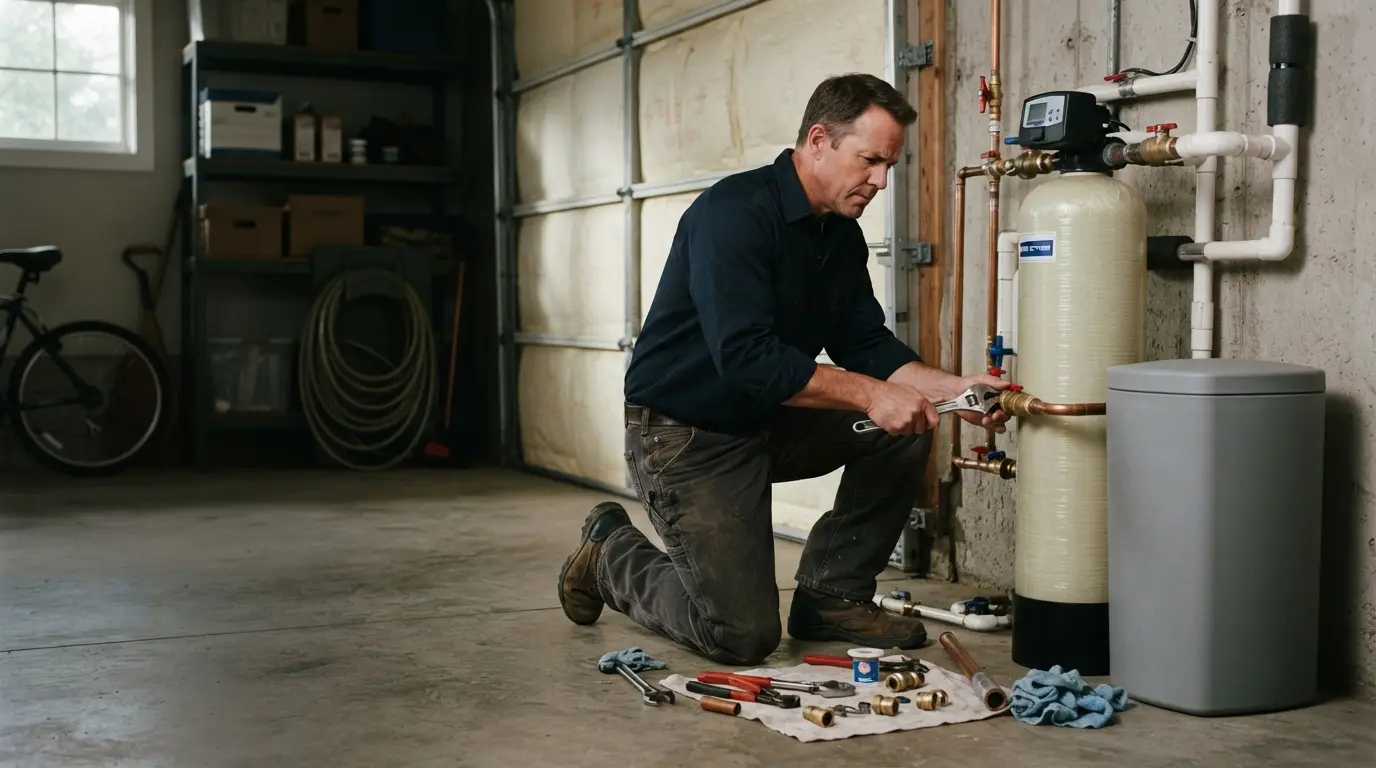
Scale in the kettle, or a well test showing iron and acidity? We handle water softeners and filtration in New York. Our plumbers install softeners, whole-house filters and reverse osmosis drinking water systems for homes on public water and private wells. New York water varies widely: soft reservoir water in New York City, hard limestone water across western and central New York, acidic water with iron on Long Island and in the Adirondacks, and emerging contaminants that Long Island suppliers are now treating. We test your water first and recommend only what it needs.
The service
Most of New York's 6,953,234 homes in our data get water from a public supplier that treats it to meet standards. That water may still be hard, carry a chlorine taste or pass through old lead or galvanized pipe inside the home. Homes on private wells, common upstate and on parts of the East End, are responsible for their own testing and treatment. A test tells us what to treat.
New York water problems and treatment
Where common: Western and central New York
Treatment: Water softener
Where common: Long Island and Adirondack wells
Treatment: Neutralizer and iron filter
Where common: Public water systems
Treatment: Carbon filtration
Where common: Older homes
Treatment: Certified filter until pipe is replaced
Why New York
Bedrock across western and central New York adds calcium and magnesium.
Long Island groundwater is often soft but acidic, with iron.
Adirondack and Hudson Highlands wells can be soft, acidic and carry radon.
New York City water is soft and disinfected, which leaves a chlorine taste.
Warning signs
Our process
We size the softener from your hardness and household use, install a bypass, connect the drain with an air gap and set regeneration to save salt and water.
We install sediment, carbon, iron or neutralizing filters at the main in the order your test calls for, with valves for easy service.
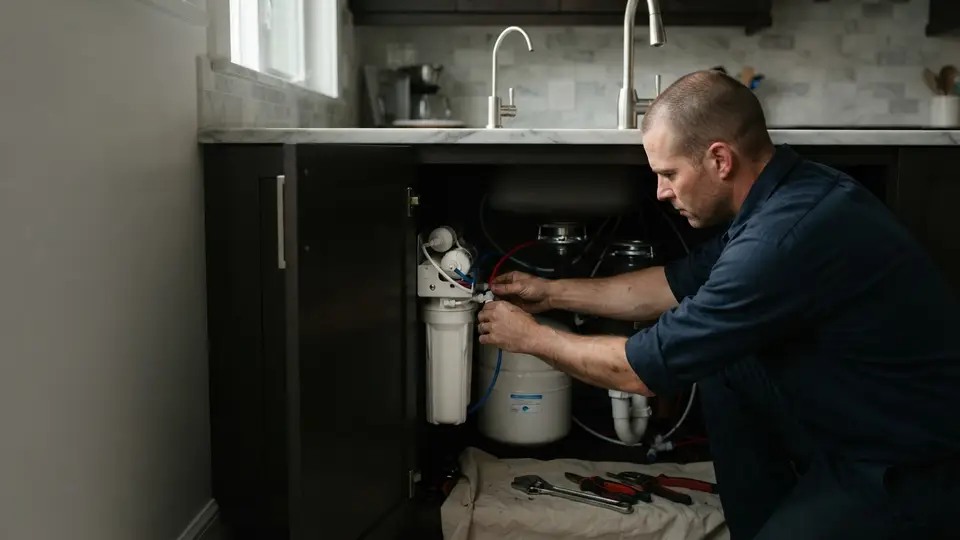
We install an under-sink system with its own faucet for drinking and cooking water and connect it to the refrigerator if you want.
Typical cost
Any figure before we test your water is an estimate only. The main factors:
You approve a written price before we install.
Get a written price: (833) 733-2357Each problem needs its own treatment.
Bigger homes need larger systems.
Several problems may mean several units.
Tight cellars and closets take more work.
Salt, filters, lamps and membranes.
Benefits
Less scale in the tank.
Fewer stains and spots.
No chlorine or metallic flavor.
Treatment matched to a real test.
Rochester (104,479 homes), Brighton, Canandaigua, Geneva and many towns across western and central New York have hard water, especially those drawing from wells in limestone. Scale fills water heaters, clogs aerators and leaves spots on glass. A softener sized to your hardness protects the water heater and fixtures. We test first, since some lake-supplied systems are only moderately hard.
Long Island draws all its water from the aquifer beneath it. Public suppliers in Levittown (17,292 homes), Hicksville and across Nassau and Suffolk treat it for iron, acidity and emerging contaminants such as 1,4-dioxane and PFAS, for which New York has set drinking water limits. Homes with private wells on the East End, around Riverhead and beyond, often need acid neutralizers and iron filters. We test and install what your water needs.
New York City (3,678,486 homes) receives soft water from upstate reservoirs, so softeners are rarely needed. Some households want filtered drinking water for taste or extra protection while old lead or galvanized pipe in the building is being replaced. We install carbon filters and certified lead-reduction or reverse osmosis systems at the kitchen sink.
Camps near Saranac Lake and Old Forge often draw from lakes or shallow wells. 63% of Old Forge homes are vacant on a typical day. Lake water needs filtration and disinfection to be safe to drink, and well water there can be acidic and carry iron. We install filters and UV disinfection suited to seasonal use and show owners how to shut them down and restart them.
Homes around Kingston (11,221 homes) and in the Catskill and Taconic hills often have bedrock wells. Depending on the rock, water may be hard or soft, carry iron and manganese or contain radon. We review your lab results and recommend treatment for what is actually present, then suggest a follow-up test to confirm it works.
In multi-family buildings with hard water, scale shortens the life of the central water heater, boiler coil and mixing valves, and tenants notice spotting and weak showers. A building softener or scale-reduction system sized for the flow protects that equipment. We size and install building systems with bypasses so service continues during maintenance, and we set up a simple schedule for the super to follow.
Gather your latest well test or your supplier's annual water quality report. If a test shows a health risk, switch to bottled water for drinking and cooking.
Clear space where the main line enters the house, near a drain and an outlet. Then call us to schedule a test.
Some municipalities require a plumbing permit for treatment equipment connected to the water supply and drain. We check with your local building department and file what is needed. Our plumbers hold the local licenses each job requires.
Why choose us
What you can count on every time one of our plumbers comes to your door.
Every job is handled by a plumber who holds the license your state or city requires, backed by liability insurance.
Our plumber explains the problem and the options, and you approve a written price before any work begins.
Burst pipes, sewage backups and failed water heaters get priority scheduling, including nights and weekends.
We pull permits when the job needs one and schedule the inspection, so the work holds up when you sell.
Repairs and installations come with a written warranty on labor, on top of the manufacturer's warranty on parts.
Our pages and plumbers account for your area's water, soil, climate and the age of the homes around you.
Service area
We install softeners and filters in 1293 New York communities, including Syracuse (67,601 homes) and Buffalo (136,850 homes). Find yours:
It depends on your water hardness, household size and the model you choose. You get a written price after we test your water and look at the space.
Usually, because it treats only drinking water at one sink. Whole-house systems treat every gallon entering the home and cost more.
Salt for softeners, replacement filters and, for some systems, UV lamps or reverse osmosis membranes on a regular schedule.
We test your water for hardness, iron, pH and other concerns, review any lab report and recommend only the equipment that addresses the results.
We shut off the water, install a bypass and the treatment units, connect the drain with an air gap, set the controls and test the treated water.
Yes. We can run a line from the reverse osmosis system to your refrigerator so filtered water and ice come from the same source.
Only a lab test can tell you. New York wells can contain bacteria, nitrate, iron, manganese, radon or other contaminants, so test and treat as needed.
Use bottled water for drinking and cooking, call us to install treatment certified for the problem and retest after it is running.
Most installations take a few hours. Multi-stage well systems with UV disinfection can take most of a day.
Right after installation and the first regeneration. Existing scale on fixtures and in pipes fades over the following weeks.
Check the brine tank monthly. Most households in hard water areas add salt every month or two.
At least every year or two, and any time the taste, smell or color changes or after flooding nearby.
Rarely. City water is soft. A drinking water filter is the more common choice for taste or lead concerns in older buildings.
Groundwater on Long Island is often acidic with iron. Public suppliers treat it; private well owners may need a neutralizer and iron filter.
We schedule as soon as we can and help you choose treatment quickly. We keep you updated on timing until the system is in place.