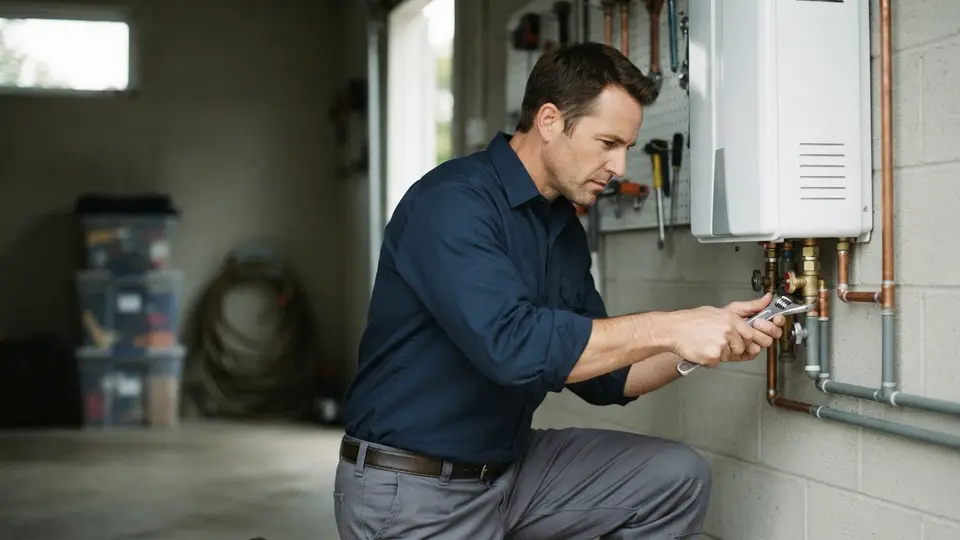
Gas tank
Where common: Most cities and suburbs
Main concern: Venting, burners, sediment
No hot water, or a tank leaking in the cellar? We handle water heater repair and replacement in New York. Our plumbers repair gas, oil-fired, electric and propane tank heaters and indirect tanks fed by boilers, install new tanks and set up tankless units, in houses, two-families and apartment buildings. New York homes make hot water in more ways than almost any other state: gas in most cities, oil boilers on Long Island and in the Hudson Valley, electricity in the North Country and central systems in apartment buildings. We match the heater to your home and handle the permit.
The service
Utility gas heats 63% of New York homes, fuel oil about 15% and electricity 16%, and water heating follows. Oil heats 73% of Levittown homes and 64% of Hampton Bays homes, often with a boiler that also makes hot water. In Plattsburgh, electricity heats 86% of homes. In apartment buildings, a central boiler or commercial heater may serve every unit. We service all of these across the state's 6,953,234 homes.
Water heater types we service
Where common: Most cities and suburbs
Main concern: Venting, burners, sediment
Where common: Oil and gas boiler homes
Main concern: Boiler controls, coil scale
Where common: Long Island, Hudson Valley
Main concern: Burner service, flue
Where common: North Country, apartments
Main concern: Elements, space and air
Why New York
Winter water arrives near freezing, so heaters work harder and longer.
Storms soak burners and controls in low basements.
Unlined masonry chimneys corrode and draft poorly with modern heaters.
Hard water upstate leaves deposits that overheat tanks.
Warning signs
Our process
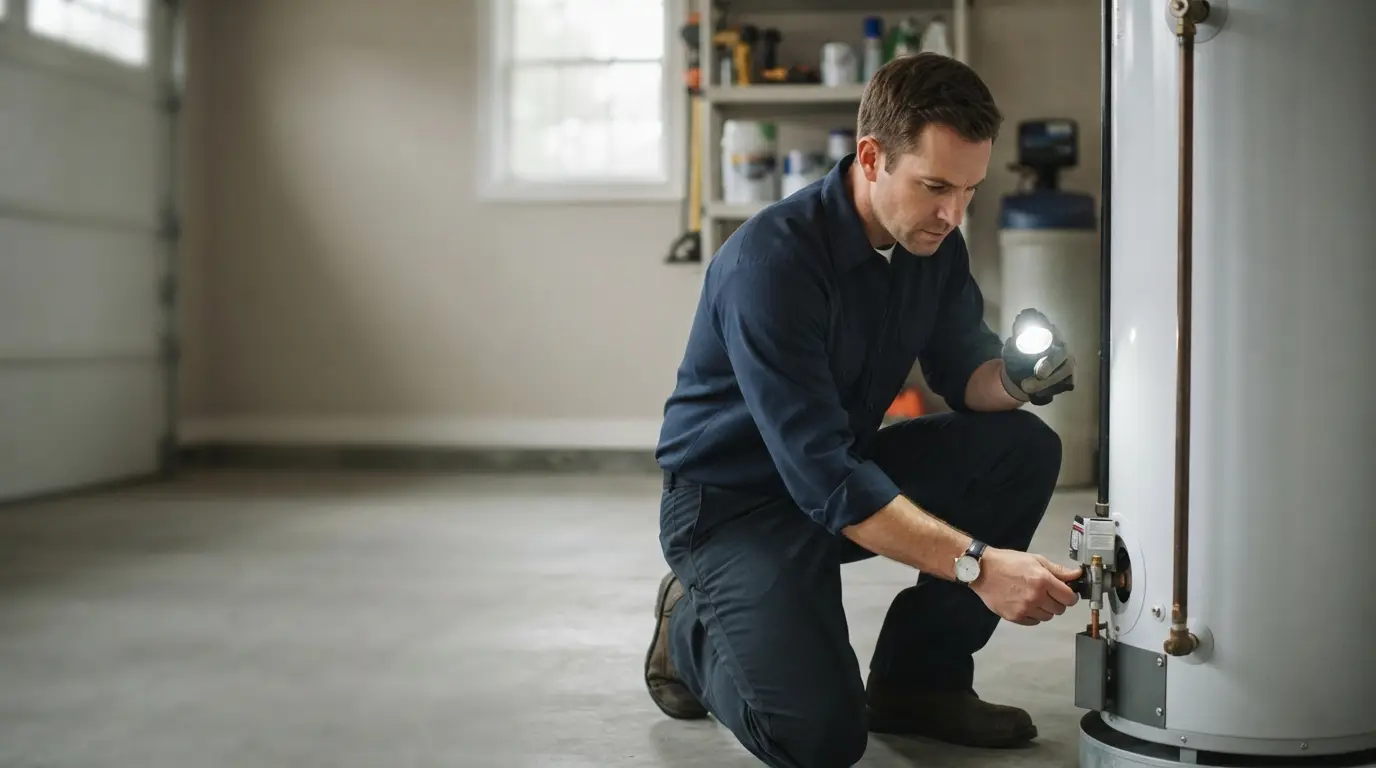
We test burners, thermocouples or flame sensors, gas valves, elements, thermostats and relief valves, check the draft and replace failed parts if the tank is sound.
We remove the old heater, set the new one, connect fuel and water, add an expansion tank where needed, check the chimney or vent and file the permit.
We size the unit, confirm the gas line, install direct venting and service valves and show you how to keep it descaled.
Typical cost
Any figure before we see your setup is an estimate only. The main factors:
You approve a written price before we remove anything.
Get a written price: (833) 733-2357Gas, oil, electric, indirect or tankless.
Chimney liners or new vents.
Expansion tanks, pans and connectors.
Narrow cellar stairs and city buildings.
Local and New York City requirements differ.
Benefits
Exhaust leaves the building properly.
A heater sized for your household.
Efficient units set correctly.
Permit and inspection on record.
Buildings with five or more units hold 62% of New York City homes and 51% of Yonkers homes. Many share a boiler that heats both the building and its hot water, or a large commercial heater. When hot water fails, every tenant calls. We service central heaters and mixing valves, replace failed tanks and plan replacements to keep the outage short.
Fuel oil heats 73% of Levittown homes and 34% of Massapequa homes. Many make hot water with a tankless coil inside the boiler or an indirect tank beside it. A failing coil gives weak, scaled hot water. We can add an indirect tank, replace the coil or install a standalone gas or electric heater, and we coordinate with your oil service company on the boiler side.
Electricity heats 86% of Plattsburgh homes and 75% of Lake Placid homes, where power has long been relatively cheap. Electric tanks there run hard against very cold incoming water. We replace elements and thermostats, install larger tanks where households need them and recommend heat pump water heaters where the space suits them.
63% of Old Forge homes are vacant on a typical day, and propane heats 40% of them. Camp water heaters must be drained when the camp closes, or they freeze and split. We drain and refill heaters at closing and opening, replace freeze-damaged tanks and recommend models suited to part-time use.
90% of Buffalo homes and 87% of Rochester homes were built before 1980, many with old masonry chimneys. When an old boiler is replaced with a sealed unit, a gas water heater left alone on that chimney may not draft well, and acidic exhaust can damage the masonry. We check the chimney, add a liner when needed or switch to a power-vented or direct-vented heater.
New York has been encouraging electric heat pump water heaters, and many homeowners ask about them. A heat pump unit pulls warmth from the surrounding air and uses far less electricity than a standard electric tank. It works best in a basement or utility room with enough space and air, and it cools and dries the room as it runs. We check the space, the condensate drain and the electrical circuit before recommending one.
For a leak, close the cold valve above the tank. Turn a gas heater to off or pilot, or switch off the breaker for an electric one.
Keep children away from the relief pipe and hot water. Move stored items away from the heater and call us.
Replacing a water heater usually needs a permit from the local building department or a filing with the New York City Department of Buildings. We file it and schedule the inspection. Our plumbers hold the local licenses each job requires.
Why choose us
What you can count on every time one of our plumbers comes to your door.
Every job is handled by a plumber who holds the license your state or city requires, backed by liability insurance.
Our plumber explains the problem and the options, and you approve a written price before any work begins.
Burst pipes, sewage backups and failed water heaters get priority scheduling, including nights and weekends.
We pull permits when the job needs one and schedule the inspection, so the work holds up when you sell.
Repairs and installations come with a written warranty on labor, on top of the manufacturer's warranty on parts.
Our pages and plumbers account for your area's water, soil, climate and the age of the homes around you.
Service area
We repair and replace water heaters in 1293 New York communities, including Syracuse (67,601 homes) and Cheektowaga (35,327 homes). Find yours:
It depends on the type, size, venting, code updates and permit. You get a written price before we disconnect or remove the old heater.
When the tank is sound and only a part failed, yes. A leaking tank or one past about twelve years is usually better replaced.
It saves space and fuel and lasts longer, but cold incoming water in winter means sizing it carefully. We help you weigh the cost.
We drain and remove the old heater, set the new one, connect fuel and water, check venting and test it. Then we arrange the inspection.
Yes. We haul away the old tank and packaging as part of the job, including heavy tanks from tight city cellars.
We can add or replace an indirect tank, replace the boiler coil or install a separate gas or electric heater. Each has trade-offs we explain.
Leave the building, then call your gas utility or 911 from outside. Do not use switches or phones inside. We repair it once it is safe.
It means pressure or temperature is too high or the valve is worn. Never plug it. Turn the heater down and call us.
A standard tank swap takes a few hours. Indirect tanks, chimney liners and building heaters can take most of a day.
Usually within an hour after a new tank is filled and running. Tankless units deliver hot water right away.
Once a year for most homes. Homes with hard water in western and central New York may need it more often.
Tank heaters often last eight to twelve years. Indirect tanks and tankless units can last longer with regular service.
In most places, yes. We file with the local building department or the New York City Department of Buildings and arrange the inspection.
Yes, if the camp will be unheated. A frozen tank splits. We drain heaters when camps close and refill them at opening.
We book the earliest time we can and keep common sizes in mind when planning the visit. We keep you updated on timing.