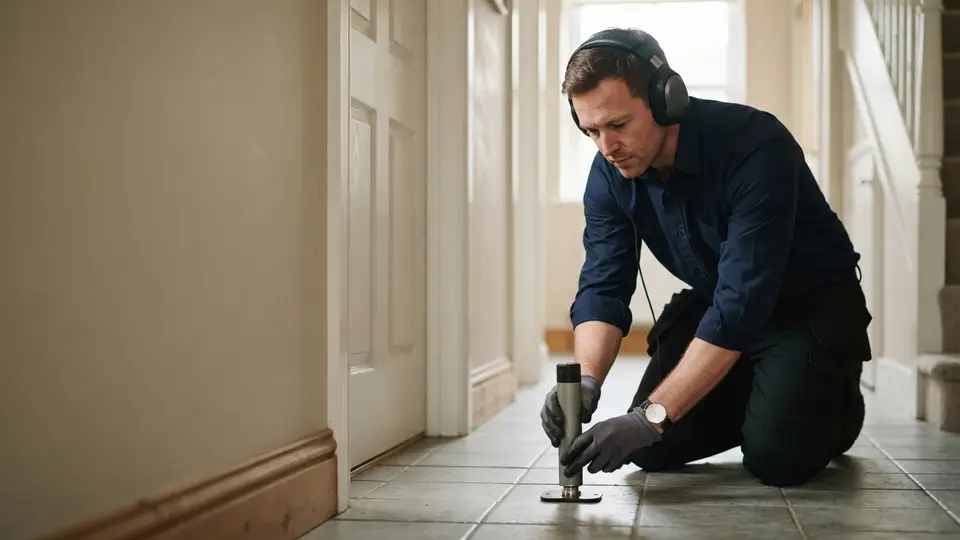
Pressure testing
Best for: Confirming a leak
What it does: Isolates lines and watches for loss

Water stain spreading on the ceiling, or a neighbor below reporting a drip? We handle leak detection and repair in New York. Our plumbers find hidden leaks in walls, ceilings, floors, risers and buried service lines, repair them and deal with burst and frozen pipes when winter arrives. In New York a leak can start in one apartment and show up three floors down, hide in plaster walls of a century-old house or burst in a lake camp nobody has visited since October. We use pressure, acoustic and thermal testing to find the source before we open a wall.
The service
Leak detection means tracking escaping water to its source. 41% of New York's 6,953,234 homes are in buildings with five or more units, and 57% of all homes were built before 1960. Old galvanized risers, copper with pinholes, leaking valve packing and failed fixture seals all send water into walls and floors. Plaster, tile and shared walls make guessing expensive, so we narrow the search with instruments first.
Methods we use to find leaks
Best for: Confirming a leak
What it does: Isolates lines and watches for loss
Best for: Floors, walls and buried lines
What it does: Picks up the sound of escaping water
Best for: Hot water and radiant lines
What it does: Shows warm or cool wet areas
Best for: Tracing the water path
What it does: Measures dampness in plaster and wood
Why New York
Galvanized and brass risers in older buildings corrode at threads and fittings.
Lines in outside walls, porches and camps split during cold snaps.
Old tub and shower pans and worn grout let water into floors.
High pressure and slamming valves stress joints over time.
Warning signs
Our process
We confirm the leak, isolate risers, branches and fixtures, then use listening gear and thermal imaging to mark the spot before cutting.
We open the smallest practical area, replace the failed pipe or fitting, pressure test it and leave the opening ready for plaster or tile repair.
We stop the water, cut out the split section, install new pipe and check nearby lines that took the same cold.
We thaw the line slowly, test it under pressure and reroute or insulate it away from the cold wall.
Typical cost
Every leak is different, so any figure before we test is an estimate only. Costs depend on:
We give you a written price before we start repairs.
Get a written price: (833) 733-2357Testing several apartments takes longer.
Old risers may need more than a patch.
Plaster, tile and wood floors take care.
Digging and permits add cost.
After-hours calls cost more.
Benefits
We cut where the leak is.
Leaks stop before they spread.
Wet framing dries sooner.
Notes and photos for insurers and boards.
Buildings with five or more units hold 62% of New York City homes, 61% of White Plains homes and 46% of New Rochelle homes. Water from a leaking tub in one unit can travel along a pipe chase and appear far from the source. We test the units above, trace the path with moisture readings and work with the super, managing agent and co-op or condo board so the right party fixes the right pipe.
90% of Buffalo homes, 79% of Albany homes and 90% of Kingston homes were built before 1980, many in the early 1900s. Their supply lines run through plaster walls and under hardwood floors. We find the leak with instruments, then open plaster carefully in one spot. When old galvanized pipe fails in many places, we show you the pattern and price a repipe alongside the repair.
Syracuse (67,601 homes), Watertown and the Tug Hill area get long stretches of deep cold. In Watertown, where the median home dates from 1945, many houses have pipes in exterior walls and unheated porches. When a cold snap hits, we thaw and repair frozen lines, then insulate, reroute or add heat cable so they survive the next one.
63% of Old Forge homes, 31% of Lake Placid homes and 65% of Montauk homes are vacant on a typical day. A camp that was not fully winterized can freeze, and a summer home with a failed boiler can burst a pipe that runs for days. We winterize and open homes, install leak sensors and automatic shutoffs and repair freeze damage when owners return.
A leak between the curb valve and the building can soften the lawn, wet the cellar wall or show only as a high bill. Older services may be lead or galvanized. We locate the leak with listening equipment, repair or replace the service with copper and coordinate with the water department for the curb shutoff.
Close the main shutoff or the valves for your apartment. In a building, tell the super and the neighbors below.
Turn off power to wet areas if you can reach the panel safely. Move valuables, take photos and call us.
Small leak repairs usually need no permit. Replacing risers, repiping or replacing a water service often does, from the local building department or the New York City Department of Buildings, and we file it. Our plumbers hold the local licenses each job requires.
Why choose us
What you can count on every time one of our plumbers comes to your door.
Every job is handled by a plumber who holds the license your state or city requires, backed by liability insurance.
Our plumber explains the problem and the options, and you approve a written price before any work begins.
Burst pipes, sewage backups and failed water heaters get priority scheduling, including nights and weekends.
We pull permits when the job needs one and schedule the inspection, so the work holds up when you sell.
Repairs and installations come with a written warranty on labor, on top of the manufacturer's warranty on parts.
Our pages and plumbers account for your area's water, soil, climate and the age of the homes around you.
Service area
We find and fix leaks in 1293 New York communities, including Yonkers (85,006 homes) and Rochester (104,479 homes). Find yours:
It depends on how hidden the leak is, how many units we test and the equipment needed. You get a written price before we start any testing.
Yes. Once we find the source, we explain the repair and give you a written price for it before we open the wall, ceiling or floor.
Some policies cover finding and repairing sudden leaks, but not gradual ones. We provide notes and photos you can send to your insurer or board.
We isolate lines with pressure tests, then use listening equipment, thermal imaging and moisture readings to mark the source before cutting.
We confirm water is escaping, ask when the signs began and isolate risers, branches and fixtures to narrow the search quickly.
Yes, with access to that unit. We work with the super or managing agent to test the units above and trace the water path down to yours.
It can be. Soaked plaster can sag and fall, and water near light fixtures is a shock risk. Shut off water and power to the area and keep clear.
Close the main or your apartment shutoff right away, turn off power to wet areas if safe and call us. Then move belongings out of the water.
A house usually takes one to two hours. Apartment buildings, where several units must be tested, and buried service lines can take longer.
Most single repairs take a few hours once the water is off. Freeze damage across several lines in a camp or old house can take a full day.
Keep heat on, open cabinets on outside walls in deep cold, drain outdoor faucets in fall and winterize any home that will sit empty.
Yes, especially in second homes and camps. Sensors alert your phone, and an automatic shutoff valve can stop the water before damage spreads.
Galvanized pipe rusts from the inside and fails at many joints over time. Once failures start, repiping often costs less than repeated repairs.
Often, yes. Responsibility depends on the building rules. We document the source so the board, owners and insurers can sort out who pays.
We put burst pipes and active leaks ahead of routine work. Shut off the water, call us and we keep you updated on timing.