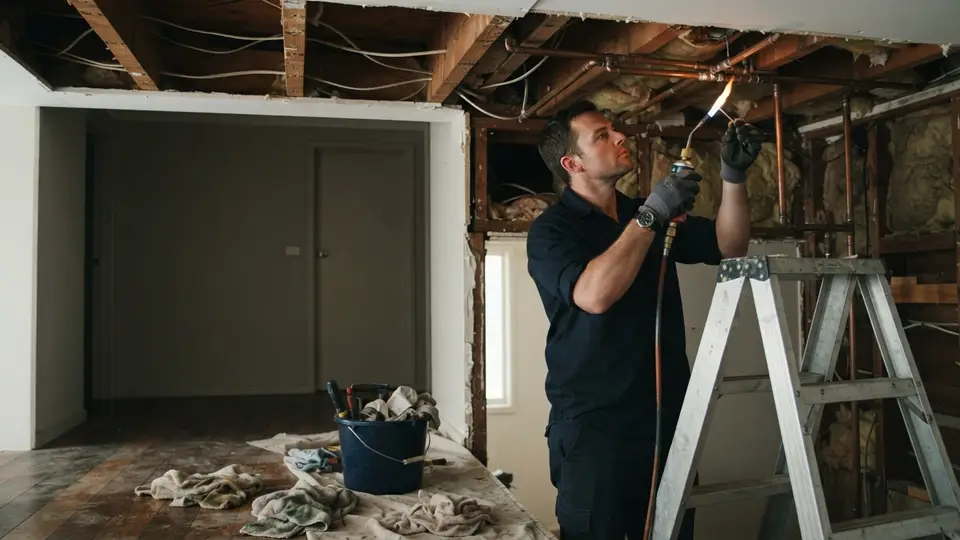
Burst pipe
Your first step: Close the main or apartment valve
What we do: Stop the leak, replace the section
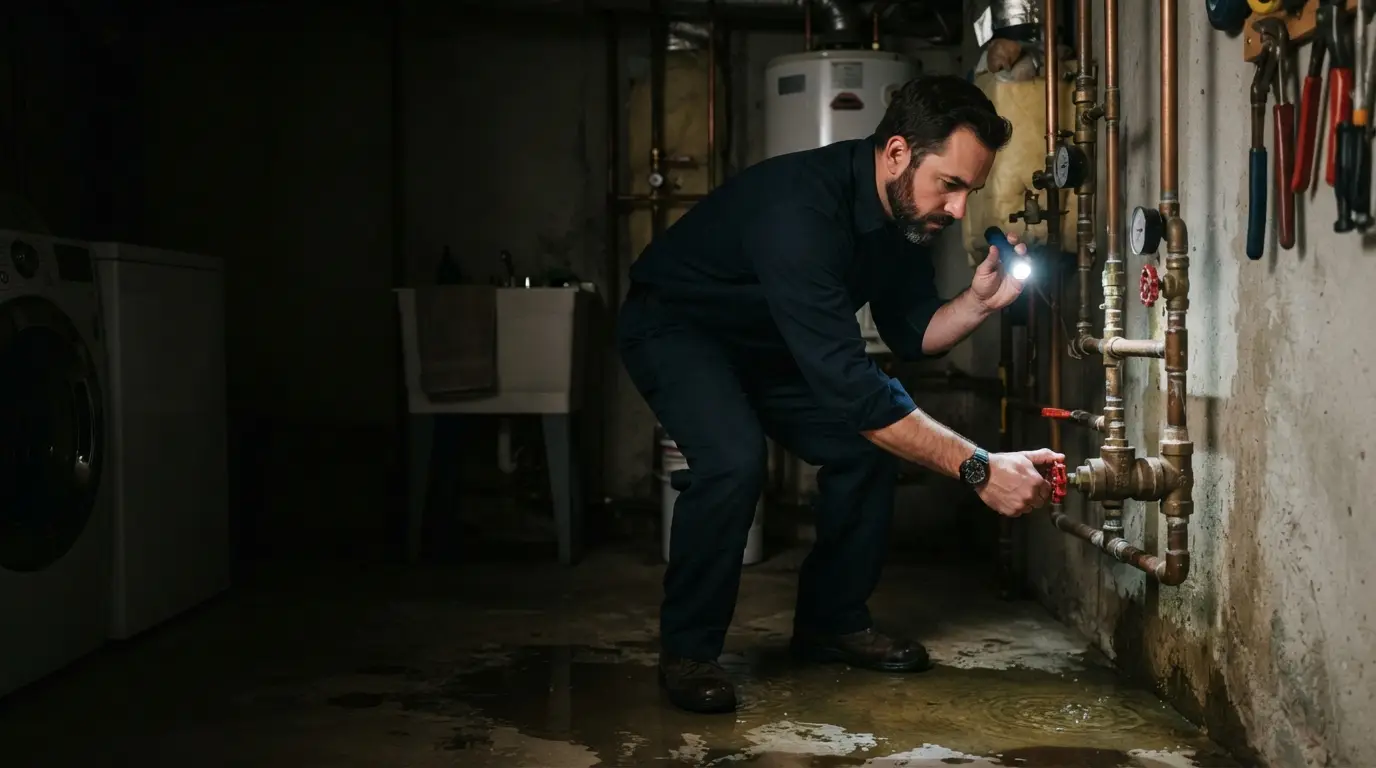
Pipe burst in a cold snap, or sewage coming up in the cellar? We handle emergency plumbing in New York. Our plumbers respond to burst pipes, sewage backups, buildings with no water and gas odors, and we tell you on the phone exactly what to shut off while we arrange the visit. In New York an emergency can be a riser leaking through six apartments, a frozen pipe in a Buffalo double after a blizzard, a flooded basement in Queens or a burst line in an empty Adirondack camp. We stop the damage first, then give you a written price for the full repair.
The service
New York has 6,953,234 homes in our data, 41% of them in buildings with five or more units and 57% built before 1960. Old pipes, shared risers and long winters make for many urgent calls. We sort them by risk: gas first, then sewage and flooding, then loss of water and heat-related freezes, so the most dangerous problems get attention first.
Emergencies and the first step
Your first step: Close the main or apartment valve
What we do: Stop the leak, replace the section
Your first step: Stop all water use
What we do: Clear the line, find the cause
Your first step: Check with neighbors and the utility
What we do: Find the frozen or broken line
Your first step: Leave, call the utility or 911
What we do: Repair piping once it is safe
Why New York
Lake-effect storms and arctic air freeze pipes in walls, porches and empty homes.
Heavy rain and coastal storms flood basements and back up sewers.
Old pipe fails suddenly, often when a valve is finally turned.
A boiler that quits in January can freeze a building within hours.
Warning signs
Our process
We confirm the water is off, open the wall or ceiling where the pipe split, replace the damaged length and check nearby lines exposed to the same cold.
We clear the blockage at the house trap or cleanout, flush the line, camera it to find the cause and advise on a backwater valve.
We check the meter, main valve and service, thaw frozen sections and repair breaks, coordinating with the water department when the curb valve is involved.
Once the utility has made the building safe, we find and repair the leak, pressure test the piping and arrange for service to be restored.
Typical cost
Any figure before we see the problem is an estimate only. The main factors:
We stop the immediate danger, then give you a written price for the full repair.
Get a written price: (833) 733-2357Nights, weekends and holidays cost more.
One split pipe or many.
Risers and shared lines take more work.
Plaster, ceilings and snowbound sites.
Permanent fixes after the emergency.
Benefits
The leak stops sooner.
Gas and sewage hazards first.
You approve the full repair.
Notes and photos.
Buildings with five or more units hold 62% of New York City homes and 51% of Yonkers homes. A burst riser or a blocked stack can affect every unit on the line. We work with the super to isolate the smallest section possible, keep the rest of the building in service and give the owner a clear account for tenants, insurers and any city filings.
The December 2022 blizzard buried Buffalo and Cheektowaga and left many homes without power or heat for days. 90% of Buffalo homes and 85% of Syracuse homes were built before 1980, with pipes in outside walls and unheated porches. When the power and heat go, pipes follow. We thaw and repair frozen lines and help owners prepare with insulation, heat cable and better-placed shutoffs.
Sandy flooded Long Beach (16,630 homes) and much of the South Shore in 2012, and the remnants of Ida filled basements across New York City in 2021. In a flood, sewers back up, water heaters and boilers go under and electrical hazards rise. Once the area is safe, we clear drains, restore water heaters and boilers and install pumps and backwater valves to reduce the damage next time.
63% of Old Forge homes, 31% of Lake Placid homes and 65% of Montauk homes are vacant on a typical day. A camp that was not fully drained, or a summer home whose boiler failed, can burst pipes that run for days. We shut off the water, repair the damage and help owners set up sensors and automatic shutoffs that alert them before the next freeze.
Many New York homes and buildings depend on a single boiler. In Watertown, where the median home dates from 1945, a boiler failure on a below-zero night puts every pipe at risk. While your heating contractor works on the boiler, we protect the plumbing: we drain vulnerable lines, add temporary heat where safe and repair any pipe that has already frozen.
Close the main or apartment shutoff for any major leak. In a building, call the super. Turn off the water heater if water will be off a while.
Turn off power to wet areas if you can reach the panel safely, move valuables and take photos. For gas, leave and call from outside. Then call us.
Emergency repairs can start right away. Where the permanent repair needs a permit, such as a water heater replacement or new gas piping, we file it with the local building department or the New York City Department of Buildings. Our plumbers hold the local licenses each job requires.
Why choose us
What you can count on every time one of our plumbers comes to your door.
Every job is handled by a plumber who holds the license your state or city requires, backed by liability insurance.
Our plumber explains the problem and the options, and you approve a written price before any work begins.
Burst pipes, sewage backups and failed water heaters get priority scheduling, including nights and weekends.
We pull permits when the job needs one and schedule the inspection, so the work holds up when you sell.
Repairs and installations come with a written warranty on labor, on top of the manufacturer's warranty on parts.
Our pages and plumbers account for your area's water, soil, climate and the age of the homes around you.
Service area
We handle plumbing emergencies in 1293 New York communities, including Albany (50,408 homes) and Binghamton (25,457 homes). Find yours:
Yes. Calls at night, on weekends and on holidays cost more than scheduled work. We tell you before the visit so there are no surprises.
Yes. We stop the immediate danger first, then give you a written price for the permanent repair before we begin it.
Many policies cover sudden water damage but not wear or slow leaks. We give you notes and photos to support your claim.
We make sure water, gas or power is safely off, find the source and stop further damage before planning the repair.
What is happening, where, whether water is near electrical outlets and whether you or the super can reach the shutoff.
Usually, yes. If several lines froze or a riser is badly corroded, we make the building safe and schedule the larger repair soon after.
Leave without using switches, phones or elevators, then call your utility or 911 from outside. We repair the piping once it is safe.
Yes. It carries bacteria and viruses. Keep people and pets away, avoid contact and stop using water until the line is cleared.
We book the earliest time we can and put gas, sewage and flooding ahead of other calls. We keep you updated on timing.
Many are handled in a few hours. Riser replacements and widespread freeze damage may need a second visit after the emergency is under control.
Keep heat on, open cabinets on outside walls in deep cold, drain outdoor faucets in fall and winterize any home that will sit empty.
Yes. Old valves often fail to close in an emergency. We can replace a seized main valve before you need it.
Drain the system and water heater, open faucets, add antifreeze to traps and have someone check the camp after deep cold.
Stay out if water is near electrical equipment. Once it is safe, we clear drains, restore equipment and can add pumps and backwater valves.
Call your water department first, since a main break is their repair. If only your home or building is affected, call us.