Roots
What the camera shows: Root masses at joints
Usual fix: Cleaning, then liner or section repair
Roots back in the sewer line, or sewage at the cleanout? We handle sewer line repair and replacement in North Carolina. Our plumbers inspect, repair and replace the private sewer line from your home to the city connection, including the drain under the house and the cleanouts outside. North Carolina sewer lines run through dense red clay, sandy coastal soil and mountain rock, often under old oaks and pines, and many older lines are clay or early plastic. We camera the line first, show you the footage and recommend the least disruptive repair that will last.
The service
In most North Carolina cities, the homeowner owns the sewer line from the house to the city cleanout or connection near the property line, though rules vary. 35% of the state's 3,058,155 homes were built before 1980, when clay, cast iron and early plastics were common. The median home in Kinston dates from 1966, in Lenoir from 1972 and in Salisbury from 1976.
Sewer problems and the usual fix
What the camera shows: Root masses at joints
Usual fix: Cleaning, then liner or section repair
What the camera shows: Water standing in a low spot
Usual fix: Dig and relay at proper slope
What the camera shows: Pipe ends out of line
Usual fix: Section replacement
What the camera shows: Soil inside the line
Usual fix: Section or full replacement
Why North Carolina
Oaks, maples and pines find every leaking joint in older lines.
Dense clay holds water, swells and settles, pulling joints apart.
Newer subdivisions built on fill can let lines sag within a few years.
Floodwater washes out bedding and pushes sand into cracks.
Warning signs
Our process
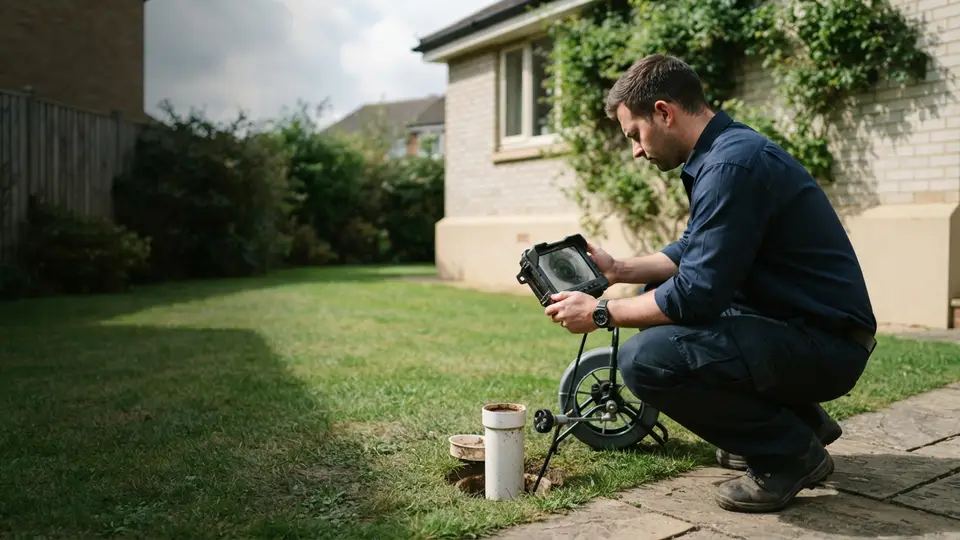
We push a camera from the cleanout to the city connection, record the line, measure to each defect and locate it from above.
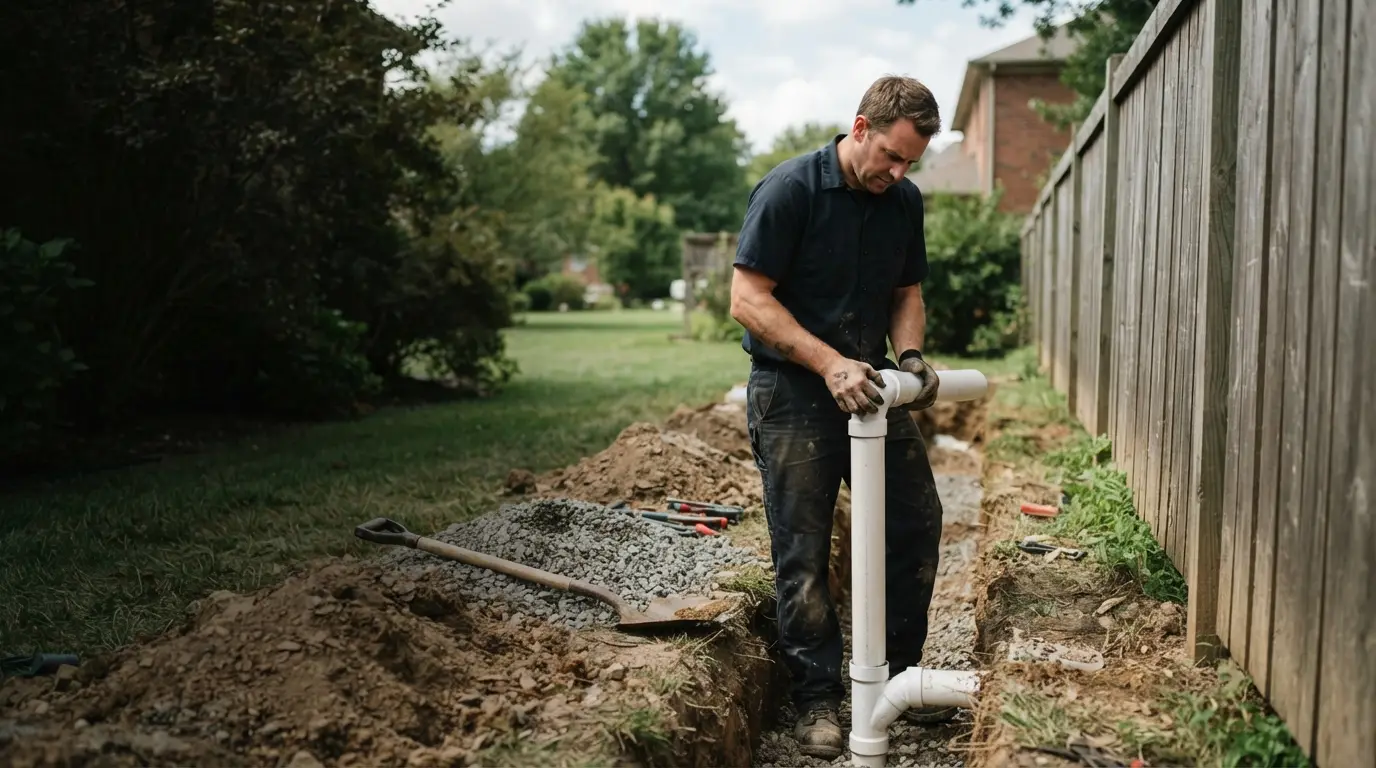
For one bad section, we dig at that spot, cut out the broken pipe, install new PVC with shielded couplings and bed it properly. Lining can avoid digging in some cases.
When the whole line has failed, we replace it by trench or by pipe bursting and connect it to the city cleanout or tap.
Typical cost
Any figure before a camera inspection is an estimate only. The main factors:
We give you a written price after the inspection and before digging.
Get a written price: (833) 733-2357Longer, deeper lines take more digging.
Clay, rock and wet sand each slow work.
Driveways, patios and trees.
Spot repair, lining, bursting or trench.
City or county requirements.
Benefits
The cycle of cleanings ends.
Sewage stays in the pipe.
The camera shows us where to open.
Video and documentation for buyers.
Durham, Greensboro, Winston-Salem and High Point have neighborhoods built from the 1920s through the 1970s. 48% of Winston-Salem homes and 43% of Greensboro homes predate 1980. Many sewer lines there are clay pipe under mature trees, set in red clay that shifts with wet and dry seasons. We camera the full line and replace only what the footage shows has failed.
Kinston, Goldsboro and Rocky Mount sit on the coastal plain near rivers that flooded during Matthew and Florence. 59% of Goldsboro homes and 52% of Rocky Mount homes were built before 1980. Flooding washes out pipe bedding and fills cracked lines with silt. After high water, we camera sewer lines, clear sediment and repair sections that shifted.
Charlotte (399,305 homes), Raleigh and their fast-growing suburbs have thousands of homes built since 2000 on graded lots. Where fill was not compacted well, sewer lines settle and form bellies within a few years. The camera shows standing water in the low spot. A short excavation to relay that section at the right slope usually solves it.
In Wilmington (62,836 homes) and beach towns like Wrightsville Beach, where 55% of homes are vacant on a typical day, sewer lines sit in sandy soil with a high water table. Sand runs into cracked pipe and the line settles. We dewater trenches when we dig, bed new pipe to resist settling and test it before backfilling.
Asheville (50,034 homes) and mountain towns have steep lots and rock close to the surface. Sewer lines may run downhill under retaining walls and driveways, and Helene's floods in 2024 damaged lines across the region. Where digging is hard, a liner or pipe bursting can avoid most excavation. We explain the options after the camera inspection.
A cured-in-place liner forms a new pipe inside the old one, installed through the cleanout without trenching the yard, driveway or garden. It suits lines that still hold their shape but leak at joints or let roots in. It is a poor fit for collapsed pipe, deep bellies or lines that changed direction many times. After the camera inspection, we tell you plainly whether lining or digging makes more sense for your line and why.
Use as little water as you can. Hold off on laundry, dishes and showers.
Clear the area around the outdoor cleanout but do not open the cap if sewage is backed up, since it will spill. Then call us.
Sewer repairs and replacements usually need a permit from your city or county inspections department, and connections follow the sewer utility's rules. We file permits and schedule inspections. Our work is done under North Carolina plumbing contractor licenses.
Why choose us
What you can count on every time one of our plumbers comes to your door.
Every job is handled by a plumber who holds the license your state or city requires, backed by liability insurance.
Our plumber explains the problem and the options, and you approve a written price before any work begins.
Burst pipes, sewage backups and failed water heaters get priority scheduling, including nights and weekends.
We pull permits when the job needs one and schedule the inspection, so the work holds up when you sell.
Repairs and installations come with a written warranty on labor, on top of the manufacturer's warranty on parts.
Our pages and plumbers account for your area's water, soil, climate and the age of the homes around you.
Service area
We repair sewer lines in 776 North Carolina communities, including Durham (136,837 homes) and High Point (49,131 homes). Find yours:
It depends on length, depth, soil, method and what sits above the line. After a camera inspection, you get a written price before any digging.
Often, when the pipe holds its shape and a driveway, patio or tree sits above it. Lining cannot fix a collapsed pipe or a deep belly.
It can. Dense red clay is slow to dig and must be bedded properly so the new line does not settle. We include that in your price.
We push a camera through the cleanout, record the full line, measure to each defect and locate it from the surface.
We call 811 for utility marks, dig or set bursting pits, install and test the new pipe, then backfill and restore the yard.
In most North Carolina cities the owner is responsible up to the city cleanout or connection. Rules vary, so we confirm them before quoting.
Yes. Leaking sewage attracts pests, wets the soil near the foundation and can back up into the home or crawl space.
Yes. We request utility locates through North Carolina 811 before every excavation, as state law requires.
Most residential replacements take one to two days, plus time for permits, locates and inspection.
A properly bedded PVC line should last many decades. Good bedding matters more in shifting clay and wet coastal sand.
Plant trees away from it, keep the joints sound and have the line checked if drains start to slow.
Yes, especially for homes built before 1980 or on fill in newer subdivisions. A camera inspection costs little compared with a repair.
Yes. Floodwater washes out bedding and fills cracks with silt. We camera lines after major floods and repair what shifted.
Sometimes fill under the line was not compacted well and settled. A short excavation to relay that section usually fixes it.
Yes. We clear the line first to stop the backup, then camera it to plan the repair. We keep you updated on timing.