Acidic water
Where common: Piedmont and mountain wells
Treatment: Neutralizer
Orange stains in the tub, or a well test that came back acidic? We handle water softeners and filtration in North Carolina. Our plumbers install water softeners, whole-house filters, acid neutralizers and reverse osmosis drinking water systems for homes on public water and private wells. North Carolina water is usually soft in the cities, but wells across the Piedmont and mountains are often acidic and carry iron or manganese, some central wells contain arsenic or uranium, and coastal wells can be hard or smell of sulfur. We test your water first and recommend only what it needs.
The service
Most of North Carolina's 3,058,155 homes in our data get water from city or county systems that treat river and reservoir water to meet standards. Millions of residents rely on private wells, and those owners are responsible for their own testing and treatment. Unlike much of the country, hardness is rarely the main issue in the Piedmont; acidity, iron and manganese are. A water test tells us what to treat.
North Carolina water issues and fixes
Where common: Piedmont and mountain wells
Treatment: Neutralizer
Where common: Wells across the state
Treatment: Iron filter or oxidizing system
Where common: Some central Piedmont wells
Treatment: Reverse osmosis or specialty media
Where common: Some coastal wells
Treatment: Softener and sulfur filter
Why North Carolina
Piedmont and mountain bedrock yields soft, often acidic water.
Some wells in the central Piedmont carry natural arsenic.
Wells near the coast can be hard and carry hydrogen sulfide.
City water from rivers is disinfected and may taste of chlorine.
Warning signs
Our process
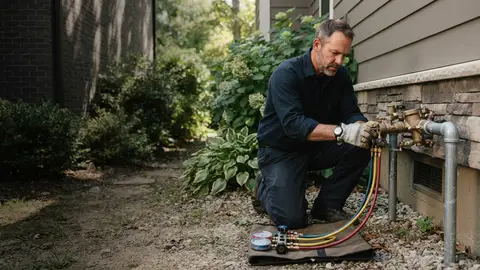
Where water is hard, we size the softener from your test and household use, install a bypass, connect the drain with an air gap and set regeneration to save salt.
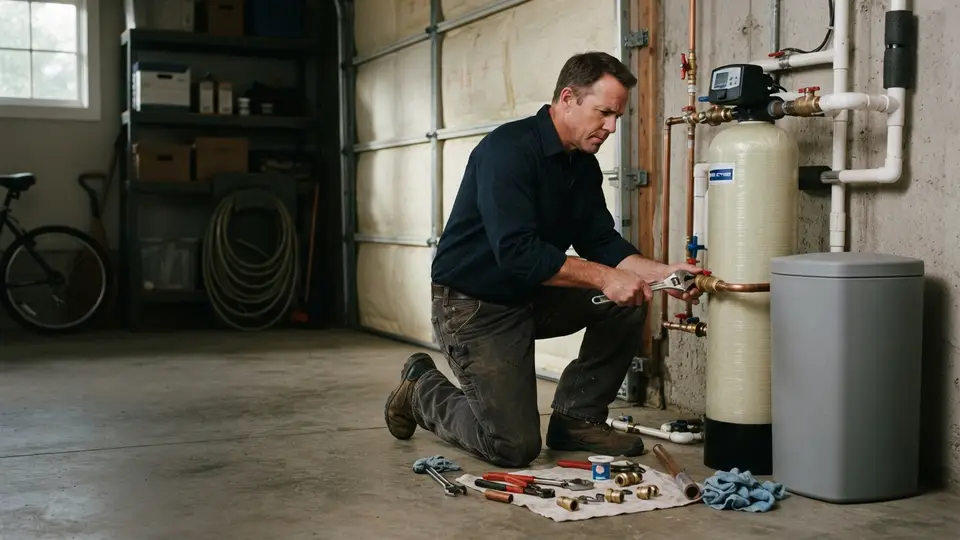
We install neutralizers, iron and manganese filters, sulfur filters or carbon at the main line, in the order your test calls for.
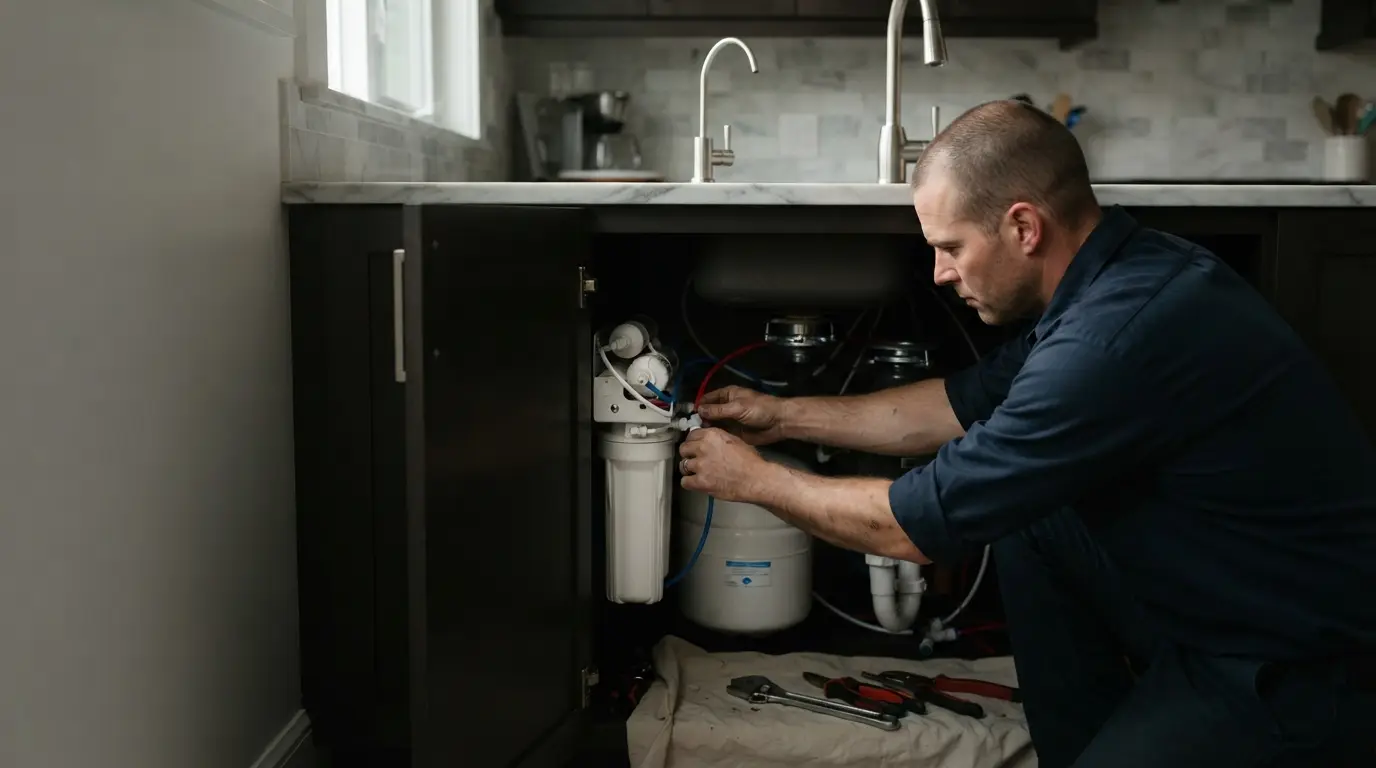
We install an under-sink system with its own faucet to remove arsenic, uranium, nitrate and many other contaminants from drinking water.
Typical cost
Any figure before we test your water is an estimate only. The main factors:
You approve a written price before we install.
Get a written price: (833) 733-2357Each issue needs its own treatment.
Larger homes need larger systems.
Several issues may mean several units.
Garages, crawl spaces and closets differ.
Salt, media, filters and membranes.
Benefits
No more acid-driven pinhole leaks.
No iron or manganese stains.
Treatment matched to a real test.
Water heaters and dishwashers last longer.
Around Asheville (50,034 homes), Boone, Hendersonville and much of the rural Piedmont, wells drilled into granite and gneiss often produce acidic water. It eats copper pipe, causes pinhole leaks and leaves blue-green stains. A neutralizer raises the pH and protects your plumbing, water heater and fixtures. We often pair it with an iron filter where iron is present too.
Parts of the central Piedmont, including areas around Monroe, Indian Trail and Concord, sit on rock formations where some private wells contain natural arsenic, and uranium has been found in some wells elsewhere in the Piedmont. You cannot taste or smell either. County health departments can help with testing. If your results are high, we install treatment certified for that contaminant and recommend a follow-up test.
Wilmington (62,836 homes) draws much of its water from the Cape Fear River, and its utility added advanced filtration to remove PFAS compounds such as GenX. Many homes in Leland, Brunswick County and the beaches use groundwater that can be hard or carry sulfur. We test your water and recommend softeners, sulfur filters or reverse osmosis depending on the results.
Charlotte (399,305 homes), Raleigh and most cities deliver soft water from rivers and reservoirs, so softeners are rarely needed. Some households want better taste or extra filtration for drinking water. Carbon filters remove chlorine taste, and reverse osmosis at the kitchen sink adds another layer for families who want it.
70% of Nags Head homes are vacant on a typical day. Treatment systems in rental and second homes must work without daily attention. We install systems with simple controls, set up salt and filter schedules your property manager can follow and recommend models that handle long idle periods without fouling.
Around Greenville, Kinston and the farm towns of the coastal plain, many rural homes use shallow or medium-depth wells that carry iron and sometimes a sulfur smell. 75% of Kinston homes predate 1980, and some older wells there sit close to septic systems. Iron stains laundry and fixtures and clogs aerators. We install iron filters sized to your water and recommend a bacteria and nitrate test where a well is shallow or old.
Fuquay-Varina, where the median home dates from 2011, and many fast-growing areas outside the cities include new homes on newly drilled wells. County health departments typically require a test when a new well is put into service, but water can change over the first months of use. We review that first test, retest if needed and set up treatment before stains and scale build up in a new house.
Gather your latest well test or your water system's annual report. If a test shows a health risk, switch to bottled water for drinking and cooking.
Clear space where the main line enters the house, near a drain and an outlet. Then call us to schedule a test.
Some jurisdictions require a plumbing permit for treatment equipment tied into the water supply and drain. We check with your city or county inspections department and file what is needed. Our work is done under North Carolina plumbing contractor licenses.
Why choose us
What you can count on every time one of our plumbers comes to your door.
Every job is handled by a plumber who holds the license your state or city requires, backed by liability insurance.
Our plumber explains the problem and the options, and you approve a written price before any work begins.
Burst pipes, sewage backups and failed water heaters get priority scheduling, including nights and weekends.
We pull permits when the job needs one and schedule the inspection, so the work holds up when you sell.
Repairs and installations come with a written warranty on labor, on top of the manufacturer's warranty on parts.
Our pages and plumbers account for your area's water, soil, climate and the age of the homes around you.
Service area
We install softeners and filters in 776 North Carolina communities, including Raleigh (224,853 homes) and Greenville (45,767 homes). Find yours:
It depends on what your test shows, household size and the equipment needed. You get a written price after we test your water.
Usually, because it treats only drinking water at one sink. Whole-house systems treat all the water entering the home.
Neutralizer media, salt, filter cartridges and reverse osmosis membranes, depending on the system you have.
We test for pH, iron, manganese, hardness and other concerns, review any lab report and recommend only what addresses the results.
We shut off the water, install a bypass and the treatment units, connect the drain, set the controls and test the treated water.
Often not. Most city and Piedmont water is soft. Acid neutralizers and iron filters are more common needs on wells.
Only a lab test can tell you. Some wells contain bacteria, nitrate, arsenic or uranium, so test regularly and treat as needed.
Use bottled water for drinking and cooking, call us to install certified treatment and retest after it is running.
Most systems take a few hours. Multi-stage well treatment can take most of a day.
Right away for taste and odor. Stains and scale already on fixtures fade over the following weeks.
Check the media level every few months and refill it as it dissolves, usually once or twice a year.
At least every year or two, and after flooding or any change in taste, smell or color.
Often sulfur bacteria react with the water heater anode. A different anode, a sulfur filter or both usually solve it.
Yes. It corrodes copper and causes pinhole leaks and blue-green stains. A neutralizer protects the whole system.
We schedule as soon as we can and help you choose treatment quickly. We keep you updated on timing until it is in place.