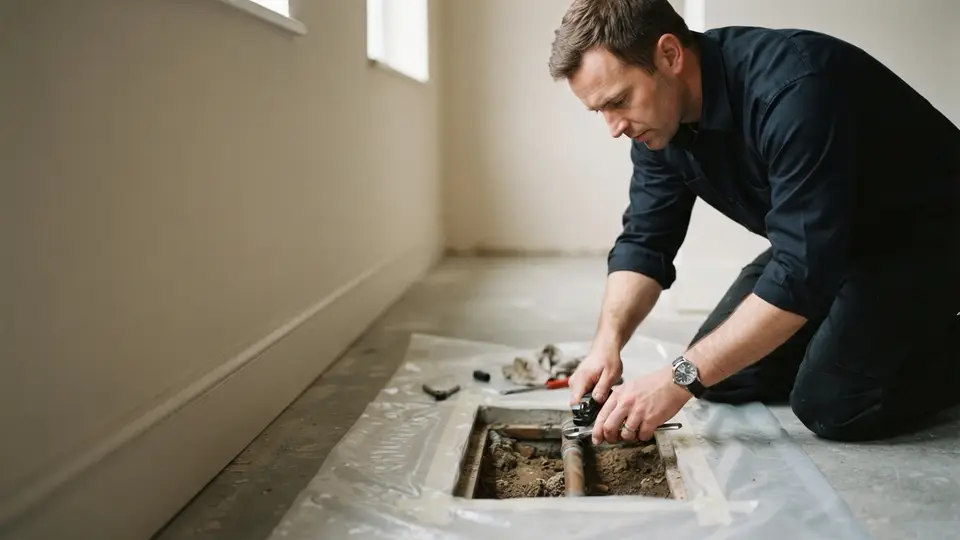
Spot repair
When it fits: A single leak in sound pipe
Trade-off: Small floor opening
Warm spot on the floor, or water running with every tap closed? We handle slab leak repair in North Carolina. Our plumbers locate leaks in water lines under concrete floors, repair them through a small opening or reroute them through walls and attic, and check the rest of the system. Most North Carolina houses sit over crawl spaces, but slab foundations are common near the coast, in townhouses and in many newer homes around Charlotte, the Triangle and the military towns. Sandy coastal soil and settling red clay both stress pipes under concrete.
The service
A slab leak is a break in a pipe running in or under a concrete floor. In North Carolina we see them most in coastal homes around Wilmington, Leland and Jacksonville, in townhouses and in newer homes on slab-on-grade foundations. 37% of the state's 3,058,155 homes were built since 2000; Holly Ridge's median home dates from 2015 and Leland's from 2010. Older slab homes have copper under the floor, and newer ones usually PEX.
Slab leak repair options
When it fits: A single leak in sound pipe
Trade-off: Small floor opening
When it fits: Aging or failing pipe
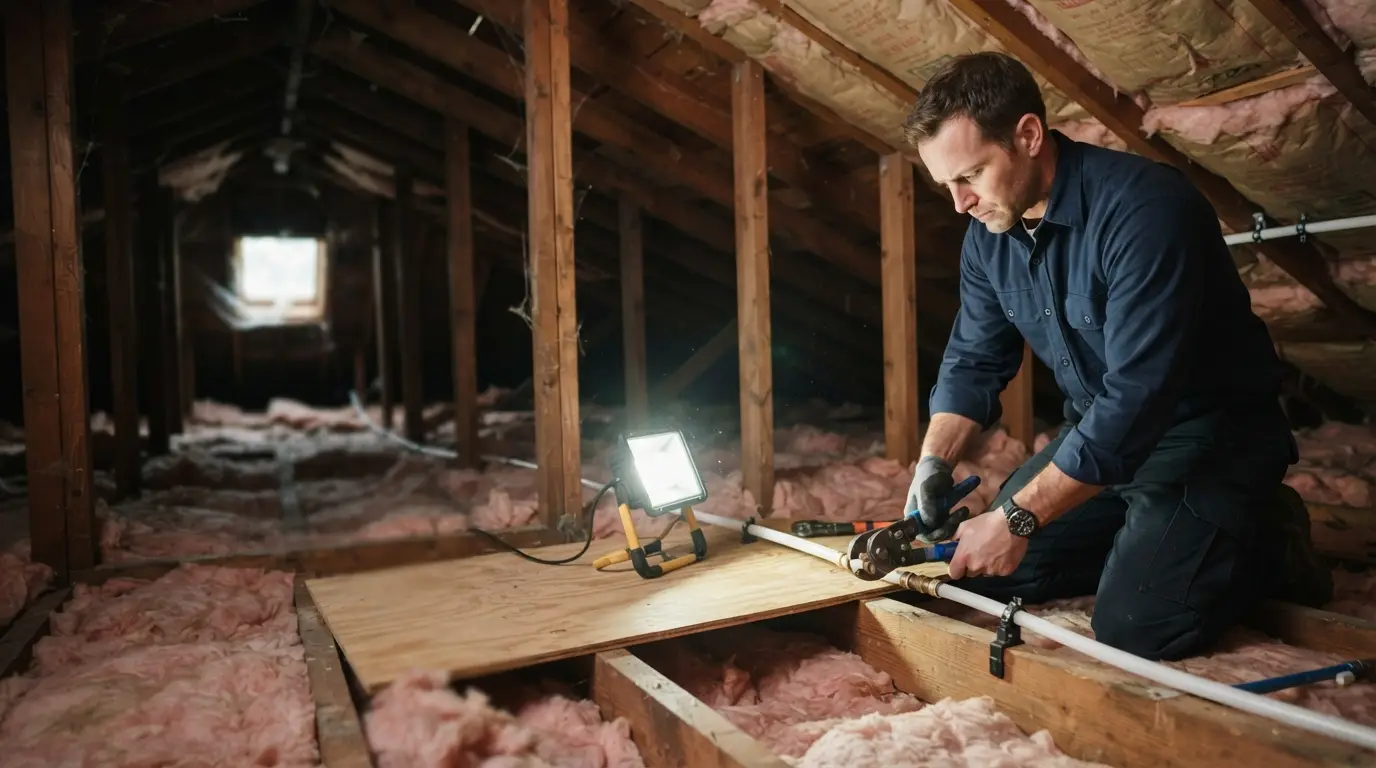
Trade-off: New lines overhead, floor untouched
When it fits: Several leaks on one run
Trade-off: Replaces the whole branch
When it fits: Pipe failing throughout
Trade-off: Largest job, ends the problem
Why North Carolina
Coastal sand moves with groundwater and storms, stressing pipes under slabs.
Red clay under Piedmont slabs swells and shrinks with rain and drought.
Hot lines expand and rub against gravel and concrete.
Acidic water thins copper from the inside.
Warning signs
Our process
We test hot and cold sides separately, trace the lines under the floor and listen through the slab, adding thermal imaging on hot lines to pinpoint the spot.
We open a small area of floor, dig to the pipe, replace the damaged length, pressure test it and patch the concrete.
We abandon the under-slab line and run new PEX through walls and the attic to each fixture, leaving the floor intact.
Typical cost
Any figure before we find the leak is an estimate only. The cost depends on:
We give you a written price for the plumbing before work starts.
Get a written price: (833) 733-2357Under cabinets costs more than under a closet.
Tile and hardwood take care.
Each has its own price.
Older pipe often has more.
Flooring is usually separate.
Benefits
Water washes out soil.
Hot leaks keep the heater running.
Wet flooring dries sooner.
Early leaks are easier to reach.
Wilmington (62,836 homes), Leland, Carolina Beach and the Brunswick County beaches have many homes on slabs over sand, with groundwater close below. 85% of Ocean Isle Beach homes are vacant on a typical day, so a slow slab leak can run unnoticed for weeks. Storm flooding shifts soil under slabs. We test seasonal homes before the season and recommend overhead rerouting where leaks repeat.
Jacksonville (25,417 homes), Havelock and Fayetteville have many slab homes built for military families and rentals. Renters occupy 61% of Jacksonville homes and 59% of Havelock homes. Landlords need fast, clear answers between tenants. We locate the leak, give you repair and reroute prices and schedule the work around move-ins.
Huntersville, Concord, Apex and Holly Springs grew quickly with homes on slabs and crawl spaces. Apex's median home dates from 2008. Slab leaks in newer homes often trace back to a kinked or damaged line during construction, or to soil settling under a graded lot. We find the leak, repair or reroute it and check whether the builder warranty applies.
Buildings with five or more units hold 35% of Charlotte homes and 35% of Raleigh homes, and townhouse communities line the suburbs. In attached homes, the line under one unit may serve another. We confirm which pipe belongs to whom with the association and plan reroutes that respect shared walls and fire separations.
Irrigation systems that soak one side of a house while the other stays dry can make clay swell unevenly and stress pipes in the slab. Downspouts that dump next to the foundation do the same. When we repair a slab leak, we look at drainage and watering around the house and suggest simple changes that keep soil moisture more even.
After a hurricane floods a slab home, water can scour soil from under the edges of the slab and shift the ground beneath it. Pipes that were sound before the storm may start leaking weeks later. If your water bill jumps or you hear running water after a flood, have the system tested. We pressure test the lines, locate any new leaks and repair them before they do more damage.
Close the main valve if you see or hear water. For a warm spot, turn off the water heater or set it to vacation.
Move rugs and furniture, take photos for your insurer and keep water away from outlets. Do not break the floor. Call us.
Reroutes and repipes usually need a permit from your city or county inspections department. We file it and schedule the inspection. Our work is done under North Carolina plumbing contractor licenses.
Why choose us
What you can count on every time one of our plumbers comes to your door.
Every job is handled by a plumber who holds the license your state or city requires, backed by liability insurance.
Our plumber explains the problem and the options, and you approve a written price before any work begins.
Burst pipes, sewage backups and failed water heaters get priority scheduling, including nights and weekends.
We pull permits when the job needs one and schedule the inspection, so the work holds up when you sell.
Repairs and installations come with a written warranty on labor, on top of the manufacturer's warranty on parts.
Our pages and plumbers account for your area's water, soil, climate and the age of the homes around you.
Service area
We repair slab leaks in 776 North Carolina communities, including Fayetteville (91,985 homes) and Concord (43,142 homes). Find yours:
It depends on where the leak is, the flooring above and whether we repair or reroute. You approve a written price before we begin any work.
Often at first, but it can save money if the old pipe is likely to leak again. We price both options so you can compare them.
Many policies cover access and resulting water damage but not the pipe itself. Check your policy, and we provide notes and photos for the claim.
We isolate hot and cold lines, trace them under the floor and listen through the concrete, using thermal imaging on hot lines.
Only a small area for a spot repair. If you choose a reroute, we leave the floor alone and run new pipe overhead.
We pressure test the line, patch the concrete and check the meter to confirm no other leaks remain in the system.
Yes, over time. Running water washes away soil under the slab and can cause settling and cracking.
It wastes energy, warms the floor and keeps moisture near outlets. Turn off the water heater and the main valve and call us.
A spot repair usually takes most of a day including detection. A reroute can take one to three days depending on the home.
Usually one to three hours. Homes with several leaks or long runs under large floors take longer.
Keep pressure normal, treat acidic water and water evenly near the foundation. In older homes, reroute before failures start.
Once a year, turn off every fixture and watch the meter for a few minutes. Any movement means water is escaping.
Less than in slab-heavy states, but we see them in coastal homes, townhouses, military rentals and newer slab-on-grade homes.
It may be, depending on the warranty and the cause. We document what we find so you can take it up with the builder.
Shut off the main and power to the wet area, then call us. We put active leaks ahead of routine work and keep you updated on timing.