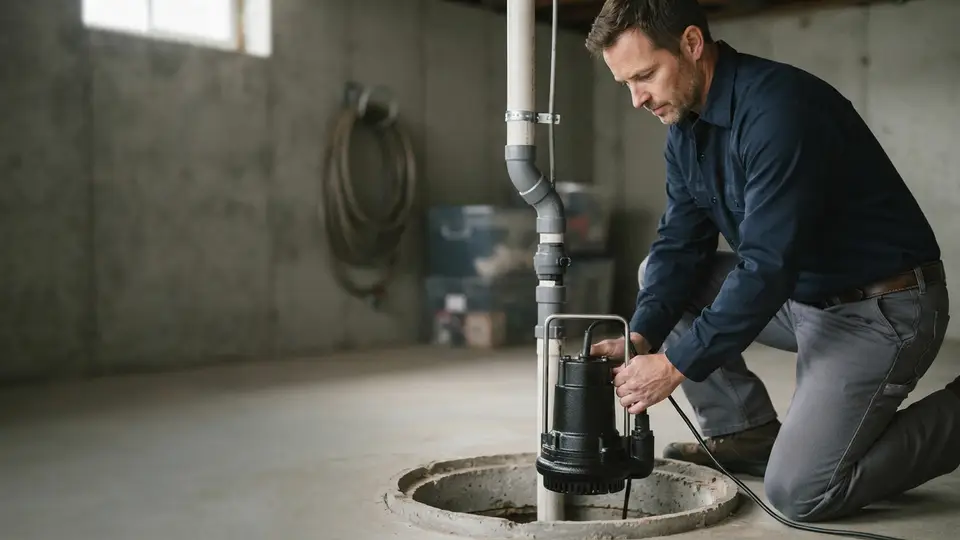
Crawl space pump
What it does: Small pump in a shallow basin
Best for: Wet crawl spaces
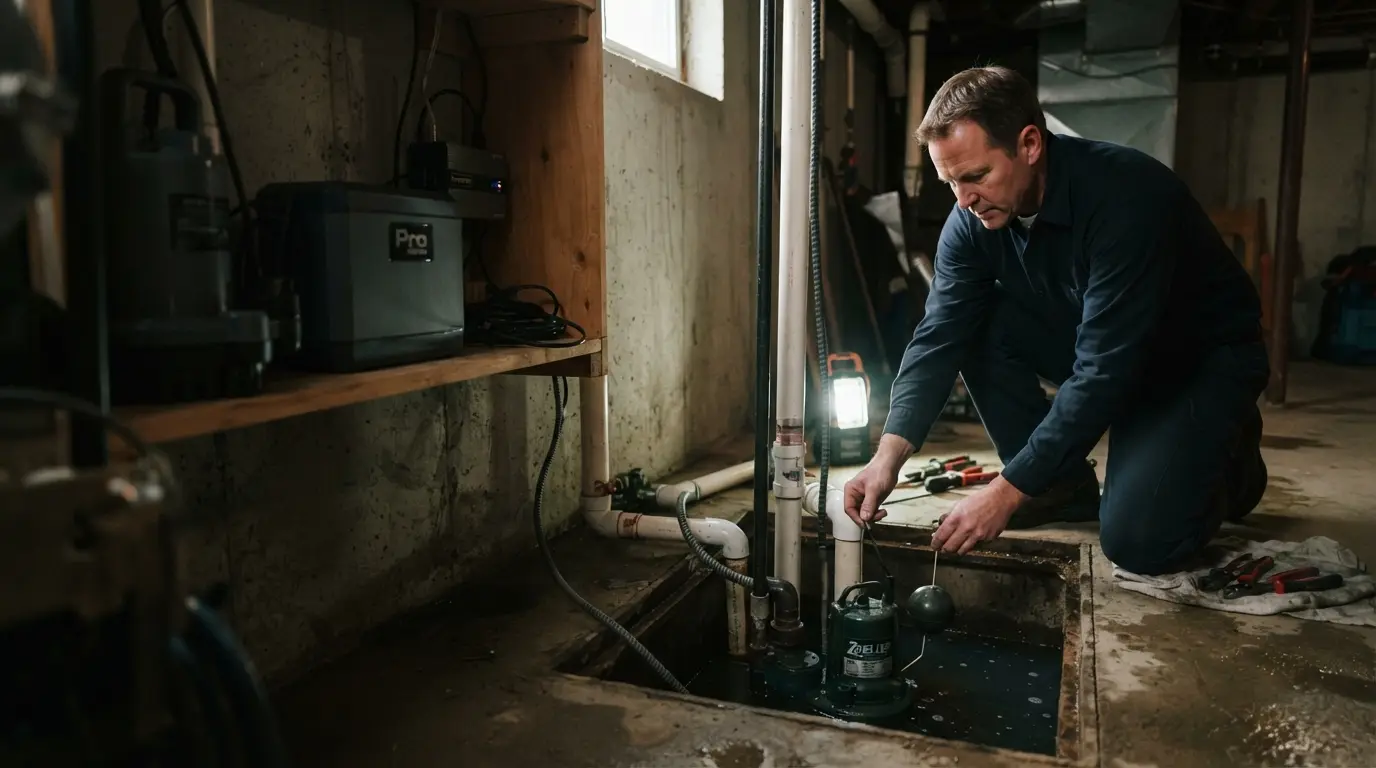
Standing water in the crawl space, or a basement that floods in storms? We handle sump pump repair and installation in North Carolina. Our plumbers repair and replace sump pumps, install new pits and pumps in crawl spaces and basements and add battery backup pumps with alarms. North Carolina homes face hurricanes, tropical storms and long stretches of heavy rain, and red clay holds water against foundations. Crawl spaces collect water after storms, and basements in the foothills and mountains take on groundwater. A working pump keeps that water from rotting framing and growing mold.
The service
A sump pump collects water in a pit at the low point of a crawl space or basement and pumps it outside. Most North Carolina homes in our 3,058,155-home dataset sit over crawl spaces, and many sloped lots in the Piedmont and mountains have full or partial basements. Crawl space pumps are often paired with encapsulation, a sealed liner that keeps ground moisture out. We install and service pumps for both.
Pump options
What it does: Small pump in a shallow basin
Best for: Wet crawl spaces
What it does: Quiet pump inside the pit
Best for: Basements and finished rooms
What it does: Second pump on a battery
Best for: Storms with power loss
What it does: Phone or audible alert
Best for: Rentals and second homes
Why North Carolina
Hurricanes and tropical systems drop inches of rain in a day.
Dense clay drains slowly and holds water against foundations.
Hillside homes in the Piedmont and mountains take runoff from above.
On the coastal plain, groundwater rises close to the surface after storms.
Warning signs
Our process
We fill the pit to test the pump, check the float switch and check valve, clear silt and replace the switch or pump when needed.
We set a basin at the low point of the crawl space or basement, connect any drain lines, install the pump and run the discharge well away from the foundation.
We add a second pump with its own float, a sealed battery and an alarm so water keeps moving when storms knock out the power.
Typical cost
Any figure before we see the site is an estimate only. The main factors:
You get a written price before we start.
Get a written price: (833) 733-2357Switches cost less than pumps.
Digging in clay or rock takes time.
Low or wet crawl spaces slow work.
Extra equipment adds cost.
Long lines to daylight.
Benefits
Framing and insulation stay sound.
Lower humidity under the house.
Backups run when the power fails.
Alarms alert you to rising water.
Water standing under a house raises humidity, rots framing, invites termites and feeds mold that you can smell through the floor. Grading and gutters help, but in many lots water still collects. A crawl space pump at the low point removes standing water, and a sealed liner keeps ground moisture out. We install the pump, route the discharge and coordinate with encapsulation contractors when needed.
Helene's flooding in 2024 hit Asheville (50,034 homes), Boone, Waynesville and towns across the mountains. Many hillside homes there have basements cut into slopes, where runoff and groundwater press against the walls. 60% of Waynesville homes and 55% of Brevard homes predate 1980. We install pumps sized for heavy runoff, add backups and route discharge lines safely downhill.
Kinston, Goldsboro, Lumberton and New Bern flooded during Matthew and Florence. 75% of Kinston homes and 57% of Lumberton homes were built before 1980. Groundwater stays high for weeks after river floods. We install pumps in crawl spaces and low rooms, raise equipment where we can and add backups for storms that cut the power.
In Charlotte (399,305 homes), Greensboro and Raleigh, many homes on sloped lots have walk-out or partial basements. Red clay holds rain against the uphill wall, and water seeps in at the floor joint. We install a pit at the low corner, connect interior drain lines where needed and run the discharge to daylight downhill.
In Wilmington (62,836 homes) and Elizabeth City, groundwater sits close to the surface and rises after storms. Crawl spaces fill and stay wet. Hurricane season runs from June through November. We install pumps with alarms and battery backups and check them before the season starts.
Beach houses, mountain cabins and rental homes often sit with no one inside when a storm arrives. A pump that fails then can leave water under the house for weeks. We install pumps with alarms that send a phone alert to the owner or property manager, add battery backups and check the system before hurricane season and after major storms, so problems are caught while they are still small.
If safe, check that the pump is plugged in and the breaker is on. Lift the float gently to see if it starts.
Move belongings off the floor and stay away from water near electrical equipment. Then call us.
Pump replacement usually needs no permit, but new circuits and some discharge connections may. Sump pumps should not drain into the sewer or a septic system. We follow local rules and file any permit needed. Our work is done under North Carolina plumbing contractor licenses.
Why choose us
What you can count on every time one of our plumbers comes to your door.
Every job is handled by a plumber who holds the license your state or city requires, backed by liability insurance.
Our plumber explains the problem and the options, and you approve a written price before any work begins.
Burst pipes, sewage backups and failed water heaters get priority scheduling, including nights and weekends.
We pull permits when the job needs one and schedule the inspection, so the work holds up when you sell.
Repairs and installations come with a written warranty on labor, on top of the manufacturer's warranty on parts.
Our pages and plumbers account for your area's water, soil, climate and the age of the homes around you.
Service area
We install and repair sump pumps in 776 North Carolina communities, including Greensboro (135,665 homes) and Hendersonville (8,884 homes). Find yours:
It depends on the pump type, whether a new pit is needed, crawl space access and the discharge route. We give you a written price before we start.
Yes, in most of North Carolina. Hurricanes and tropical storms often cut power exactly when the pump is needed most.
Often, because the pit is smaller. Tight or wet crawl spaces can add labour, so we price each job after seeing it.
We fill the pit with water, watch the float start the pump, check the flow at the outlet and listen for worn bearings.
If water stands under the house after rain, yes. A pump removes standing water, and a sealed liner keeps ground moisture out.
We check for a stuck float, a failed check valve or a high water table, then fix the cause or size the pump correctly.
Over time, yes. It rots framing, draws termites and grows mold. If water reaches wiring or equipment, keep clear and have the power shut off.
No. Sump water would overload the septic system. We route the discharge outside, away from the foundation and the drain field.
A replacement takes a couple of hours. A new pit and discharge line can take most of a day.
Usually a few years. Run time in an outage depends on how much water comes in and how often the pump cycles.
Before hurricane season begins in June, and again after any long dry spell. Pour water into the pit and make sure it starts.
Usually seven to ten years. Pumps that run often after storms may need replacing sooner.
Yes, especially in rentals and second homes. An alarm alerts you or your manager before water rises high enough to cause damage.
It removes standing water. Humidity from outside air and the ground also needs a liner, closed vents or a dehumidifier.
We put flooding ahead of routine work and keep you updated on timing. Move valuables up and stay clear of electrical hazards.