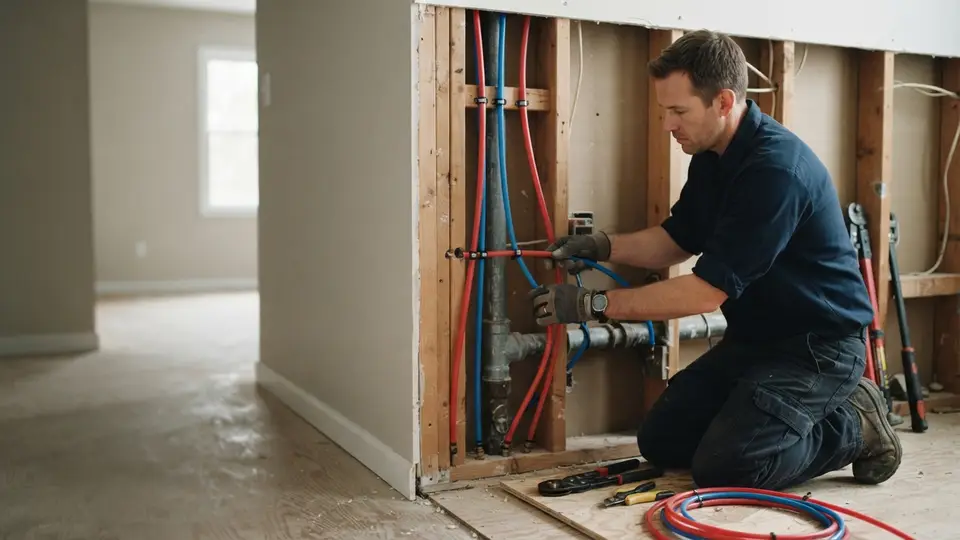
Polybutylene
Common problem: Fitting and pipe failures
Replacement: PEX
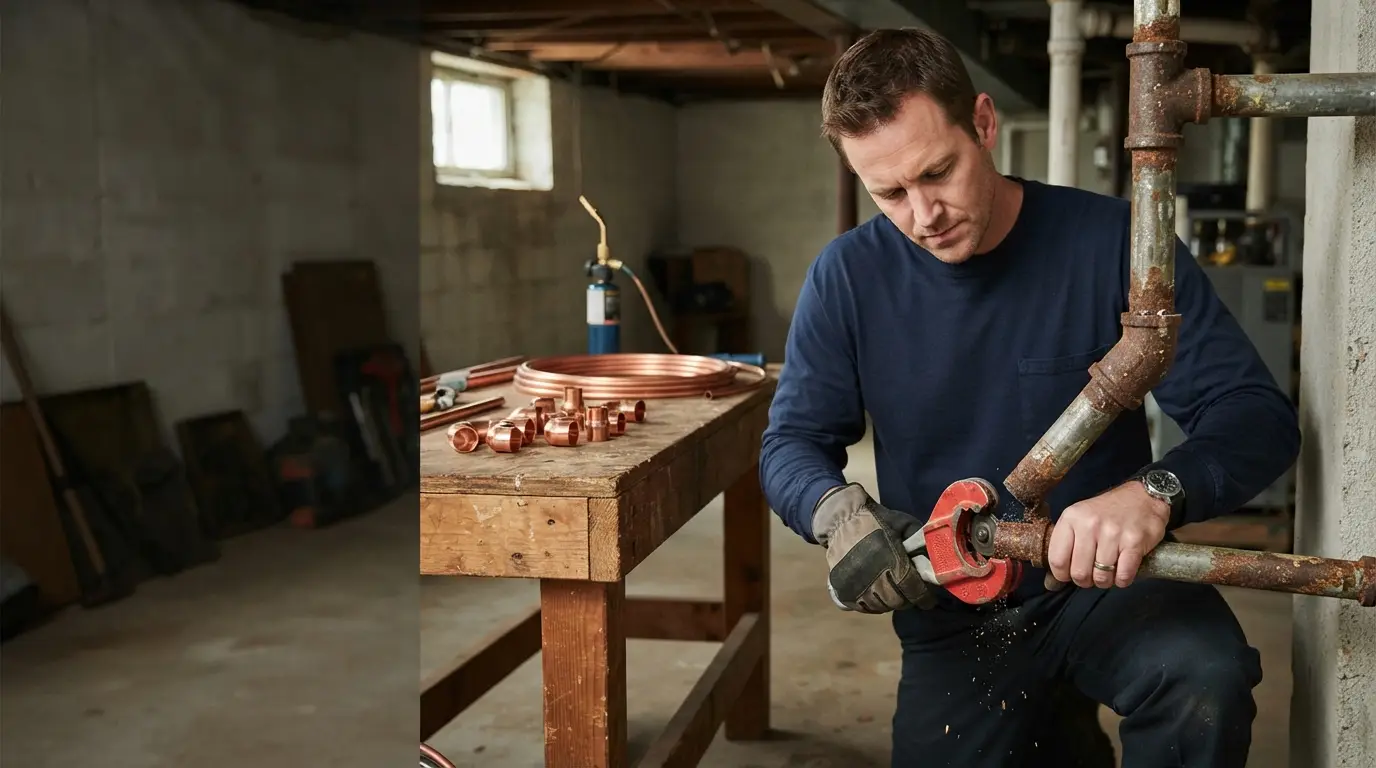
Polybutylene pipe, pinhole leaks or weak pressure? We handle repiping and water line replacement in North Carolina. Our plumbers repair damaged pipe, replace polybutylene, galvanized and worn copper throughout the house and replace the water line from the meter or well to the home. In North Carolina most repipes run through the crawl space, which keeps wall openings small, but slab homes and finished basements need different routes. We plan the work around your home, pull the permit and leave you with a system that should last for decades.
The service
North Carolina has 3,058,155 homes in our data. 35% were built before 1980, often with galvanized steel or early copper, and a large share of homes from the late 1970s to the mid-1990s were plumbed with polybutylene. The median home in Kinston dates from 1966, in Lenoir from 1972 and in Salisbury from 1976. Repiping replaces the supply system with PEX or copper.
Pipe we replace in North Carolina
Common problem: Fitting and pipe failures
Replacement: PEX
Common problem: Rust, low pressure, leaks
Replacement: PEX or copper
Common problem: Pinhole leaks, blue stains
Replacement: PEX or copper with treatment
Common problem: Leaks, low pressure
Replacement: New service line
Why North Carolina
The pipe and its fittings degrade with age and chlorinated water.
Piedmont and mountain well water can eat through copper.
Damp conditions corrode fittings and steel.
Uninsulated lines split during sudden freezes.
Warning signs
Our process
We replace a damaged section with new pipe and proper transition fittings and tell you honestly how much life the rest of the system has.
We map every fixture, run new PEX or copper through the crawl space, drop it up into walls at each fixture and connect one area at a time.
We locate a leak in the service line, dig at that spot and splice in a new section.
We replace the line from the meter or well to the house by trench or by pulling new pipe, and coordinate with the water utility.
Typical cost
Any figure before we see the home is an estimate only. The main factors:
You approve a written price before work begins.
Get a written price: (833) 733-2357More fixtures mean more pipe.
Crawl spaces are easier than slabs or finished basements.
PEX and copper differ in cost.
Length and digging through clay or rock.
Working around tenants takes scheduling.
Benefits
Polybutylene and pinholes gone.
Clear pipe delivers full flow.
Many insurers prefer homes without polybutylene.
Buyers look for updated plumbing.
Polybutylene was widely used in North Carolina homes built from the late 1970s into the mid-1990s, and the Triad cities of Greensboro (135,665 homes), Winston-Salem and High Point have many of them, as do Charlotte, Hickory and the Triangle. When polybutylene starts to fail, it tends to keep failing. We replace it with PEX, which most insurers prefer.
In a crawl space home, we run the new main and branch lines under the floor, then come up through the floor or bottom plate at each fixture. Walls are opened only where valves or stub-outs sit inside them. We hang the new pipe properly, insulate it against cold snaps and leave the crawl space cleaner than we found it.
53% of Burlington homes, 75% of Kinston homes and 55% of Salisbury homes predate 1980, including mill-village houses from the early 1900s. Galvanized steel in these homes rusts shut and leaks at threads. Replacing it restores pressure and clean water. We plan routes that respect old plaster and wood floors.
Around Asheville (50,034 homes), the foothills and much of the Piedmont, many homes draw acidic well water that corrodes copper from the inside, leaving blue-green stains and pinhole leaks. Repiping with PEX solves the leaks, but we also recommend a neutralizer so fixtures and the water heater are protected.
Renters occupy 53% of Fayetteville homes and 48% of Durham homes, and buildings with five or more units hold 35% of Charlotte homes. Landlords often patch the same pipe again and again. We price a full repipe against ongoing repairs, schedule around tenants and finish one unit at a time.
Not every North Carolina home has an open crawl space. Slab homes near the coast and in newer suburbs, and split-levels and basement homes in the foothills and mountains, need different routes. In a slab home we usually run new lines through the attic and drop them down interior walls, insulating them against attic heat and cold. In a finished basement we use soffits, closets and the space above drop ceilings. We show you the planned route and the openings it needs before we begin.
Home inspectors in North Carolina regularly flag polybutylene and old galvanized pipe, and some buyers or insurers ask for it to be replaced before closing. If you are selling, a written assessment and price helps you negotiate. If you just bought a home with polybutylene, replacing it before you finish a basement or remodel a kitchen saves money and stress later. We inspect, explain what we find and give you a written price.
Find the main shutoff and check that it works. If a pipe is leaking, close it and open a low faucet to drain the lines.
Clear the crawl space door and any stored items under the house. Then call us to plan the work.
Repiping and water line replacement need a permit from your city or county inspections department. We file it, coordinate with the water utility and schedule the inspection. Our work is done under North Carolina plumbing contractor licenses.
Why choose us
What you can count on every time one of our plumbers comes to your door.
Every job is handled by a plumber who holds the license your state or city requires, backed by liability insurance.
Our plumber explains the problem and the options, and you approve a written price before any work begins.
Burst pipes, sewage backups and failed water heaters get priority scheduling, including nights and weekends.
We pull permits when the job needs one and schedule the inspection, so the work holds up when you sell.
Repairs and installations come with a written warranty on labor, on top of the manufacturer's warranty on parts.
Our pages and plumbers account for your area's water, soil, climate and the age of the homes around you.
Service area
We repipe homes in 776 North Carolina communities, including Winston-Salem (115,270 homes) and Raleigh (224,853 homes). Find yours:
It depends on house size, fixture count, foundation type and pipe material. You get a written price after we look at the home and the crawl space.
Usually. PEX needs fewer fittings, less labour and handles freezing better. We price copper too if you prefer it.
Some insurers charge more for, or decline, homes with polybutylene. Replacing it removes that concern. Check with your insurer.
We run new lines under the floor and come up at each fixture, so walls are opened only where valves and stub-outs sit.
Most evenings, yes. We work in sections and reconnect the water before we leave each day.
We protect floors, confirm the routes with you, shut off the water to the first area and begin running the new main line.
Look for gray, sometimes blue or black, plastic pipe stamped PB, often under the house or at the water heater. We can confirm it.
Yes. It thins copper from the inside and causes pinhole leaks and blue-green stains. A neutralizer protects new and old pipe.
Most crawl space homes take two to four days. Slab homes and larger houses can take longer.
Usually a day, plus time for permits and utility locates. Rock or clay can add digging time.
Insulate them in the crawl space, close vents during hard freezes and drain outdoor faucets before winter.
Yes. Replacing pipe while walls and floors are open saves money and disruption later.
Often. Many still have galvanized steel that rusts shut. Repiping restores pressure and ends recurring leaks.
Yes. We plan the work for the gap between tenants or schedule it around occupants to keep disruption short.
Close the main valve and call us. We put active leaks ahead of routine work and keep you updated on timing.