Black steel
Common use: Older homes and main runs
What we check: Joint leaks, crawl space corrosion
Gas smell near the range, or a new gas fireplace to hook up? We handle gas line repair and installation in North Carolina. Our plumbers find and fix leaks in house gas piping, run new lines for ranges, dryers, water heaters, fireplaces, generators, grills and pool heaters, and connect appliances safely on natural gas or propane. Gas is common in newer suburbs around Charlotte and the Triangle, while propane serves mountain homes and rural areas beyond the mains. Much of the piping runs through crawl spaces. We pressure test every job and handle the permit and inspection.
The service
Utility gas heats 33% of North Carolina homes, much more in newer suburbs: 64% in Apex, 64% in Indian Trail and 62% in Holly Springs. Propane heats 42% of Blowing Rock homes, 42% in Highlands and 49% in Scotland Neck. The utility or propane supplier owns the meter or tank; the piping after it belongs to you, and in most homes it runs through the crawl space or attic.
Gas piping we work with
Common use: Older homes and main runs
What we check: Joint leaks, crawl space corrosion
Common use: Most newer homes
What we check: Bonding and lightning protection
Common use: Buried yard lines
What we check: Depth and tracer wire
Common use: Some propane systems
What we check: Flare fittings and kinks
Why North Carolina
Damp crawl spaces corrode steel piping and fittings over time.
Frequent summer storms can damage flexible gas tubing that is not bonded properly.
Remodels, fences and landscaping disturb lines that were never marked.
Old connectors reused on new appliances crack or leak.
Warning signs
Our process
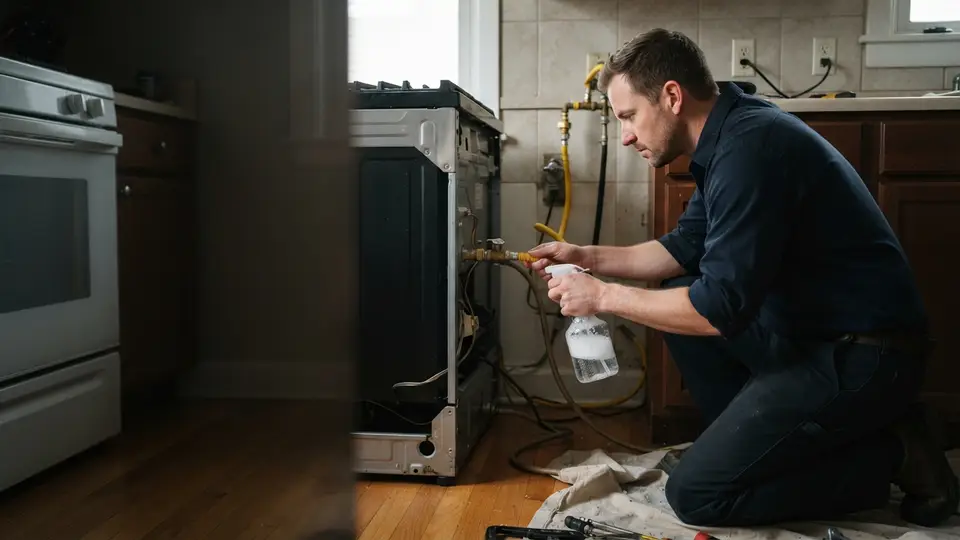
We find the leak with an electronic detector and bubble test, isolate the section, replace failed fittings or pipe and pressure test before relighting.
We size the new line for every appliance, run steel or CSST with proper bonding, add shutoffs and sediment traps and schedule the inspection.
We connect ranges, dryers, water heaters, fireplaces and generators with new connectors and check the flame and venting.
Typical cost
Any figure before we see the site is an estimate only. The main factors:
You approve a written price before we start.
Get a written price: (833) 733-2357Crawl space, attic and yard runs vary.
Generators and tankless heaters need bigger lines.
Natural gas and propane differ.
Clay and rock slow trenching.
Local fees vary.
Benefits
Tested, leak-free piping.
Every appliance gets enough gas.
Flexible tubing protected from lightning damage.
Permits filed and passed.
Many North Carolina homes built in the last few decades use corrugated stainless steel tubing for gas. North Carolina sees frequent summer thunderstorms, and manufacturers require this tubing to be bonded to the electrical grounding system to reduce the risk of lightning damage. We check the bonding on existing systems, add it where it is missing and follow the manufacturer's rules on every new run.
Around Charlotte (399,305 homes), Huntersville, Cary and Apex, many newer homes have gas ranges, fireplaces, water heaters and furnaces on one meter. Owners often add an outdoor kitchen, a fire pit or a generator. We check that the existing meter and lines can carry the new load and upsize where needed before connecting anything.
In Blowing Rock, Highlands, Cherokee and rural counties across the state, propane runs the furnace, water heater, range and fireplace. Propane runs at different pressures than natural gas and needs appliances set up for it. We run piping from the regulator to each appliance and test it, while your supplier sets the tank and first-stage regulator.
Hurricanes on the coast, ice storms in the Piedmont and Helene in the mountains have left homes without power for days or weeks. Many owners in Wilmington (62,836 homes), Raleigh and the mountains now install standby generators on natural gas or propane. We size the line for the generator and everything else on the system, run it to the pad and coordinate with the electrician and the utility or supplier.
53% of Burlington homes and 43% of Greensboro homes predate 1980. Gas piping in these houses may have been extended over the years without upsizing, and steel in damp crawl spaces rusts. We check each line, replace corroded sections and leaking joints and make sure every appliance has its own shutoff.
Gas fireplaces and gas log sets are popular across North Carolina, from new suburban homes to mountain cabins where they serve as backup heat. Each needs a properly sized line, an accessible shutoff and the correct venting or vent-free rating for the room. We run the line, connect the unit, check for leaks and confirm the flame, and we recommend a carbon monoxide alarm in the same room.
If you smell gas, get everyone out and call the utility, supplier or 911 from outside. Do not search for the leak yourself.
For a planned hookup, clear space around the appliance and the meter or tank, and open the crawl space door. Then call us.
New gas piping and most gas repairs need a permit and inspection from your city or county inspections department before gas is turned on. We file the permit, schedule the inspection and coordinate with the utility or supplier. Our work is done under North Carolina contractor licenses.
Why choose us
What you can count on every time one of our plumbers comes to your door.
Every job is handled by a plumber who holds the license your state or city requires, backed by liability insurance.
Our plumber explains the problem and the options, and you approve a written price before any work begins.
Burst pipes, sewage backups and failed water heaters get priority scheduling, including nights and weekends.
We pull permits when the job needs one and schedule the inspection, so the work holds up when you sell.
Repairs and installations come with a written warranty on labor, on top of the manufacturer's warranty on parts.
Our pages and plumbers account for your area's water, soil, climate and the age of the homes around you.
Service area
We repair and install gas lines in 776 North Carolina communities, including Raleigh (224,853 homes) and Greensboro (135,665 homes). Find yours:
It depends on length, pipe size, route, fuel type and the permit. We give you a written price after we see where the new line needs to run.
Yes. A leak repair depends on finding and replacing the failed part; new lines depend on length and size. Both come with a written price first.
Usually, because generators need larger lines and sometimes a meter upgrade or bigger propane tank. We size it for your whole system.
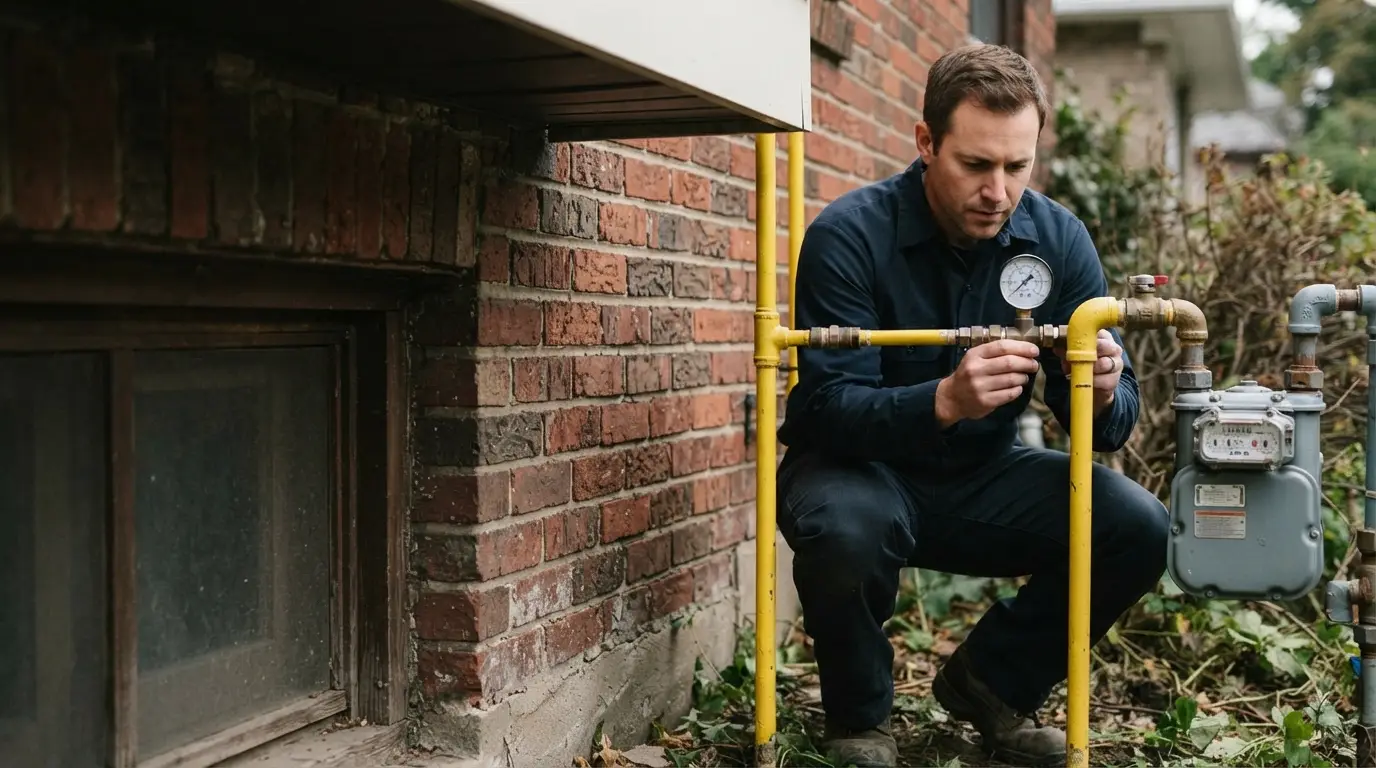
We use an electronic detector along the piping, often in the crawl space, confirm joints with bubble solution and pressure test the system.
We shut off the gas, run and connect the new pipe, pressure test it and restore gas once the inspection is passed or allowed.
Yes. Manufacturers require it to be bonded to the electrical grounding system. We check existing bonding and add it where missing.
Leave without using switches or phones, then call your gas utility, propane supplier or 911 from outside. We repair the piping once it is safe.
Yes. North Carolina homes with fuel-burning appliances should have carbon monoxide alarms near sleeping areas and on each level.
A short line for a range or dryer takes a few hours. Generators and outdoor lines can take a day, plus the inspection.
Usually the same day, once the line passes a pressure test and any required inspection or utility turn-on.
When appliances are serviced each year, whenever you smell gas and before adding an appliance to the system.
No. Old flexible connectors can crack or leak. We install a new connector with every appliance hookup.
For new piping and most repairs, yes. We file with your city or county inspections department and schedule the inspection.
Yes. We pipe from the regulator to each appliance and test it, while your supplier handles the tank and first regulator.
Get out and call the utility or 911 first. Once it is safe, we put gas repairs ahead of routine work and keep you updated on timing.