Meter and pressure tests
Best for: Confirming a leak
How it works: Watches for flow or pressure loss
Water bill climbing, or a damp smell from the crawl space? We handle leak detection and repair in North Carolina. Our plumbers find hidden leaks in crawl spaces, walls, ceilings, slabs and yard lines, then repair them, including burst and frozen pipes after a cold snap. In North Carolina, many leaks drip quietly under the house for months before anyone notices, while others come from polybutylene fittings in homes built in the 1980s and 1990s or from pinholes in copper carrying acidic well water. We use pressure, acoustic and thermal testing to find the source before we cut.
The service
Leak detection means finding water that escapes out of sight. Most of North Carolina's 3,058,155 homes in our data are built over crawl spaces, so many leaks drip onto the ground under the house where no one sees them. Slab homes hide leaks under concrete, and apartments pass water between floors. We narrow the search with instruments so the repair opening is small.
How our plumbers find leaks
Best for: Confirming a leak
How it works: Watches for flow or pressure loss
Best for: Under-floor leaks
How it works: Finds drips, wet soil and damaged pipe
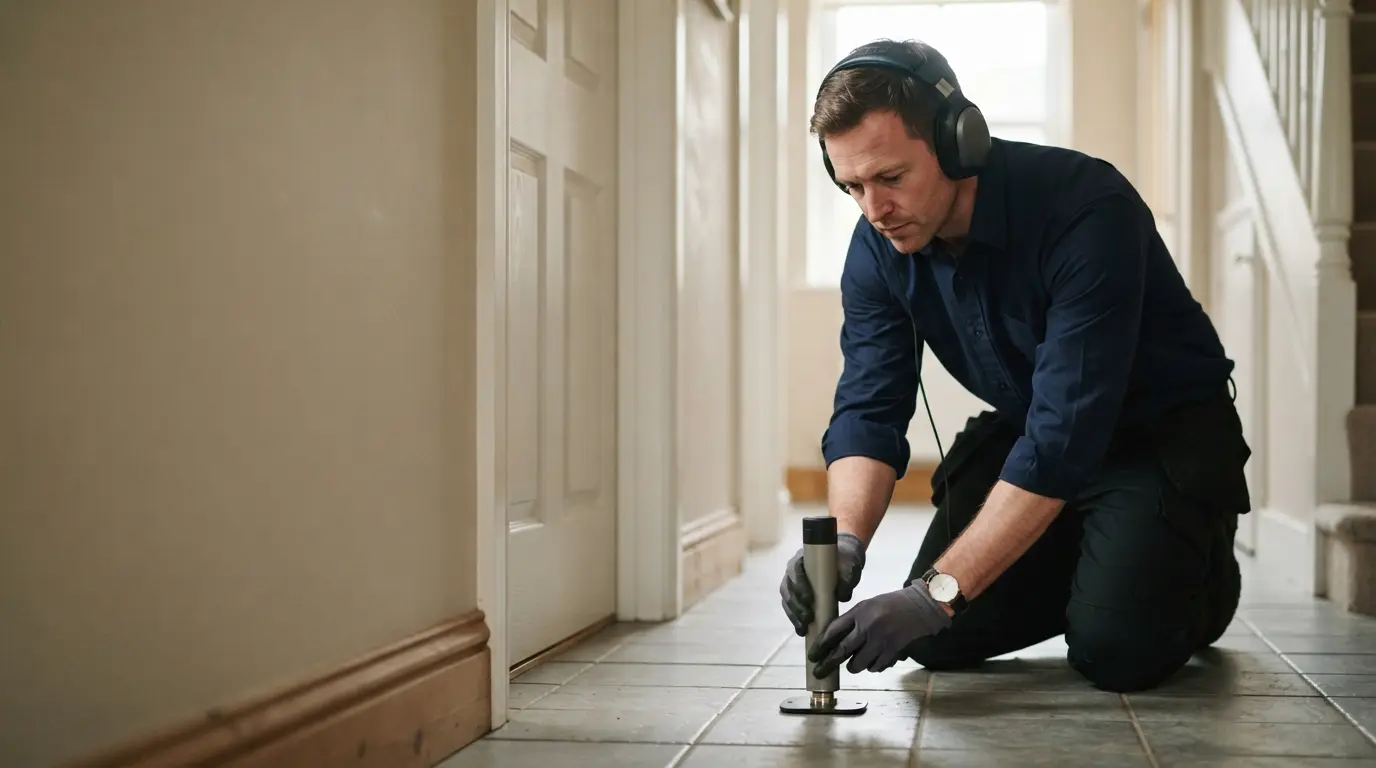
Best for: Slabs and yard lines
How it works: Hears water escaping
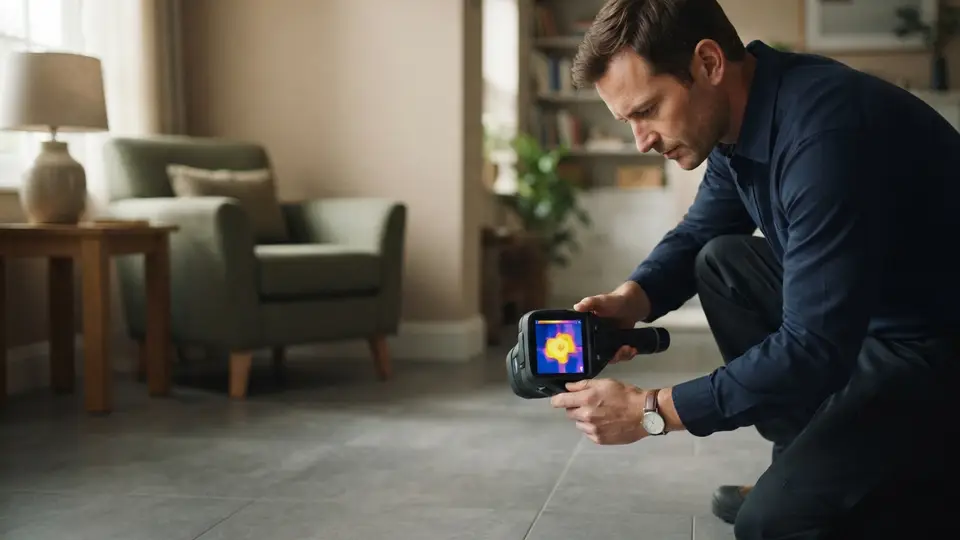
Best for: Walls, ceilings, hot lines
How it works: Shows wet or warm areas
Why North Carolina
Gray plastic pipe from the 1980s and 1990s fails at its fittings.
Well water in the Piedmont and mountains can pinhole copper.
Pipes in uninsulated crawl spaces split when temperatures drop suddenly.
Damp crawl spaces corrode fittings and hide slow drips.
Warning signs
Our process
We check the meter, isolate parts of the system, crawl the space under the house and use acoustic and thermal tools to mark the leak before cutting.
We replace the failed pipe or fitting, pressure test the repair and, under a crawl space, replace wet insulation we disturbed.
We stop the water, cut out the split section, install new pipe and check nearby lines that faced the same cold.
We thaw the line slowly, test it under pressure and insulate or add heat cable so it does not freeze again.
Typical cost
Any figure before we test is an estimate only. Costs depend on:
We give you a written price before repairs start.
Get a written price: (833) 733-2357Slabs and walls take more work than crawl spaces.
Polybutylene may need more than a patch.
Low or wet crawl spaces take time.
Yard lines need digging.
After-hours visits cost more.
Benefits
Crawl space leaks stop before wood rots.
We cut where the leak is.
Hidden leaks waste water around the clock.
Notes and photos for claims.
A small leak in a crawl space can run for months. The ground stays wet, humidity rises, wood framing softens and mold grows on joists and insulation. Musty smells through floor vents are often the first sign. We crawl the space, find the source, repair it and point out moisture problems so you can deal with them before they damage the floor framing.
Many homes built in the 1980s and 1990s across Greensboro, Winston-Salem, Hickory and the Charlotte area were plumbed with polybutylene. 47% of Hickory homes and 48% of Winston-Salem homes predate 1980, and many more date from the polybutylene years. When we find a polybutylene leak, we repair it and price a repipe alongside, because the rest of the system often fails soon after.
Boone, Blowing Rock and Highlands see far colder winters than the rest of the state. 75% of Blowing Rock homes and 74% of Highlands homes are vacant on a typical day. A second home with a failed heat pump or empty propane tank can freeze, and a burst pipe can run for days. We winterize, install leak sensors and automatic shutoffs and repair freeze damage when owners call.
Buildings with five or more units hold 35% of Charlotte homes, 35% of Raleigh homes and 57% of Boone homes. A leak in one unit shows up in another, and townhouses share walls with plumbing behind them. We test the units above or beside, trace the water and work with owners and managers so the right party repairs the right pipe.
On the Outer Banks and southern beaches, many homes stand on pilings with pipes running under the house, exposed to wind and salt air. 70% of Nags Head homes are vacant on a typical day. Fittings corrode and lines can freeze in winter wind. We repair exposed pipe, insulate it and install shutoffs that owners and rental managers can reach.
Close the main shutoff, often in the crawl space, garage or near the meter at the street. On a well, turn off the pump breaker.
Turn off power to wet areas if you can reach the panel safely. Move belongings, take photos and call us.
Most leak repairs need no permit. Repiping or replacing water service lines usually does, from your city or county inspections department, and we file it. Our work is done under North Carolina plumbing contractor licenses.
Why choose us
What you can count on every time one of our plumbers comes to your door.
Every job is handled by a plumber who holds the license your state or city requires, backed by liability insurance.
Our plumber explains the problem and the options, and you approve a written price before any work begins.
Burst pipes, sewage backups and failed water heaters get priority scheduling, including nights and weekends.
We pull permits when the job needs one and schedule the inspection, so the work holds up when you sell.
Repairs and installations come with a written warranty on labor, on top of the manufacturer's warranty on parts.
Our pages and plumbers account for your area's water, soil, climate and the age of the homes around you.
Service area
We find and fix leaks in 776 North Carolina communities, including Greensboro (135,665 homes) and Fayetteville (91,985 homes). Find yours:
It depends on where the leak hides, the equipment needed and access to the crawl space or slab. You get a written price before we start testing.
Yes. Once we find the source, we explain the repair options and give you a written price for the one you choose before any work begins.
Many policies cover sudden leaks and resulting damage but not long-term seepage. We provide notes and photos to support your claim.
We check the meter, isolate parts of the system and inspect the crawl space for drips, wet soil and damaged pipe, using acoustic tools where needed.
We confirm water is escaping at the meter, ask about the signs you noticed and isolate parts of the system to narrow the search quickly.
Yes. We trace the lines under the concrete and listen through the slab, using thermal imaging on hot lines to mark the spot.
It can be. Constant moisture rots floor framing, feeds mold and draws insects. It should be repaired promptly and the space allowed to dry.
Close the main shutoff right away, turn off power to wet areas if safe and call us. Then move belongings away from the water.
Usually one to two hours for a typical home. Slab homes, yard lines and multi-unit buildings can take longer.
A single split takes a few hours. Several frozen lines under a mountain home or beach house can take most of a day.
Insulate the pipes, close vents and the crawl space door during cold snaps and drain outdoor faucets before winter.
Yes, especially in vacation homes and rentals. Sensors alert your phone, and automatic shutoff valves can stop water before damage spreads.
Yes. Its fittings and the pipe itself degrade with age. Once leaks start, repiping usually costs less than repeated repairs.
Yes. Acidic water can thin copper from the inside and cause pinhole leaks. Testing and neutralizing the water protects the pipes.
We put burst pipes and active leaks ahead of routine work. Close the main valve, call us and we keep you updated on timing.