Toilet
Typical problem: Running, rocking, leaking at the base
Our fix: Fill valve, flapper, wax ring, new toilet
Toilet rocking on a soft floor, or a faucet that drips all night? We handle toilet, faucet and fixture repair in North Carolina. Our plumbers repair and install toilets, faucets, sinks, showers, tubs and garbage disposals, and we do the plumbing for kitchen and bathroom remodels. In North Carolina many fixture problems start under the floor: a crawl space leak softens the subfloor and a toilet starts to rock, or iron from well water stains and wears out cartridges. We fix the fixture, check what is below it and test everything before we leave.
The service
North Carolina's 3,058,155 homes range from mill houses and mid-century ranches to brand-new subdivisions, where 37% of homes were built since 2000. Older homes have original shutoffs and supply lines that seize or leak; newer homes have plastic fittings and fixtures that wear out under heavy family use. In crawl space homes, we can often see from below whether a fixture has been leaking for a while.
Common fixture jobs in North Carolina
Typical problem: Running, rocking, leaking at the base
Our fix: Fill valve, flapper, wax ring, new toilet
Typical problem: Dripping, low flow, iron stains
Our fix: Cartridge, aerator or new faucet
Typical problem: Leaking valve, temperature swings
Our fix: Cartridge or pressure-balance valve
Typical problem: Jammed, humming, leaking
Our fix: Clear, reset or replace
Why North Carolina
Well water carries iron and grit that wear cartridges and stain fixtures.
Slow leaks into a damp crawl space soften the floor under toilets.
Muggy summers corrode chrome and metal parts.
Rentals, student housing and beach houses wear parts quickly.
Warning signs
Our process
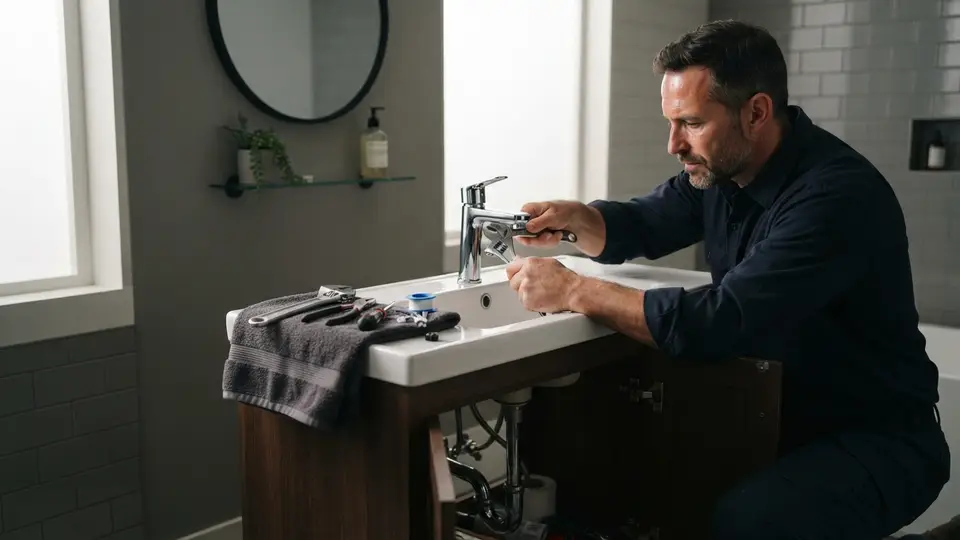
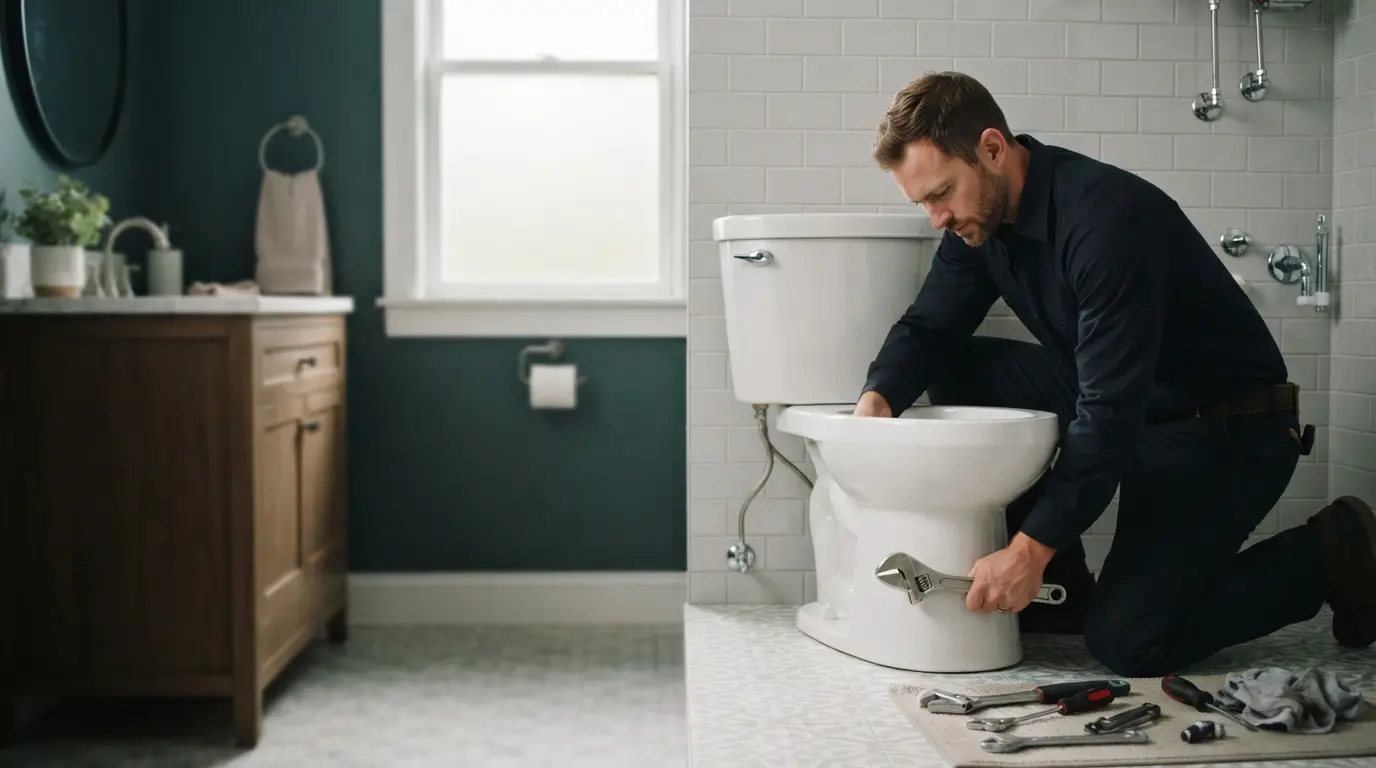
We replace fill valves, flappers and wax rings, repair flanges and install new toilets with new supply lines, checking the subfloor from below when we can.
We replace cartridges and aerators, install new faucets and swap out seized or leaking shutoff valves.
We replace drains, traps and sinks, including undermount and farmhouse sinks, with proper support and seals.
We repair or replace valves and add pressure-balancing valves to stop sudden temperature swings.
We clear jams, fix leaks and install new units; on septic, we explain the extra load a disposal adds.
We move drains and supplies, set rough-in heights and handle the permit and inspection.
Typical cost
Any figure before we see the job is an estimate only. The main factors:
We give you a written price before we start.
Get a written price: (833) 733-2357Parts cost less than new fixtures.
Yours or ours.
Hidden problems add work.
Tile walls and tight vanities take longer.
Moving drains needs a permit.
Benefits
Crawl space damage found early.
Replaced while we are there.
No slow drips left behind.
Inspections passed.
In crawl space homes, a failed wax ring or a slow supply leak drips onto the subfloor for months. The wood softens, the toilet starts to rock and the seal fails faster. When we replace the toilet or seal, we check the floor from below. If the subfloor is damaged, we show you, and we can coordinate the floor repair before setting the new toilet so the problem does not return.
Renters occupy 74% of homes in Boone, 67% in Greenville, 53% in Chapel Hill and 48% in Durham. Rental fixtures take heavy use. We recommend durable parts for landlords: toilets with strong flushes, metal-body faucets with ceramic cartridges and disposals sized for the household, so repairs are less frequent.
Pinehurst, Southern Pines and Hendersonville attract many retirees. Pinehurst's median home dates from 1995. Owners often want comfort-height toilets, walk-in showers with low thresholds, handheld showers and anti-scald valves. We plumb these changes, file the permit and work with your contractor so the bathroom is safer for years to come.
70% of Nags Head homes and 72% of Emerald Isle homes are vacant on a typical day, many of them weekly rentals with several bathrooms and outdoor showers. Salt air corrodes fixtures and sand wears valves. We check toilets, faucets and outdoor showers before the season and handle repairs between bookings.
Concord (43,142 homes) and the suburbs around Charlotte and Raleigh are full of homes built in the last twenty-five years. Builder-grade fixtures in these homes often wear out first. We replace them with better faucets, toilets and valves, keeping the existing rough-in where we can so there is no wall work.
Hose bibs, outdoor kitchens and outdoor showers are common across North Carolina, from Piedmont backyards to beach houses. A hose left connected in a cold snap can split the faucet inside the wall, and the leak only shows when the hose is turned on in spring. We replace damaged faucets with frost-free models, add vacuum breakers and install outdoor shower valves with shutoffs inside so they can be drained before winter.
Close the shutoff behind the leaking fixture. If it will not turn, close the main instead of forcing it.
For a jammed disposal, cut the power and never reach inside. Wipe up water and call us.
Simple fixture repairs rarely need a permit. Remodels that move drains or supplies do, from your city or county inspections department, and we file them. Our work is done under North Carolina plumbing contractor licenses.
Why choose us
What you can count on every time one of our plumbers comes to your door.
Every job is handled by a plumber who holds the license your state or city requires, backed by liability insurance.
Our plumber explains the problem and the options, and you approve a written price before any work begins.
Burst pipes, sewage backups and failed water heaters get priority scheduling, including nights and weekends.
We pull permits when the job needs one and schedule the inspection, so the work holds up when you sell.
Repairs and installations come with a written warranty on labor, on top of the manufacturer's warranty on parts.
Our pages and plumbers account for your area's water, soil, climate and the age of the homes around you.
Service area
We repair and install fixtures in 776 North Carolina communities, including Winston-Salem (115,270 homes) and Asheville (50,034 homes). Find yours:
Most running toilets need a new fill valve or flapper, which is a modest repair. You get a written price before we begin the work.
A quality faucet with a new cartridge often works like new. A worn, inexpensive faucet stained by iron is usually better replaced.
Yes. We install fixtures you buy and check them for missing parts first, so the visit goes smoothly without a second trip.
We check the flange, the shutoff and the subfloor, from the crawl space if we can, then set a new seal and supply line and test it.
Yes. We rough in drains and supplies, pull the permit, pass the inspection and return to set fixtures after the walls and tile are done.
We use access panels where they exist and choose valves that fit the existing trim area to save as much tile as possible.
Often a failed seal has let water soften the subfloor. We reset the toilet and check the floor below so the problem does not return.
Older valves cannot balance pressure changes. A pressure-balancing valve keeps the temperature steady and prevents scalding.
Usually one to two hours, longer if the flange or subfloor needs repair.
Rough-in typically takes one to three days, plus a return visit to set fixtures after finishes are complete.
Clean aerators, avoid overtightening handles and replace worn cartridges early. Iron and grit from well water wear parts faster.
It adds solids to the tank, so you will need to pump more often. We can install one and explain how to limit the extra load.
Use a cleaner made for iron and rust. To stop new stains, an iron filter on your well water is the lasting fix.
Yes. We install comfort-height toilets, handheld showers, lever faucets and anti-scald valves and plumb walk-in showers.
Close the valve behind the toilet first. We put overflows and active leaks ahead of routine work and keep you updated on timing.