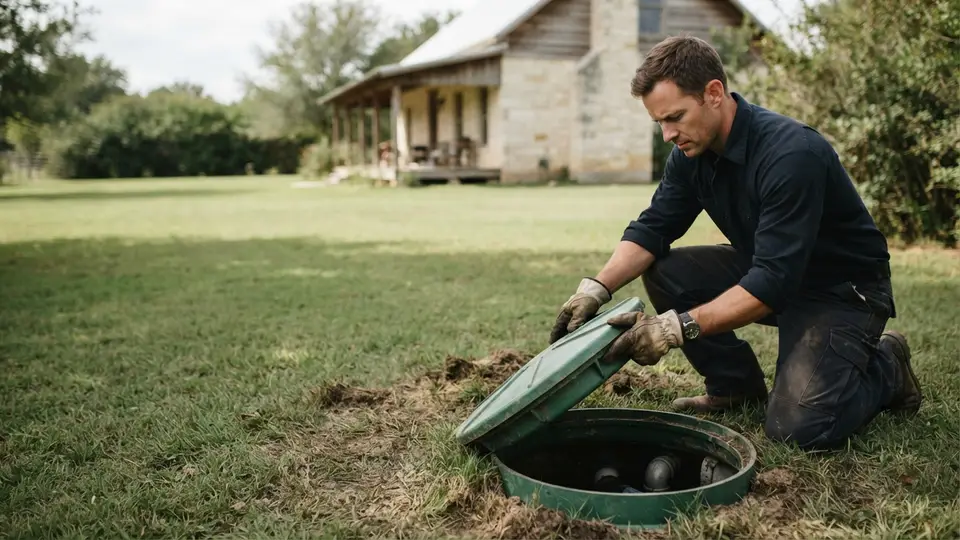
Pumping
When needed: Every three to five years
What we do: Remove sludge and scum, check baffles
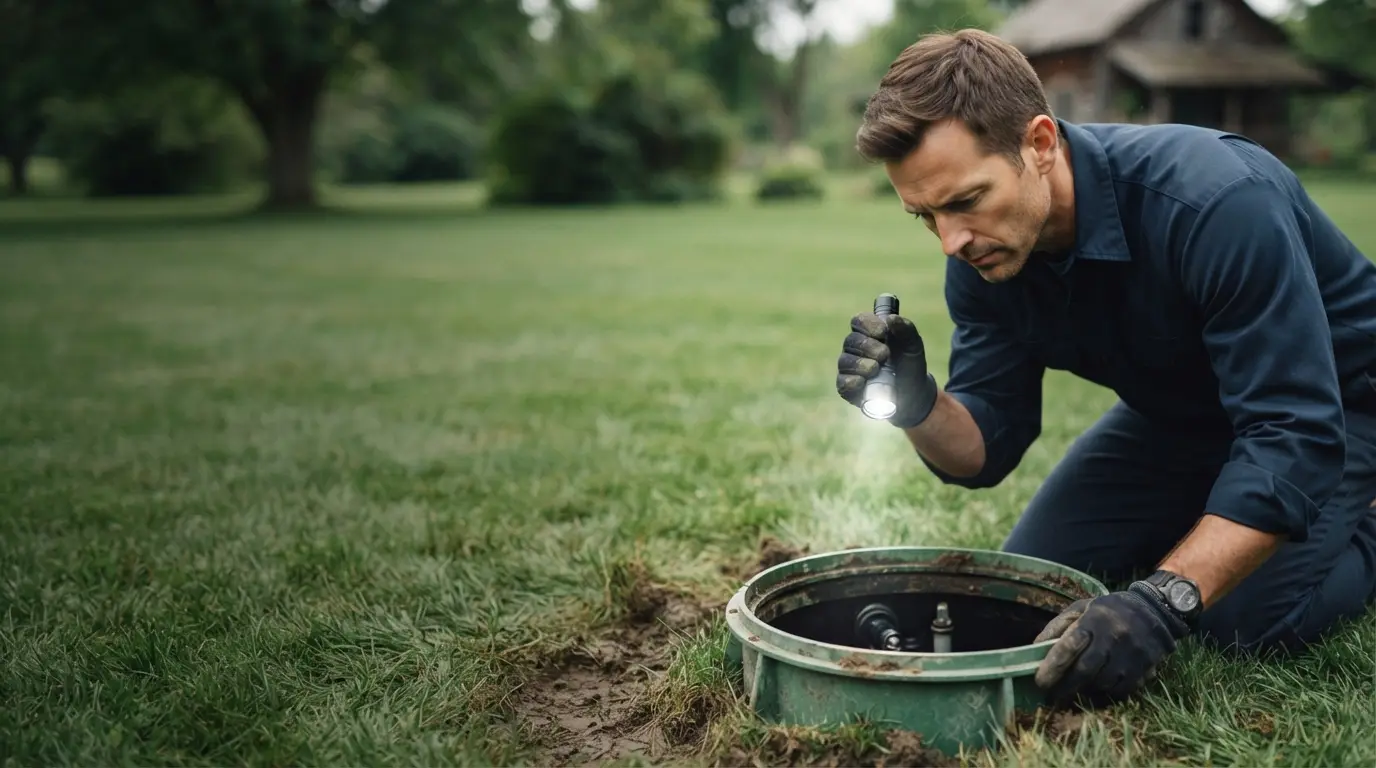
Toilets slow all over the house, or soggy ground over the field? We handle septic tank services in North Carolina. Our plumbers pump and inspect septic tanks, find the cause of slow drains and backups, replace baffles, filters, pumps and lids and repair drain fields. Roughly half of North Carolina households use septic, from suburban lots outside Charlotte and Raleigh to Outer Banks cottages and mountain homes. Piedmont clay, coastal sand with a high water table and thin mountain soil each make systems behave differently, and we follow county health department rules on every repair.
The service
North Carolina has one of the highest shares of homes on septic in the nation, roughly half of all households. County health departments permit and inspect systems under state rules. Many homes in our 3,058,155-home dataset sit outside city sewer lines even in growing suburbs, and on the coast the Outer Banks rely largely on onsite systems. A typical system has a tank and a gravel or chamber drain field; many newer ones add a pump tank or advanced treatment.
Septic services we provide
When needed: Every three to five years
What we do: Remove sludge and scum, check baffles
When needed: Sale, slow drains, odors
What we do: Check tank, filter, pump and field
When needed: Pump tank systems
What we do: Replace pumps, floats and alarms
When needed: Wet ground, backups
What we do: Diagnose, repair or replace
Why North Carolina
Dense Piedmont clay absorbs water slowly, so fields saturate in wet seasons.
On the coastal plain, groundwater rises close to the trenches after storms.
Mountain lots often have little soil over bedrock.
Solids carried into the field clog it for good.
Warning signs
Our process
We locate and open the lids, pump both compartments, check the inlet and outlet baffles and clean the effluent filter if there is one.
We check the tank, baffles, filter, pump and alarm, run water through the system and probe the field, then give you a written report.
We look for crushed pipe, a tipped distribution box or a failed pump before assuming the field is gone. When replacement is needed, we work with the county health department on the permit.
Typical cost
Any figure before we see the system is an estimate only. The main factors:
You get a written price before work begins.
Get a written price: (833) 733-2357Buried lids take time to uncover.
Pump tanks and advanced units add parts.
Baffles, filters and pumps may need replacing.
From a pipe repair to full replacement.
County health department approval for new work.
Benefits
Solids stay in the tank.
Pump and baffle problems are caught early.
Wells, creeks and sounds stay protected.
Service records reassure buyers.
Nags Head, Kill Devil Hills, Kitty Hawk and Emerald Isle rely heavily on septic systems in sandy soil close to the water table. 70% of Nags Head homes and 72% of Emerald Isle homes are vacant on a typical day, then fill with renters each summer week. Large rental homes put heavy loads on their systems. We pump before the season, check pumps and alarms and handle problems between bookings.
Around Indian Trail, Monroe, Fuquay-Varina and Sanford, many homes built in the last few decades use septic on clay lots. Fuquay-Varina's median home dates from 2011. Newer systems often include pump tanks to reach a field uphill. We service pumps and floats, replace alarm panels and pump tanks on schedule so a busy household does not overload the field.
In Blowing Rock, Highlands and Waynesville, homes sit on steep, rocky lots with thin soil. Propane heats 42% of Blowing Rock homes, and 74% of Highlands homes are vacant on a typical day. Fields on slopes need careful design, and second homes can sit unused for months. We pump, inspect and repair mountain systems and check them before busy seasons.
Southern Pines and the Sandhills have deep sand that drains fast, while eastern farm country around Elizabeth City has flat, wet ground. Fast-draining sand treats effluent less before it reaches groundwater, and wet ground leaves fields saturated. We check how your system handles your site and recommend repairs or upgrades that suit it.
Many North Carolina homes with septic also have private wells. State rules set minimum distances between them, but older lots may sit close to those limits. A failing field can send bacteria and nitrate toward a well. If your system is struggling, we fix it first and recommend a lab test of your well water through the county health department.
When hurricanes like Florence and Matthew flooded eastern North Carolina, and Helene flooded the mountains, many septic systems sat underwater. A flooded tank fills with silt, the field stays saturated for weeks and floating lids or broken pipes let floodwater in. After the water drops, do not pump a tank while the ground is still saturated, because an empty tank can float out of the soil. We check when it is safe, pump and clean the tank, inspect the field and repair damaged parts.
Cut water use: no laundry or dishwasher and short showers. Keep vehicles off the field.
Never open or lean into a septic tank. The gases can kill quickly. Keep everyone away from wet areas and call us.
County health departments permit septic repairs and replacements under state rules, and some systems need regular inspections. We work with county staff and certified installers and handle the plumbing between the house and the tank. Our work is done under North Carolina plumbing contractor licenses.
Why choose us
What you can count on every time one of our plumbers comes to your door.
Every job is handled by a plumber who holds the license your state or city requires, backed by liability insurance.
Our plumber explains the problem and the options, and you approve a written price before any work begins.
Burst pipes, sewage backups and failed water heaters get priority scheduling, including nights and weekends.
We pull permits when the job needs one and schedule the inspection, so the work holds up when you sell.
Repairs and installations come with a written warranty on labor, on top of the manufacturer's warranty on parts.
Our pages and plumbers account for your area's water, soil, climate and the age of the homes around you.
Service area
We serve septic homes in 776 North Carolina communities, from Kill Devil Hills (7,119 homes) to Waynesville (6,057 homes). Find yours:
It depends on the tank size, how deep the lids are and any repairs found. You get a written price before we begin the work.
It needs a county health department permit, a new layout suited to your soil and excavation. Pump tanks or advanced units add more cost.
Yes. Risers bring the lids to the surface so future pumping and inspections take less digging and cost less over the life of the system.
We check the tank, baffles, filter, pump and alarm, run water through the system and probe the field, then give you a written report.
We check the tank level first. A high level points to the field, outlet or pump; a normal level points to a clog in the house line.
Sometimes. Crushed pipe, tipped boxes and failed pumps can be fixed. A field clogged with solids usually needs replacement.
Yes. Gases inside can overcome a person in moments. Keep lids secured and never lean into or enter a tank.
Keep people and pets away, stop using water and call us. Surfacing effluent carries bacteria and should be dealt with promptly.
Usually one to two hours, including finding and opening the lids and checking the baffles and filter.
Installation takes a few days. Getting the county permit and site evaluation can take several weeks before work begins.
Most households every three to five years. Large families, garbage disposals and rental homes need more frequent pumping.
They do not replace pumping. Regular pumping and keeping grease and wipes out of drains matter much more for system health.
Sandy soil and a high water table leave little room for treatment, and summer rentals add heavy loads. Regular service helps.
The water level in the pump tank is too high, often from a failed pump or float. Cut water use and call us.
Yes. A spring pumping and pump check help the system handle full houses each week without backups during the season.